Things to Do in Yerevan: Top Sights & Day Trips (2026)
What to do in Yerevan: the Cascade, Republic Square fountains, wine bars on Saryan Street, the food scene, where to stay and the best day trips.
Yerevan rewards walkers. Almost everything a first-time visitor comes for - the sweep of the Cascade, the fountains on Republic Square, the wine bars of Saryan Street, the pink-tuff facades that glow at sunset - sits inside one compact, tree-lined centre you can cross on foot in twenty minutes. Give it two or three days and the city doubles as the base for the country’s best day trips, from Khor Virap under Mount Ararat to the temple at Garni. This guide covers what to see, where the food and wine actually are, which neighbourhood to sleep in, and how to turn the capital into a launchpad for the rest of Armenia. If you’ve not booked yet and are still weighing it up, see is Armenia worth visiting for the honest pros and cons.
Pair city days with the best places to visit in Armenia beyond the capital.
The Cascade and Cafesjian Center
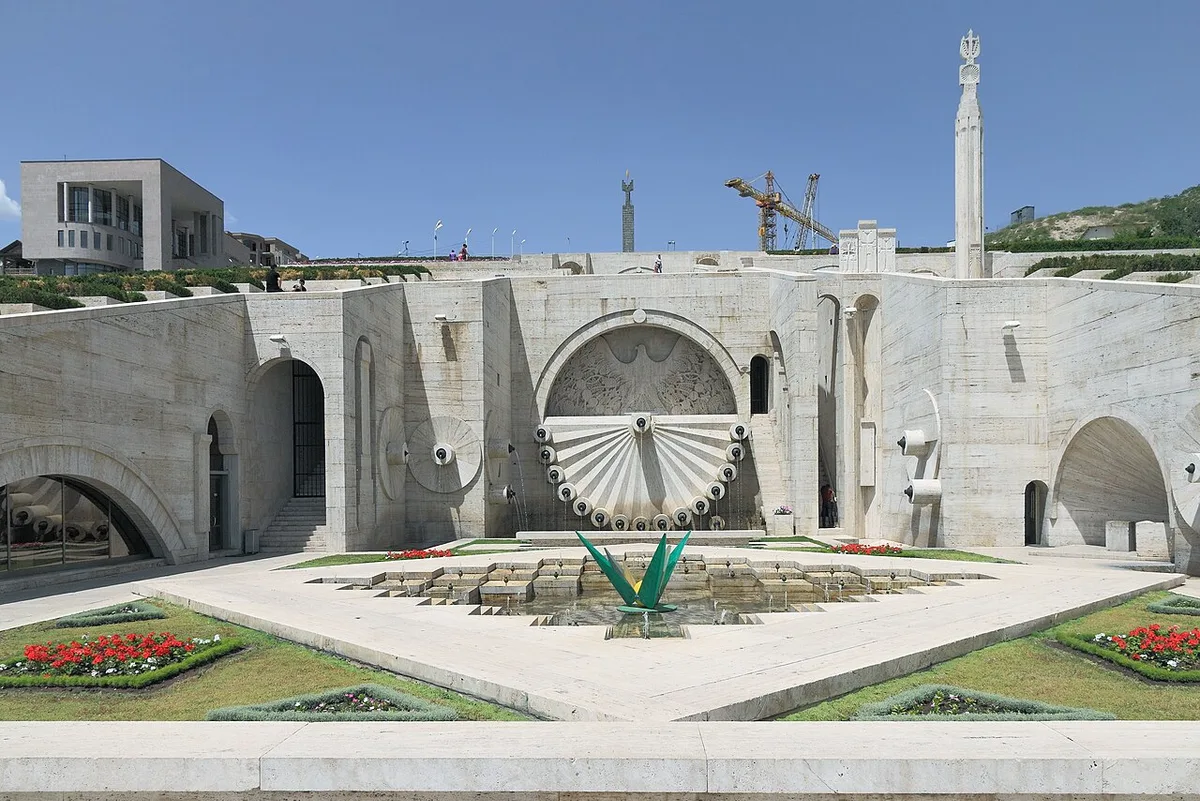
Start with the Cascade, because it orients you to the whole city. It’s a giant limestone stairway of terraces, fountains and sculpture climbing the hillside on the northern edge of the centre, and from the top you get the classic Yerevan panorama: the rooftops below and - on a clear morning - Mount Ararat floating on the southern horizon (the Cascade is one of the best city spots for it, and our guide to where to see Mount Ararat rounds up the rest). You can climb the 572 steps outside, but there’s an easier trick most people miss: inside the monument runs a hall of escalators, open daily 8:00-20:00 (closed on state holidays, with an earlier 19:00 finish the day before one), so you ride up and walk down past the artworks - the civilised way to do it in summer heat.
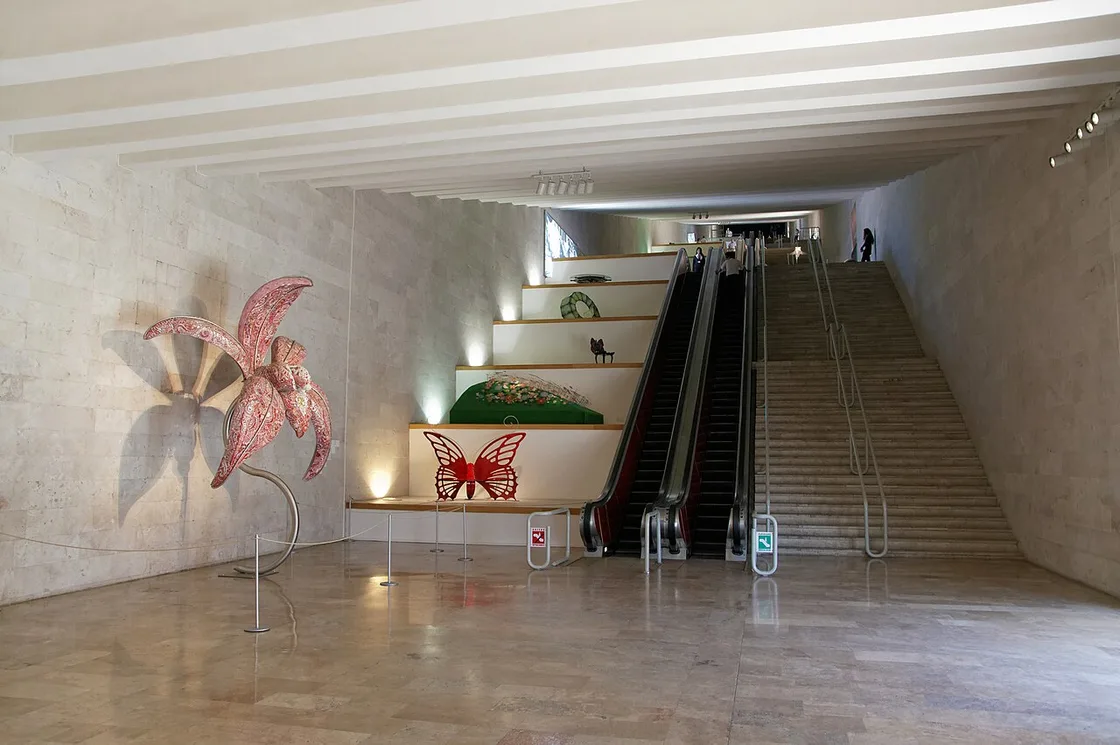
The whole staircase is really the front garden of the Cafesjian Center for the Arts, and the good news is that it’s free - both the outdoor sculpture garden at the base (look for the fat bronze cat and the Roman soldier by Fernando Botero) and the terraces themselves. The indoor galleries keep shorter hours (Friday to Sunday, 10:00-20:00 when we checked), so for the interior collection aim for a weekend. Everyone else just treats the Cascade as public space: locals sprawl on the steps at dusk, and it’s arguably the best free thing to do in the city. Hours, the indoor escalator and the honest Ararat caveat are in the Cascade guide. For a half-day of late Soviet concrete - Rossiya Cinema, Komitas Hall, Hrazdan Stadium and the Demirchyan Complex - use the Soviet modernist architecture walk.
Republic Square and the singing fountains
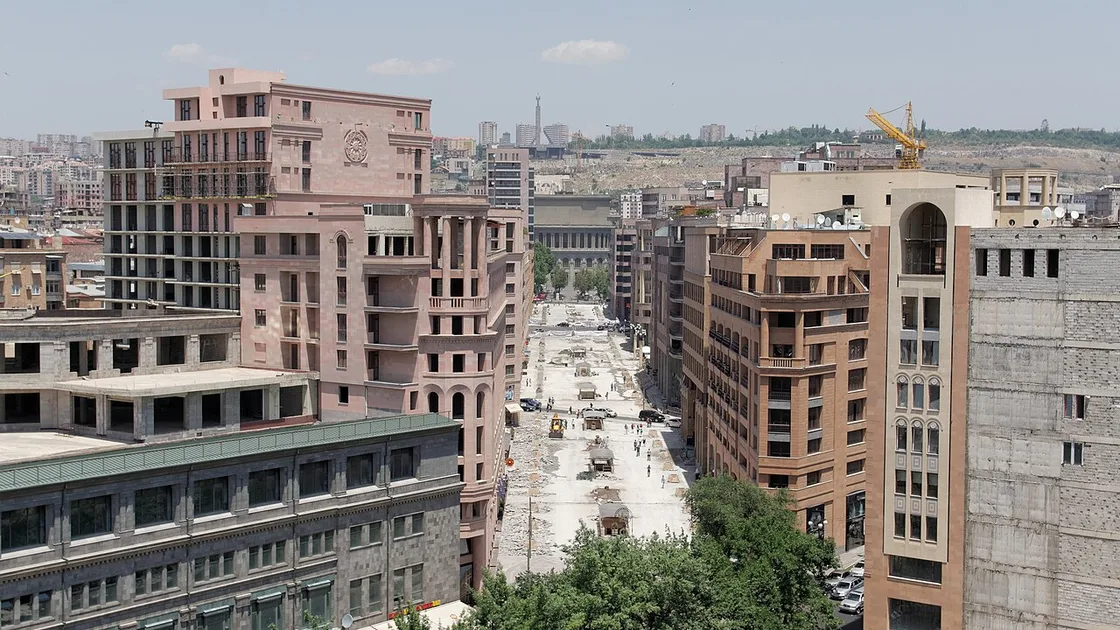
Republic Square is Yerevan’s grand set piece - a ring of pink and black volcanic-tuff buildings designed by the architect Alexander Tamanyan, who gave the modern city its Soviet-neoclassical bones in the 1920s and 30s. The History Museum and National Gallery anchor one end; the Government House with its clock tower dominates the rest. By day it’s handsome but sober. Come back after dark.
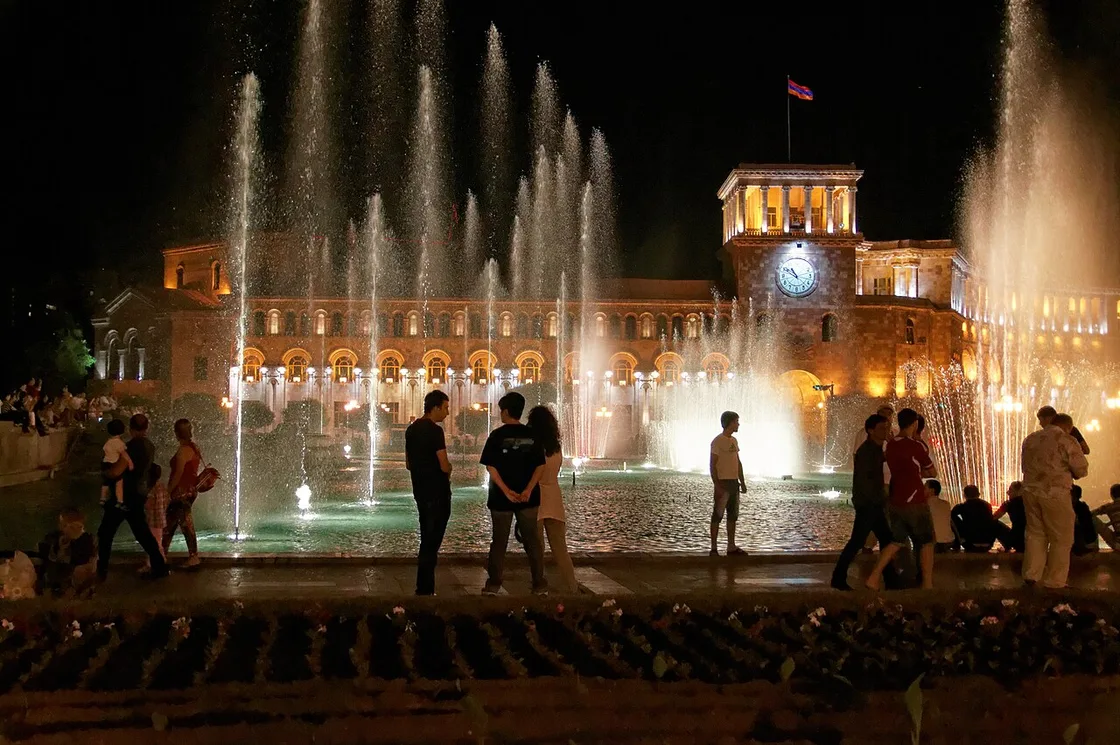
From late May into the autumn, the pool in front of the museum stages a free singing-fountains show: jets of water choreographed to music and coloured light. It usually kicks off around 21:00 and runs a couple of hours, and the one thing worth knowing is that Tuesday is the fountains’ day off - no show. Turn up around half past eight for a spot on the museum steps, the best-angled seating in the house. It’s genuinely charming, tourists and Yerevantsis side by side, and it costs nothing. Once a year the square goes bigger: Erebuni-Yerevan Day (11 October 2026) turns the centre into a free birthday party with concerts and fireworks - our Erebuni-Yerevan Day guide covers where to stand. Like a lot of the city’s open-air life, it runs on the warm half of the year, so if you’re still choosing dates, our guide to the best time to visit Armenia lays out what each season gives you.
Matenadaran: the manuscript treasury
A short walk uphill from the Cascade, at the head of Mashtots Avenue, the Matenadaran is one of those museums that sounds dry on paper and lands as quietly moving. It’s the national repository of ancient manuscripts - a fortress-like building holding some 23,000 codices and fragments, with a stern statue of Mesrop Mashtots, who invented the Armenian alphabet in 405 AD, seated at the door. Inside, a fraction of the collection is on display: illuminated gospels, tiny prayer books, vast medieval tomes, works on medicine and astronomy.
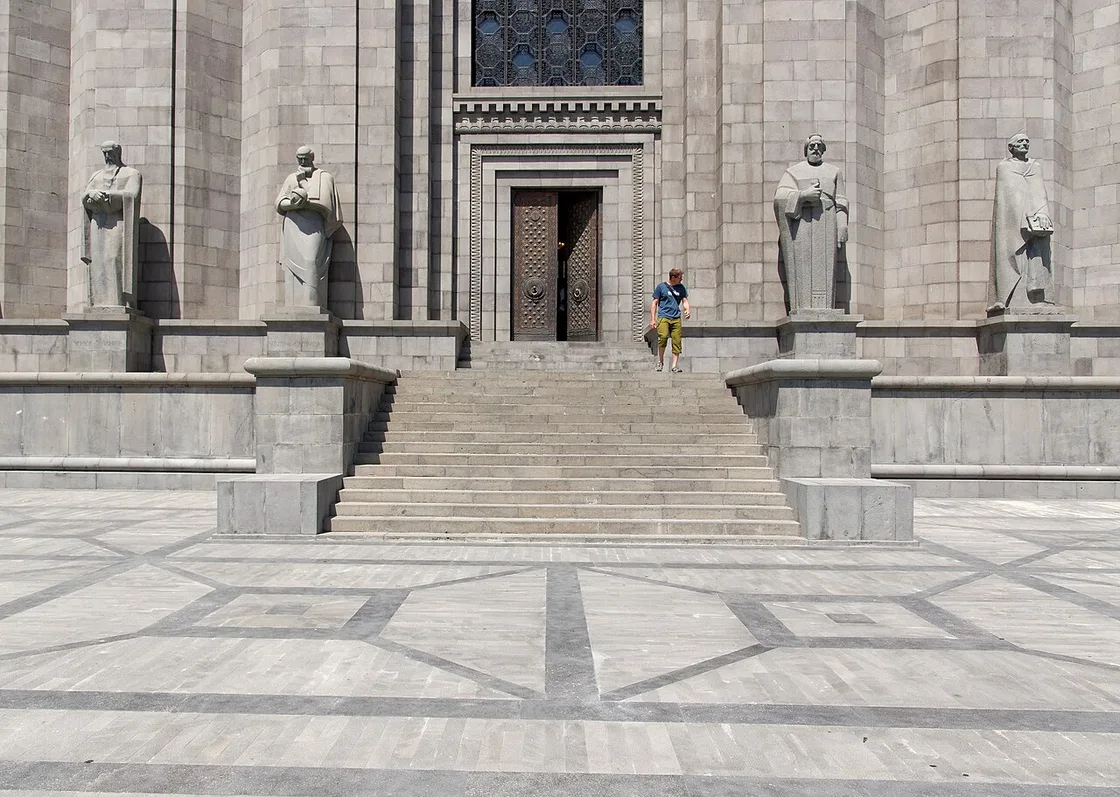
You don’t need to be a bibliophile to feel the weight of it - this is a nation that guarded its written word through centuries of invasion, and the museum makes that visceral. Entry is 2000 AMD (a couple of dollars); a guided tour costs 5000 AMD and is worth it, because the manuscripts don’t explain themselves. Hours are Tuesday to Saturday, 10:00-17:50, closed Sunday and Monday. More on the monasteries where these manuscripts were written sits in our attractions guides.
Tsitsernakaberd: the Genocide Memorial
On a hill across the Hrazdan gorge stands Tsitsernakaberd, the memorial to the Armenian Genocide of 1915. This isn’t a sight to “tick off” - it’s a place of mourning, and the most important site in the country for understanding modern Armenia. A 44-metre stone spire splits the sky; beside it, twelve inward-leaning basalt slabs form a circle around an eternal flame sunk into the ground, where visitors lay flowers in silence.
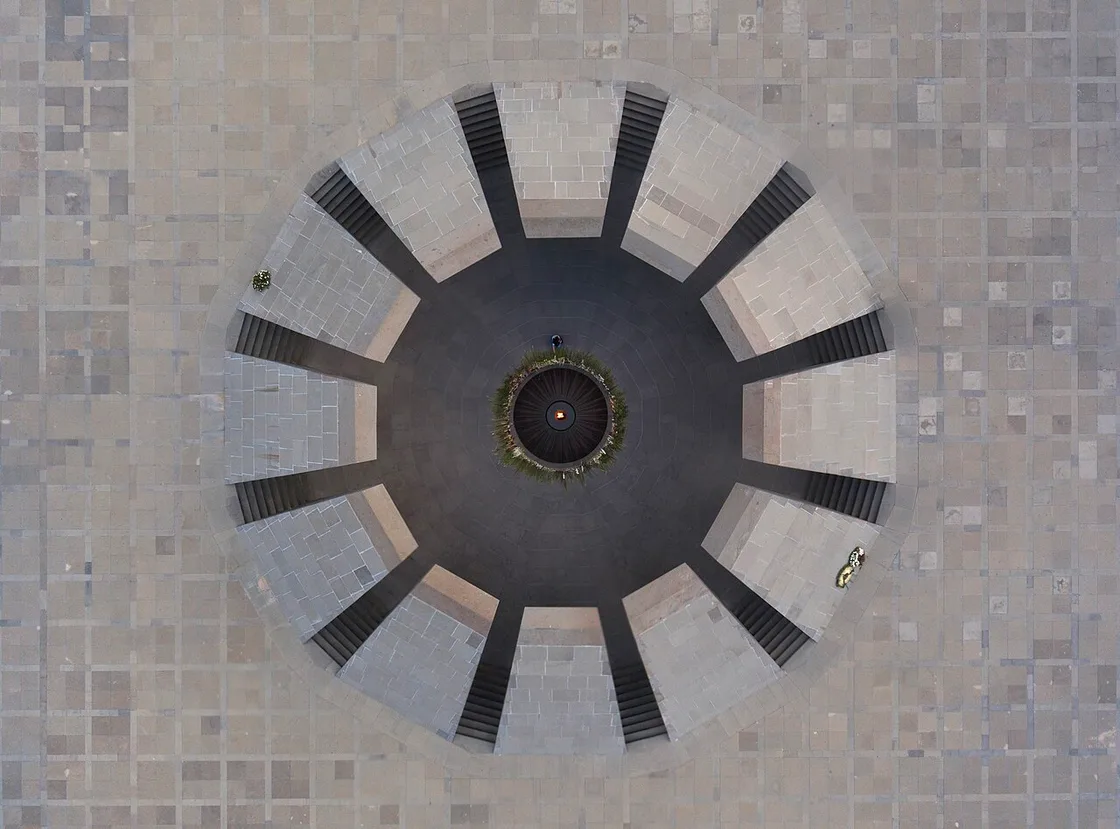
The underground Genocide Museum-Institute below the memorial tells the history through documents and photographs, plainly and without sensationalism. Both the grounds and the museum are free (donations welcomed); the museum opens Tuesday to Sunday, closed Monday, roughly 10:00-17:00 in the warm season and shorter hours in winter. Allow an hour or two, more with the museum, and go in the right frame of mind. If you visit only one thing beyond the pretty centre, make it this - it’ll change how you read everything else. Our full guide to visiting the Tsitsernakaberd memorial covers the stele, the flame, the museum and how to get there.
Yerevan’s markets: Vernissage and GUM
For a feel of the city that isn’t polished, hit two very different markets. The Vernissage is a sprawling open-air craft bazaar that unrolls along Aram and Buzand streets - carpets, silver, chess sets, khachkar carvings, Soviet cameras and antiques, wooden duduks and hand-painted ceramics. It runs all week but is really a weekend event: Saturday and especially Sunday morning is when the full length of it fills with sellers. Haggling is expected and good-natured.
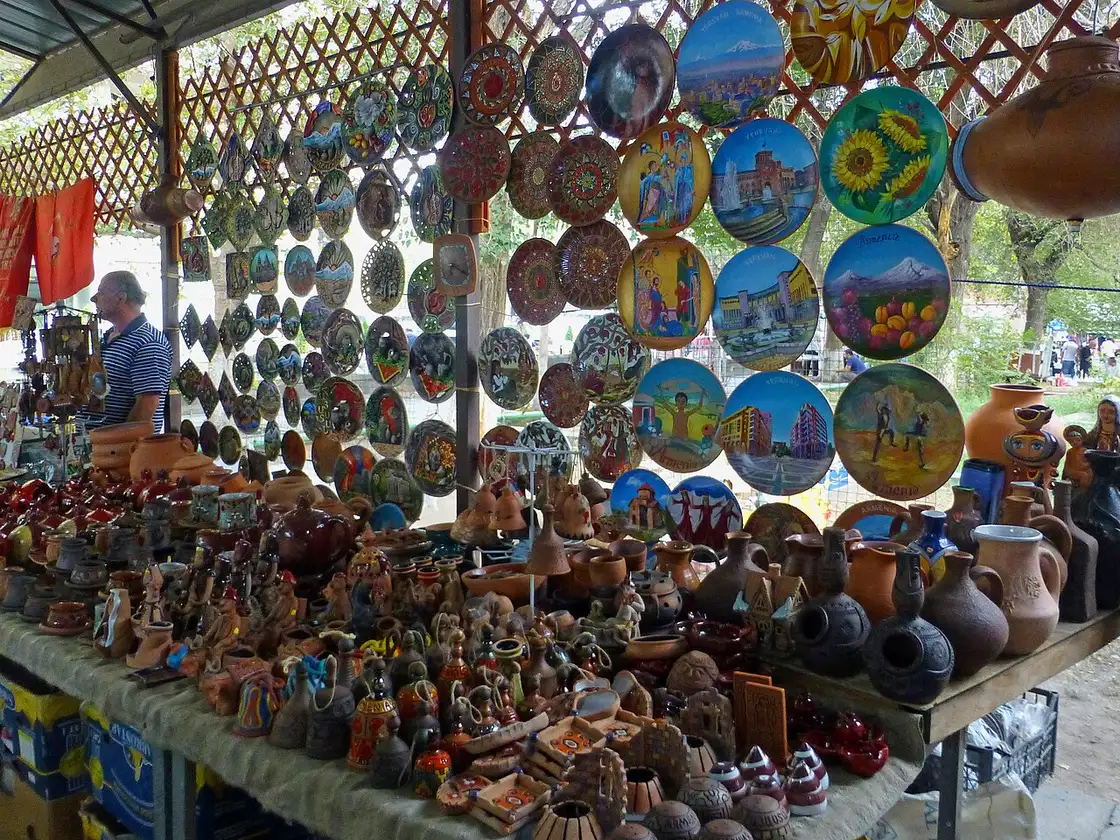
A few minutes away, don’t confuse the department store with the GUM Market - the covered food hall is the one you want. Its aisles are stacked with pyramids of dried fruit, walnut-studded sujukh (Armenia’s answer to a candy bar), sheets of lavash, barrels of cheese and pickles. Vendors thrust samples at you the moment you slow down, and it’s the best crash course in Armenian food there is. Pair it with a stroll down pedestrian Northern Avenue, the marble promenade linking Republic Square to the Opera.
Wine bars, the Opera and after dark
Yerevan’s evenings belong to Saryan Street. Armenia has been making wine for a very long time - the Areni-1 cave in the south holds the remains of a winery some 6,100 years old - and the modern scene has clustered into a strip of open-air wine bars along Saryan, a block from the Opera. Grab an outdoor table, order a glass of Areni red or a dry Voskehat white, and watch the street fill up. Prices are gentle by European standards. For the bars by name, what a glass actually costs and how to book something more organised, see our guide to wine tasting in Yerevan; for the food alongside it, our guide to Armenian food covers the rest of the table.
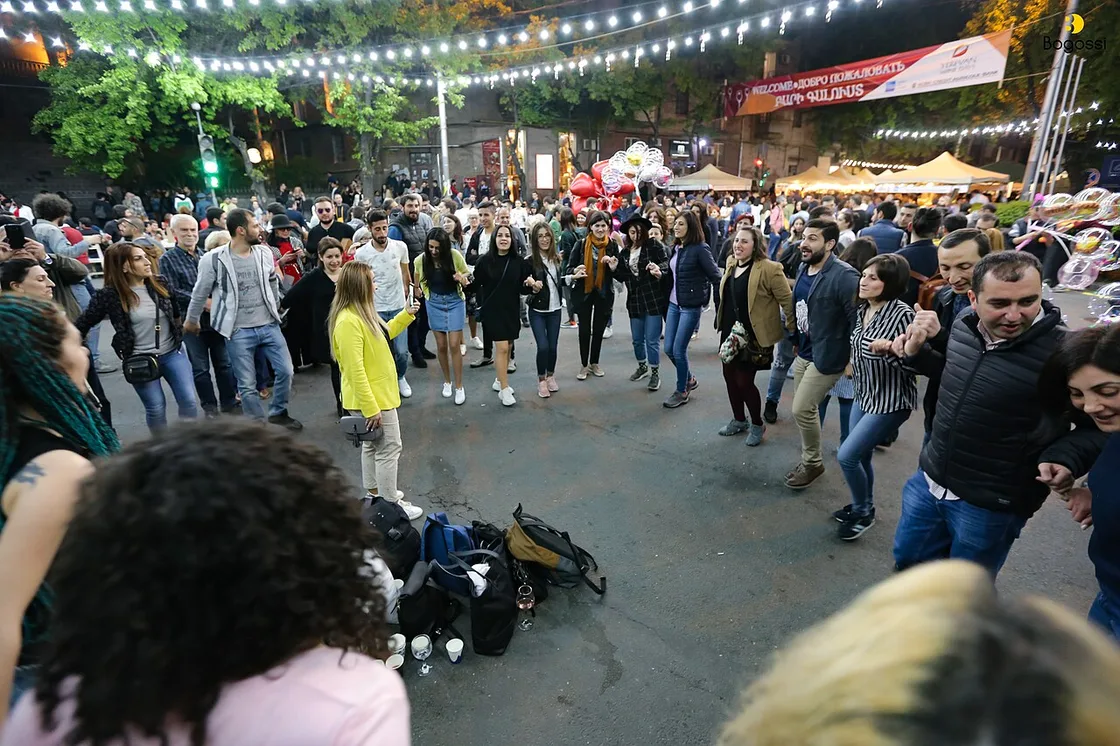
If your trip lands in early June, you may hit Yerevan Wine Days, the city’s biggest street party, when Saryan and the neighbouring lanes close to traffic and dozens of wineries pour under strings of lights. In 2026 it falls on 5-7 June (it’s pinned to the first weekend of June, so double-check the dates for other years - some older listings still show late May). The rest of the year the bars carry the district on their own. Don’t miss the strip even without the festival: for jazz, craft beer, clubs and late food beyond the wine strip, see Yerevan nightlife.
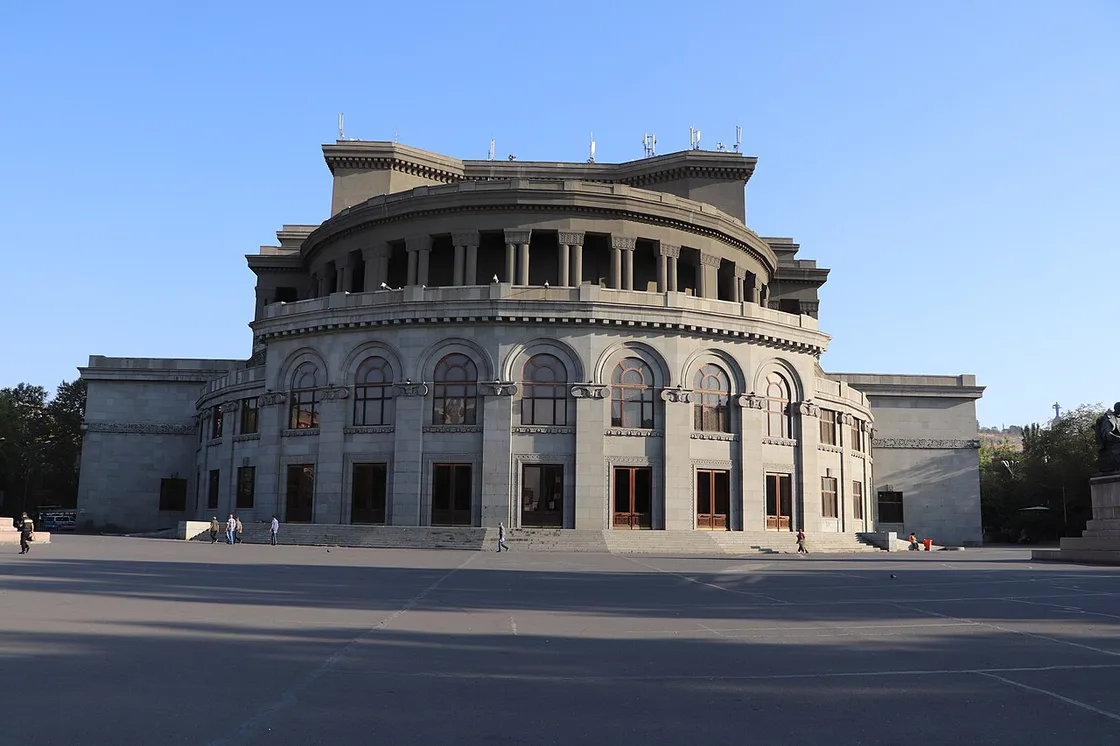
Nearby, the Opera House - another Tamanyan design, opened in 1933 - sits in a leafy square with a lake and cafés, and tickets to a ballet or concert in the Aram Khachaturian hall are astonishingly cheap by Western standards. Even without going in, the square is the social heart of the centre on a warm night.
Mother Armenia, the Blue Mosque and the brandy
West of the polished centre, the hillside lanes of Kond still read as a lived-in old quarter - Surp Hovhannes, Tepebashi mosque walls, and alleys too narrow for a tour bus. Walk it as a guest, not a photo safari - you’ll get more that way.
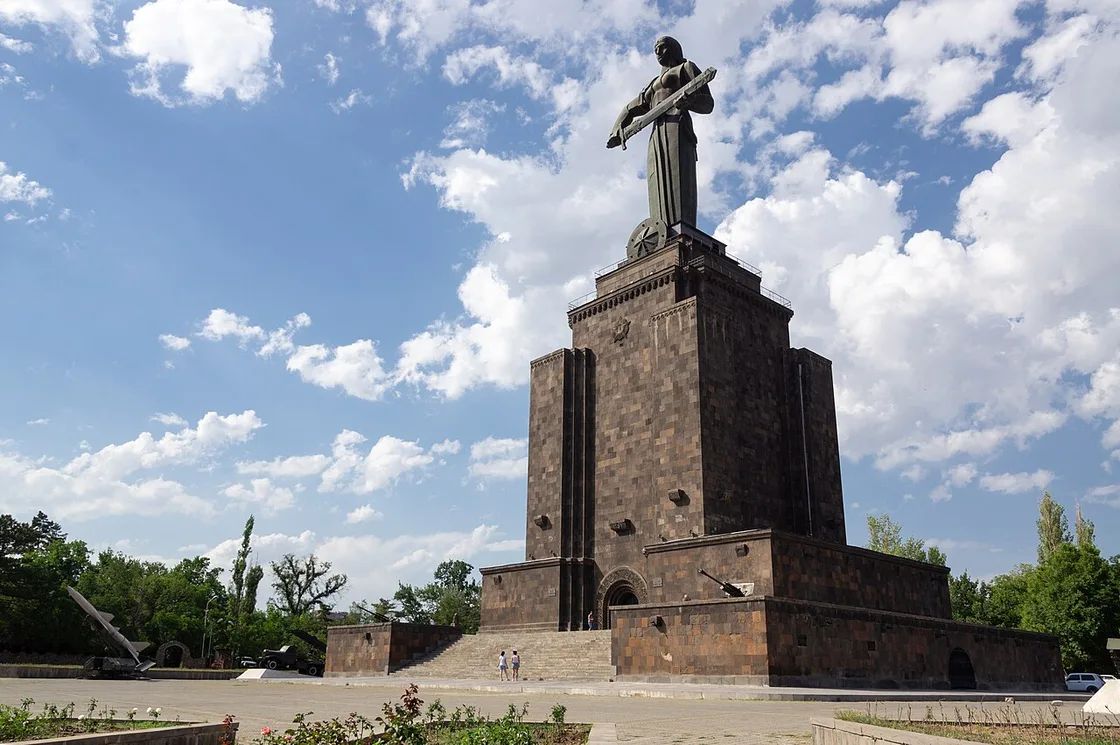
A few more stops fill out a longer stay. Mother Armenia - a monumental statue of a woman with a sword, raised in 1967 in Victory Park on the heights above the centre - is a stiff walk or short taxi up behind the Cascade, and rewards you with another sweeping view over the city to Ararat. That’s the panorama when the Cascade is crowded.
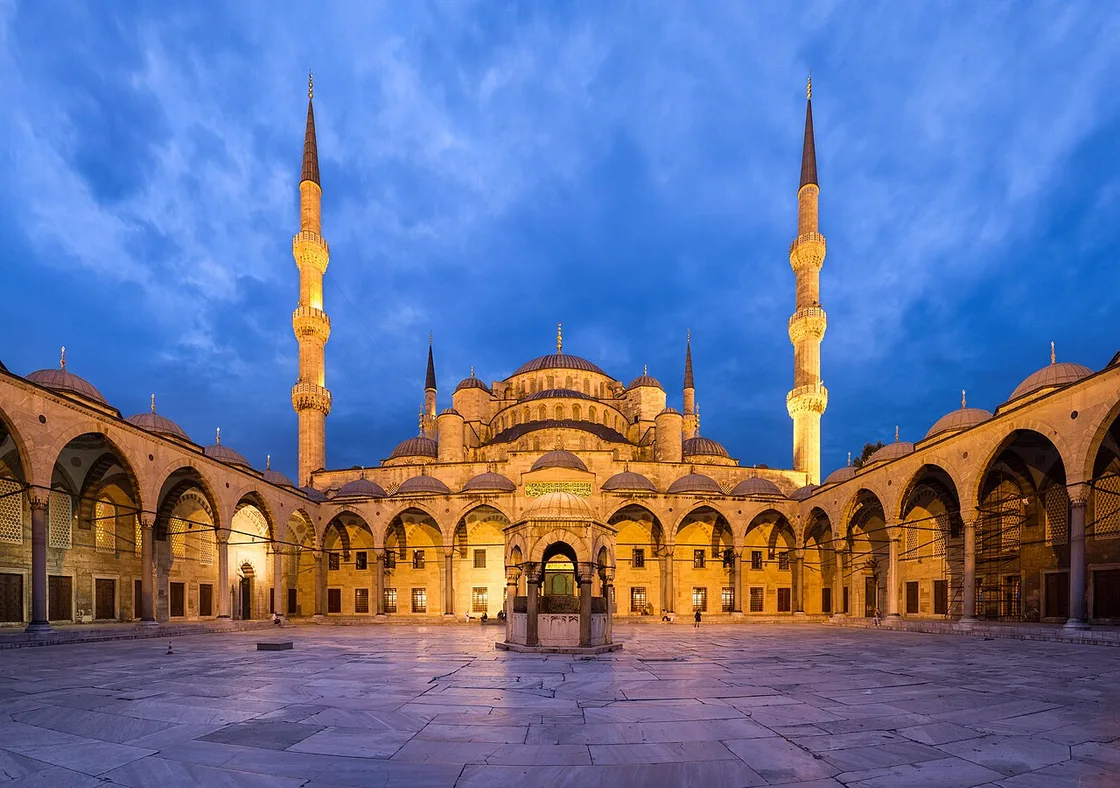
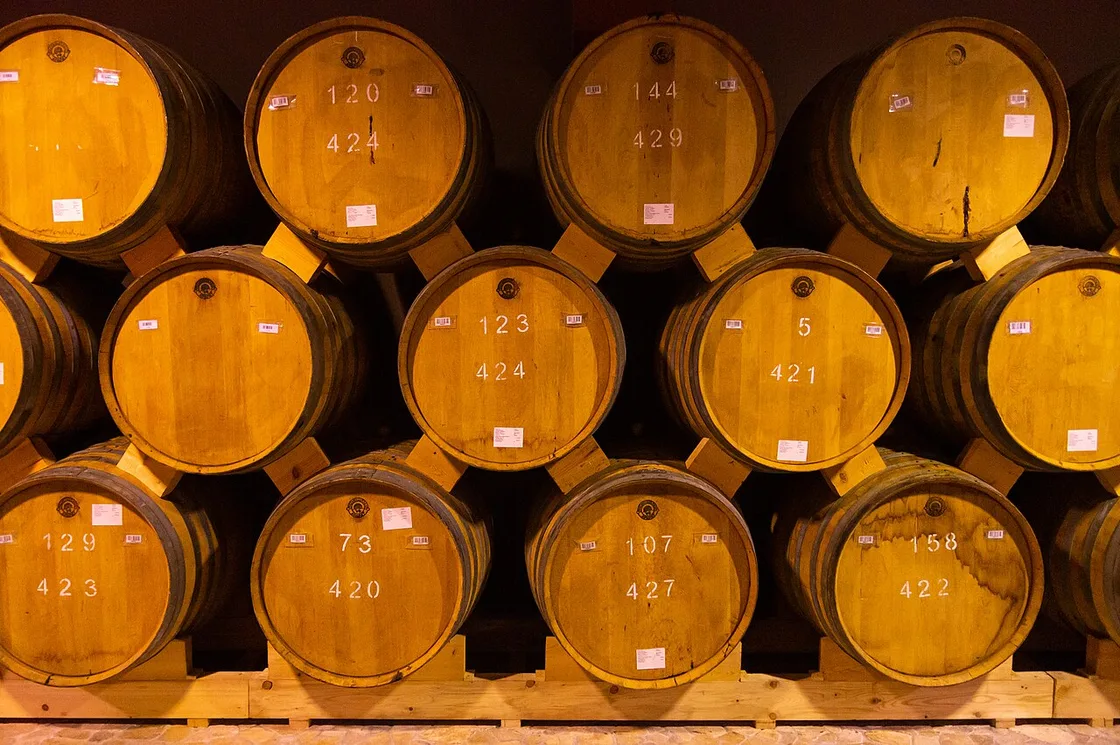
Down in the centre, the 18th-century Blue Mosque is Yerevan’s only working mosque and a genuine pocket of calm - a Persian-style courtyard of turquoise tilework hidden behind a wall on busy Mashtots Avenue. And for a very Armenian afternoon, book a tour at the Ararat brandy factory (the Yerevan Brandy Company), where the country’s famous cognac-style brandy is aged in oak; tours end in a tasting and must be reserved ahead. Prices vary by tour, so confirm when you book. Our guide to Yerevan brandy explains the Ararat and Noy factories, the tastings and the cognac question in full.
What to eat
Armenian food is one of the trip’s quiet highlights, and Yerevan is where you’ll eat best. The dish to seek out is khorovats - the national barbecue, chunks of pork, lamb or veg charred over vine cuttings and served with lavash, raw onion and herbs. It’s a weekend ritual as much as a meal.
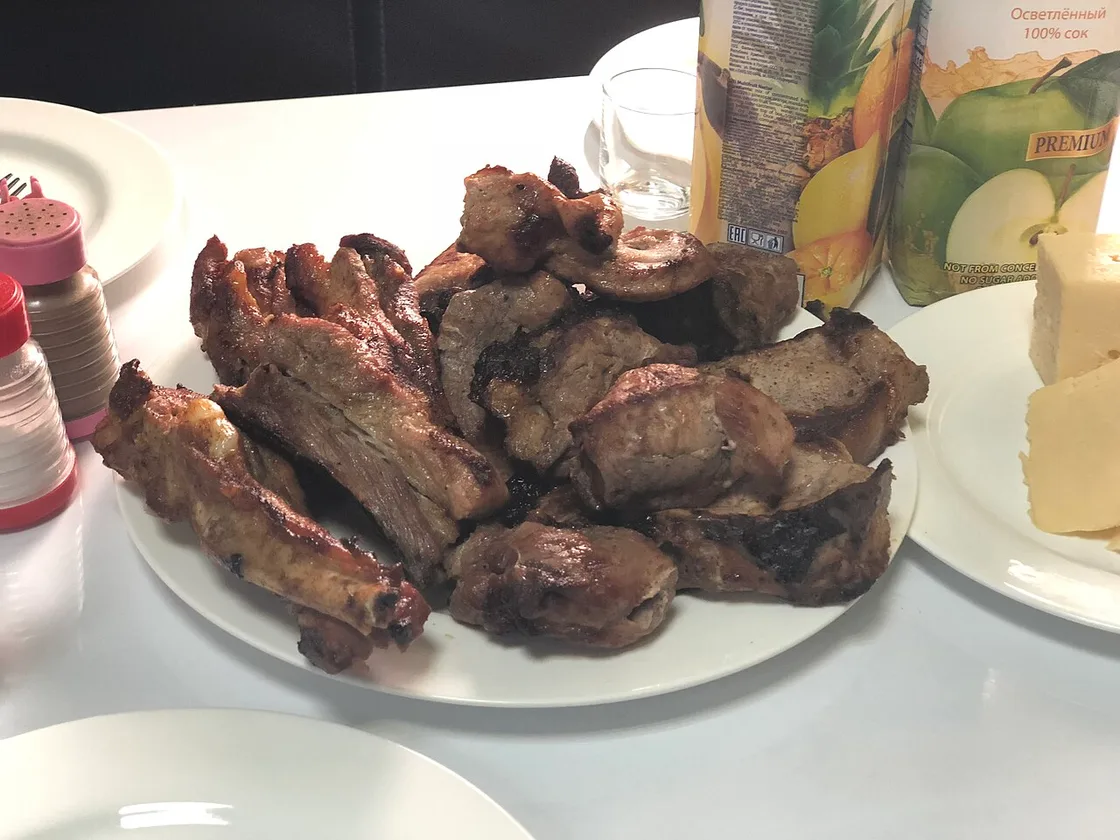
Round it out with lavash (the thin tonir-baked flatbread, recognised by UNESCO as part of Armenia’s heritage), tolma (spiced meat and rice wrapped in vine leaves), fresh cheeses, and something sweet - gata pastry, or the walnut-and-grape sujukh from the market. And the tap water is superb: the city is dotted with pulpulaks, little public fountains running cold mountain water for free - locals drink from them all day, and so should you. If you want the full list of what to order and where, read our guide to Armenian dishes and where to try them, and our roundup of the best restaurants in Yerevan names the specific tables worth booking; the food section goes deeper on where to find it all.
Where to stay in Yerevan
For a first visit, base yourself in Kentron - the central district around Republic Square, the Opera and Northern Avenue. Nearly everything in this guide is then a walk away, you’re in the thick of the café and wine-bar scene, and you can be at the fountains or on Saryan Street in minutes. It’s the priciest area, but “pricey” in Yerevan is still modest, and the convenience is worth it.
If you’d rather trade a few minutes’ walk for lower rates, look at the streets just north and west of the centre, or near a metro station - the single metro line is quick and costs a flat 150 AMD a ride (the old token system was retired at the end of 2024; you now tap a card or QR). Rooms fill and rates climb during Wine Days and peak summer, so book ahead for June through August. Our guide to where to stay in Yerevan breaks the areas down neighbourhood by neighbourhood.
Using Yerevan as a base for day trips
Most first-timers underestimate one thing: Yerevan is the launchpad, not the whole trip. Some of Armenia’s greatest sights are a half-day or day away, and there’s almost no public transport to them - so you’ll want either a rental car or an organised tour. Three stand out.
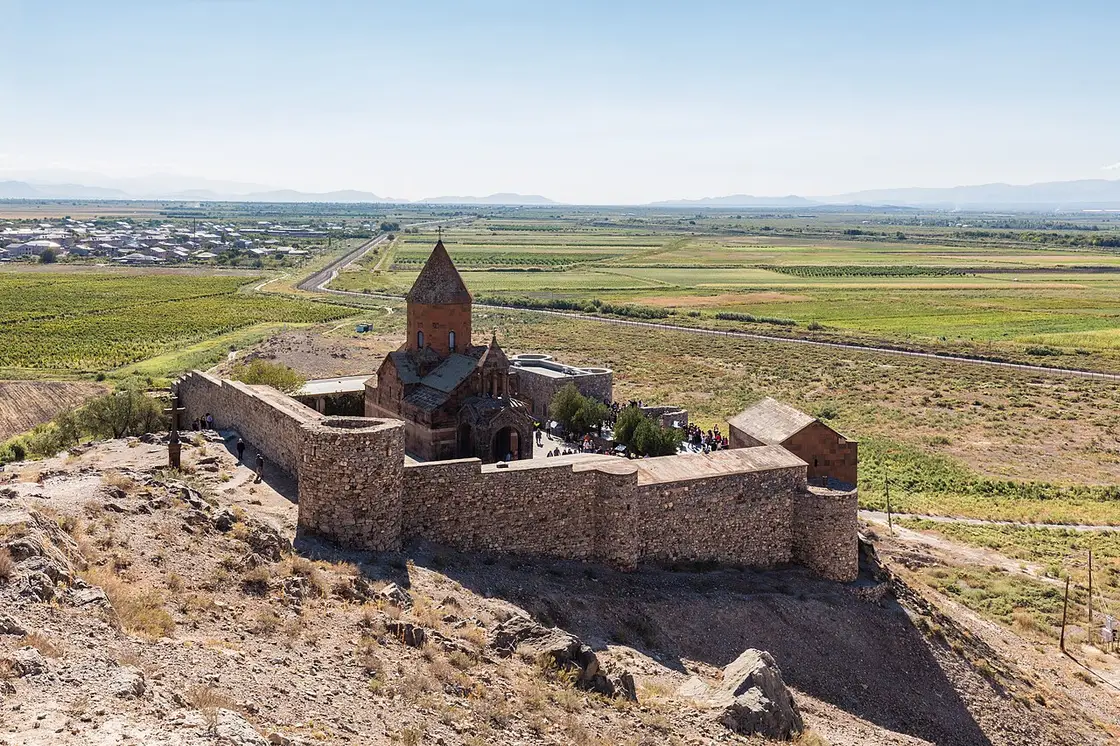
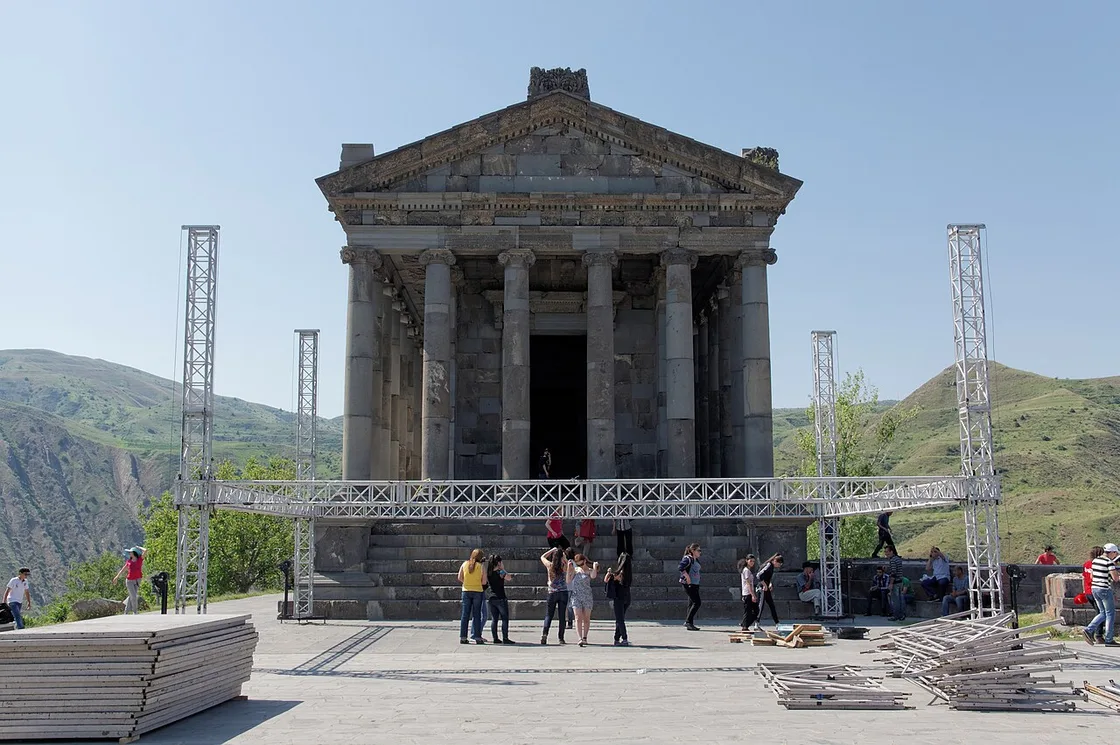
Khor Virap is the postcard: a monastery on a lone hill about 40 km south, set directly beneath the twin cones of Mount Ararat. The mountain is over the border in Turkey - that frontier has been closed since the 1990s - but the view from Armenian soil is unmatched, clearest in spring and autumn. Our Khor Virap visiting guide covers the drive, the pit you can climb into and how to time a clear Ararat. Garni and Geghard, roughly 40 km east, pair perfectly for a half-day: Garni is a colonnaded first-century temple (entry around 1500 AMD) perched over a gorge of basalt “organ pipes,” and Geghard is a UNESCO-listed monastery carved partly into the cliff - and free to enter. Both are doable in about five hours round-trip; our Garni and Geghard day-trip guide walks through the temple, the Symphony of Stones and how to combine them. For summit and forest days you can still return to the same hotel - Hatis, Ara, Khosrov and Parz Lake - see day hikes near Yerevan.
The bigger loop - Khor Virap, Noravank and the Wings of Tatev cableway in the far south - is often sold as a single day tour, but it’s a punishing 12-15 hours there and back, and honestly better broken over two days with a night in the south. Hiring a car lets you linger; a group tour with a driver-guide is the simpler call. If you have a week, our 7-day Armenia itinerary strings all of this - the south, Tatev, Sevan and Dilijan - into one relaxed loop. Weigh it up in our trip-planning guides, and see the transport section for getting between towns without a car.
Getting in and around
Most visitors land at Zvartnots International Airport (EVN), about 13 km west of the centre - a 25-minute drive. The airport express bus is a flat 300 AMD, but with luggage a taxi is easier: a metered or app-hailed ride (GG or Yandex) should run roughly 2,000-3,800 AMD, so ignore the drivers in arrivals quoting 6,000-10,000. Booking a fixed-price transfer ahead takes the haggling out of a late arrival. Full options, fares and tips are in our guide to getting from Zvartnots Airport to Yerevan.
Once you’re in, the centre is flat and walkable, taxis are cheap, and the lone metro line handles the longer hops - our guide to Yerevan public transport covers the metro, the buses and the flat tap-to-pay fare. Two or three days covers the city and leaves time for a day trip - our 3 days in Yerevan itinerary plans exactly that, with the day trips as returns from one hotel base; a week lets you use Yerevan as a proper base and still see the monasteries, Lake Sevan, the forests of Dilijan, the high country of Mount Aragats and Lake Kari, the second city of Gyumri and the wine country of the south. Not sure how long to give the whole country? Our guide to how many days you need in Armenia breaks it down by trip length.
Photos
On the map
The map loads on click - to keep the page lightweight.
The map didn’t load. Check your connection and refresh the page.
Read also
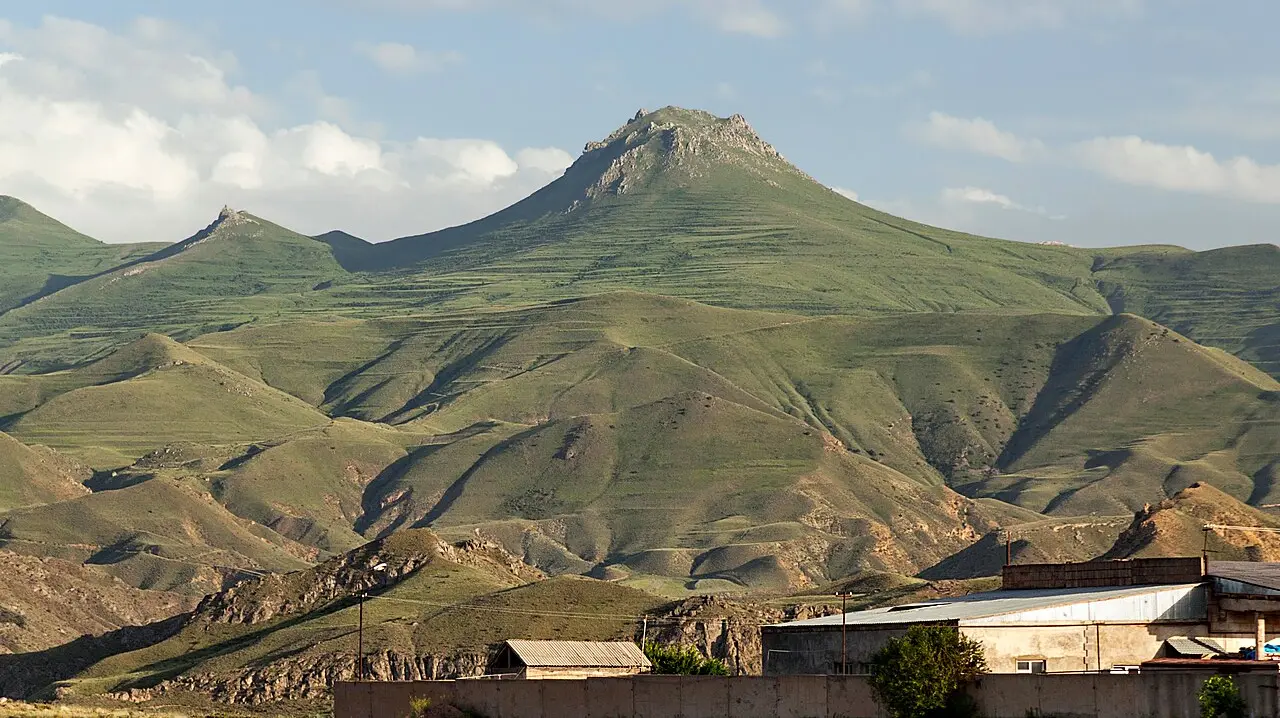
Cities · 13 min read
Yeghegnadzor: Wine Country Base in Vayots Dzor
Verified · July 23, 2026Why base yourself in Yeghegnadzor: Noravank and Areni on the doorstep, Gladzor, Smbataberd, a medieval Jewish cemetery and buried cheese.
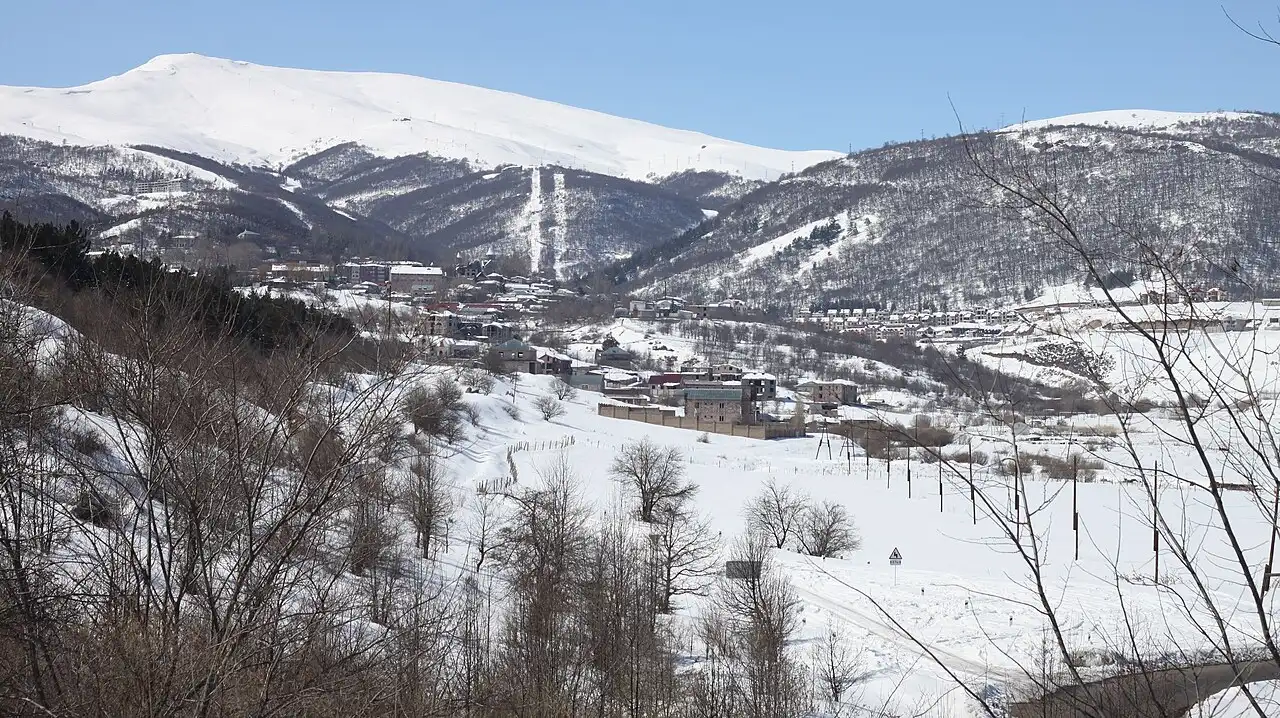
Cities · 10 min read
Tsaghkadzor: Armenia's Ski Town in Every Season
Verified · July 21, 2026Armenia's flagship ski resort, 58 km north of Yerevan: the Kecharis monastery, a five-stage ropeway, the ski slopes and what to do here in summer.
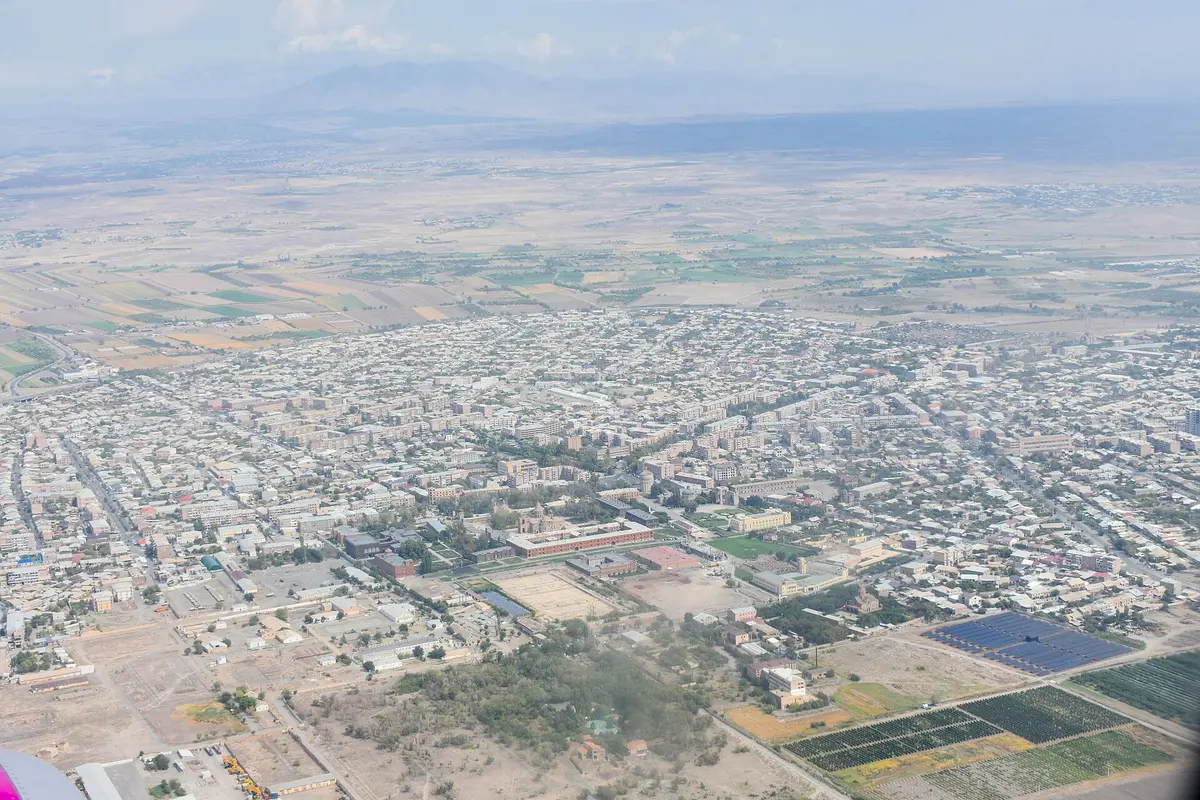
Cities · 11 min read
Vagharshapat (Etchmiadzin): Armenia's Spiritual Capital
Verified · July 16, 2026A guide to Vagharshapat (Etchmiadzin): the Mother See cathedral, the martyr churches of Hripsime and Gayane, Sardarapat memorial and how to visit.
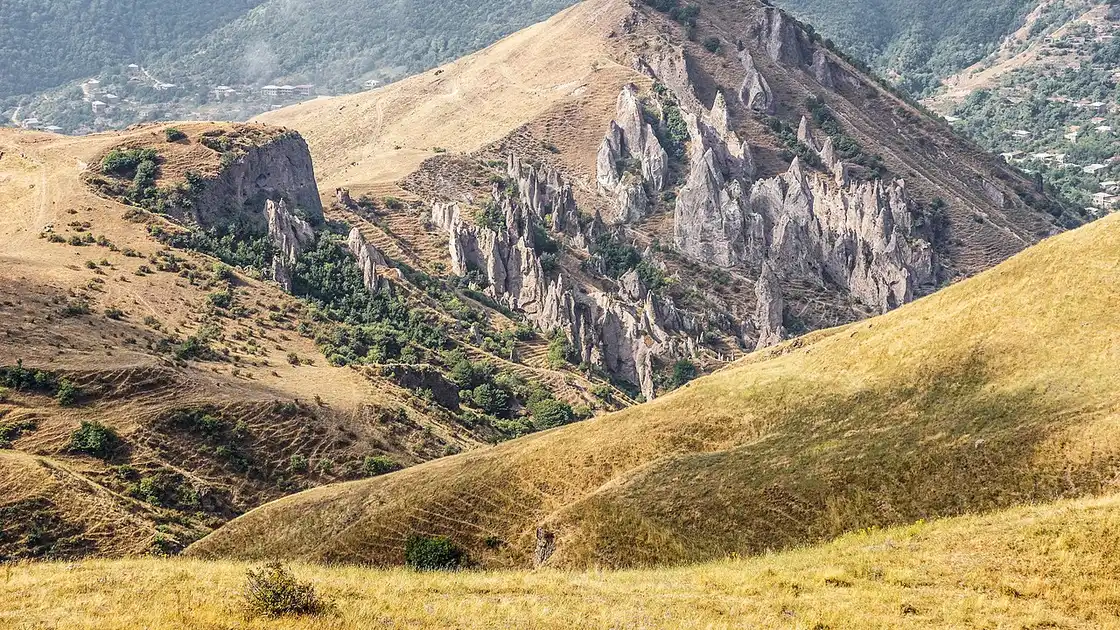
Cities · 10 min read
Goris: Gateway to Tatev & the South
Verified · July 4, 2026A guide to Goris, Armenia: the stone old town and rock cones, Old Khndzoresk and its swinging bridge, the base for Tatev, and how to get there.