Khor Virap Monastery: Ararat Views & How to Visit
How to visit Khor Virap, Armenia's signature Ararat view: the monastery under the mountain, the pit you can climb into, and when the peak shows.
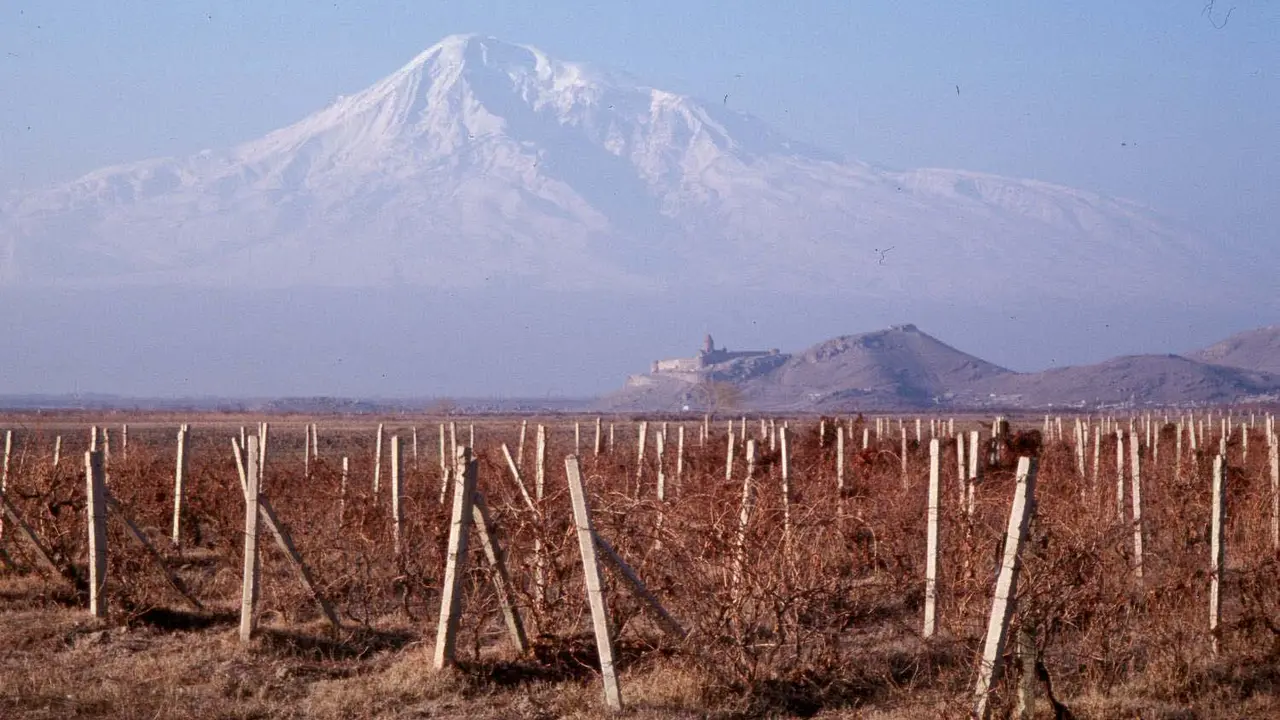
Khor Virap is the shot you’ve already seen: a squat, fortress-walled monastery on a low hill, and behind it, filling half the sky, the snow-capped cone of Mount Ararat. It sits about 40 km south of Yerevan, roughly an hour’s drive, on the flat vine-covered plain that runs to the Turkish border - and it’s at once Armenia’s most photographed view and one of its most sacred places, the spot where, tradition says, the country’s turn to Christianity began. Get the timing right and you leave with the single image that sells the whole country; get it wrong and the mountain hides behind cloud all morning - so most of what matters here is knowing how to stack the odds, and what else there’s to see when the peak stays shy.
Why Khor Virap matters
The name means “deep dungeon,” and the story behind it is the reason this small monastery outranks grander ones. In the late third century, Gregory the Illuminator - a Christian noble at a stubbornly pagan court - refused to take part in the king’s rites. King Trdat III (Tiridates) had him thrown into a pit on this hill and left there. Gregory survived thirteen years, kept alive, the tradition holds, by a widow who lowered him bread. When the king later fell into a raving illness that no one could cure, Gregory was hauled out, healed him, and converted him - and in 301 AD Armenia became the first nation in the world to adopt Christianity as its state religion. Gregory became its first Catholicos and the patron saint of the country.
That is why people come here on pilgrimage as much as for the view. It’s a working monastery of the Armenian Apostolic Church, still used for services, weddings and baptisms, so it rewards a little quiet and modest dress - more on that below.
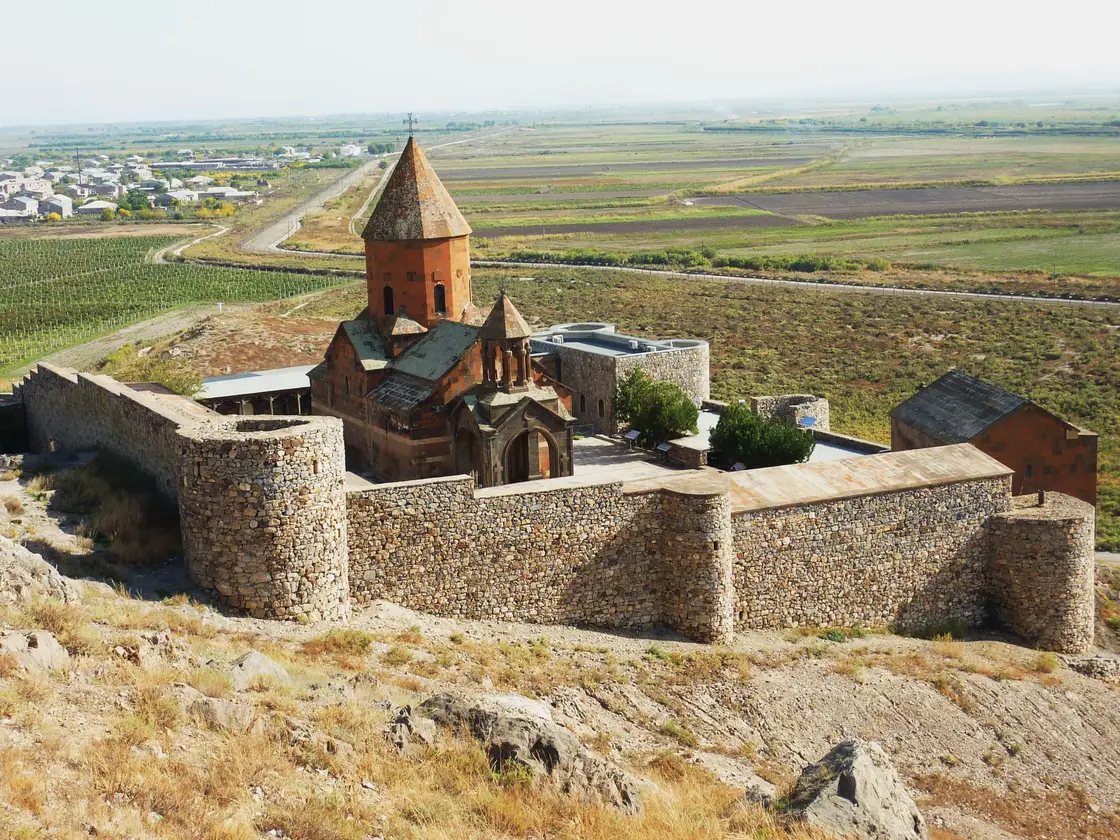
The buildings you see are much later than the legend. A first chapel went up on the site in 642, under Catholicos Nerses III “the Builder,” and the larger church that dominates the compound today - Surb Astvatsatsin, the Holy Mother of God - was raised in 1662, when Armenia lay under Persian Safavid rule. The complex was walled like a small fortress, which is why it reads as part castle, part church from the approach road.
Going down into the pit
Most first-timers don’t realise they can do this: you can climb straight down into Gregory’s prison. In the corner of the compound stands the little St Gevorg (Gevorgi) chapel, and set into its floor is a hole. A near-vertical metal ladder drops through it into the pit itself - a round, bottle-shaped stone chamber roughly six metres deep and about four metres across, the traditional dungeon where Gregory spent those thirteen years.
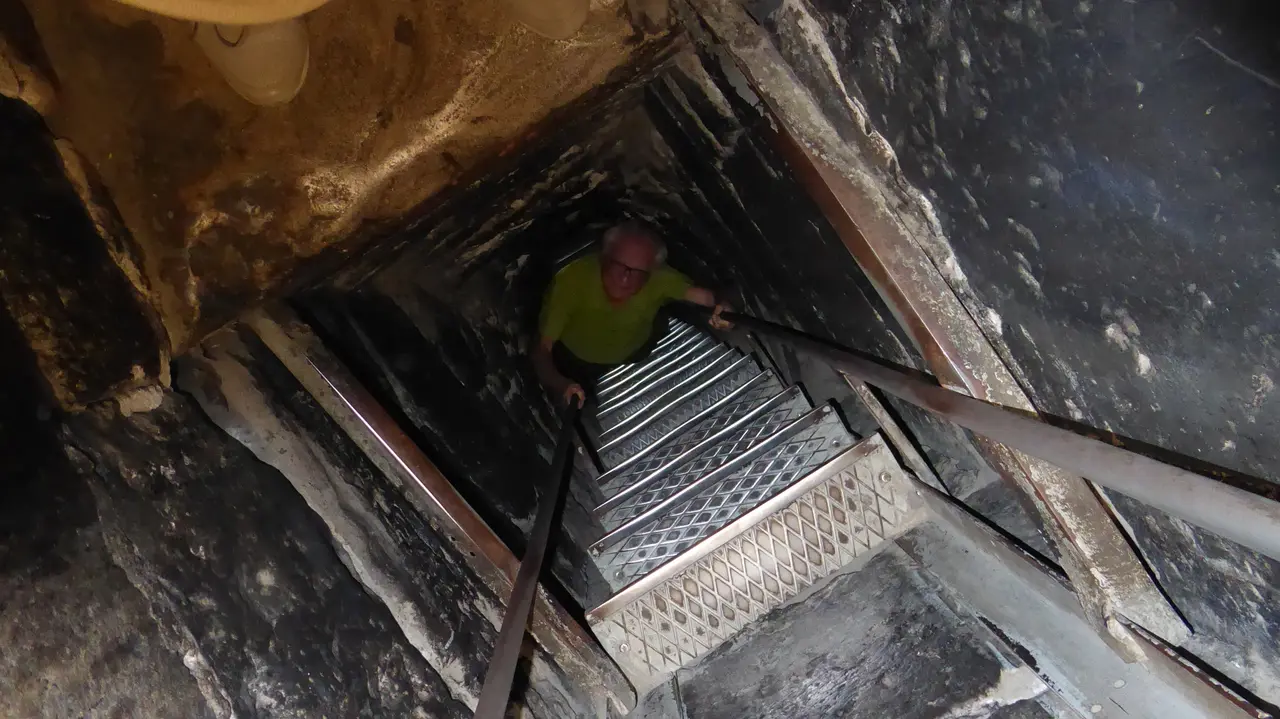
Be honest with yourself before you commit. The ladder is steep and the shaft is narrow; you go down facing the rungs, and it’s warm and airless at the bottom with a queue forming above you. If you have any trouble with heights, tight spaces or dodgy knees, give it a miss - the pit is small and there’s nothing to see down there but bare walls, and that’s rather the point. Leave the good camera up top, take it slowly, and let people come up before you go down, because there’s no room to pass. Most visitors spend two minutes below and are glad they went.
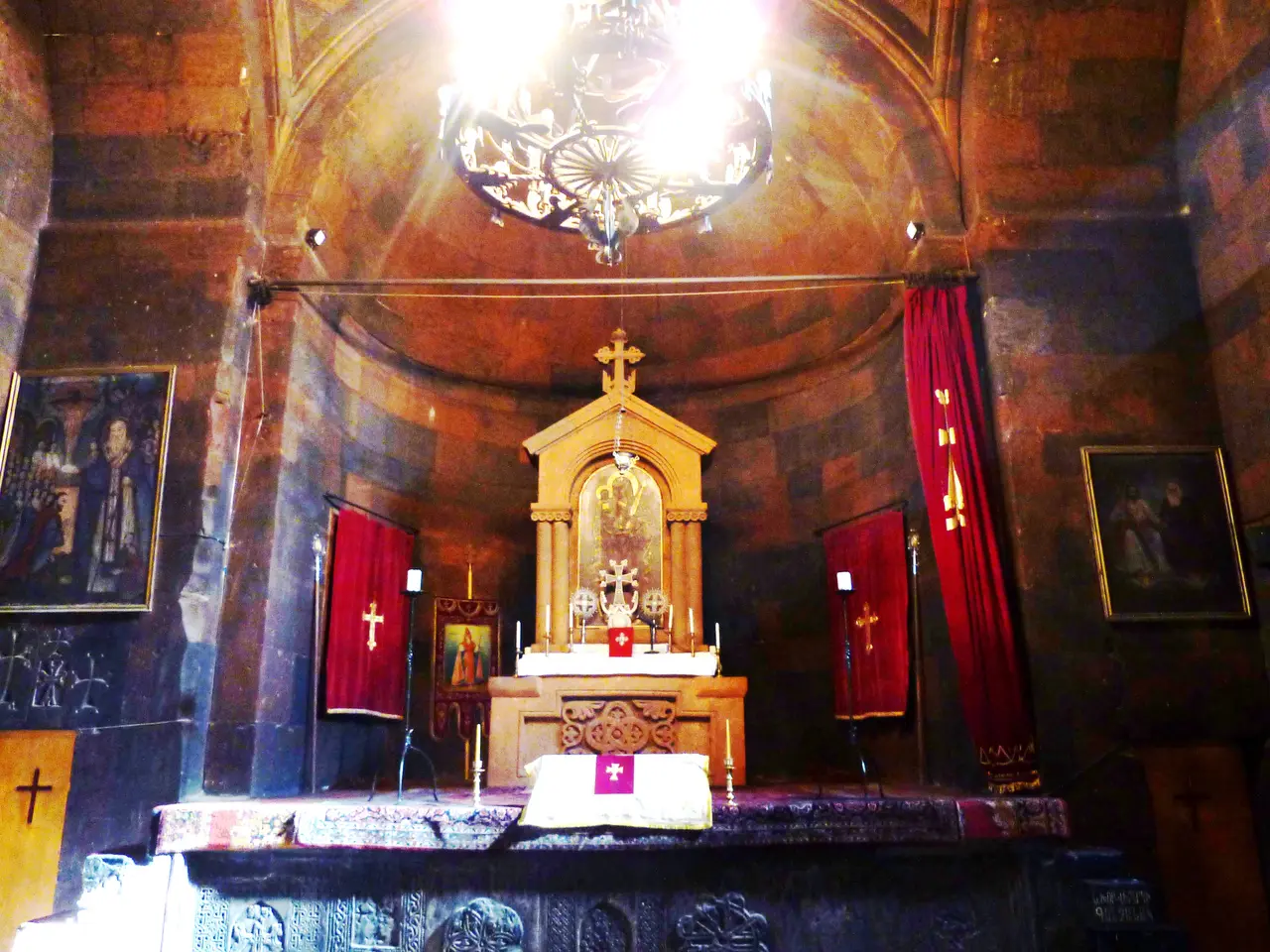
Back at ground level, step inside Surb Astvatsatsin too. After the glare of the plain the interior is dim and cool, its bare tuff walls hung with a few icons and lined with carved khachkars (cross-stones), a working altar at the far end. It’s plain by the standards of Europe’s great churches, and moving precisely because of it.
The Ararat view - and when you’ll actually get it
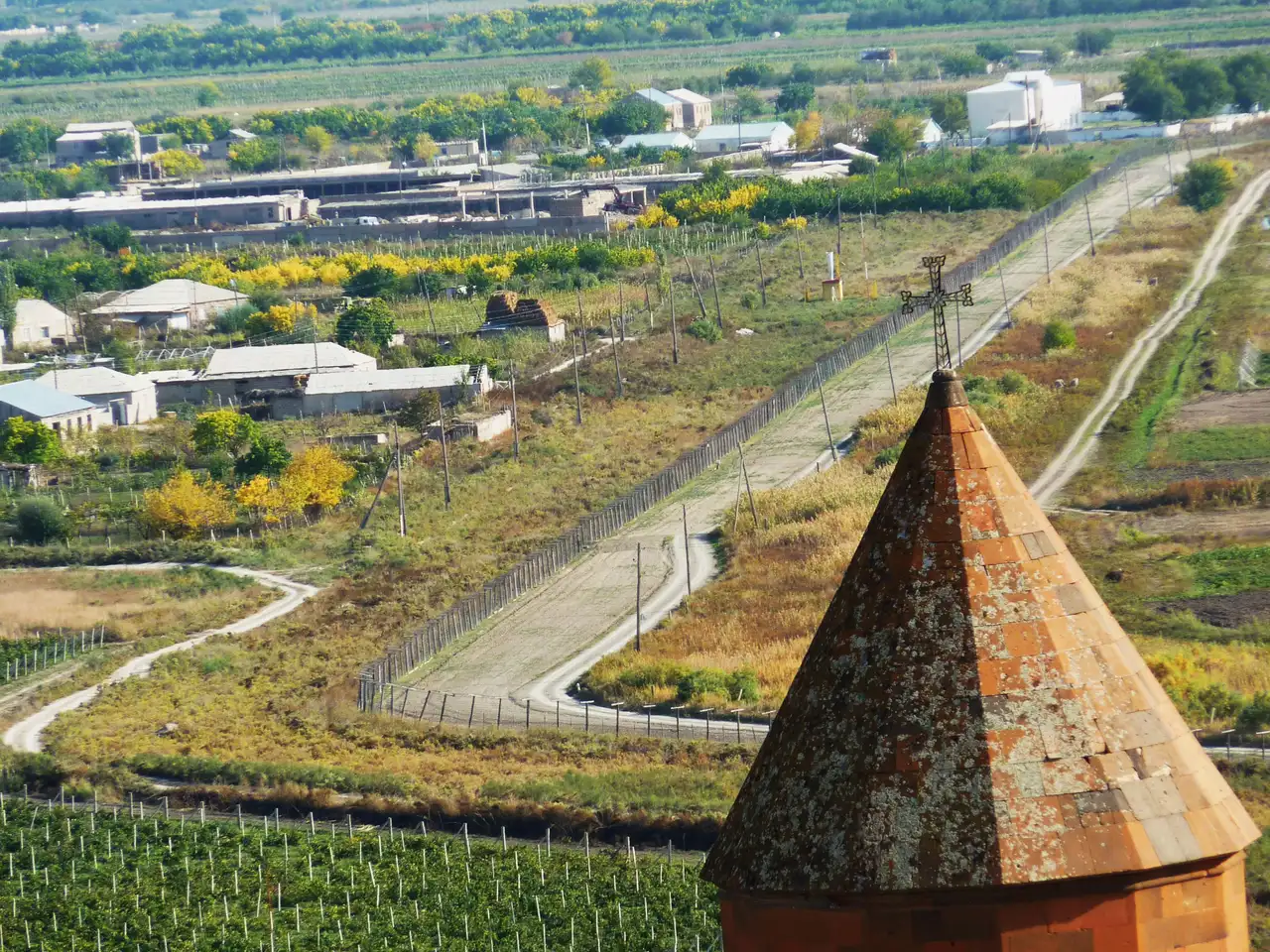
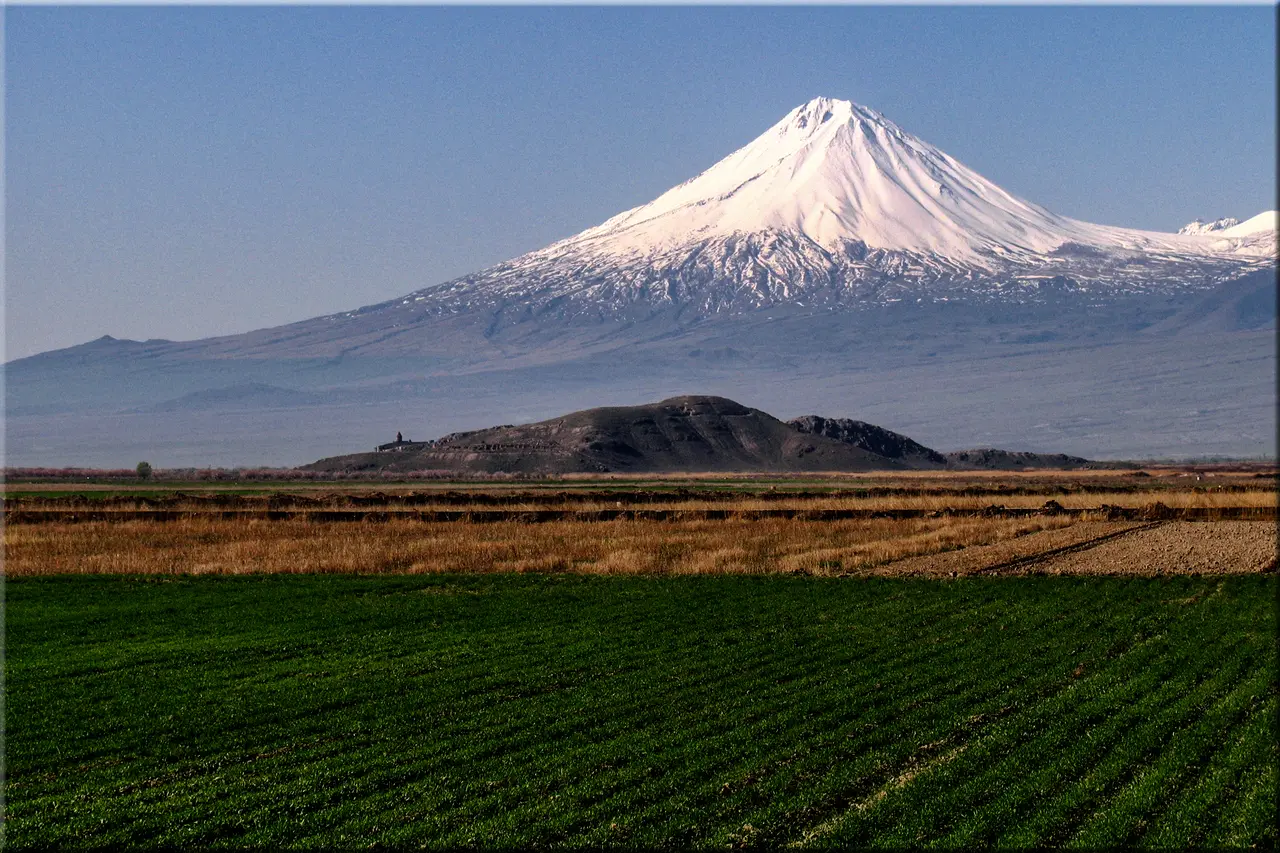
The reason Khor Virap is on every Armenian postcard, tourism poster and brandy label is the mountain. Mount Ararat - a dormant volcano whose greater peak tops out at 5,137 m - is the national symbol, printed on the coat of arms and gazed at from half the country. This low hill with a monastery on it’s simply the best place in the country to stand beneath it, which is why the view here counts as Armenia’s signature shot. The cruel twist is that Ararat has stood inside Turkey since the borders were redrawn after the First World War, and the frontier a stone’s throw from the monastery has been closed since 1993. From the hill you look straight across the fenced no-man’s-land at a mountain Armenians can’t set foot on.
Whether Ararat shows up at all is a lottery, and one worth managing your expectations over. The peak spends a great deal of the year wrapped in cloud and summer haze - locals will tell you they can go weeks without a clean sighting. To load the dice in your favour, come early on a clear morning, before the heat builds a milky haze over the plain and before the tour coaches roll in around mid-morning. Spring and autumn give the crispest air and the best odds; a fresh snow-line makes the mountain look its most dramatic. If you arrive to a wall of grey, the monastery and the pit still make the trip worthwhile - but a dawn start on a bright day is what turns a good visit into the photograph. Khor Virap is the closest and clearest of the lot, but it’s not the only place the mountain shows itself; for the Yerevan Cascade, Charents Arch and the other vantage points, see our guide to where to see Mount Ararat.
A few practical notes for the shot itself. The light is kindest in the first hour after sunrise: the air is at its clearest and the low sun rakes softly across the walls and the snow, where by late morning a milky haze usually settles over the plain and flattens everything. And a word on drones, because people ask: Khor Virap sits barely 100 metres from a closed, militarised border, and this is a sensitive frontier zone. Border guards do move people on for flying here, and pointing a drone toward the Turkish side is asking for real trouble, so leave it in the bag unless you’ve checked the current rules and have permission. The icon of Khor Virap was always the ground-level frame across the vines anyway - a phone held steady at the low wall gets you 90 percent of it.
While you are up there you’ll meet the doves. Vendors near the gate sell white doves in cages to release toward Ararat - a wish for luck and a nod to Noah, whose ark, the old stories say, came to rest on the mountain. It’s touristy, and the birds are trained to loop home, but it photographs beautifully and the small fee is part of the ritual. Pope John Paul II released doves from here in 2001, and Pope Francis prayed at Khor Virap in 2016; you are in well-trodden company.
Getting there, hours and what it costs
Khor Virap sits near the village of Pokr Vedi, about 40 km south of Yerevan and roughly 4 km off the main highway. By car it is an easy 45-60-minute run down the M2, and the road in is paved to the foot of the hill, where there’s a free car park.
Public transport is the weak point: no bus goes up to the monastery itself, and the marshrutkas from Yerevan toward Ararat town leave you out on the highway with a long walk in. The closest a bus gets is Lusarat, the nearest village: local minibus No. 02-005 runs from Artashat bus station to Ararat through Pokr Vedi and Lusarat, leaving Artashat at 07:00, 09:10, 12:10 and 16:10 and Ararat at 08:10, 10:10, 14:10 and 18:10 on the ministry’s Ararat timetable as we checked it on 2 October 2026, and Artashat itself is 50 minutes from Yerevan’s Southern Bus Station on bus No. 451. From Lusarat the monastery is 1.3 km away as the crow flies, a walk of just under 2 km. The timetable prints no fare and no times for the villages along the way, so tell the driver you want Lusarat and ask when the bus will be back through. Realistically you have three good options, and which suits you depends on how much you want to linger:
- An organised day tour is the simplest fix and usually the best value, because Khor Virap is almost always bundled with other southern sights (see below) - a driver-guide handles the logistics and you just turn up.
- A private transfer or taxi from Yerevan gives you a fixed price and your own timing - ideal if you want that early-morning slot before the crowds.
- A rental car is the move if you’d rather set your own pace, chase the light, and carry on deeper south afterwards - or fold Khor Virap into the westbound Ararat plain heritage drive with Zvartnots and Etchmiadzin.
Entry to the monastery itself is free - it’s a living church, not a ticketed site - though a donation is welcome and the car park is free too. There’s no official published timetable, but the grounds are generally open daily from around 9:00 to 18:00, and later, to roughly 20:00, in summer; treat those as a guide and confirm on the day. Because it’s a religious site, dress modestly: cover shoulders and knees, and women may want a scarf for the head inside the church. Keep phones quiet and stay to the edges if a service or a wedding is under way.
Combine it with the wine country to the south
The smart way to visit isn’t to drive 40 km for one hill and turn straight back, but to carry on south into Vayots Dzor, Armenia’s wine region - which is exactly why the classic tour pairs Khor Virap with Noravank, a honey-and-rust monastery wedged into a canyon of sheer red cliffs about an hour and a half further on. On the way lies the village of Areni, the heart of Armenian winemaking, where roadside cellars pour the local reds and the nearby Areni-1 cave holds the remains of the world’s oldest known winery, some 6,100 years old. Khor Virap in the clear morning, a tasting at Areni, and Noravank’s cliffs in the afternoon make one of the best day loops in the country - timed stop-by-stop in our Vayots Dzor wine route.
Many operators stretch the same route all the way to Tatev and its “Wings of Tatev” cableway in the far south, but that turns into a punishing 12-15-hour round trip - better split over two days if you can. For most people, Khor Virap plus Noravank and Areni is the sweet spot.
Khor Virap is the standout day trip in our guide to things to do in Yerevan, and it’s one of the first stops in our roundup of the best day trips from Yerevan, which lays out every headline sight and tells you what fits in a day. For how Khor Virap stacks up against the country’s other great churches, and how to group them without burning out, see our roundup of the best monasteries in Armenia. You’ll also find more monasteries, canyons and caves across our attractions section to build the rest of your southern route around.
Photos
On the map
The map loads on click - to keep the page lightweight.
The map didn’t load. Check your connection and refresh the page.
Read also

What to see · 10 min read
Soviet Modernist Yerevan: An Architecture Walk
Verified · September 5, 2026Walk Yerevan's Soviet modernism: Rossiya Cinema, Komitas Hall, Cascade, Hrazdan Stadium and Demirchyan Complex - dates, route order, and what still stands.

What to see · 9 min read
Kond: Walking Yerevan's Oldest Neighborhood
Verified · September 3, 2026Walk Kond, Yerevan's oldest living quarter: Surp Hovhannes, Tepebashi mosque walls, Leo Street alleys, and how to visit without treating it like a set.
What to see · 8 min read
Sardarapat Memorial: Armenia's 1918 Battle Site
Verified · August 31, 2026Sardarapat Memorial near Armavir: 1918 battle site, Israelyan's red-tufa complex, ethnography museum tickets, hours and how to reach it from Yerevan.
What to see · 12 min read
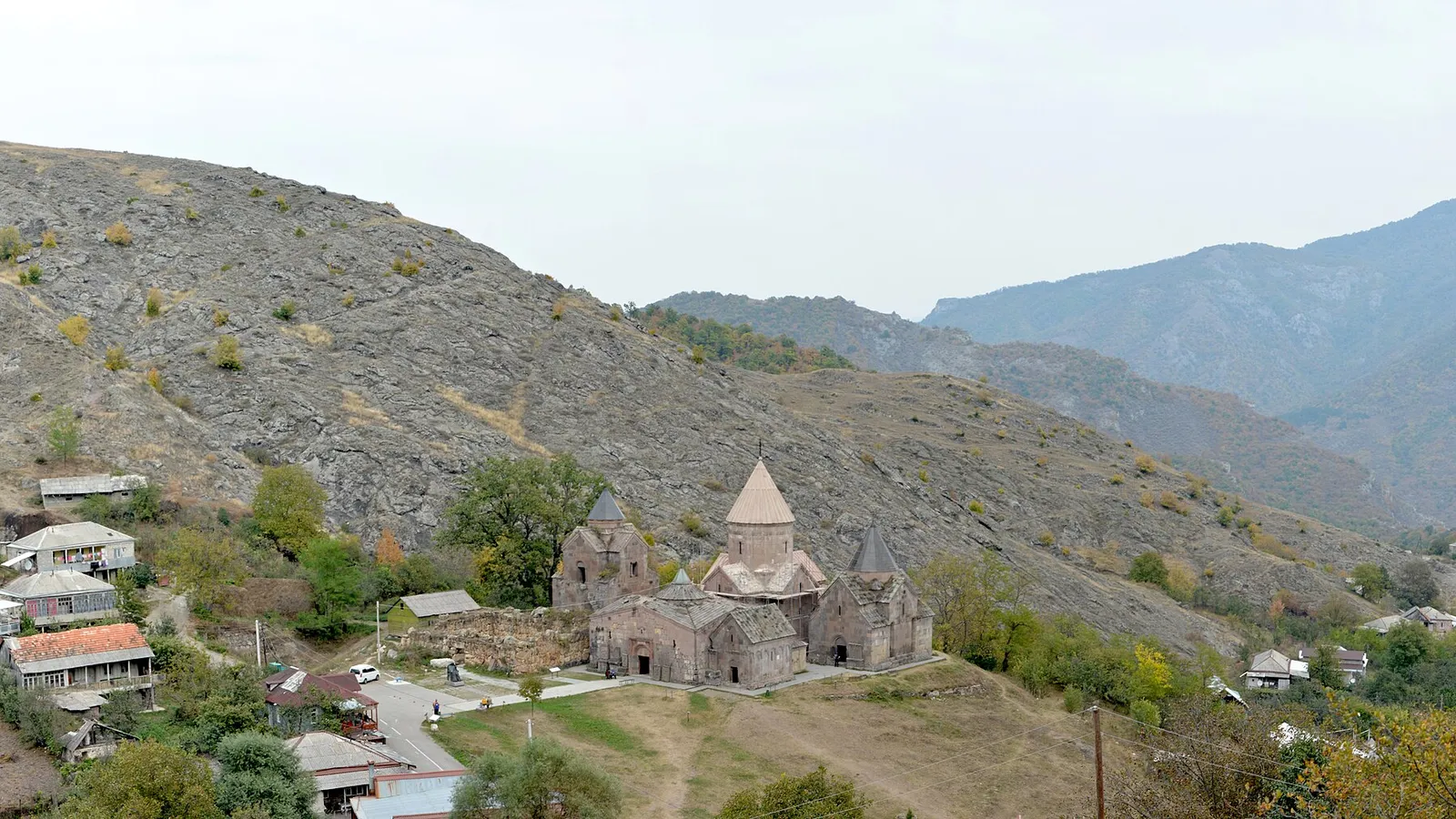
Goshavank Monastery & the Village of Gosh
Verified · August 29, 2026Visiting Goshavank: Mkhitar Gosh's law code that reached Poland, the 1291 embroidered khachkar, his statue and hillside tomb, and the drive from Dilijan.