Best Monasteries in Armenia
How to choose between the best monasteries in Armenia: Khor Virap, Geghard, Tatev, Noravank, Sevanavank and the UNESCO north, grouped by region.
Armenia has hundreds of medieval churches and monasteries, and the truth is that you can’t, and shouldn’t, see them all. A first-timer chasing a checklist ends up worn out on the fourth grey-stone gavit, unable to remember which cliff belonged to which century. So this isn’t a ranked countdown of every monastery in the country. It’s a way to choose the handful that repay the drive, group them so a trip actually flows, and skip the rest with a clear conscience. If you take away one thing: pick monasteries that look and feel different from each other, not five variations on the same theme.
The five most people build a trip around are Khor Virap on the plain under Mount Ararat, the rock-cut Geghard east of Yerevan, cliff-perched Tatev in the deep south with its record-breaking cable car, red-canyon Noravank near the wine country, and lakeside Sevanavank on the shore of Lake Sevan. Add the UNESCO pair of Haghpat and Sanahin in the far north if you have the days. What follows groups them by the road you take out of Yerevan, tells you which are worth a detour and which aren’t, and how to space them so you enjoy the fifth as much as the first. Each has its own deep-dive guide on this site; here I’m handing you the map, not the fine print. For the whole inventory, all 20 monasteries, temples and UNESCO sites laid out by region with distances and entry, see our map of Armenia’s monasteries and UNESCO sites.
How to think about it: direction, not distance
The single mistake that ruins a monastery trip in Armenia is planning by the map instead of by the road. Distances look tiny, but the roads are mountainous and slow, and the great monasteries point in three different directions from the capital. Get the geography straight and everything else falls into place.
There are, roughly, three clusters. East and south of Yerevan sit the easy half-days: Geghard, and Khor Virap on the Ararat plain, each reachable and back before dinner. The deep south holds Noravank and Tatev, too far to sensibly bolt onto a day trip and much better with an overnight. North lies the Lake Sevan and Dilijan axis, plus, further still, the Lori monasteries near the Georgian border. Sort your monasteries into those three clusters, do one at a time, and you’ll never spend a whole day driving past the sight you came to see. Our roundup of the best day trips from Yerevan maps out which of these pair naturally into a single day.
The two easy ones: Khor Virap and Geghard
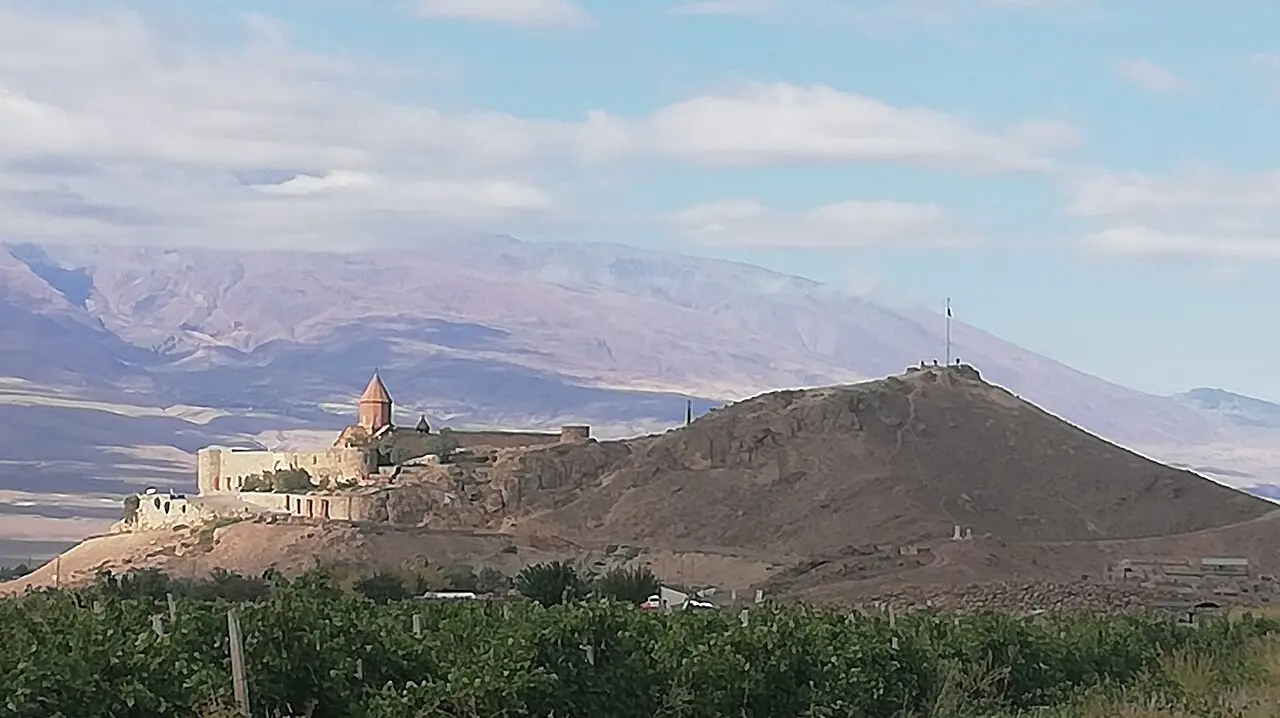
If your time is tight, prioritise these two, because they cost the least driving for the most reward and they look nothing alike. Khor Virap sits on a low hill on the Ararat plain, about 40 km south of Yerevan, staring straight up at Mount Ararat across the closed Turkish border. The building itself is modest; the setting carries it, and it’s the single most photographed view in Armenia. There’s a deep pit under the chapel, reached by a metal ladder, where tradition says Saint Gregory the Illuminator was held for thirteen years before he converted the king and, with him, the country. One thing worth knowing: Ararat hides in summer haze and shows clearest on spring and autumn mornings, so if the mountain is the reason you’re going, go early and check the forecast. The full picture is in our Khor Virap guide.
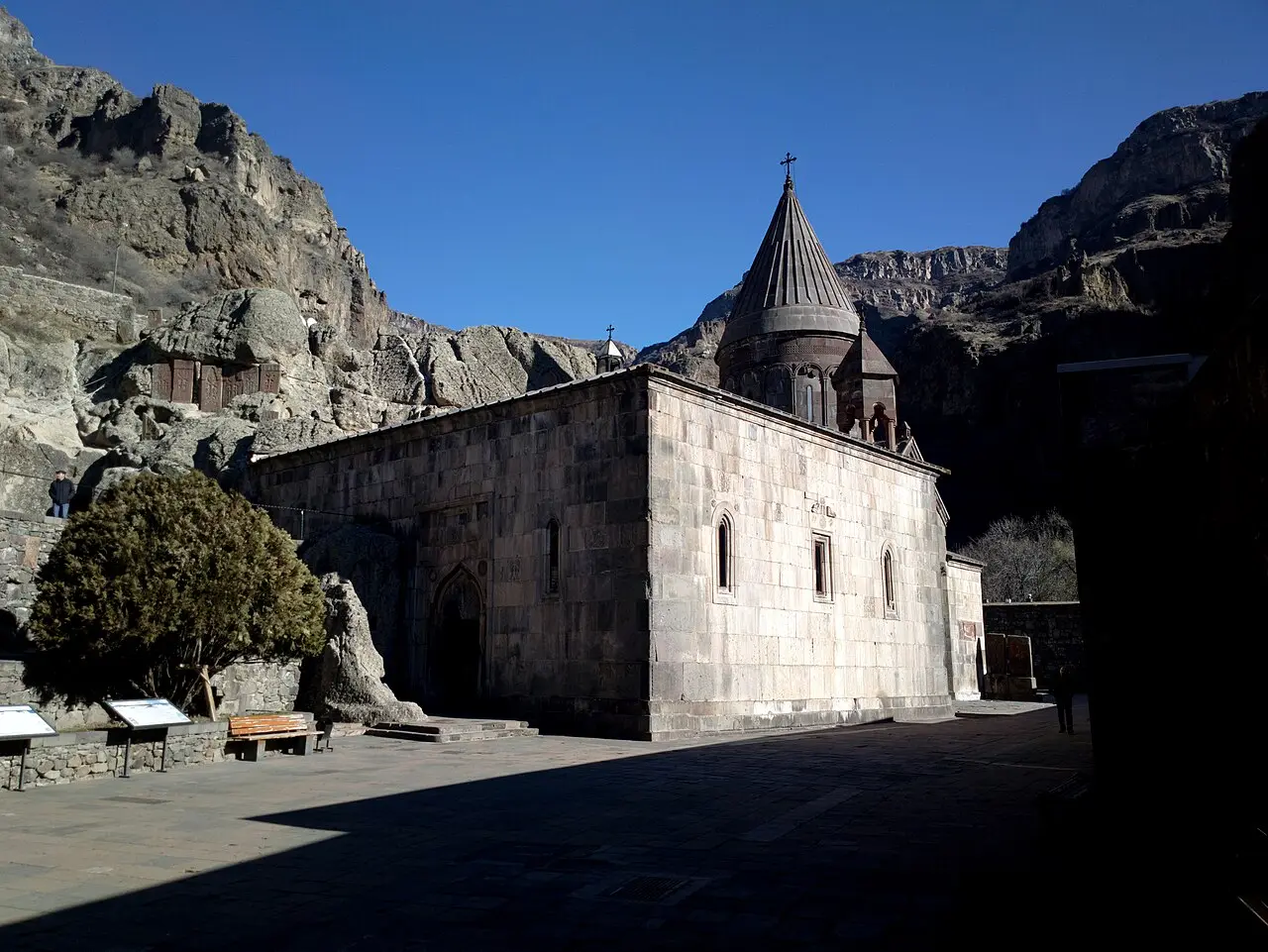
Geghard, about 40 km east, is the opposite kind of place: not a view but an interior, chambers hewn straight out of the mountain, dim and cool, with acoustics that turn a single chanted note into something that raises the hair on your arms. It has been UNESCO-listed since 2000, and it pairs naturally with the first-century Roman temple at Garni ten minutes away, which makes the two together a very full half-day east. Do Geghard for the rock-cut drama and Garni for the pagan curveball; our Garni and Geghard guide covers both and the Symphony of Stones in the gorge below. Between them, Khor Virap and Geghard give you the two headline experiences, plain-under-Ararat and carved-into-the-rock, without a single long drive. One easy add-on sits just west of the city: the great cathedrals of Vagharshapat, where the mother church of Etchmiadzin and the ruined seventh-century round cathedral of Zvartnots share a UNESCO listing and a single unhurried morning, an easy detour if you have a spare half-day near the capital.
The deep south: Noravank and Tatev, worth the overnight
This is where people overreach, and it’s an easy mistake to make from a map. Both southern stars are genuinely spectacular and both are too far for a comfortable day trip from Yerevan, which is exactly why they belong together on a two-day southern loop with a night near Areni or Goris.
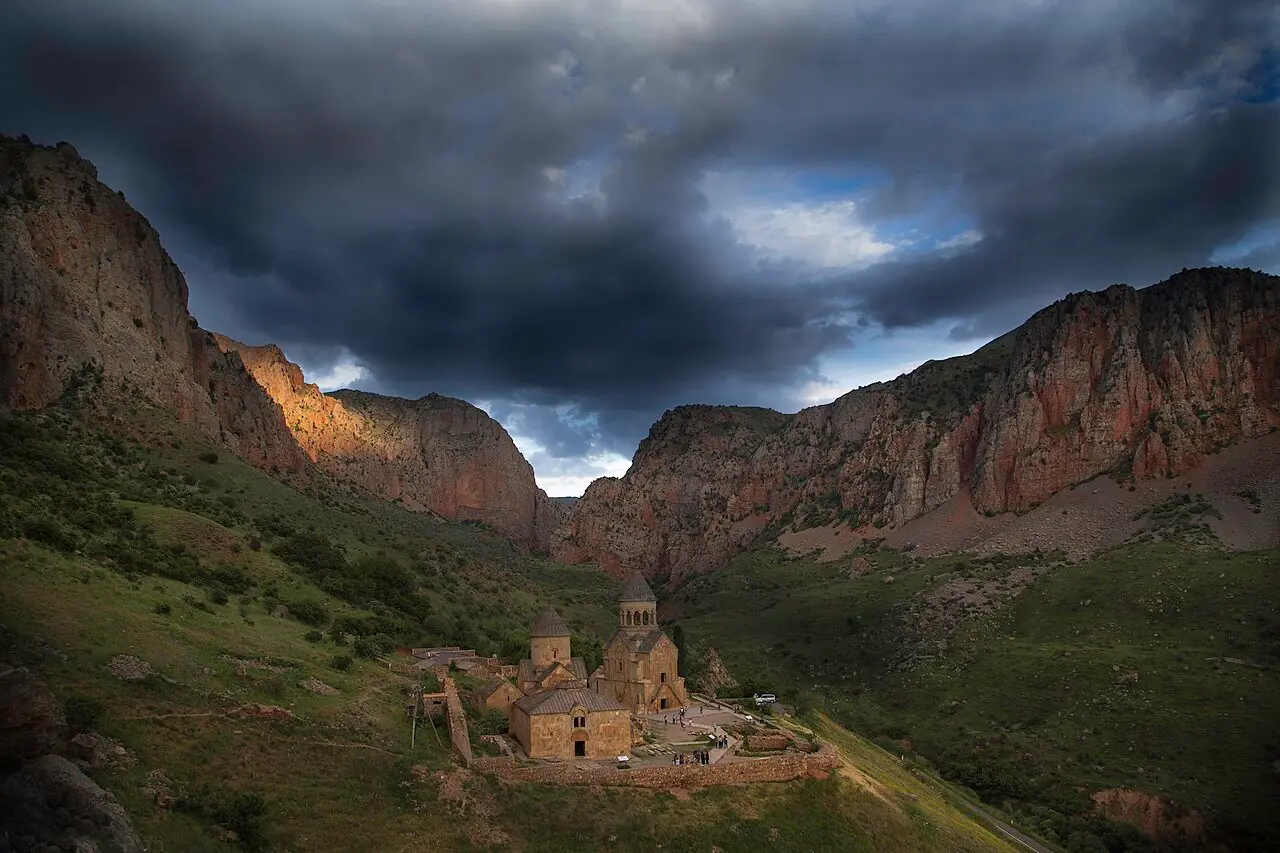
Noravank is the one that stops conversation. A 13th-century monastery of honey-gold stone, wedged up a side canyon of brick-red cliffs near Yeghegnadzor, about 122 km from the capital. Its two-storey Burtelashen church, finished in 1339 by the sculptor Momik as his last work, has a set of narrow steps jutting straight out of the facade with nothing but air beneath them. It sits close to the Areni wine village, so the classic move is monastery in the morning, cellar tasting after. The detail is in our Noravank guide.
Further south, Tatev is the trip’s showpiece and, for many, the reason to come to the region at all. The ninth-century monastery stands on a cliff above the Vorotan gorge, and you reach it on the Wings of Tatev, a cable car that at 5,752 m holds the Guinness record for the longest reversible aerial tramway built in a single section. The ride floats you across the gorge in about twelve minutes and turns what used to be a white-knuckle drive down a serpentine road into the best-value thrill in the country, and it’s worth building a whole day around. A round-trip adult ticket runs on the order of 9,000 AMD, cheaper in winter, and the tramway is closed on Mondays all year round, high summer included, so confirm current prices and days at tatever.am before you plan a day around it. Tatev is around 255 km and four hours from Yerevan, which is the whole argument for sleeping near Goris rather than attempting it in a single brutal day that isn’t much fun for anyone in the car. The popular one-day Khor Virap-Noravank-Tatev tour crams all three into twelve to fifteen hours in a minibus, and honestly, the second half of it doesn’t win many fans. Our Wings of Tatev guide has the ride, the record and the timing.
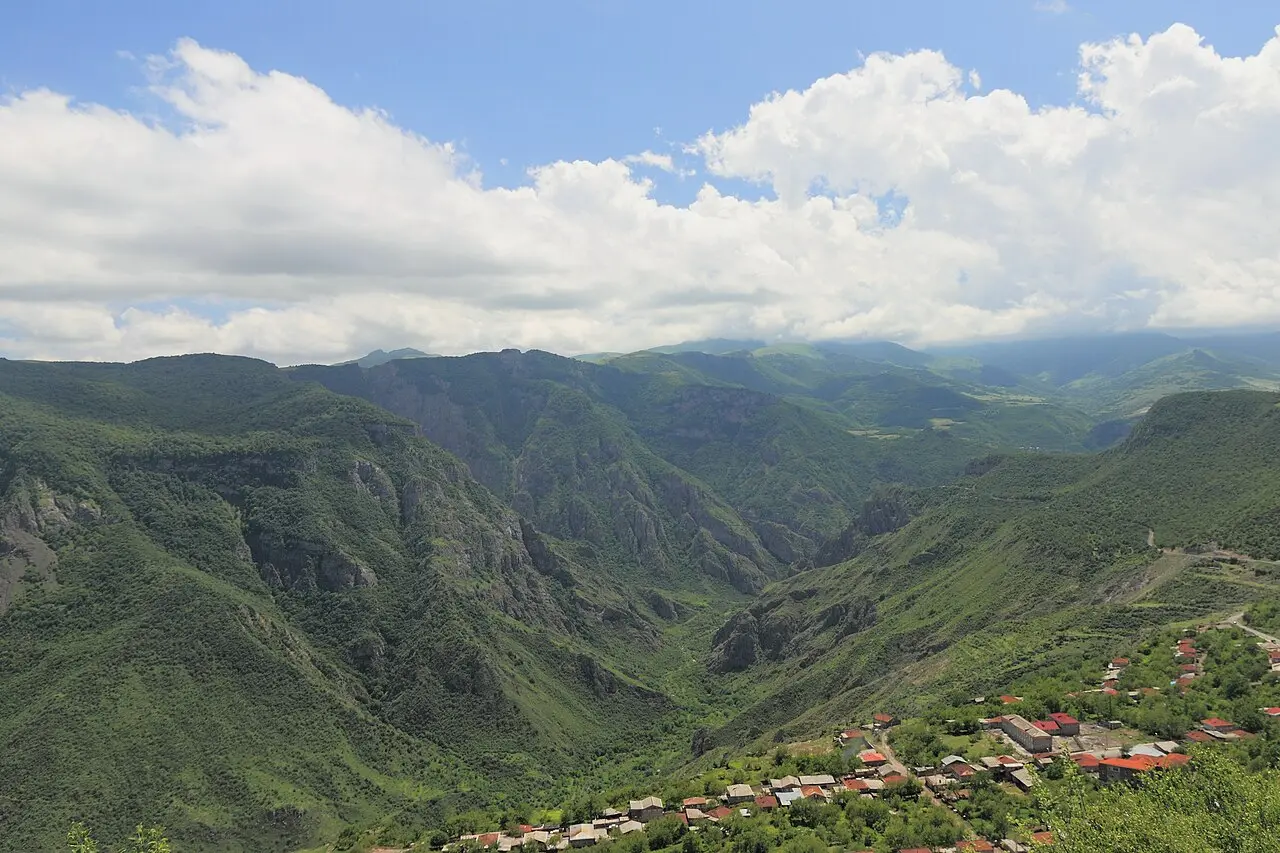
North for a change of scene: Sevanavank and Dilijan
After the sun and stone of the south, the north is the antidote. Sevanavank sits on a headland above Lake Sevan, the huge blue lake at nearly 1,900 m, an hour from Yerevan on the way to almost everything in the north. Its two dark-tuff churches were financed in 874 by Princess Mariam; the site was an island until the Soviet-era drop in the lake left it joined to the shore. It’s a short climb up the steps for a panorama that, on a clear day, ranks among the best in the country, and the lake trout eaten by the water afterwards is part of the ritual. It works less as a destination in itself than as a superb stop on a northern day; our full Sevanavank guide has the founding story, the two churches and the climb.
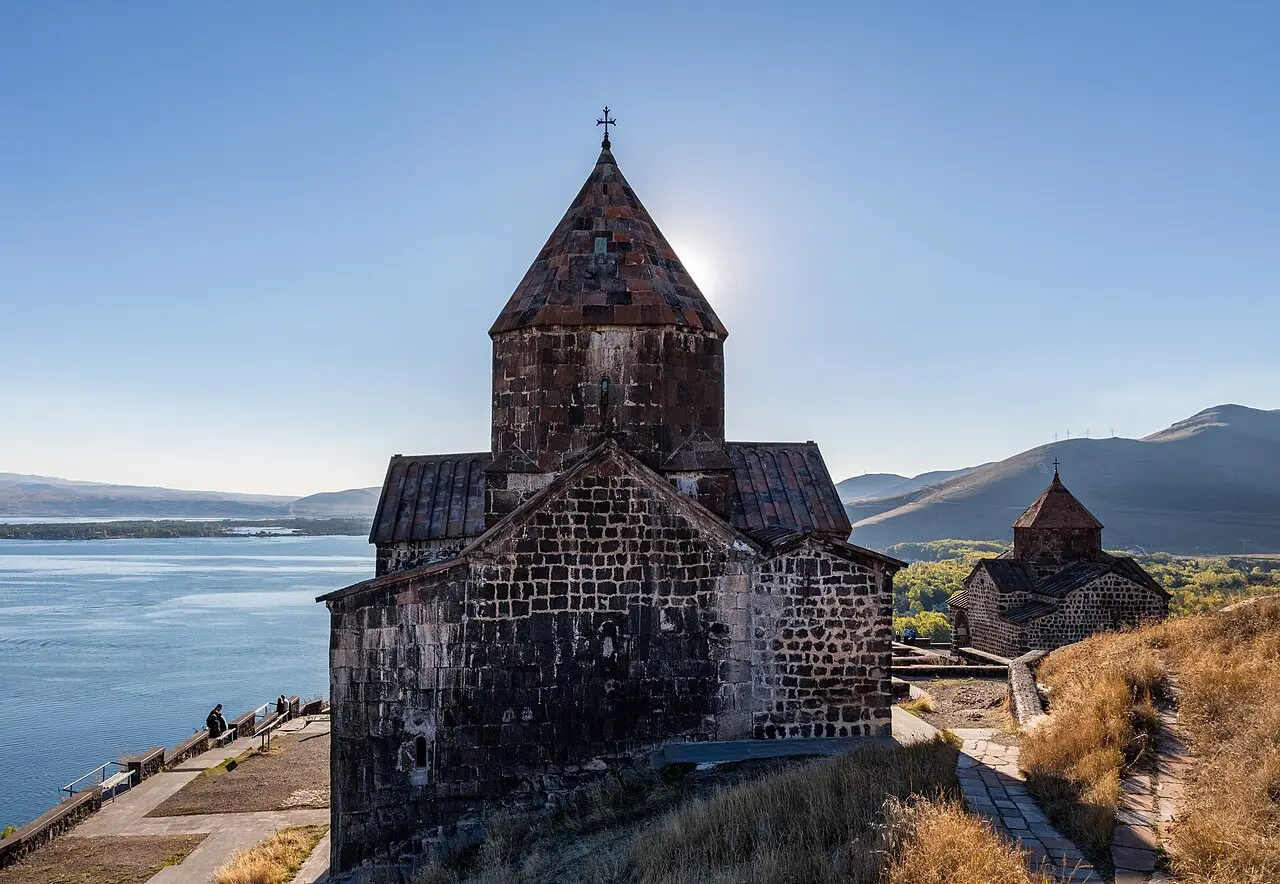
Carry on over the pass and you drop into the forests around Dilijan, where two more monasteries hide in the trees: Haghartsin, a 10th-to-13th-century cluster in a green clearing, and Goshavank, a 12th-to-13th-century complex founded by the scholar Mkhitar Gosh, famous for a khachkar carved as fine as lace. These are the gentlest monasteries on the list, low-key and wooded rather than dramatic, and that’s their charm after Tatev and Noravank. Morning at the lake, afternoon in the forest is the classic northern day; the towns and trails are in our Dilijan guide.
The far north, if you have the days: Haghpat and Sanahin
Two monasteries deserve a special mention for travellers with a week or more, or anyone combining Armenia with Georgia. Haghpat and Sanahin, in the northern Lori region near the Georgian border, are jointly inscribed on the UNESCO World Heritage list (Haghpat inscribed 1996, Sanahin added 2000) and count among the finest surviving medieval Armenian architecture. They sit about three kilometres apart above the wooded Debed canyon, and Haghpat’s carved portal and shady gavit halls have a heavier, older gravity than the polished stars further south.
The problem is distance: this is the deep north, a long haul from Yerevan, and it makes little sense on a short trip unless you’re already heading toward Tbilisi, since the Georgian border and the onward road lie just beyond. If that’s your route, Haghpat and Sanahin are a superb last taste of Armenia before the crossing. If it’s not, save them for a ten-day trip rather than forcing them in. The whole northern region, including Odzun and the Debed canyon, is covered in our guide to Lori, Haghpat and Sanahin, and travellers who do have the days can follow our dedicated Debed Canyon road trip for the two-day version with an overnight built in.
Avoiding monastery fatigue: how many is enough
Even the most beautiful monastery loses its power when it’s the fifth you’ve seen that day. Armenian churches share a visual language, dark tuff, conical domes, khachkars, dim gavits, and past a certain point they blur into one long grey afternoon. The fix isn’t to see more, but to see fewer, spaced further apart, and chosen for contrast.
A rule of thumb that works: no more than two proper monasteries in a single day, and try to make them different in character. Pair a view (Khor Virap) with an interior (Geghard); a cliff-top (Tatev) with a canyon (Noravank); a lakeside (Sevanavank) with a forest one (Haghartsin). Break the monastery days up with the things that aren’t churches, a wine tasting at Areni, a swim in Lake Sevan, a walk in Dilijan, a drive up to the alpine lake and Amberd fortress on Mount Aragats, the brandy and cafes of Yerevan. Over a week, five or six well-chosen monasteries land far harder than a dozen box-ticked ones. Five monasteries you still remember a year later beat a dozen you photographed and forgot.
Tours, drivers or your own car
The last decision is how to reach them, and it comes down to the deep south. For the two easy half-days, Geghard and Khor Virap, almost anything works: a cheap taxi deal for the day, a shared day tour, or a rental car. The close monasteries are forgiving.
The south is where the choice matters. A rental car gives you the freedom to overnight near Goris, catch Tatev’s cable car early, and linger at Noravank without a guide tapping a watch, which is why self-drive suits this region so well; our car rental in Armenia guide covers the documents, deposit and mountain-road realities. A guided tour or private driver makes sense if you would rather not drive the mountain switchbacks, or you want the history narrated, and it’s the low-stress way to do the far-north Lori run in a day. Whatever you choose, resist the single-day southern blitz. For the wider picture of how these monasteries fit a trip, see how to plan the week in our 7-day Armenia itinerary and how much time to give the country in our guide to how many days you need in Armenia. For everything else worth seeing, browse the full attractions section.
Photos
Read also

What to see · 10 min read
Soviet Modernist Yerevan: An Architecture Walk
Verified · September 5, 2026Walk Yerevan's Soviet modernism: Rossiya Cinema, Komitas Hall, Cascade, Hrazdan Stadium and Demirchyan Complex - dates, route order, and what still stands.

What to see · 9 min read
Kond: Walking Yerevan's Oldest Neighborhood
Verified · September 3, 2026Walk Kond, Yerevan's oldest living quarter: Surp Hovhannes, Tepebashi mosque walls, Leo Street alleys, and how to visit without treating it like a set.
What to see · 8 min read
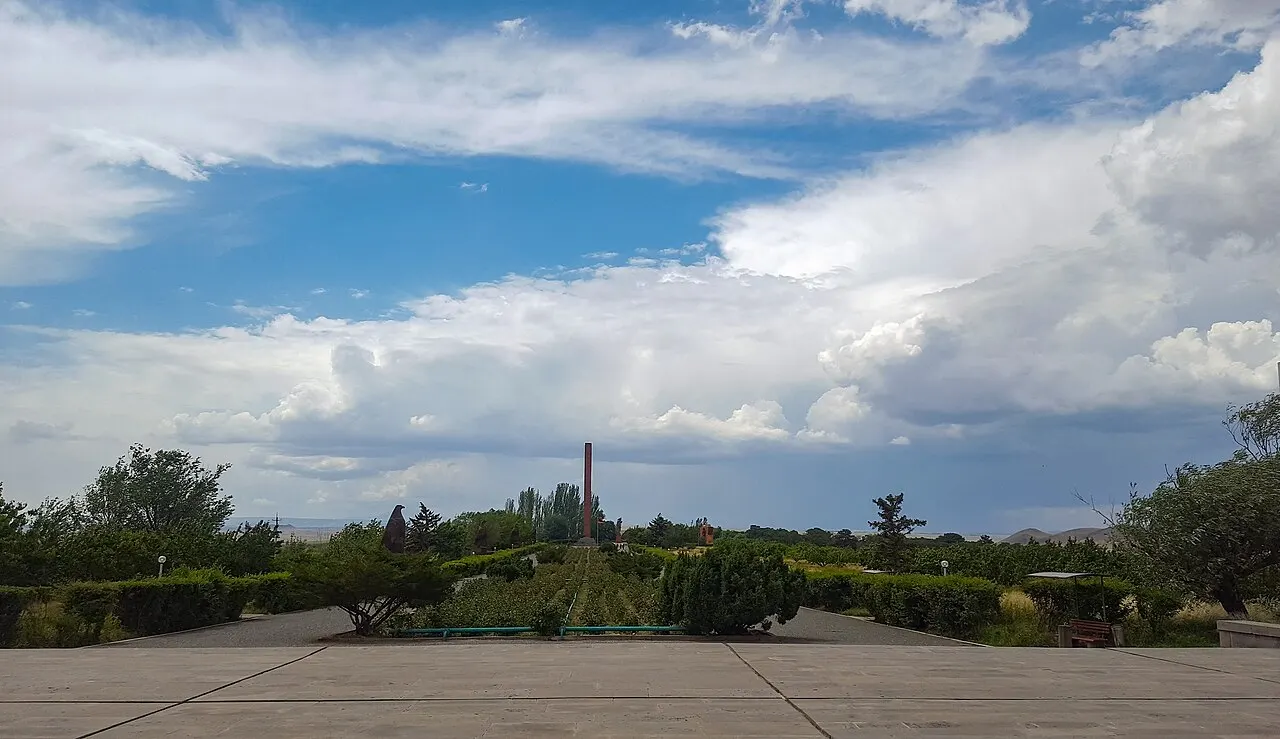
Sardarapat Memorial: Armenia's 1918 Battle Site
Verified · August 31, 2026Sardarapat Memorial near Armavir: 1918 battle site, Israelyan's red-tufa complex, ethnography museum tickets, hours and how to reach it from Yerevan.
What to see · 12 min read
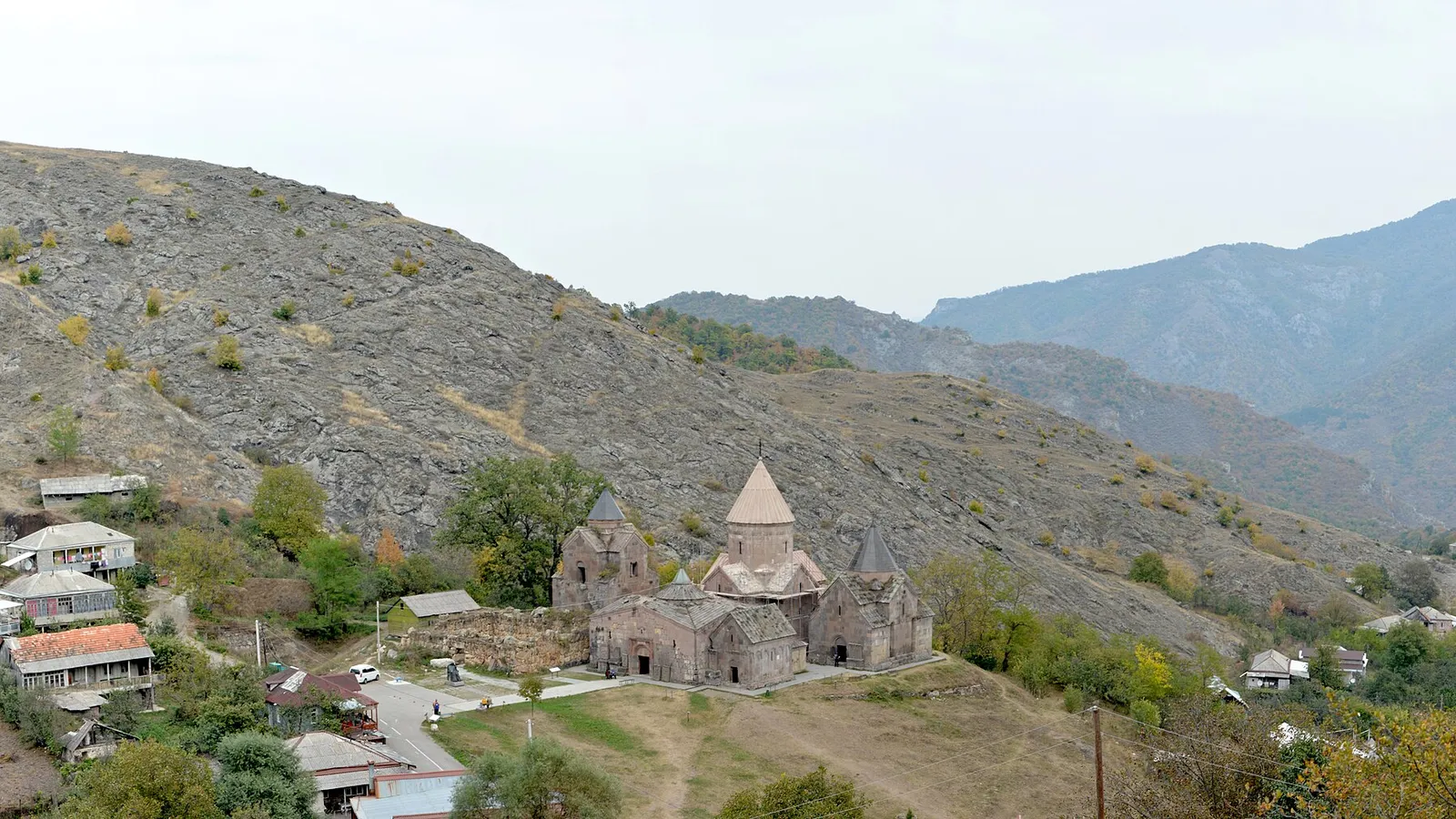
Goshavank Monastery & the Village of Gosh
Verified · August 29, 2026Visiting Goshavank: Mkhitar Gosh's law code that reached Poland, the 1291 embroidered khachkar, his statue and hillside tomb, and the drive from Dilijan.