Vagharshapat (Etchmiadzin): Armenia's Spiritual Capital
A guide to Vagharshapat (Etchmiadzin): the Mother See cathedral, the martyr churches of Hripsime and Gayane, Sardarapat memorial and how to visit.
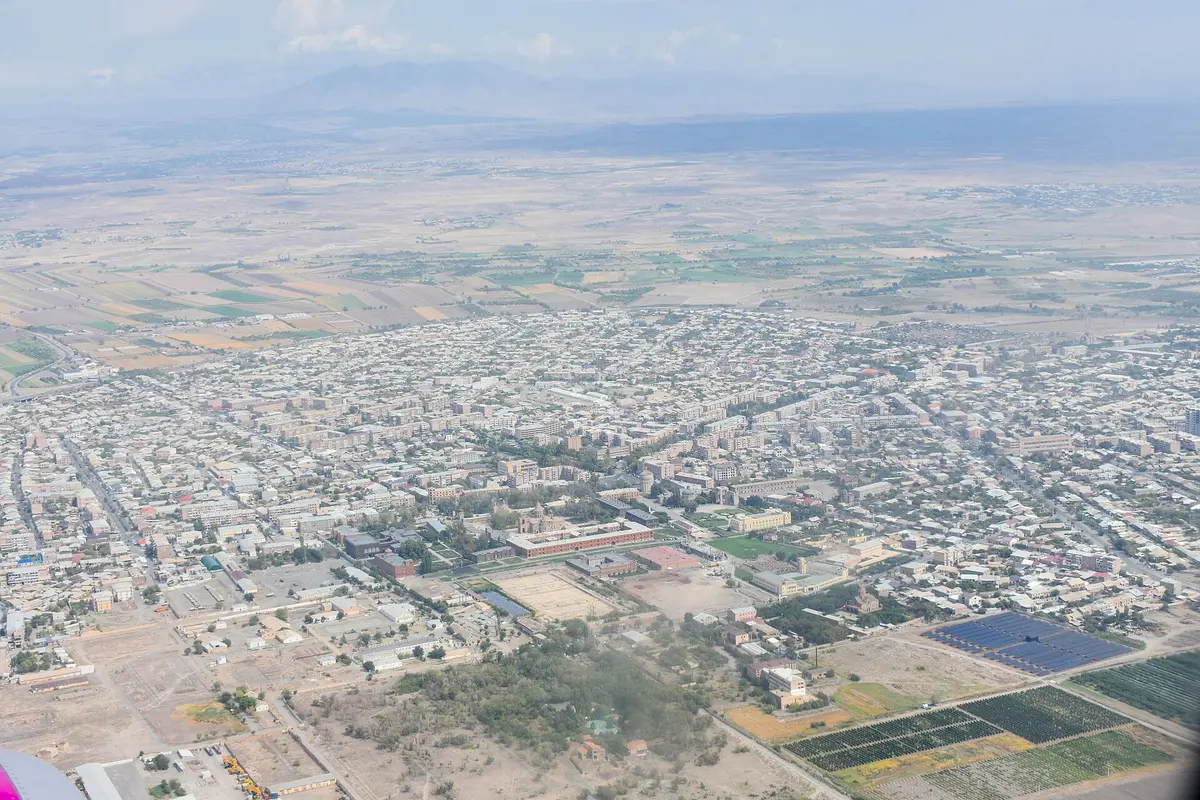
Vagharshapat is the town most people call Etchmiadzin, and most people see one tenth of it. For a fuller walkthrough of the complex, see our Sardarapat memorial. About 20 km west of Yerevan on the flat Armavir plain, it’s Armenia’s spiritual capital, seat of the head of the Armenian Church, and nearly everyone rolls in on a tour bus, spends an hour at the great cathedral and leaves. That’s a mistake. Within a short walk of the Mother See stand two of the oldest and most perfect churches in the country, a third built over a legend, and just up the road the ruins of Zvartnots and the war memorial at Sardarapat. Give the town half a day and you get four UNESCO churches, a national shrine and a proper Armenian town, not just a photo of a dome.
The town, and its two names
First, the name, because it confuses people. The place is officially Vagharshapat, and that has been its name for most of two thousand years. Under Soviet rule it was renamed Etchmiadzin in 1945, after the cathedral, and only changed back to Vagharshapat in 1995. Locals still call it Ejmiatsin in everyday speech, so you’ll hear all three, and they all mean the same town. Ejmiatsin, roughly, means “the descent of the Only-Begotten,” which is the founding legend of the cathedral.
This is old ground. Vagharshapat was one of the capitals of ancient Armenia, the royal seat from about 120 to 330 AD, so it was already a major city when King Trdat converted the country to Christianity in 301. Today it’s a working town of around 45,000 people (the 2022 census counted 44,837), sitting at about 850 m on the vineyards and orchards of the Armavir plain, with Mount Ararat filling the sky to the south on a clear day. It’s not a pretty town in the postcard sense, and the centre is ordinary Soviet-era streets, but it’s not a museum either, which is part of the appeal: the churches are living parishes in an ordinary Armenian town.
The martyr churches: the real reason to walk the town
Here’s what the tour buses skip. The conversion of Armenia begins with a group of Christian women who fled the Roman emperor Diocletian and ended up here at Vagharshapat. When one of them, Hripsime, refused King Trdat and was killed for it, along with her abbess Gayane and their companions, the calamity that then struck the king is what drove him to Gregory the Illuminator and to Christianity. So the whole story of Christian Armenia is buried, literally, under three churches you can walk between in half an hour.
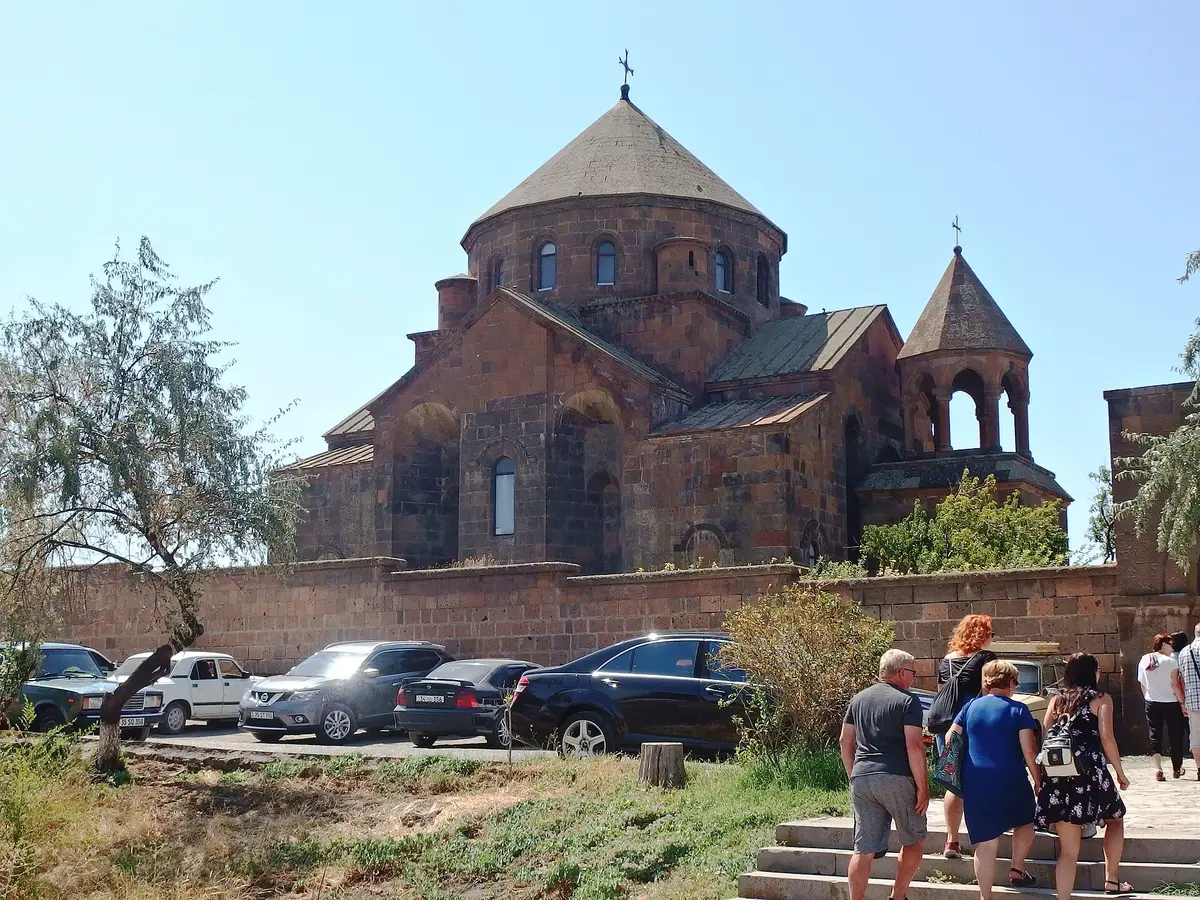
Saint Hripsime Church is the one to see first, on the eastern edge of town by the Yerevan road. Built in 618 by Catholicos Komitas over the spot where Hripsime was martyred, it’s a masterpiece of the “inscribed tetraconch” plan that Armenian architects made their own: a compact cross of four apses inside plain outer walls, with sharp corner niches and a windowed drum carrying the dome. Go down into the small vaulted chamber under the eastern apse and you’re standing at her tomb. If you have any interest in how Armenian churches got their distinctive shape, this is the textbook example, and it’s quietly one of the finest buildings in the country.
Saint Gayane Church, closer to the cathedral, came a few years later, built in 630 by Catholicos Ezra I over the abbess’s grave. It’s a different shape, a three-nave domed basilica, and one of the earliest Armenian churches to marry a long basilica to a central dome, so architecturally the two churches make a neat pair: try one plan, then the other. Its western arcade, the covered gallery you walk under to reach the door, was added in 1683 as a burial place for senior clergy, and its calm, shaded courtyard is a good place to sit for ten minutes.
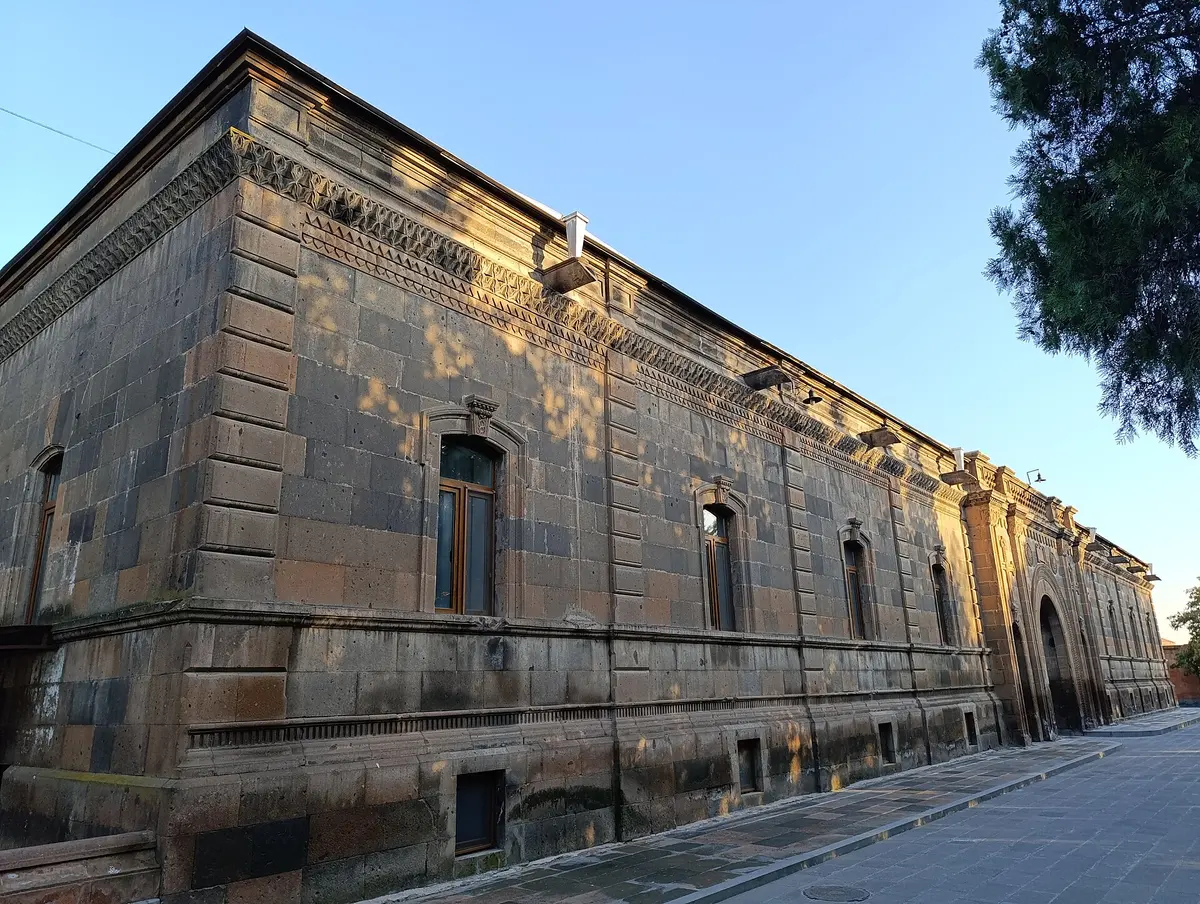
The third, Shoghakat Church, is smaller and much later, built in 1694 by Prince Aghamal Sorotetsi. The name means “drop of light,” after the ray of light that, in the tradition, marked the martyrdom of the 38 or so unnamed nuns who died with Hripsime and Gayane. It’s a modest single-nave church with a dome, and few tour groups bother with it, which is exactly why it’s worth the five-minute walk: you’ll often have it to yourself.
The cathedral, in brief
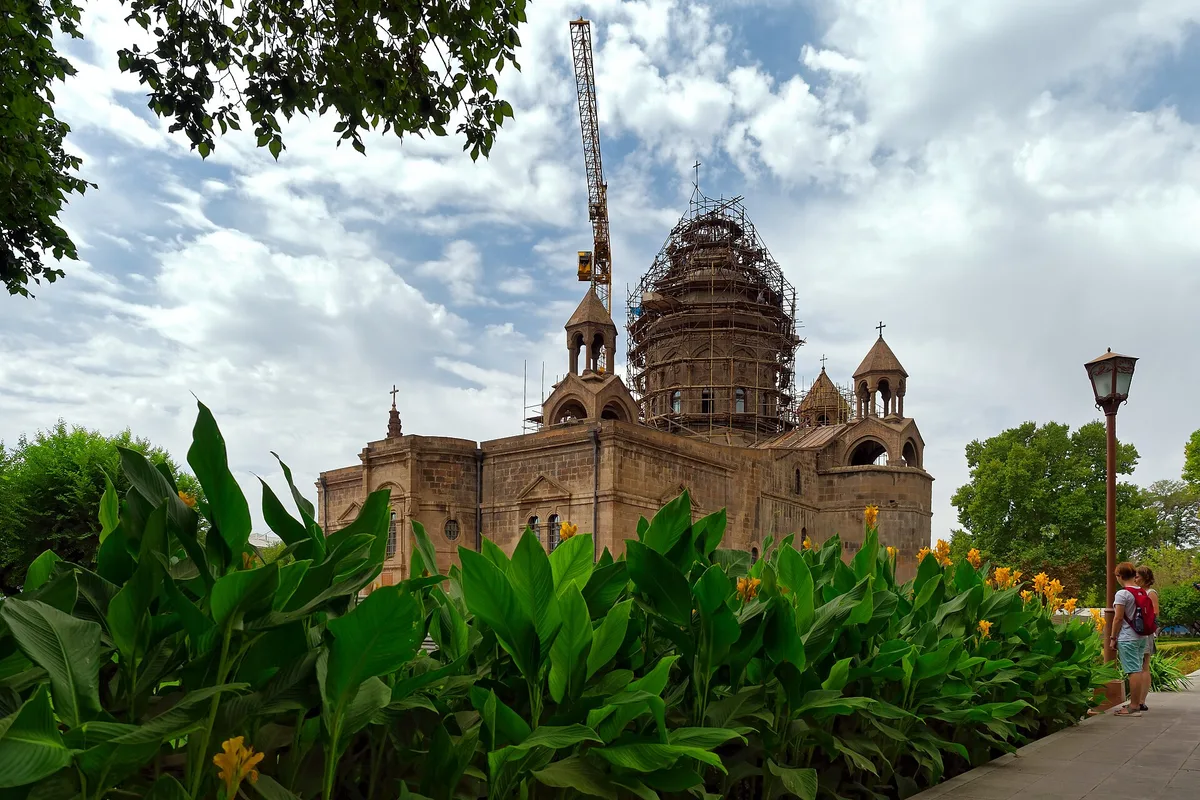
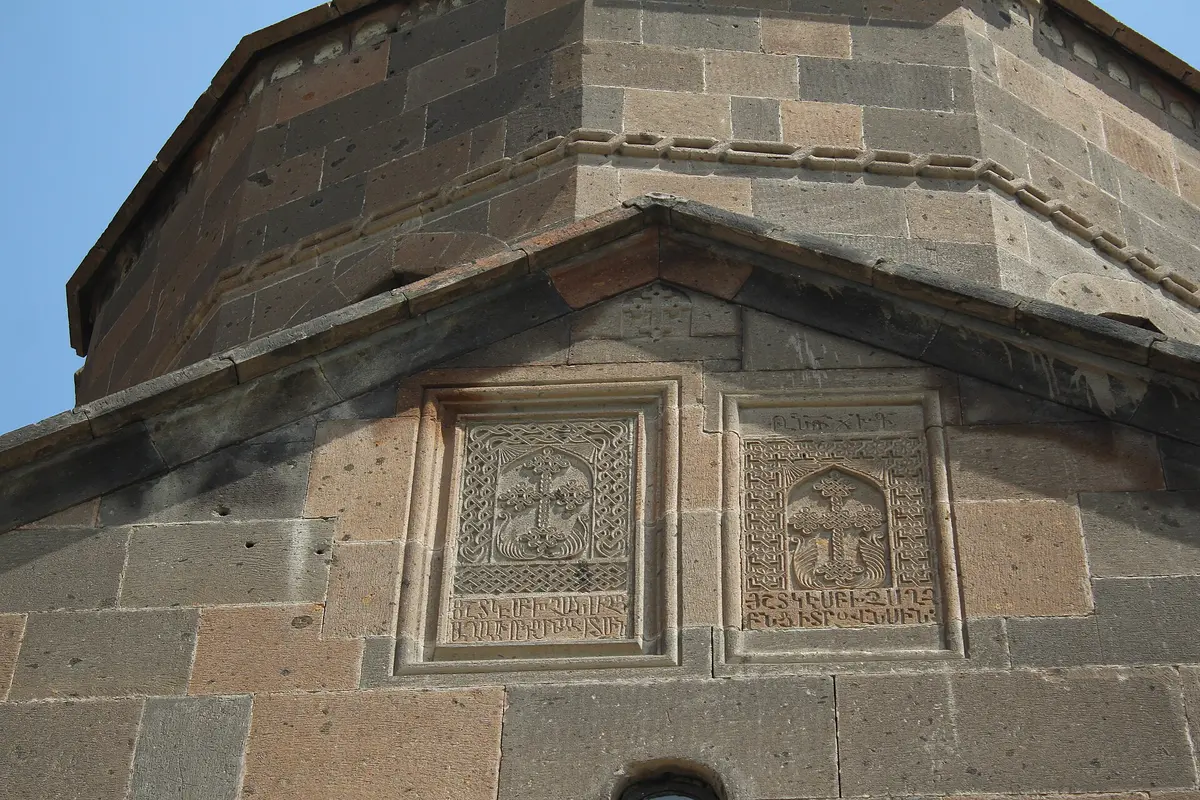
The Mother See itself needs no selling: Etchmiadzin Cathedral, first built in 301-303, is widely called the oldest cathedral in the world and the seat of the Catholicos of All Armenians, and it reopened in September 2024 after a long restoration that scrubbed its frescoes back to their colours. The walled compound holds the seminary, museums and a treasury with the Holy Lance. It’s the obvious centrepiece of any visit, and it deserves more space than a town guide can give it, so we cover the legend, the interior, the relics and the visiting details in a separate guide to Etchmiadzin Cathedral. Entry to the cathedral is free; the treasury museum is a small separate ticket. As a working church, dress modestly: shoulders and knees covered.
Zvartnots, four kilometres back toward Yerevan
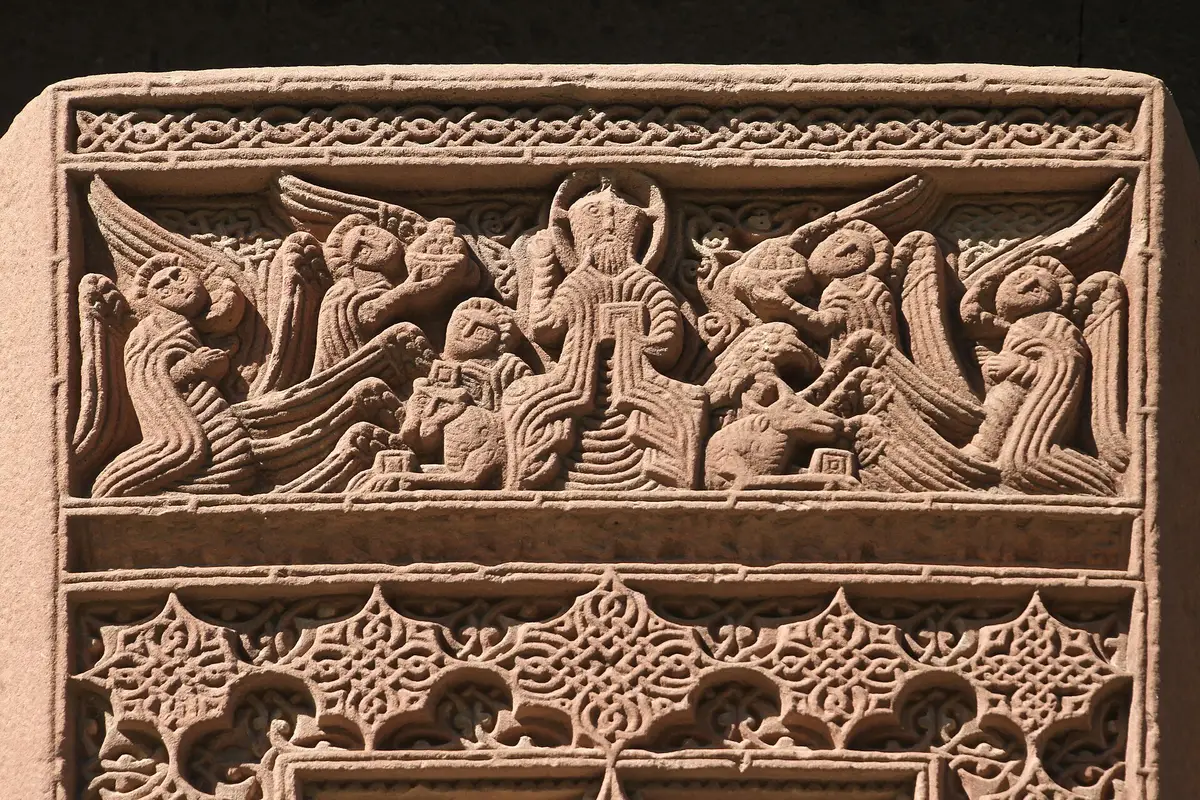
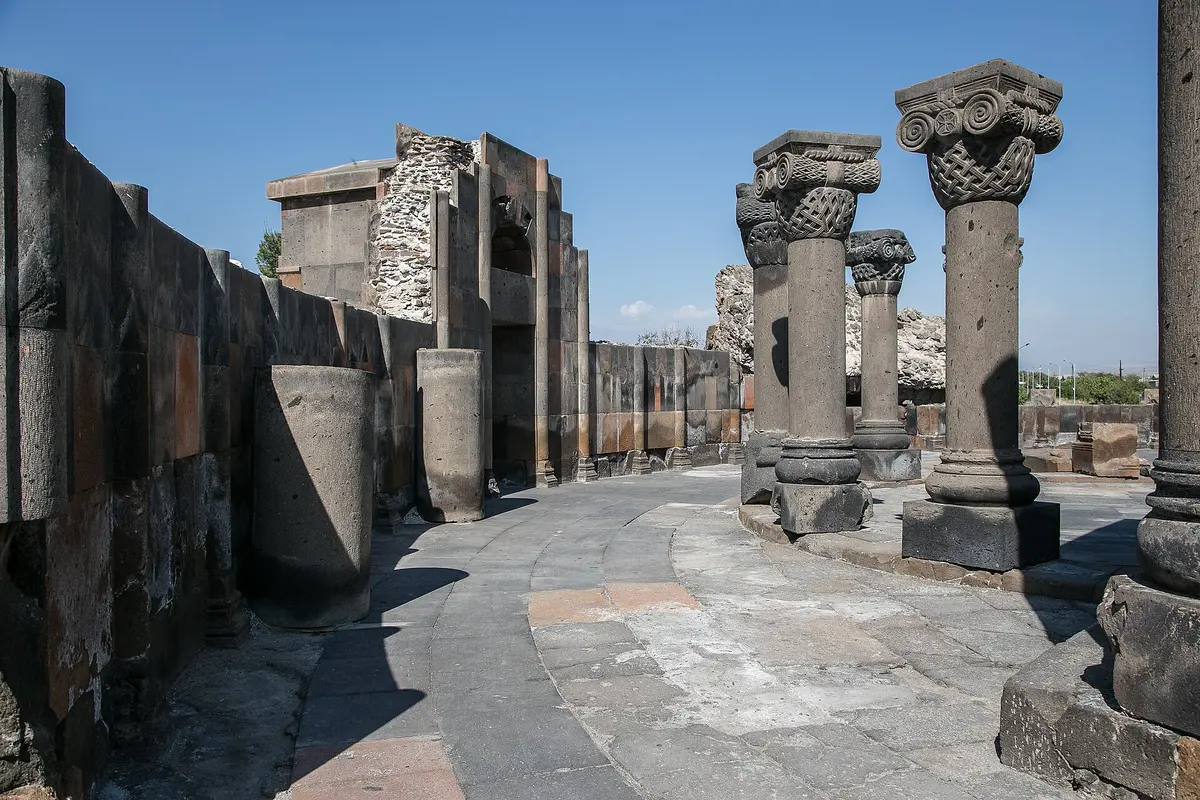
You pass it on the way in, so see it on the way out. Zvartnots is the ruin of a vast circular cathedral from the 640s, a three-tiered rotunda that collapsed in an earthquake and was half re-erected by archaeologists in the 20th century. It shares a single UNESCO World Heritage listing (from 2000) with the Vagharshapat churches, one of Armenia’s three, which our guide to the UNESCO World Heritage Sites in Armenia sets out in full. Its ring of re-raised columns on the open plain, with Ararat behind, is a completely different thing to look at from the intact churches in town. It sits right by the airport road, four kilometres east, so it slots into the same trip with no detour. Our full guide to Zvartnots Cathedral has the history and the practicalities.
Sardarapat: the memorial worth the extra drive
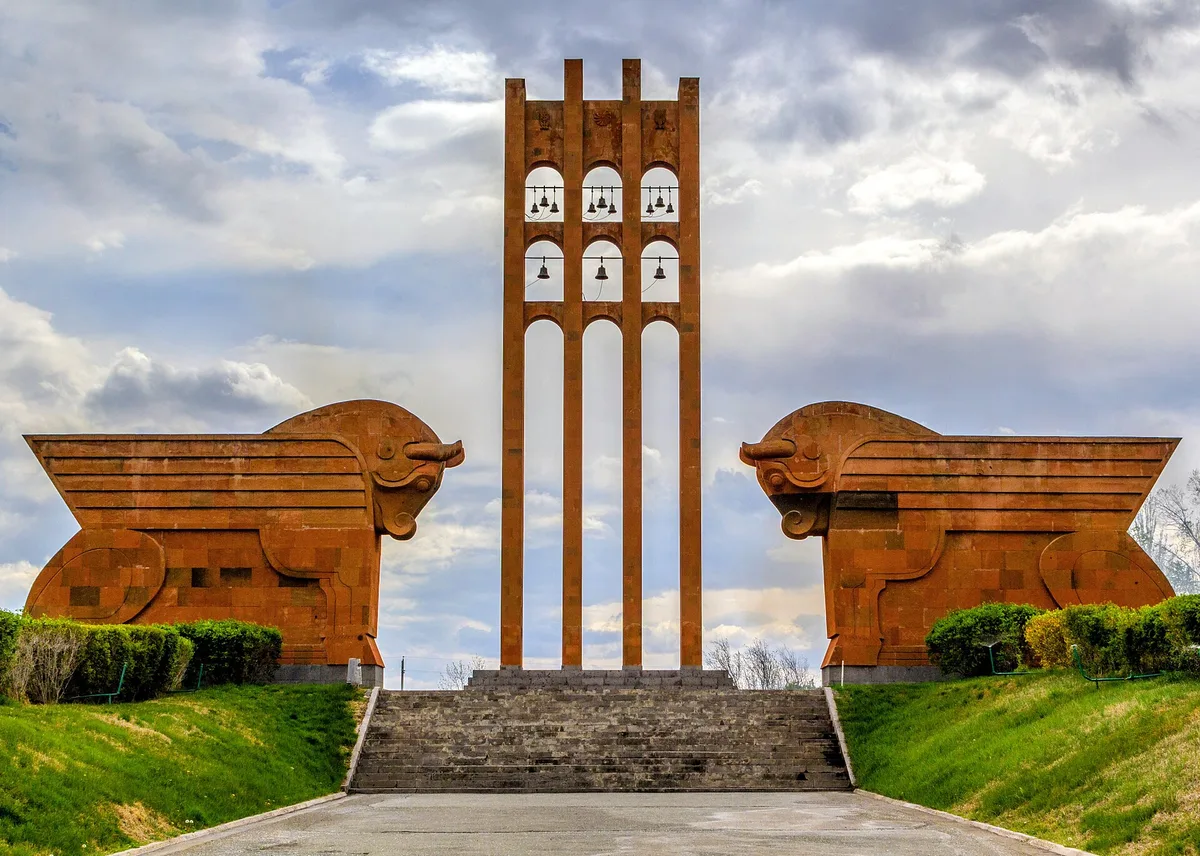
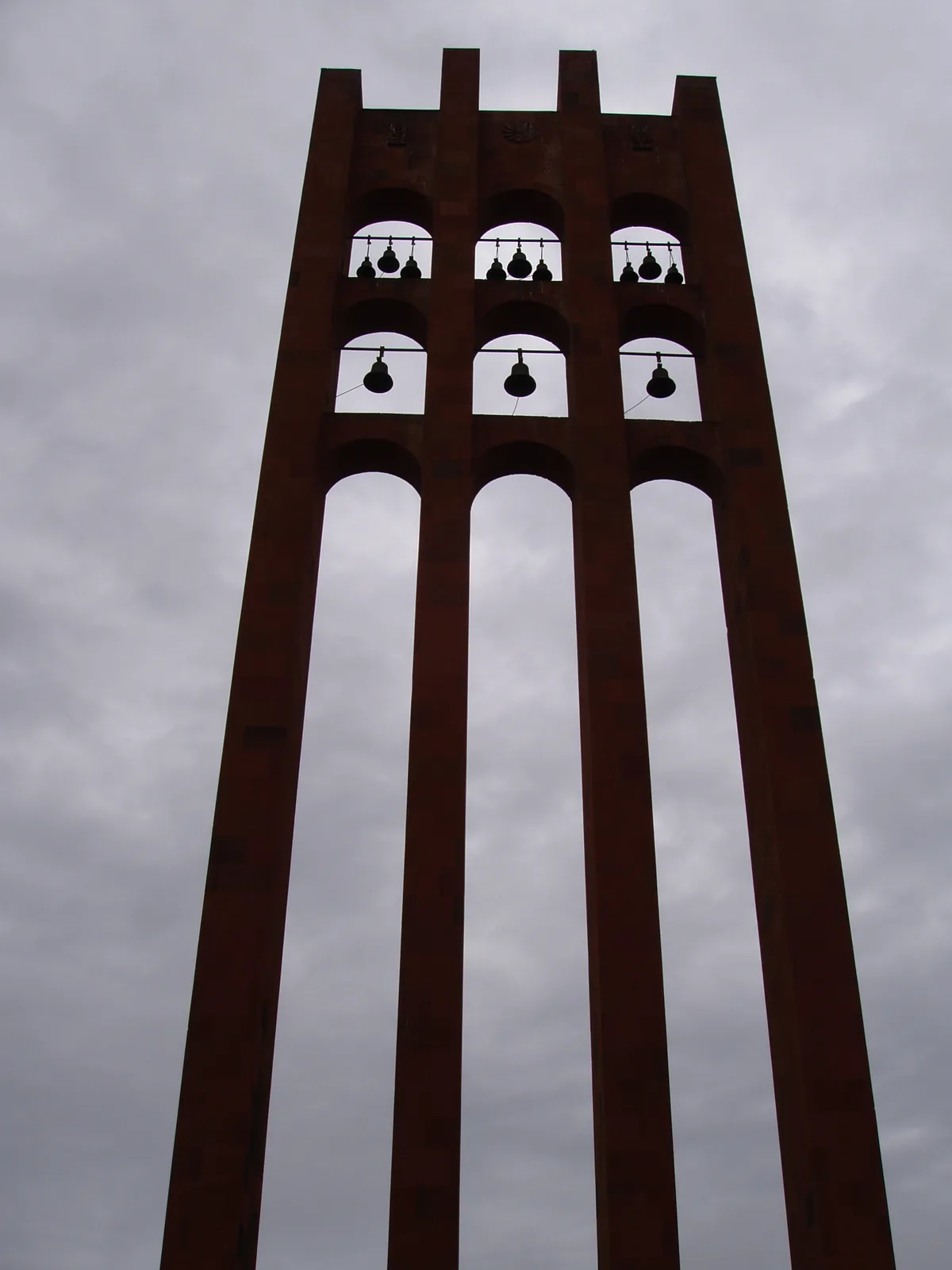
If you have your own wheels, one more stop turns a church crawl into something that explains modern Armenia. The Sardarapat Memorial stands out on the plain in the village of Araks, roughly half an hour further west, and it commemorates the Battle of Sardarabad of 21-29 May 1918, when an improvised Armenian force stopped the advancing Ottoman army and, in effect, saved what became the Armenian republic. Built from 1968 by the architect Rafael Israelyan, it’s a striking piece of design: an avenue guarded by huge winged oxen of red tufa, a 26 m bell tower hung with twelve bells, and a line of winged lions, all in the deep red stone of the region. On the site is the Ethnography and Liberation Movement History Museum, one of the better folk museums in the country. It’s out of the way, and public transport is awkward, so it’s really a stop for drivers or a private transfer, but it lands harder than any church.
Eating, staying, and how long to give it
Vagharshapat is an easy half-day from Yerevan, and most people treat it exactly that way: go in the morning, do the churches and Zvartnots, be back in the capital for dinner. That’s the sensible plan for most visitors. For food, the town has simple local restaurants and bakeries near the Mother See rather than a dining scene, so eat a proper Armenian lunch here (khorovats, a fresh gata pastry from a bakery) and keep your evening for Yerevan. There’s little reason to stay overnight unless you’re here for a feast day or a church event, in which case a couple of modest guesthouses and hotels operate in town; Yerevan, 20 minutes away, has the range.
Timing matters more than most guides admit. Come on an ordinary weekday morning and the churches are calm and half-empty. Come on a Sunday or a feast day and the cathedral fills with worshippers and choir, which is far more moving to witness but harder to photograph, and the treasury and services keep their own hours. If you specifically want the pilgrimage atmosphere, aim for a Sunday; if you want the architecture in peace, avoid it.
How to get to Vagharshapat from Yerevan
It’s one of the easiest trips in the country. Vagharshapat is about 20 km west of Yerevan, a 30 to 40 minute run:
- Marshrutka or bus from the Kilikia central bus station is the budget route: minibuses (route 203 and others) leave frequently through the day, take around 35 minutes and cost only a few hundred dram. There’s no need to book; turn up and take the next one, but confirm the current number and fare at the station.
- A taxi or private transfer is worth it if you want to add Zvartnots and especially Sardarapat, which are clumsy by public transport. Use a metered app in Yerevan or arrange a driver for the loop.
- A rental car gives you the whole plain at your own pace: churches, Zvartnots and Sardarapat in one half-day, then back to the city - or the longer Ararat plain heritage drive that adds Khor Virap.
- An organised tour almost always runs the cathedral, Zvartnots and the two martyr churches as a single half-day loop, often paired with a Yerevan brandy stop.
Where Vagharshapat rewards you is by not treating it as a single cathedral. Walk the three martyr churches, add the ruins at Zvartnots, and, if you can, drive out to Sardarapat, and you’ve covered the entire founding story of Christian Armenia and its modern survival in one morning. For where this sits among the other runs out of the capital, see our guide to the best day trips from Yerevan and, for the country’s great churches overall, the best monasteries in Armenia and our map of the monasteries by region. If you’re still building the itinerary, things to do in Yerevan covers the base you’ll come from.
Photos
On the map
The map loads on click - to keep the page lightweight.
The map didn’t load. Check your connection and refresh the page.
Distance ≈20 km · about 30-40 minutes by road
- Yerevan ≈20 km · about 30-40 minutes by road Frequent marshrutkas and buses (route 203) from the Kilikia central bus station, roughly 30-40 minutes; taxi or rental car is simpler if you want to add Zvartnots or Sardarapat. Confirm the current number and fare locally.
Read also
Cities · 13 min read
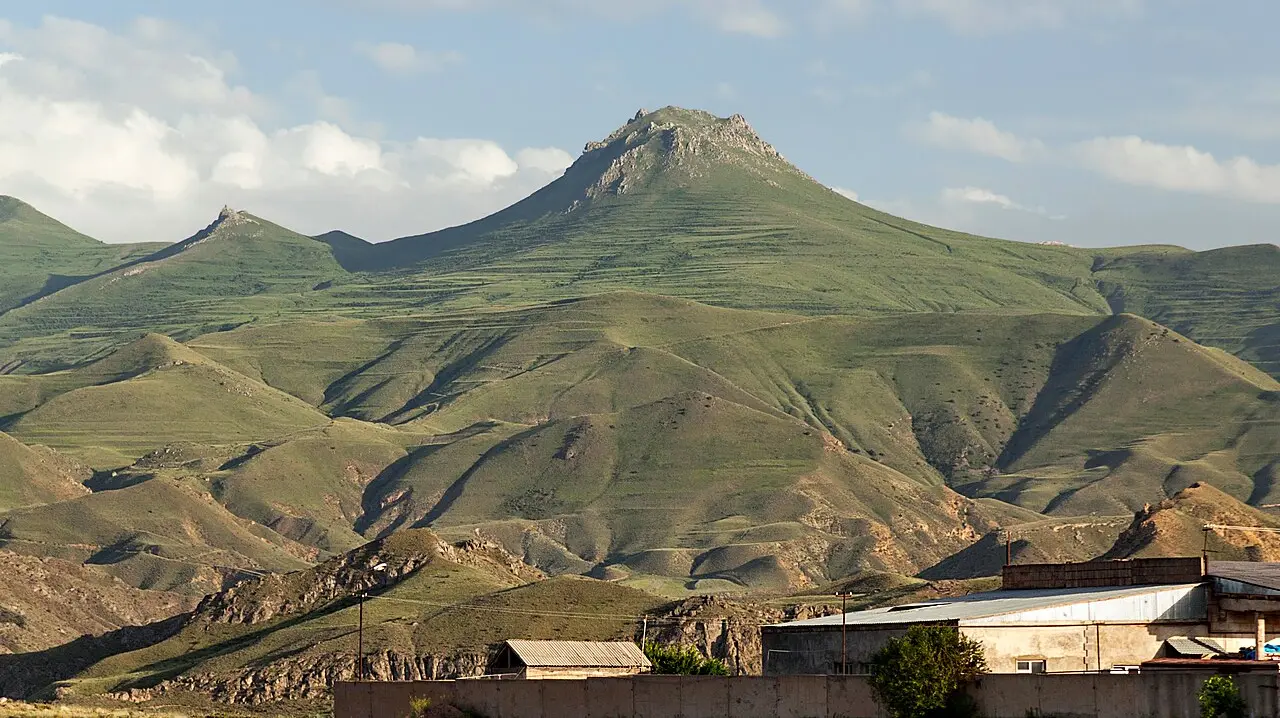
Yeghegnadzor: Wine Country Base in Vayots Dzor
Verified · July 23, 2026Why base yourself in Yeghegnadzor: Noravank and Areni on the doorstep, Gladzor, Smbataberd, a medieval Jewish cemetery and buried cheese.
Cities · 10 min read
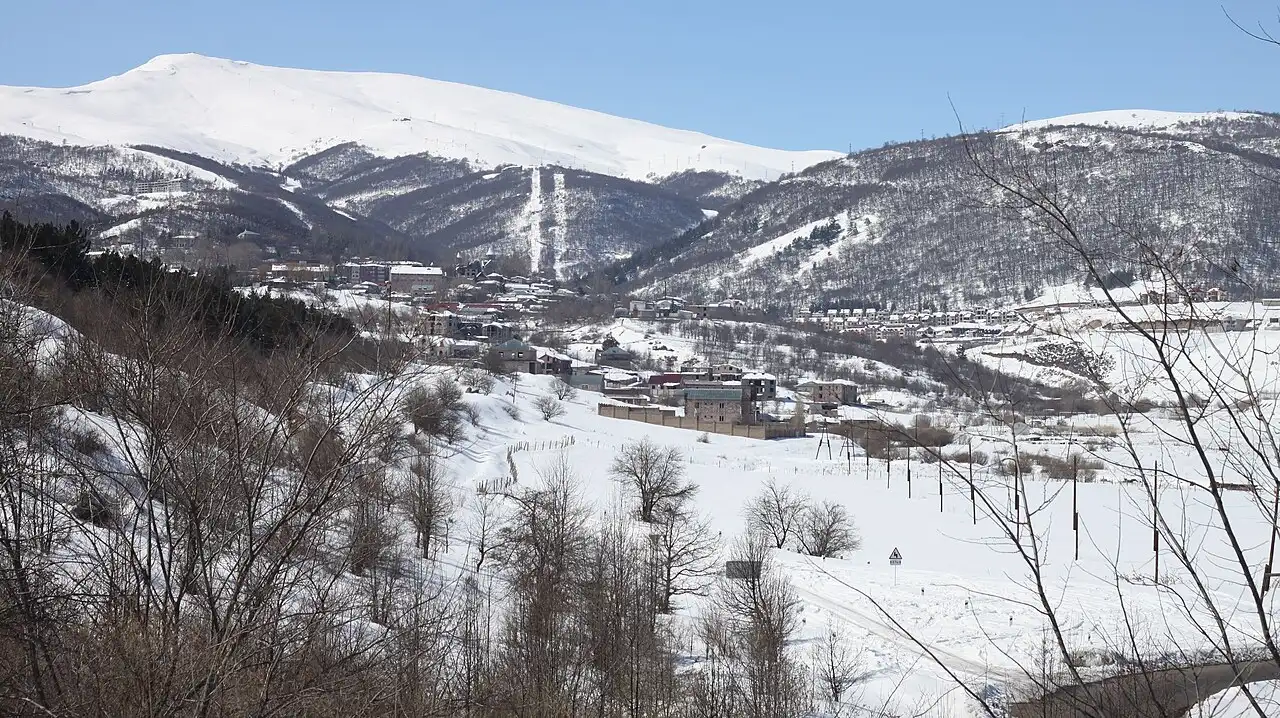
Tsaghkadzor: Armenia's Ski Town in Every Season
Verified · July 21, 2026Armenia's flagship ski resort, 58 km north of Yerevan: the Kecharis monastery, a five-stage ropeway, the ski slopes and what to do here in summer.
Cities · 10 min read
Goris: Gateway to Tatev & the South
Verified · July 4, 2026A guide to Goris, Armenia: the stone old town and rock cones, Old Khndzoresk and its swinging bridge, the base for Tatev, and how to get there.
Cities · 9 min read
Gyumri: Armenia's Second City
Verified · July 4, 2026A guide to Gyumri, Armenia's second city: the Kumayri old town, Vardanants Square, the Black Fortress, the 1988 earthquake, and how to visit from Yerevan.