Sardarapat Memorial: Armenia's 1918 Battle Site
Sardarapat Memorial near Armavir: 1918 battle site, Israelyan's red-tufa complex, ethnography museum tickets, hours and how to reach it from Yerevan.
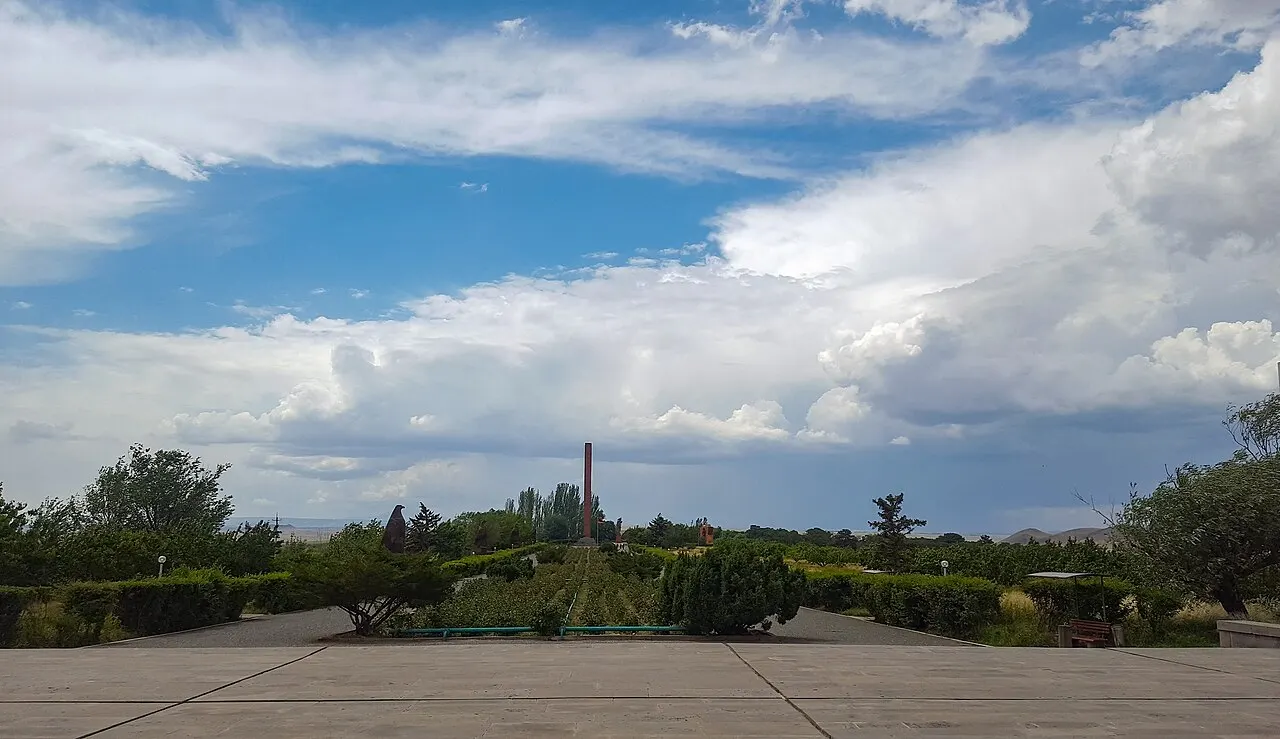
Sardarapat is where modern Armenia’s survival story sits in stone. On the flat Armavir plain west of Yerevan, near the village of Araks, a red-tufa memorial marks the May 1918 battle that stopped an Ottoman advance short of the capital - and beside it stands the national ethnography museum in a windowless, castle-like block. Most church tours from Yerevan skip it. Drivers on the Ararat plain heritage loop already pass the turn; this page is the stop itself: what happened, what you’re looking at, and how to time the visit without rushing the outdoor walk or the museum halls.
May 1918, without the slogans
In mid-May 1918, Ottoman forces pushed into Eastern Armenia after the Russian Caucasus front collapsed. According to the History Museum of Armenia, they took Alexandropol (today’s Gyumri) on 15 May and the Sardarapat station and village on 21 May. Fighting then ran on three axes - Sardarapat, Bash-Aparan and Gharakilisa. The museum dates the Sardarapat fighting itself to 22-26 May; broader military histories usually frame the battle as 21-29 May. Either way, you’re standing on the ground where Armenian regular units and militia held, then pushed the advance back toward Alexandropol.
The political sequel came fast. On 28 May 1918 the Armenian National Council in Tiflis declared itself the authority for the Armenian provinces - the birth of the First Republic of Armenia. On 4 June Turkey recognised that state in the Treaty of Batum. The republic lasted only about two and a half years, but the May battles are why there was a republic to begin with. Treat the site as a place of record, not a stage for speeches: the architecture does the emphasis for you.
The memorial walk: oxen, bells, eagles, wall
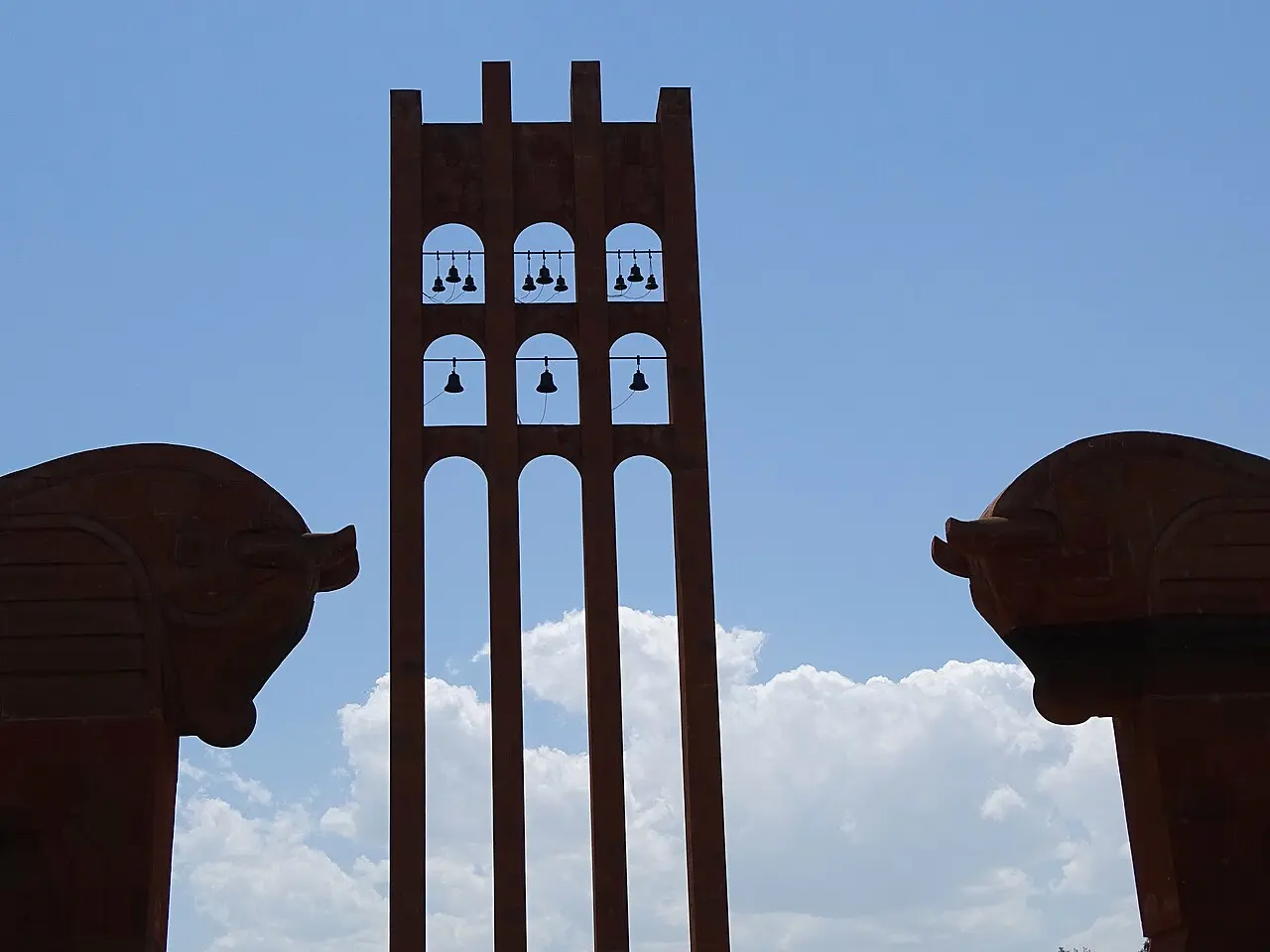
Architect Rafael Israelyan shaped the outdoor complex for the battle’s fiftieth anniversary; it was inaugurated on 25 May 1968. Sculptors credited alongside him include Ara Harutyunyan, Arsham Shahinyan and Sambel (Samvel) Minasyan. Everything you notice first is the same deep red tufa.
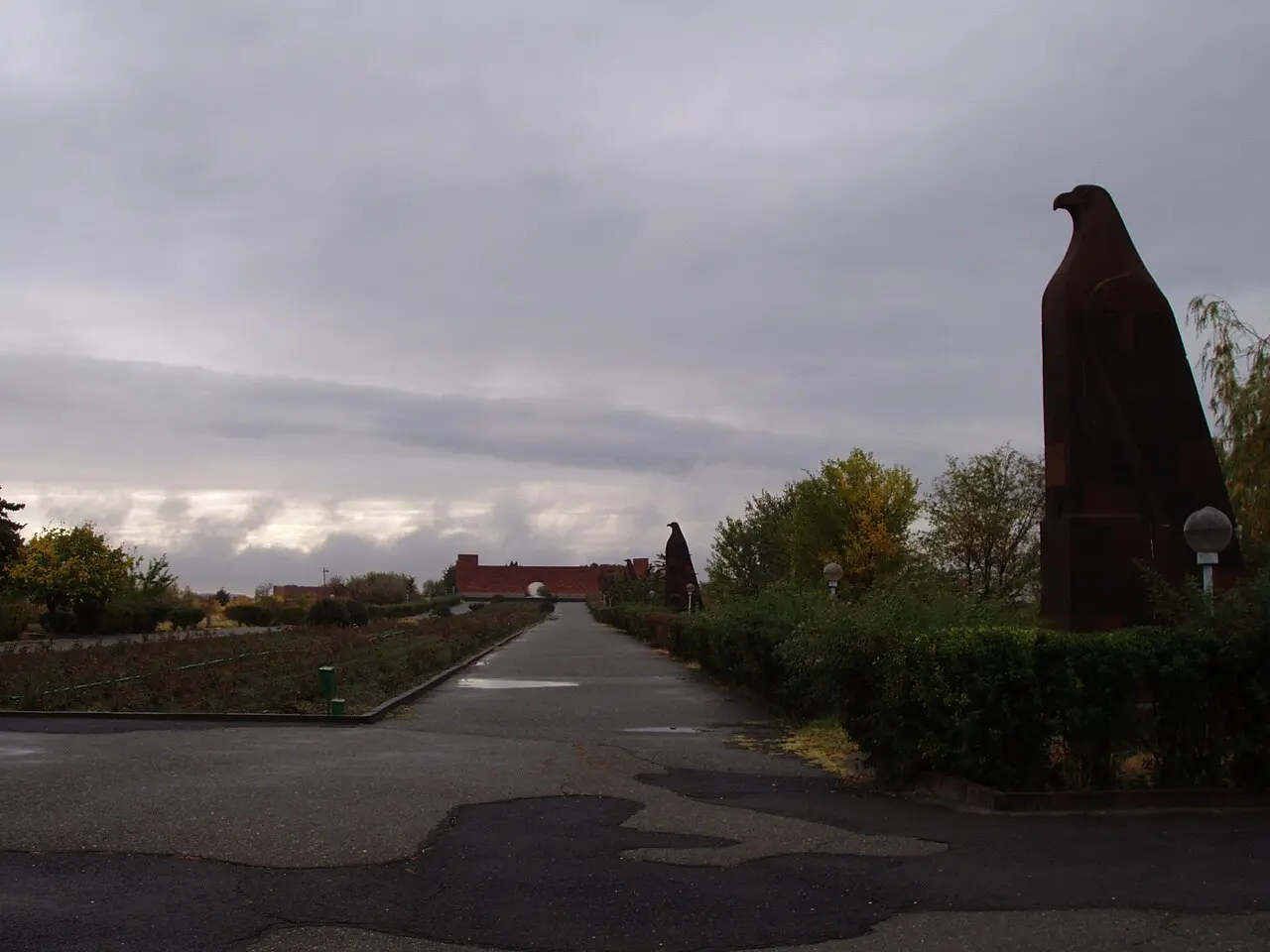
You enter between two massive winged oxen. Steps lift you to a square dominated by a lattice bell tower about 26 metres high, hung with twelve bells. The bells aren’t a constant soundtrack; they ring on the commemorative days tied to the victory. From there an avenue of eagles leads toward the curved memorial wall, cut with bas-reliefs of soldiers and civilians who took part in the defence. Walk it slowly. The scale works better in quiet than in a five-minute photo stop.
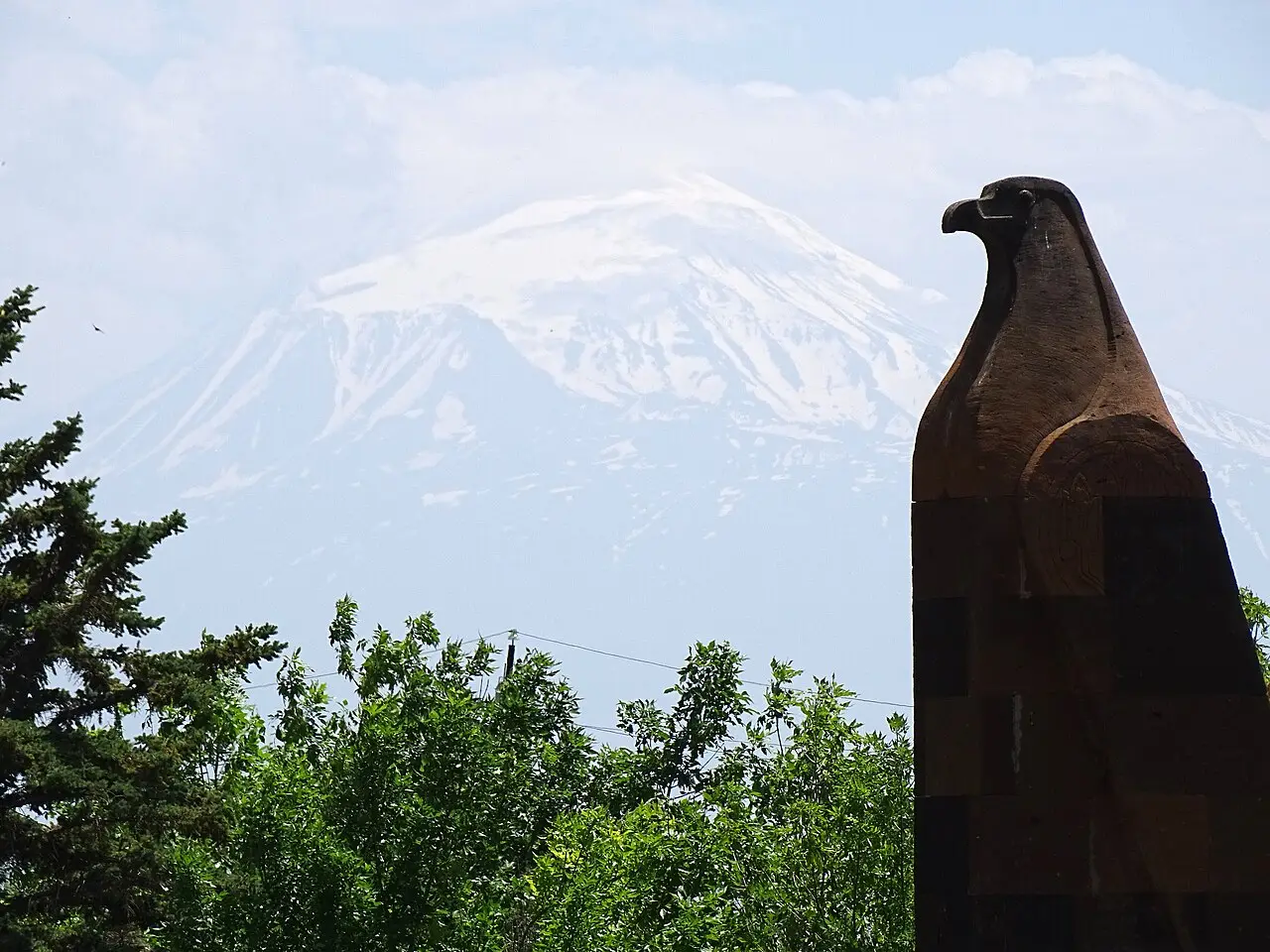
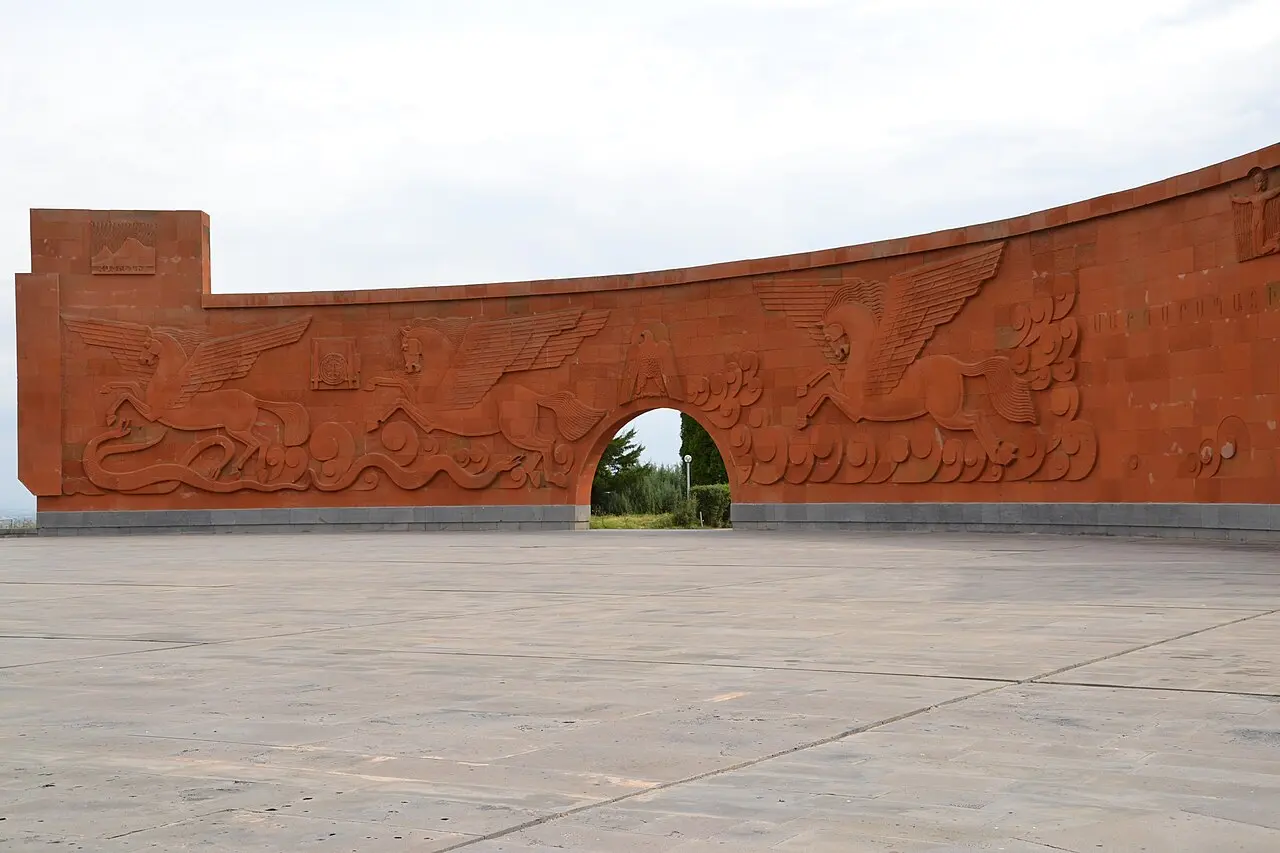
Give the outdoor grounds 45-60 minutes. Shade is limited; bring water in summer. There’s usually no separate outdoor ticket - you’re paying when you enter the museum halls. Keep voices low near wreath sites and any formal ceremony; Republic Day events still use this ground.
The ethnography museum behind the wall
Through the wall’s opening you reach the National Museum of Armenian Ethnography and History of Liberal Struggle - Israelyan’s fortress-like hall, opened in 1978, with almost no windows from outside. The museum’s own page puts the collection above 70,000 items: tools, pottery, jewellery, weapons, and displays that run from prehistoric highland life into modern struggle history. Separate rooms cover the May 1918 battles and the First Republic. If you only walk the avenue, you miss half the reason this complex exists.
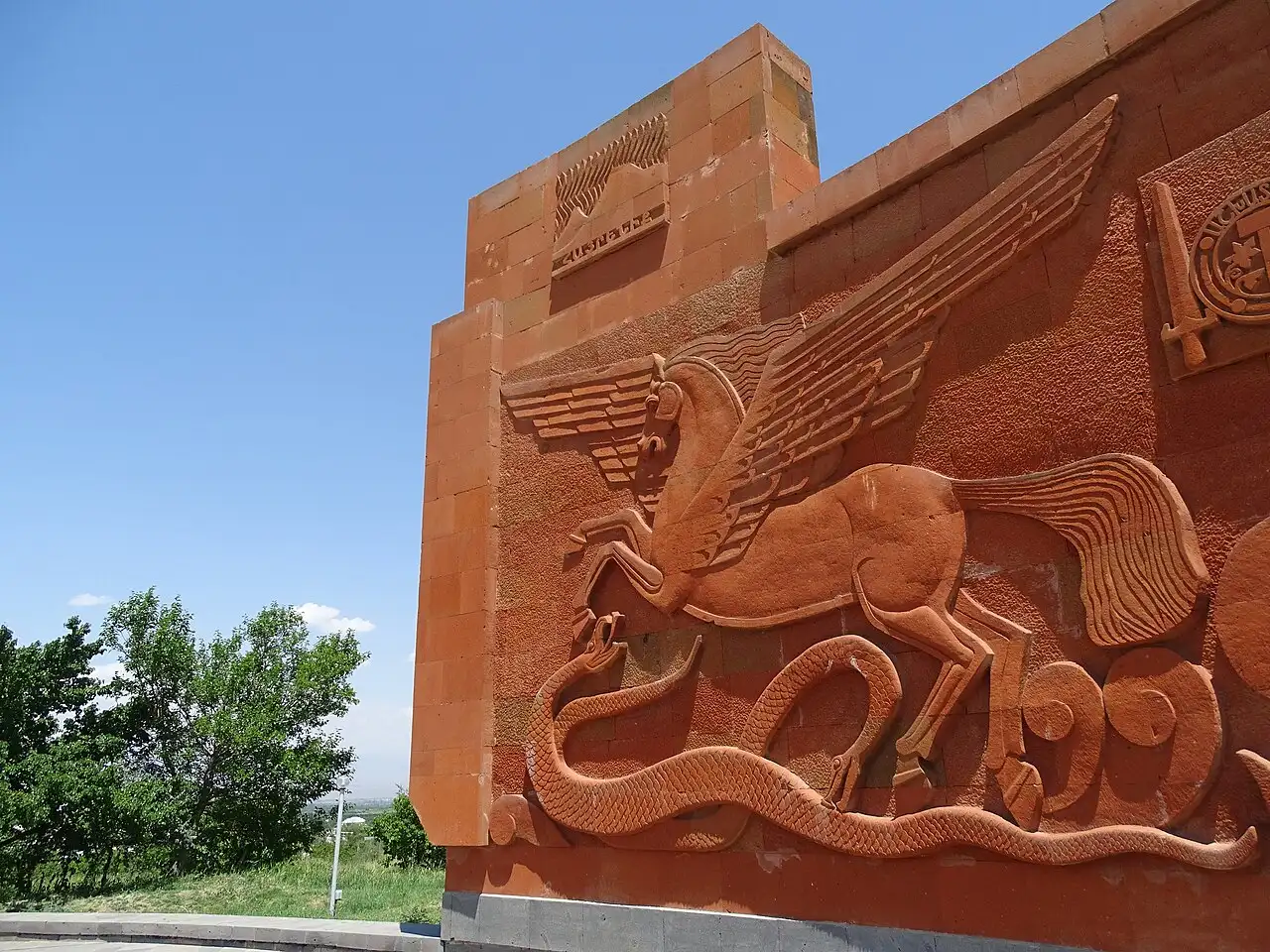
Guided tours are bookable in advance: the museum lists 4,500 AMD for an ethnography tour in Armenian and 5,000 AMD in English or Russian. Without a guide, budget another 60-90 minutes indoors if you’re reading labels carefully. Photography rules can change by hall - ask at the desk before you shoot flash.
Hours, tickets and how to get here
Address (museum): Armavir / Araks village, Daniel-Bek Pirumyan Street 1. Phones listed by the museum: +374 6068 7818, +374 77051918.
As of late August 2026, sardarapat.mus.am lists the museum Tuesday-Sunday, 09:15-18:00. Armenian-language pages on the same registry sometimes show slightly different wording (for example 09:00 start or a shorter weekday set), so treat the English board as your working plan and confirm on the day - especially if Monday is your only free slot. Mondays are the safe day to assume closed for the indoor halls.
Tickets on the museum page (checked 31.08.2026):
- Armenian ethnography exhibition - 1,200 AMD
- “1918 May battles and the declaration of the First Republic” exhibition - 1,000 AMD (worded as the Armenian visit line on the English page; ask at the desk if a foreign rate differs)
- Combined, you’re in the low thousands of dram for both halls - carry cash; cards aren’t guaranteed
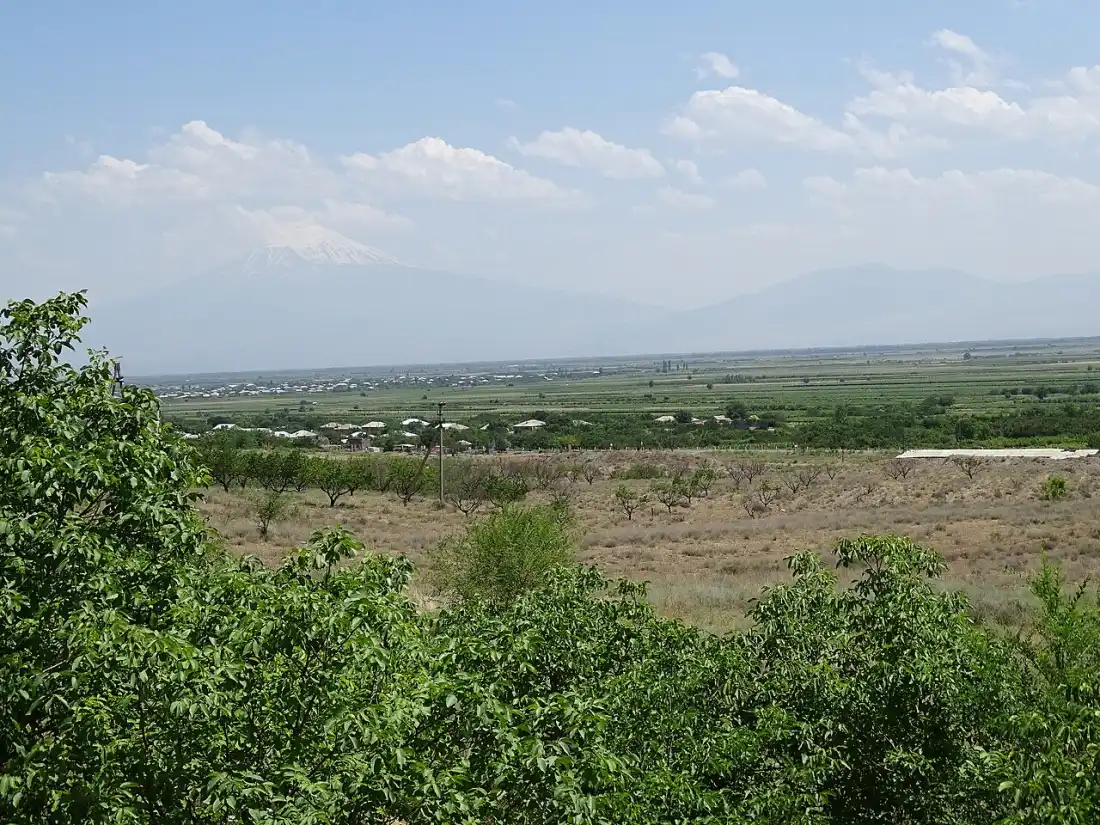
The complex sits roughly 50 km west of central Yerevan (battle literature often says about 40 km west of the capital; tour blurbs stretch toward 55 km depending on your start point). Driving time is usually 50-70 minutes via the Armavir road to Araks. Public transport gets you to Armavir town on marshrutkas from Yerevan’s Kilikia station, then you still need a local taxi for the last stretch - workable, but slow if you’re chaining Etchmiadzin and Zvartnots the same day. A rental car or private driver is the honest tool; see car rental in Armenia for IDP and deposit basics.
Two practical habits help. First, fill fuel in Yerevan or Armavir before the last rural stretch - village pumps aren’t a guarantee. Second, keep small dram notes for the museum desk; change for a large note can be awkward late in the afternoon. There’s parking by the complex; weekends and Republic Day weekends fill earlier, so arrive before midday if you’re aiming for quiet photos of the avenue.
Pairing it with Etchmiadzin and the plain
Sardarapat makes more sense as the memory stop on a west-of-Yerevan day than as a lone outing. The natural sequence is the UNESCO cluster at Vagharshapat / Etchmiadzin - cathedral, St Hripsime, often Zvartnots - then the drive on to Araks for the memorial, then southeast to Khor Virap if you still want Ararat light. That full shape is written up as a self-drive day in our Ararat plain heritage drive.
If the clock is tight, keep the outdoor memorial and skip the indoor halls, or reverse that if rain closes the avenue for you. Don’t try to force a Monday museum visit. And don’t schedule a loud group stop right after a cathedral liturgy - the tone shift from living church to war memorial works better with a quiet lunch gap in between.
What first-timers often miss is how short the physical walk is and how long the reading takes. The avenue and wall can be covered in under an hour; the ethnography halls reward anyone who slows down at the 1918 maps and unit lists. If you’ve already done the Mother See and feel “churched out,” this stop resets the day without another dome: different stone, different century, same plain.
For a wider day-trip menu from the capital, see best day trips from Yerevan. Sardarapat won’t top every list for first-time visitors chasing monasteries, and that’s fine: it’s the place that explains why those monasteries still sit inside a living republic, not a vanished name on a map.
Photos
On the map
The map loads on click - to keep the page lightweight.
The map didn’t load. Check your connection and refresh the page.
Distance ≈50 km · about 50-70 minutes by road
- Yerevan ≈50 km · about 50-70 minutes by road West toward Armavir, then to Araks. Marshrutkas reach Armavir town; the memorial itself needs a taxi, rental car or private driver. Confirm locally.
Read also

What to see · 10 min read
Soviet Modernist Yerevan: An Architecture Walk
Verified · September 5, 2026Walk Yerevan's Soviet modernism: Rossiya Cinema, Komitas Hall, Cascade, Hrazdan Stadium and Demirchyan Complex - dates, route order, and what still stands.

What to see · 9 min read
Kond: Walking Yerevan's Oldest Neighborhood
Verified · September 3, 2026Walk Kond, Yerevan's oldest living quarter: Surp Hovhannes, Tepebashi mosque walls, Leo Street alleys, and how to visit without treating it like a set.
What to see · 12 min read
Goshavank Monastery & the Village of Gosh
Verified · August 29, 2026Visiting Goshavank: Mkhitar Gosh's law code that reached Poland, the 1291 embroidered khachkar, his statue and hillside tomb, and the drive from Dilijan.
What to see · 8 min read
Byurakan Observatory: Stargazing on Aragats
Verified · August 26, 2026Visit Byurakan Observatory on Mount Aragats: day tours, the 2.6m telescope, night stargazing prices and how to book ahead on bao.am.