Soviet Modernist Yerevan: An Architecture Walk
Walk Yerevan's Soviet modernism: Rossiya Cinema, Komitas Hall, Cascade, Hrazdan Stadium and Demirchyan Complex - dates, route order, and what still stands.

Yerevan’s postcard pink is Alexander Tamanyan’s neoclassical city centre - Republic Square, the Opera, the ring of tuff facades from the 1920s and 30s. This walk is the other city: late Soviet modernism from the late 1960s through the mid-1980s, when Armenian architects poured concrete into forms that still look slightly unreal on a phone screen. Budget four to six hours and you can stand under Rossiya Cinema’s uplifted halls, circle Komitas Chamber Music House in the park, climb the Cascade’s terraces, then ride west to Hrazdan Stadium and the Demirchyan Complex. The years below are building dates, not architects’ birth years - keep them apart or the timeline turns into mush.
What this walk is (and isn’t)
You’re reading facades and urban space. Interiors open on a live schedule - whatever concert, match or exhibition is booked that week. The Cascade has its own practical page for escalator hours and the Cafesjian galleries - use the Cascade guide for ticket-and-hour detail. The wider first-timer list sits in the Yerevan city hub. Kond is a different layer of the city: older streets and lived-in courtyards, not this concrete language.
Budget three to four hours for the central loop on foot, then another hour or two west by taxi or ride-hail. Soft shoes matter more than a map app once you’re under Rossiya and on the Cascade stairs.
Rossiya Cinema: concrete that floats
Start at the terminus of the Ring Boulevard, where Rossiya Cinema - later renamed Ayrarat / Hayrarat - still interrupts the street with two asymmetrical halls. The Arthur Tarkhanyan Center, which documents the architects’ own work, dates the project to 1965, construction from 1971, completion in 1974, and the opening in December 1974. The design team was Arthur Tarkhanyan, Spartak Khachikyan and Hrachya Poghosyan, with structural engineers Gerasim Gevorkyan and Igor Tsaturyan.

If the passage under the raised volume is open, walk through it before you look up. The complex was meant as a public passageway as much as a cinema: a rectangular foyer under the halls held cafes, tickets and a smaller 280-seat room, while the two main auditoriums seated 1,000 and 1,600. The larger hall measures about 44 by 49 metres; the smaller is 39 by 39. The Tarkhanyan Center’s own account of what happened next is blunt: the building was privatised in 2004, the investor couldn’t run a cultural complex and converted it into a marketplace, and later construction nearby damaged the original silhouette and cost it some of its sculpture. Stand back far enough to see both concave roofs anyway - close-up phone photos miss how aggressively the structure claims the junction.
Komitas Chamber Music House: a church without a cross
About 25-30 minutes on foot (roughly 2 km) toward Circular Park puts you at 1 Isahakyan Street, where Komitas Chamber Music House sits among the trees. Architect Stepan Kyurkchyan designed the hall; the National Centre of Chamber Music says it was put into operation on 2 July 1977, and Visit Yerevan records the ceremonial opening in October 1977 with the Komitas String Quartet. Both dates are 1977 - don’t invent a single “opening day” that merges them. The auditorium holds 300 seats. An organ was installed in 1979.

Kyurkchyan’s own framing, preserved by the venue, is blunt: in years when church building was taboo, he still drew a church. The hall reads as a three-nave Armenian basilica form without liturgical furniture. You can walk the exterior any daytime; for a concert, check the schedule on nccm.am rather than guessing prices here. If you only have five minutes, circle the building once - the free-plan massing and the park setting are the architectural lesson.
Cascade: the hillside that became a monument
From Circular Park, cut north toward Tamanyan Street and the Cascade. The idea of terraces linking the centre to the northern hills belongs to Alexander Tamanyan (1878-1936) and his 1920s master plan. That’s a lifespan and a 1920s sketch - the actual concrete came decades later. The concrete you climb was designed in the late 1970s by Yerevan’s chief architect Jim Torosyan with Sargis Gurzadyan and Aslan Mkhitaryan. Construction started in the 1980s, stalled after the 1988 earthquake and the Soviet collapse, and only became today’s Cafesjian Center for the Arts after work resumed in 2002; the center opened in November 2009.

The operator’s own statistics describe the climb, not the straight-line height: 572 steps and 302 metres measured along the slope from bottom to top of the Cascade, stretching to 450 metres of walkway if you continue up to Monument Terrace, 50 metres wide, incline about 15 degrees. That climb only gains 118 metres of actual height by Monument Terrace - the 450-metre figure is the length of the path, not how far up you go. As of September 2026 the sculpture garden is always open, the escalator gallery runs daily 8:00-20:00, and exhibition galleries keep Friday-Sunday 10:00-20:00 hours - admission free, but the whole complex is closed on state holidays and closes at 19:00 the evening before one, so check the date before you plan an evening around it. Ride the escalator up if you’re mid-walk and tired; walk a terrace or two down to feel the tuff reliefs. Then leave the deep Cascade visit for its own page and keep moving before the afternoon heat stacks up.
Yeritasardakan metro station sits in this northern-centre pocket for a short underground hop later; for how the network works day to day, see Yerevan public transport.
West hill: Hrazdan and Hamalir
The next two stops sit across the Hrazdan gorge on the western ridge. Walking is possible but uphill and long; a taxi or ride-hail from the Cascade area is the sensible cut. First, Hrazdan Stadium in the gorge - these days it’s an exterior viewpoint stop, no ticket office in sight. A court declared the operating company bankrupt in 2015, with liquidation proceedings following in 2019, and a July 2026 government allocation of about 63 million AMD funds only the design project for a renovation aimed at the 2027 Francophonie Games, targeting over 21,000 seats - construction hasn’t started. Don’t book a taxi out here expecting a working stadium, and don’t climb into the stands. Visit Yerevan dates the original construction to 1968-1970, architects Koryun Hakobyan and Gurgen Musheghyan, engineer Eduard Tosunyan. The opening match was 19 May 1971 (Ararat Yerevan vs Kairat). The complex measures 260 by 180 metres overall, with a pitch of 114 by 69 metres. Visit Yerevan calls it the first two-tier stadium in the USSR - the stands follow the natural amphitheatre of the gorge rather than sitting on a flat pad.

A short ride up the same ridge reaches the Karen Demirchyan Sports and Concerts Complex - locals still say Hamalir. Unlike Hrazdan, this one still runs concerts and matches, but you’re an outside visitor unless one is actually scheduled - check the complex’s own listings before assuming you can walk in. Visit Yerevan lists the years 1983-1984: the sports hall opened in 1983, the concert hall in October 1984. The design team included Koryun Hakobyan, Arthur Tarkhanyan, Spartak Khachikyan, Hrachya Poghosyan and Gurgen Musheghyan. When the programme needs it, a rotating 1,008-seat tribune links the two halls. Above the entrance, Ferdinand Arakelyan’s 1984 high-relief “Renaissance” runs along a red-tuff wall 60 metres long and 4.5 metres high. A fire closed the complex in 1985 - Visit Yerevan’s own page doesn’t give a cause, but an architecture-history site records the fire explicitly; the complex reopened after renovation in 1987, and a later full renovation ran 2007-2008. The name Demirchyan arrived in 1999.


On the same hill, about 900 metres (roughly 12 minutes uphill on foot), sits Tsitsernakaberd, completed in 1967. It belongs to a memorial register, not this modernist itinerary - but if you’re already on the ridge, the quiet plaza after Hamalir is the right place to stop talking about concrete and start listening.
The Youth Palace that isn’t there
One building on every serious modernist map of Yerevan is missing from the pavement. The Youth Palace - the cylindrical tower locals nicknamed the “Gnawed Corncob” - opened on 7 April 1979 (first phase; a second phase followed in 1987) under Tarkhanyan, Khachikyan, Poghosyan and Martin Zakaryan. It was demolished in 2006. The Tarkhanyan Center still publishes the project because the loss is part of the story: late Soviet public culture that Yerevan tore down in the privatisation years. You won’t get a ticketed visit. You get a reminder that this walk is also about what the city chose to keep.
How to walk it without getting lost
Do the Ring Boulevard → Circular Park → Cascade leg in the morning while the stone is still cool. Save the Hrazdan / Hamalir ridge for after lunch with a car. Golden hour on the Cascade terraces is worth looping back if you have the legs. Stay in Kentron for a coffee-distance start to the first three stops - where to stay in Yerevan maps the neighbourhoods. Pair this route with a day of monasteries or wine only after you’ve done the concrete; mixing both before noon usually means you rush the facades.
If one stop has scaffolding or a closed plaza, skip it and keep the sequence. The walk’s value is comparative: Rossiya’s floating halls, Kyurkchyan’s park basilica, Torosyan’s hillside, Hakobyan’s gorge stadium, Hamalir’s transforming arena. Once you’ve stood under all five, Tamanyan’s pink square looks like a different century - which, in construction years, it mostly is.
Photos
On the map
The map loads on click - to keep the page lightweight.
The map didn’t load. Check your connection and refresh the page.
Admission and opening hours
- Admission price
- Outdoor architecture walk is free. Cascade sculpture garden and escalator gallery free (confirm hours on cmf.am). Concert and sports venues sell their own tickets.
- Opening hours
- Exterior stops readable in daylight. Cascade escalator gallery daily 8:00-20:00; Cafesjian exhibition galleries Fri-Sun 10:00-20:00 (as of September 2026); Cascade closed on state holidays, 19:00 close the day before one. Venue interiors follow event calendars.
This is a street-and-facade walk, not a ticketed museum trail. Rossiya Cinema is a marketplace inside today, not a working cinema - judge the building from the outside. Hrazdan Stadium is a viewpoint stop, not a ticketed venue - it has no regular football and its 2026 renovation is still at the project-funding stage. Confirm concert times at nccm.am and the Demirchyan Complex before you plan an indoor seat.
Details checked: September 5, 2026
Distance ≈0 km · Central loop on foot 3-4 hours; west-hill stops by taxi or ride-hail
- Yerevan ≈0 km · Central loop on foot 3-4 hours; west-hill stops by taxi or ride-hail Start at Rossiya (Ayrarat) Cinema on the Ring Boulevard, walk to Komitas Chamber Music House and the Cascade, then ride west to Hrazdan Stadium and the Demirchyan Complex.
Read also

What to see · 9 min read
Kond: Walking Yerevan's Oldest Neighborhood
Verified · September 3, 2026Walk Kond, Yerevan's oldest living quarter: Surp Hovhannes, Tepebashi mosque walls, Leo Street alleys, and how to visit without treating it like a set.
What to see · 8 min read
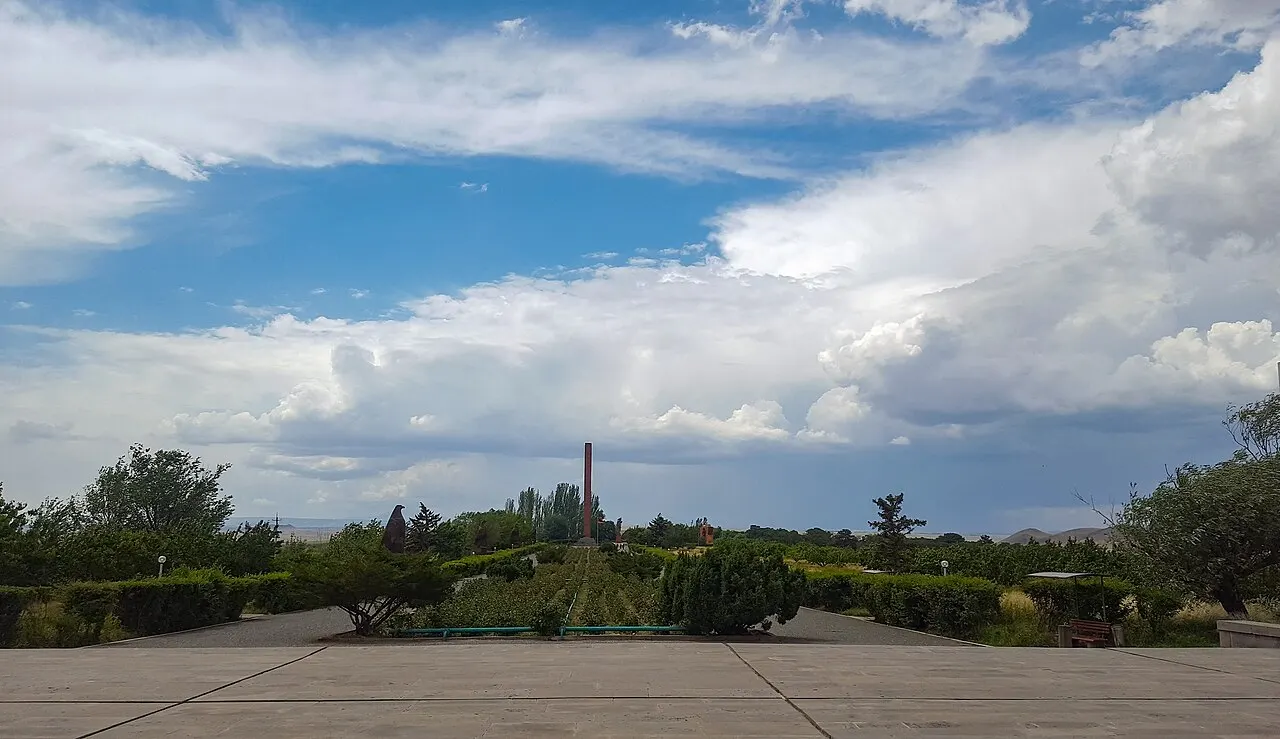
Sardarapat Memorial: Armenia's 1918 Battle Site
Verified · August 31, 2026Sardarapat Memorial near Armavir: 1918 battle site, Israelyan's red-tufa complex, ethnography museum tickets, hours and how to reach it from Yerevan.
What to see · 12 min read
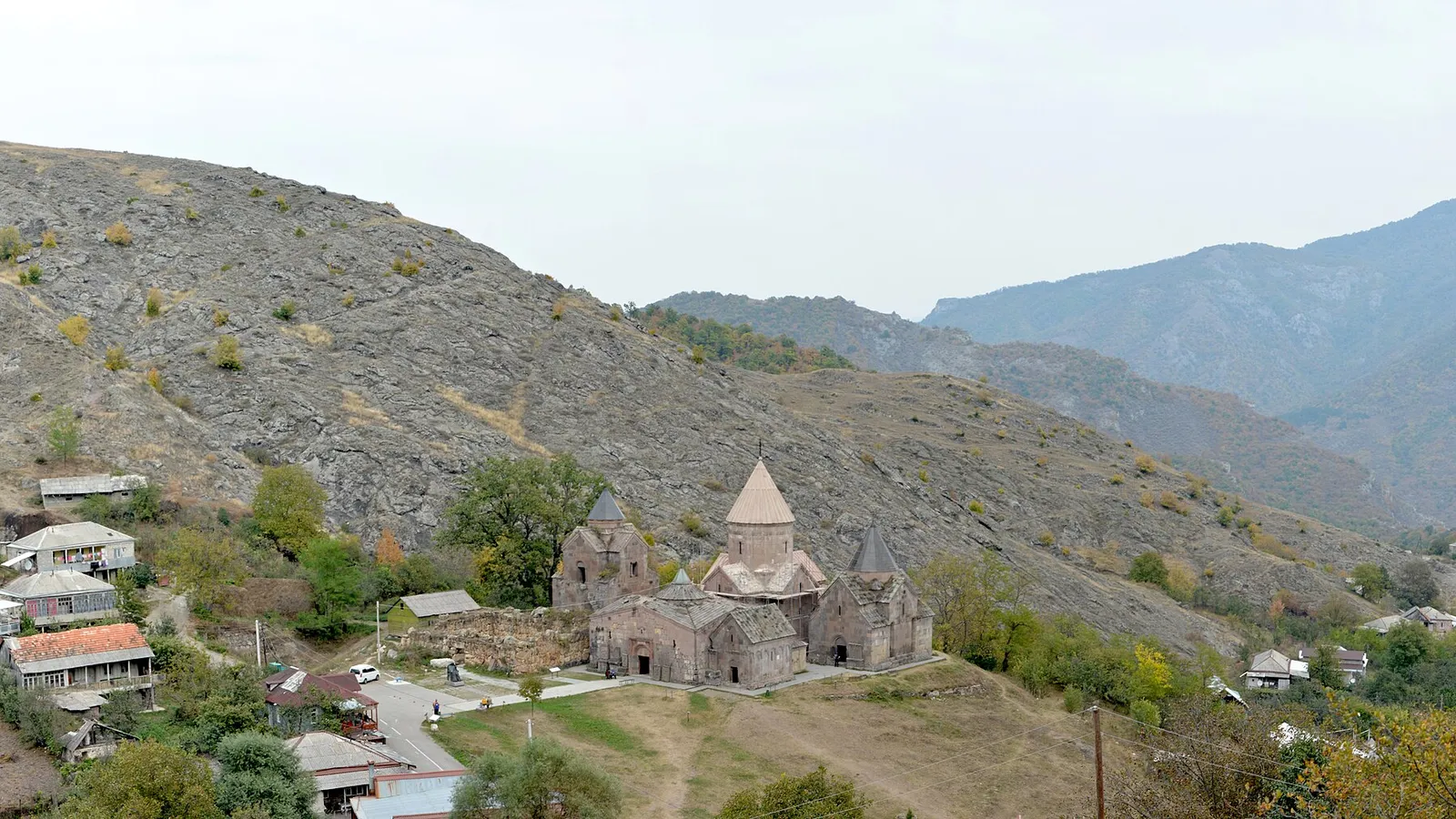
Goshavank Monastery & the Village of Gosh
Verified · August 29, 2026Visiting Goshavank: Mkhitar Gosh's law code that reached Poland, the 1291 embroidered khachkar, his statue and hillside tomb, and the drive from Dilijan.
What to see · 8 min read
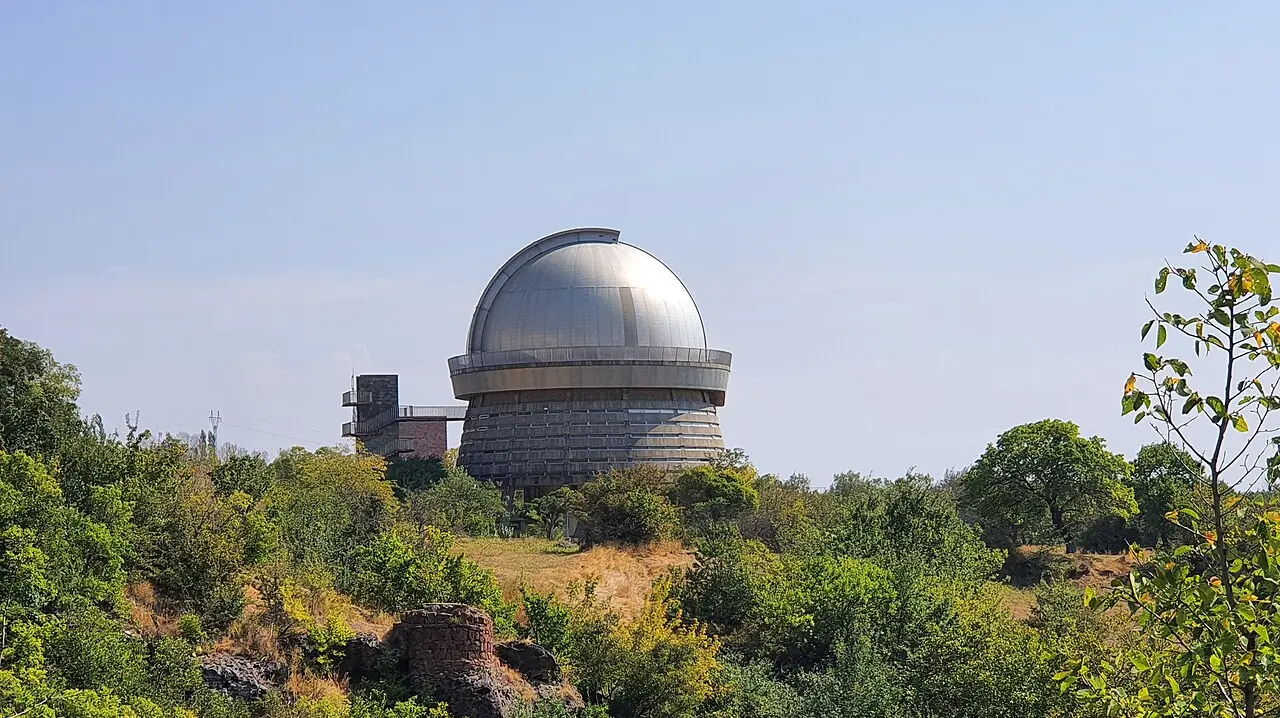
Byurakan Observatory: Stargazing on Aragats
Verified · August 26, 2026Visit Byurakan Observatory on Mount Aragats: day tours, the 2.6m telescope, night stargazing prices and how to book ahead on bao.am.