Tsitsernakaberd: Visiting the Armenian Genocide Memorial
A respectful guide to Tsitsernakaberd, the Armenian Genocide Memorial in Yerevan: the eternal flame, the museum, hours, entry and how to get there.
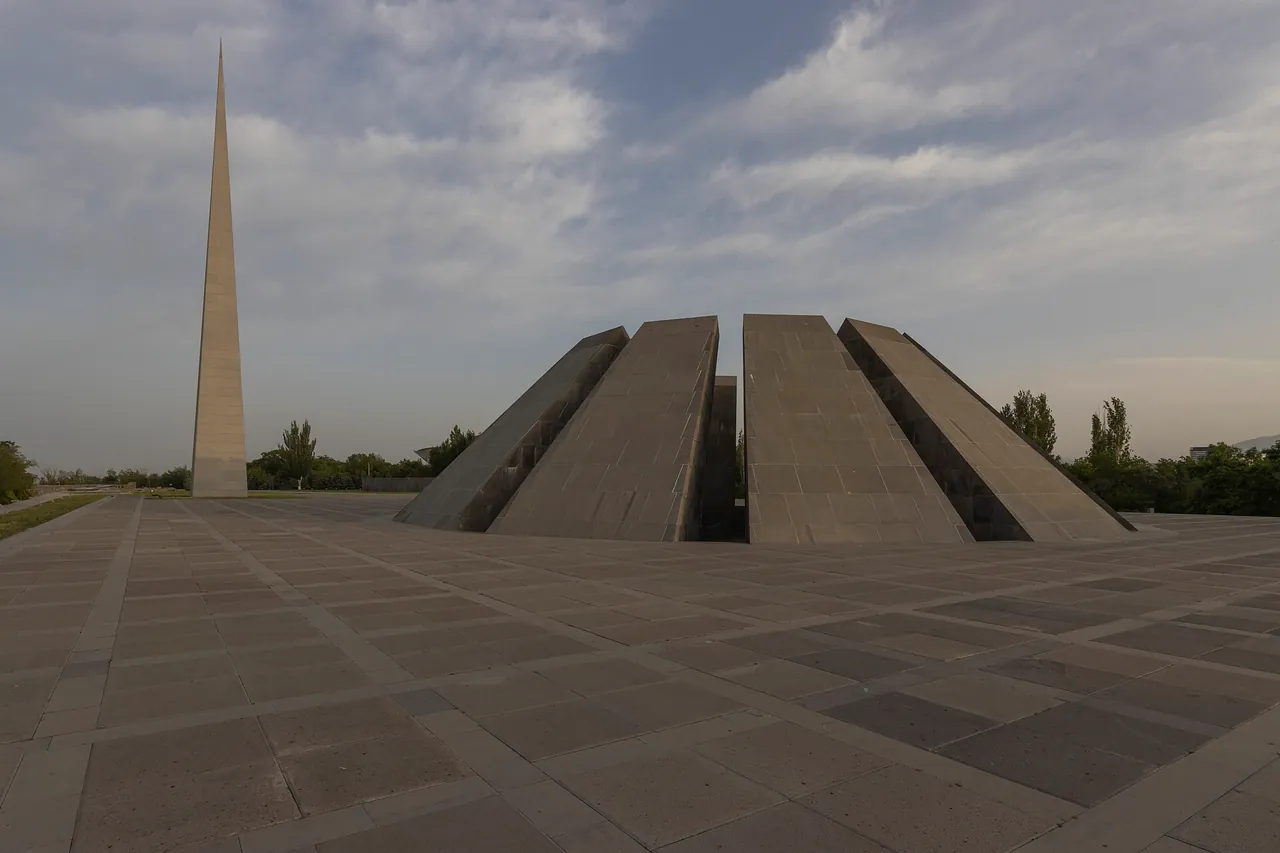
Tsitsernakaberd is Armenia’s memorial to the victims of the Armenian Genocide of 1915, in which an estimated 1.5 million Armenians were killed in the Ottoman Empire. It stands on a quiet hilltop across the Hrazdan gorge from central Yerevan, it’s free to enter, and it’s the most important place of remembrance in the country - almost every foreign leader who visits Armenia comes here first. The forms on the hill say more once you know what they stand for, so this practical guide covers their meaning and the essentials of visiting.
What it commemorates
It helps to arrive with the basic history in mind. The Armenian Genocide is generally dated from 24 April 1915, when Armenian community leaders and intellectuals were arrested in the Ottoman capital of Constantinople. Over the following years the Ottoman government deported the Armenian population of Anatolia, driving hundreds of thousands south on forced marches into the Syrian desert, and an estimated 1.5 million Armenians died through killings, starvation and disease. The survivors were scattered across the Middle East, Europe and the Americas, forming the modern Armenian diaspora, and the loss of the historic Armenian homeland in the east of what’s now Turkey is felt to this day. Those are the events this hill remembers, and knowing them changes how the quiet forms up here read.
What the memorial is
The complex was completed in 1967. Two years earlier, on the fiftieth anniversary, some 100,000 people had marched through Yerevan demanding that the genocide be publicly commemorated, and that unprecedented protest pushed the Soviet Armenian authorities to allow a permanent monument. It was designed by the architects Arthur Tarkhanyan and Sashur Kalashyan with the artist Hovhannes Khachatryan, and its power comes from restraint: this isn’t a statue or a list of horrors but a small number of very deliberate forms, laid out so that walking through them becomes the act of remembrance.
It also matters where it sits. The memorial crowns a wooded hilltop in Tsitsernakaberd Park, high above the Hrazdan gorge on the western edge of the city, a green and deliberately hushed place set apart from the traffic just across the valley. You reach the monuments along a long paved avenue, and on a clear day Mount Ararat - the peak that has become the symbol of the lost homeland - stands on the horizon behind them. Along the approach is a grove of young trees, many of them planted by visiting heads of state as part of paying their respects, so the walk in is itself part of the site.
The split stele
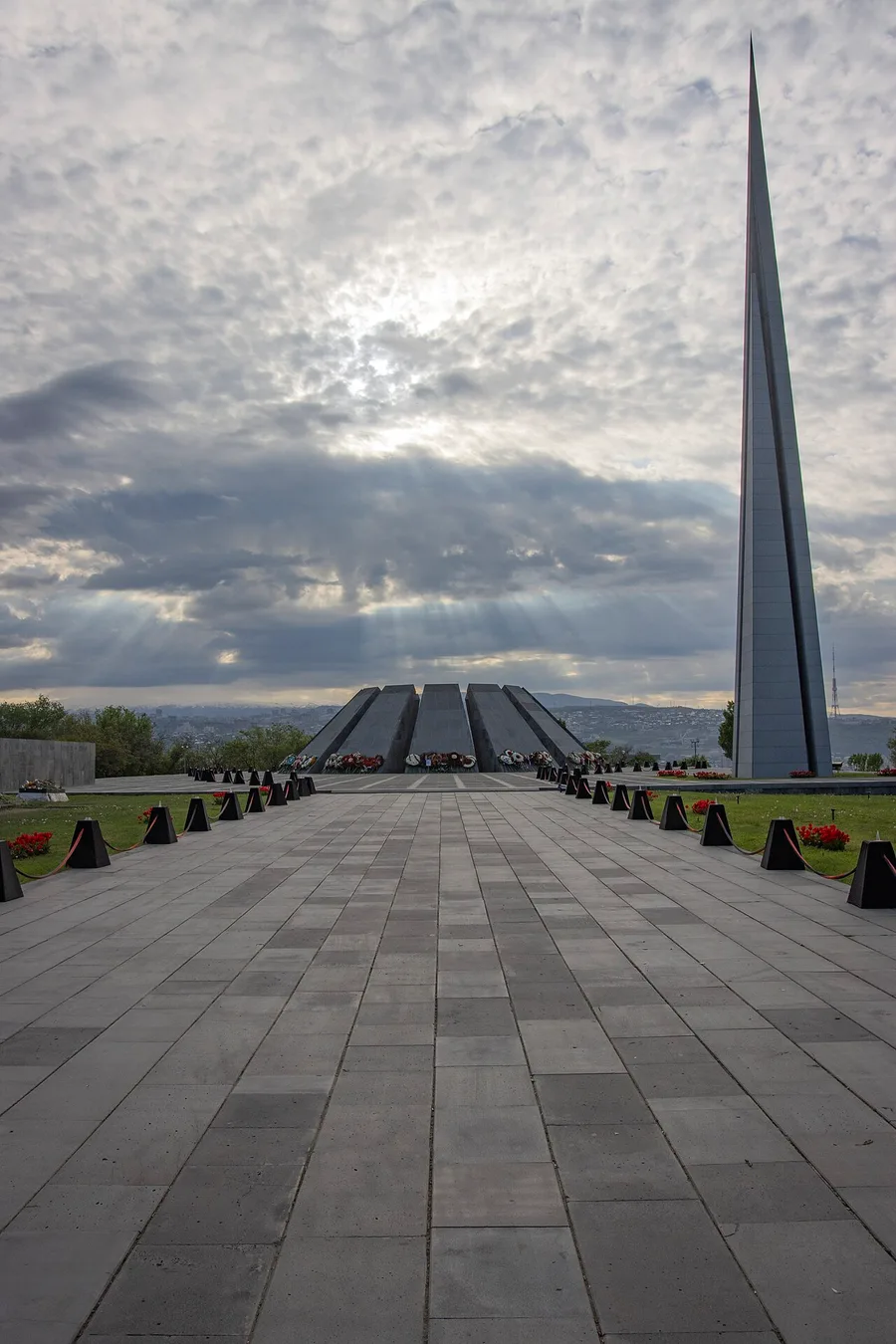
Two forms dominate the hilltop. The first is a slender 44-metre stele that rises like a needle beside the plaza, and it’s deliberately split into two - a taller shaft and a smaller one alongside it. The division is usually read as the survival and rebirth of the Armenian nation: a people cut in two by the genocide, with the smaller spire standing for the part scattered into the diaspora and the emptied lands of Western Armenia, yet still reaching upward. Nothing is spelled out or labelled, which is part of why it lands so hard; you’re left to read the shape yourself.
The eternal flame and the twelve slabs
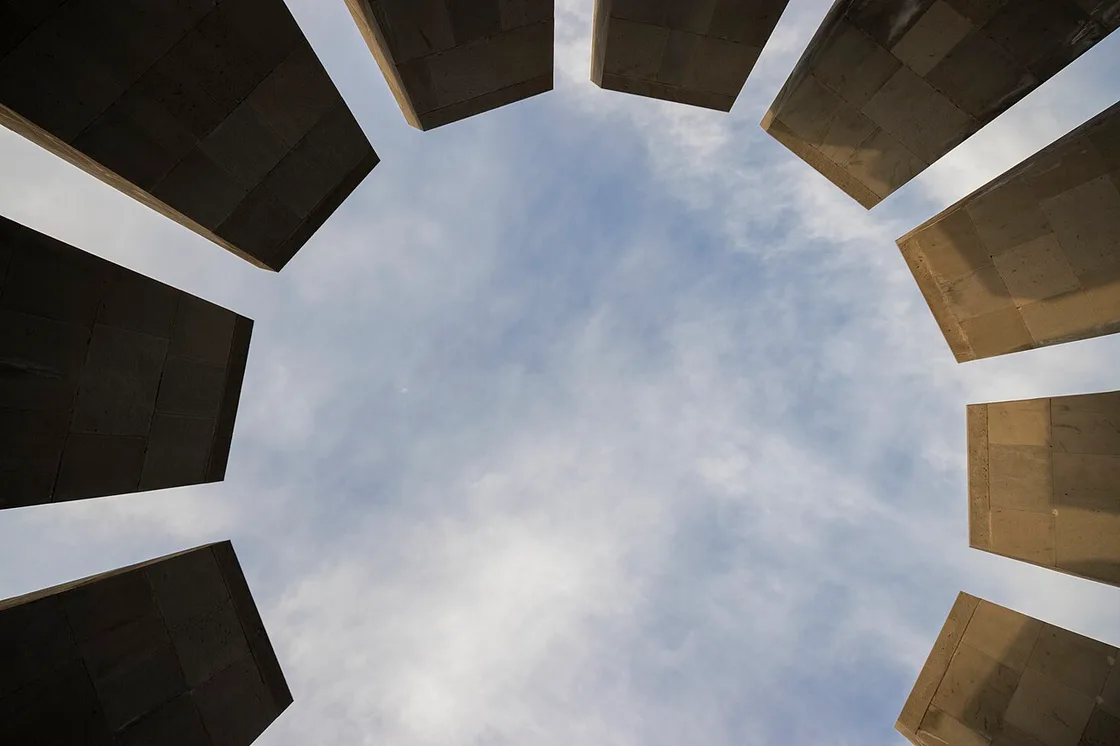
The second form, and the heart of the memorial, is the low circular structure beside the stele, sometimes called the Temple of Eternity. Twelve tall basalt slabs lean inward in a ring, bowed like mourners around a grave, and at the centre, sunk below the level of the plaza, burns an eternal flame. You walk down a few steps into the circle to reach it, and the drop in level, the lean of the stone and the hush combine into something that asks for silence without a single sign telling you to be quiet. The flame is kept burning day and night, and it’s the fixed point of the whole memorial: everything else on the hilltop is arranged around it.
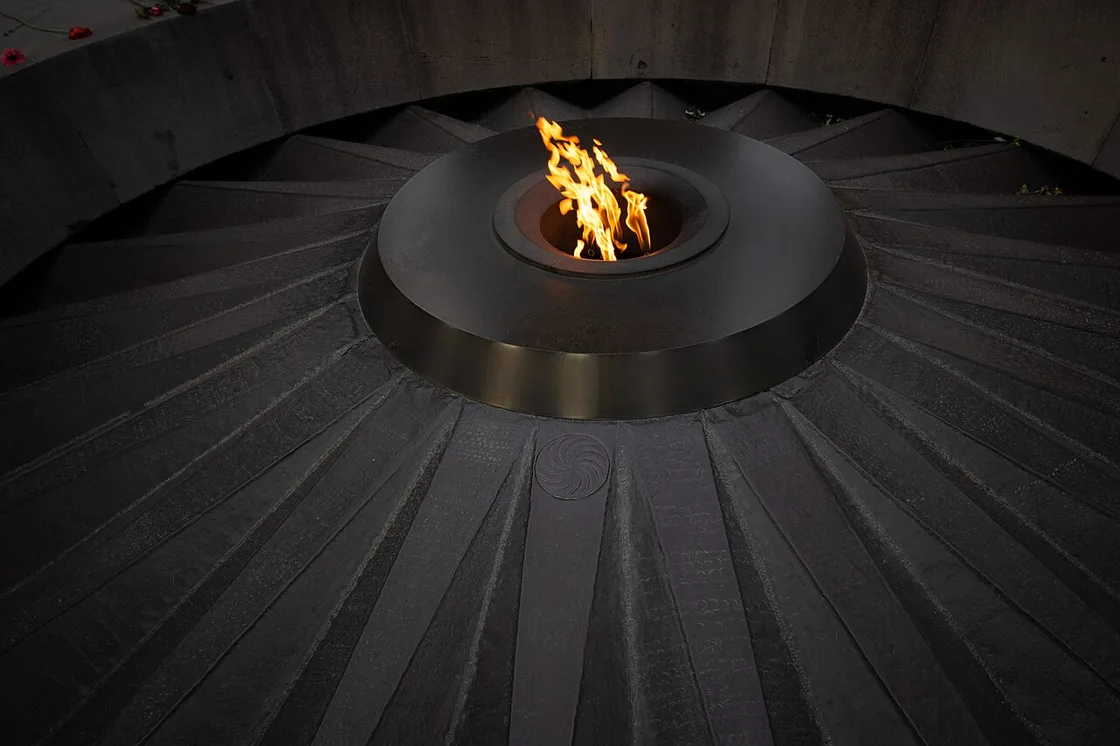
The twelve slabs aren’t decorative. They stand for the twelve provinces of Western Armenia, the lands emptied of their Armenian population during the genocide and now in eastern Turkey. Laying fresh flowers around the flame is the customary gesture here, and on any given day you’ll find carnations and roses ringing it, added by families, schoolchildren and visiting officials. If you bring flowers, this is where they go.
The wall and the museum
Running along one edge of the site is a 100-metre memorial wall, its stone inscribed with the names of the towns and villages where massacres took place - a long, plain roll-call that rewards slow reading. Set into the hillside nearby, and easy to miss because it’s largely underground, is the Armenian Genocide Museum-Institute, which opened in 1995 on the eightieth anniversary.
Its two floors trace the history in a sober, document-led way rather than a sensational one: photographs, official records, maps, newspaper reports, short films and the testimony of survivors, moving from Armenian life in the Ottoman Empire before 1915, through the deportations and killings, to the aftermath and the worldwide diaspora that resulted. It gives the forms on the hilltop above their context, and it is worth allowing forty-five minutes to an hour for it. Like the memorial, the museum is free to enter; there’s a bookshop by the entrance, and eating, drinking and smoking are not allowed inside.
Tsitsernakaberd is also where the country’s official mourning is centred. Foreign heads of state and visiting dignitaries almost always come here to lay a wreath at the flame, and the Museum-Institute doubles as the national body that researches and documents the genocide. For all that weight of state ceremony, though, the hill stays a personal place: on an ordinary afternoon it’s mostly local families, students and a scatter of visitors, walking slowly and speaking in low voices.
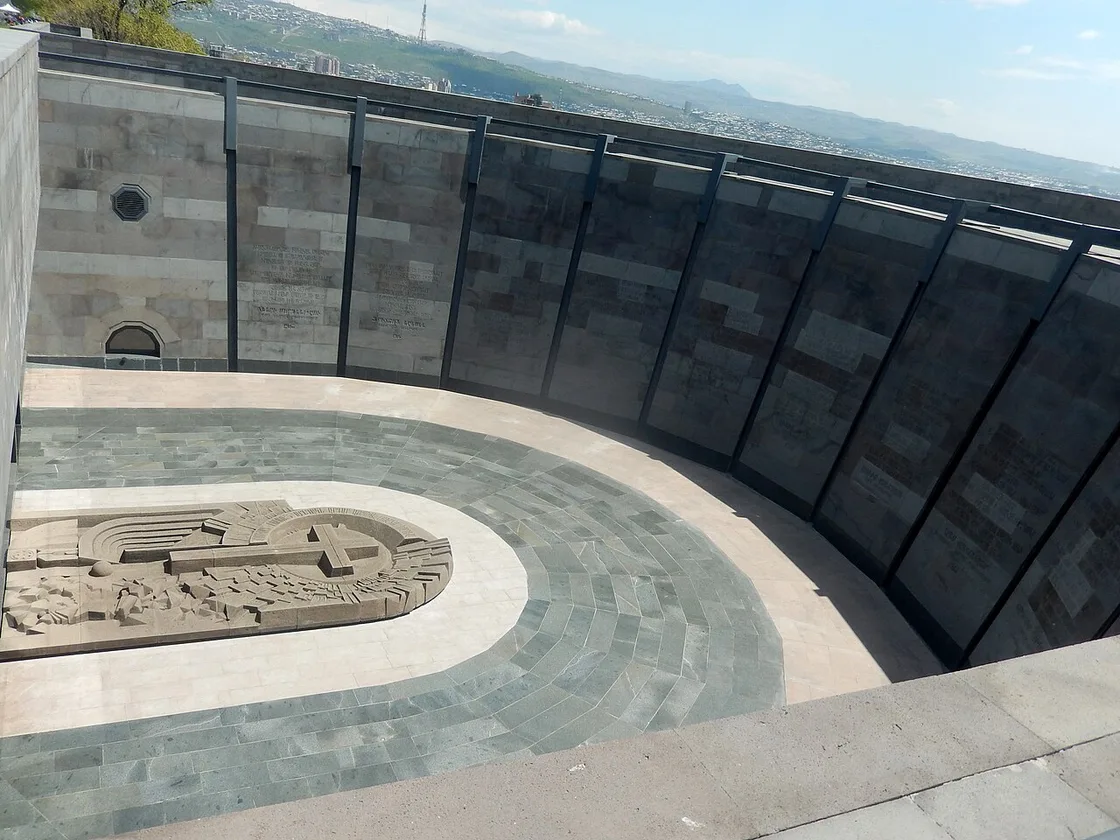
April 24
If you’re in Yerevan on 24 April, you will see the memorial at its most significant. This is Armenian Genocide Remembrance Day, marking the date in 1915 when Armenian community leaders were arrested in Constantinople, and each year hundreds of thousands of people walk up the hill in a slow, day-long procession to lay flowers at the flame. By evening the ring around it’s buried under a mountain of blooms. It is a moving thing to witness, but it is also the busiest day of the year by a wide margin, with long queues on the approach; if you would rather visit quietly, come on almost any other day.
Hours, entry and how to visit
The outdoor memorial - the stele, the flame and the wall - is open-air and can be visited at any reasonable hour, and it is always free. The museum keeps set hours: broadly Tuesday to Saturday 10:00 to 17:00 in the warmer months (11:00 to 16:45 in winter) and Sunday 11:00 to 15:00, closed on Mondays and on official holidays, with extended hours on 24 April. Because the times shift with the season, it is worth checking the official site, genocide-museum.am, before you go so you’re not caught out arriving on a Monday.
Getting there’s straightforward. The hill sits about four kilometres west of the centre, across the Hrazdan gorge, roughly a ten-to-fifteen-minute taxi or ride-hail ride from the middle of town; there is no metro station at the memorial. It’s also walkable in around forty-five minutes from Republic Square if the weather is kind, and there’s free parking on site if you drive. For fares and the local ride-hailing apps, see our guide to getting around on Yerevan’s public transport. Whichever way you come, the last stretch is on foot up through the park, and that slow approach along the tree-lined avenue is the right way to arrive: it gives you time to leave the noise of the city behind before you reach the flame.
A last word on etiquette, because it matters here. This is a place of mourning, not a sightseeing tick-box: keep your voice down, dress as you would for any solemn site, and be considerate with photography, especially around anyone who has come to grieve. There’s no need to rush it and no ticket queue to beat for the outdoor part, so give it the time it asks for - most people spend an hour or so between the flame, the wall and the museum. It sits naturally within a wider day in the capital, a sober counterweight to the cafes and cognac; our roundups of things to do in Yerevan and where to stay in Yerevan help you place it in a trip. Most visitors come away quietly glad they made the time.
Photos
On the map
The map loads on click - to keep the page lightweight.
The map didn’t load. Check your connection and refresh the page.
Admission and opening hours
- Admission price
- Free (donations welcomed)
- Opening hours
- Museum: Tue-Sat 10:00-17:00 (Feb 15-Nov 15) / 11:00-16:45 (Nov 15-Feb 15); Sun 11:00-15:00; closed Mondays and official holidays. Outdoor memorial open daily.
Hours are seasonal - check genocide-museum.am before visiting. Eating, drinking and smoking are not allowed in the museum.
Details checked: July 18, 2026
Distance ≈4 km · about 10-15 minutes by car from the centre
- Yerevan ≈4 km · about 10-15 minutes by car from the centre On Tsitsernakaberd hill west of the centre, across the Hrazdan gorge. A taxi or ride-hail is easiest; it is also walkable in around 45 minutes from Republic Square. No metro at the hill.
Read also

What to see · 10 min read
Soviet Modernist Yerevan: An Architecture Walk
Verified · September 5, 2026Walk Yerevan's Soviet modernism: Rossiya Cinema, Komitas Hall, Cascade, Hrazdan Stadium and Demirchyan Complex - dates, route order, and what still stands.

What to see · 9 min read
Kond: Walking Yerevan's Oldest Neighborhood
Verified · September 3, 2026Walk Kond, Yerevan's oldest living quarter: Surp Hovhannes, Tepebashi mosque walls, Leo Street alleys, and how to visit without treating it like a set.
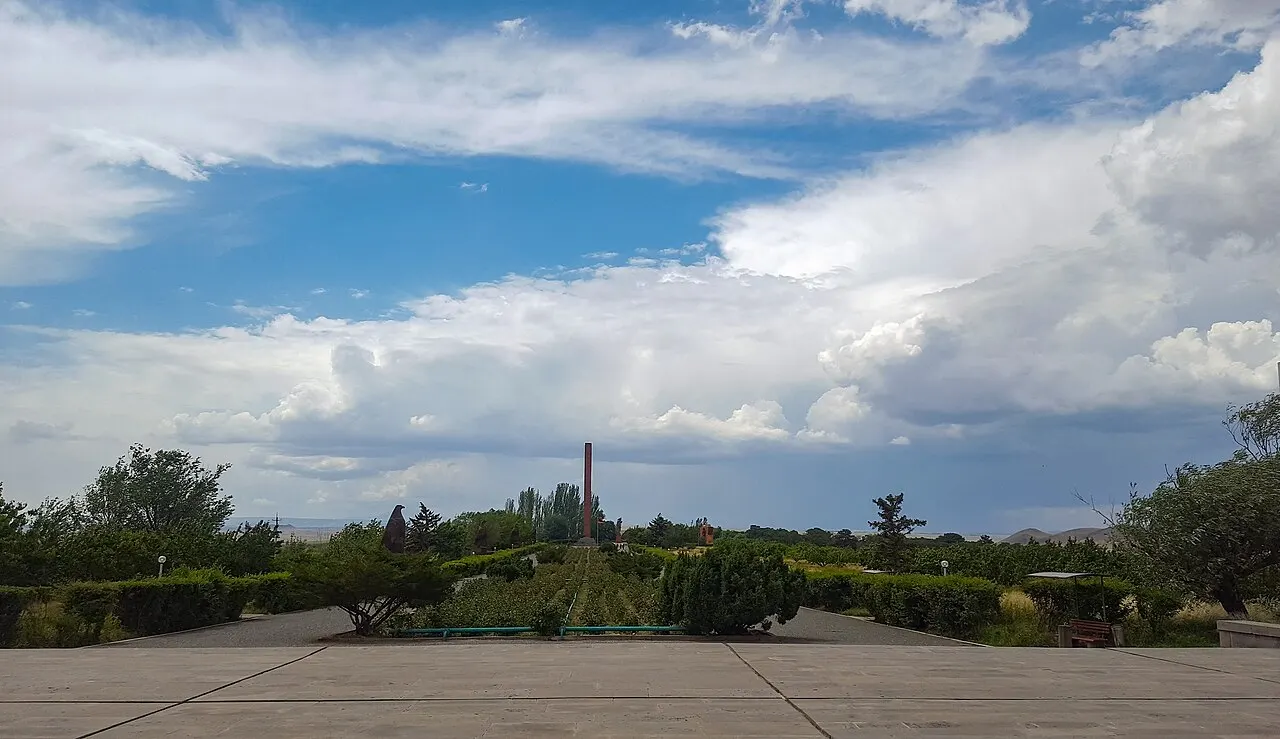
What to see · 8 min read
Sardarapat Memorial: Armenia's 1918 Battle Site
Verified · August 31, 2026Sardarapat Memorial near Armavir: 1918 battle site, Israelyan's red-tufa complex, ethnography museum tickets, hours and how to reach it from Yerevan.
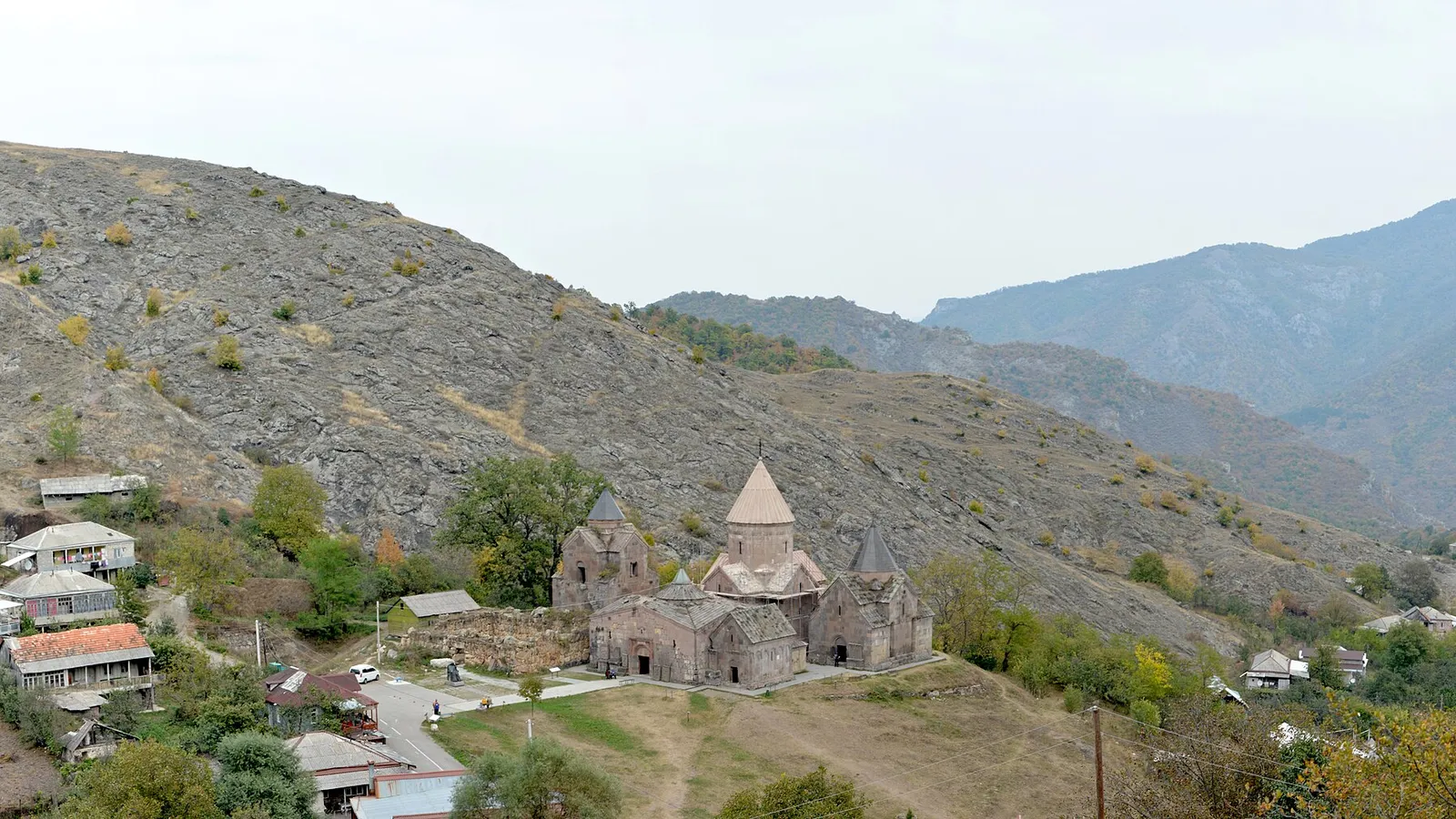
What to see · 12 min read
Goshavank Monastery & the Village of Gosh
Verified · August 29, 2026Visiting Goshavank: Mkhitar Gosh's law code that reached Poland, the 1291 embroidered khachkar, his statue and hillside tomb, and the drive from Dilijan.