Byurakan Observatory: Stargazing on Aragats
Visit Byurakan Observatory on Mount Aragats: day tours, the 2.6m telescope, night stargazing prices and how to book ahead on bao.am.
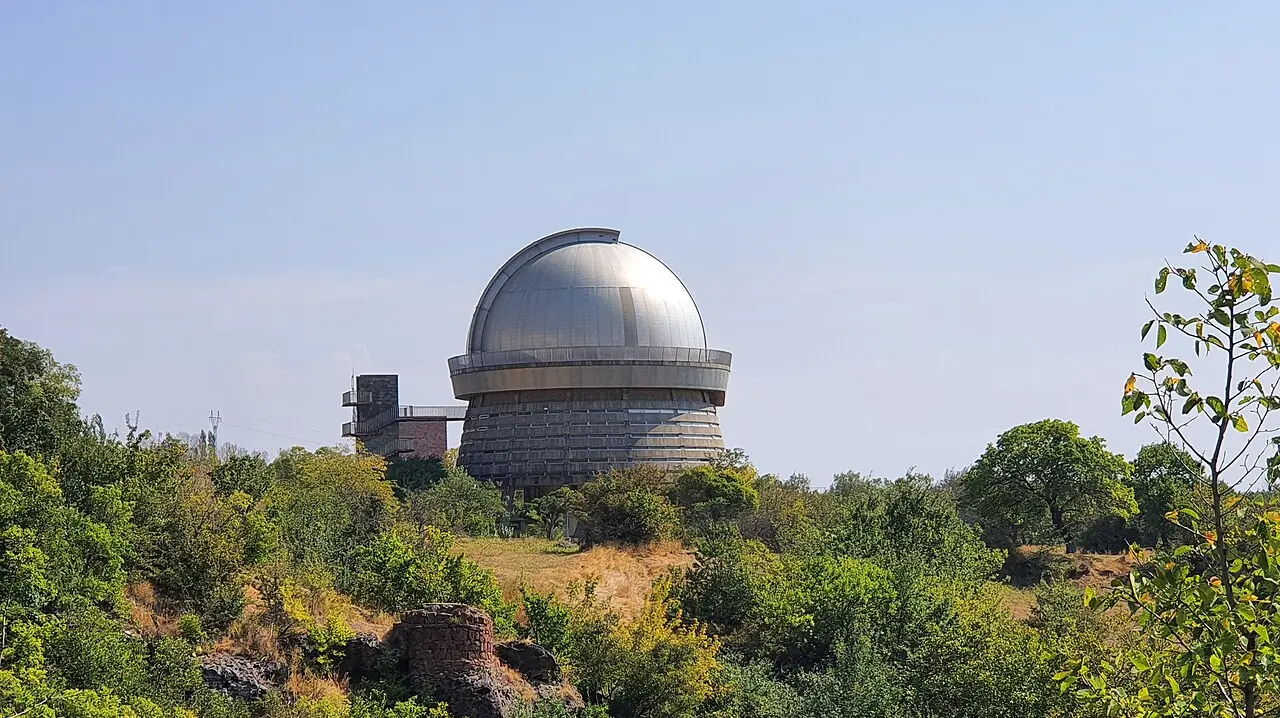
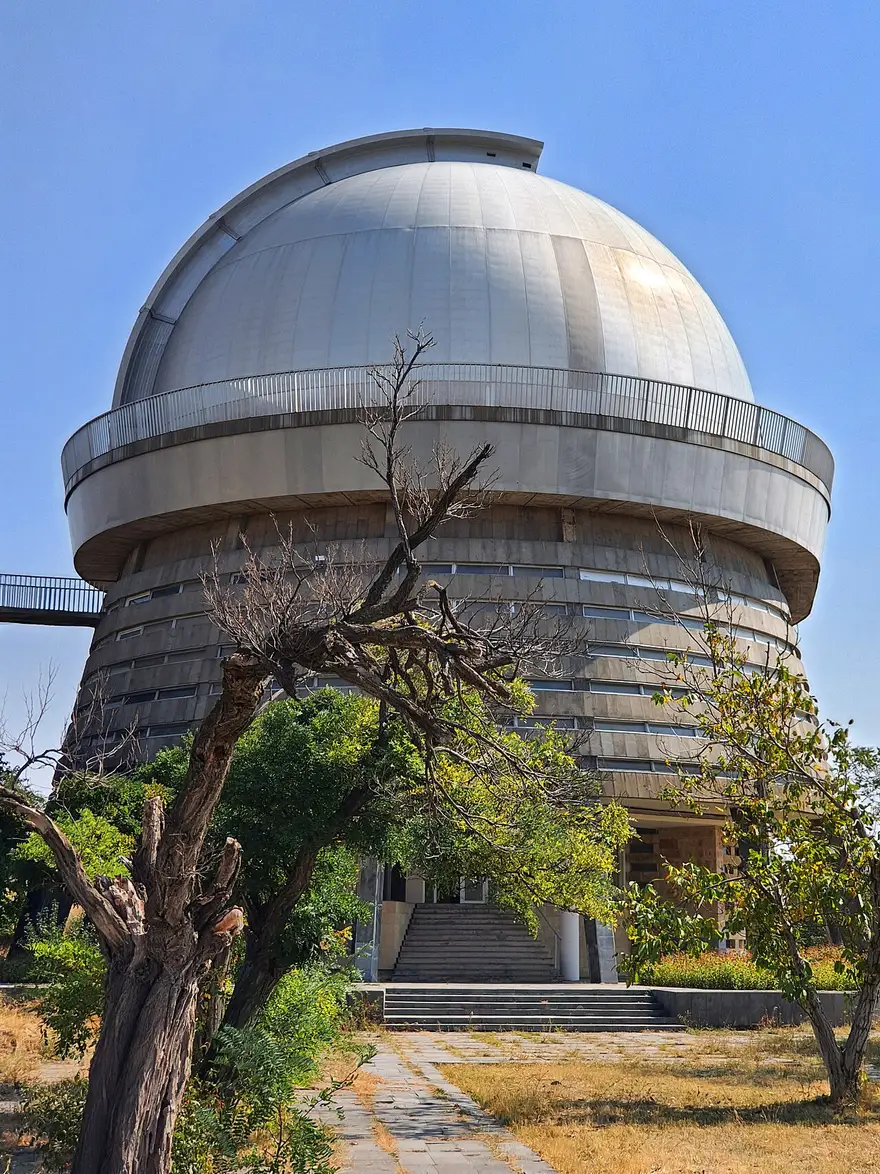
The Byurakan Astrophysical Observatory sits on the southern flank of Mount Aragats at about 1,400 m, roughly 35 km northwest of Yerevan, and it’s still a working science site - not a theme park with a gift shop. Viktor Ambartsumian founded it in 1946, and its 2.6 m reflector and 1 m Schmidt telescope helped define how astronomers think about stellar systems in the Soviet era and after. For visitors the draw is simpler: white domes above pine forest, a house-museum of a giant of Armenian science, and - on clear nights - a guided hour at a professional small telescope. You’ll need to book ahead; walk-ins don’t fit how a live observatory runs.
In 2026 the observatory marks its 80th anniversary with public events through the year. The International Astronomical Union already credited Byurakan in 2016 as an early driver of astronomical tourism, which sounds like marketing until you stand on the terrace and realise how dark the sky gets once Yerevan’s glow drops below the ridge.
Why astronomers still care about this ridge
Byurakan’s fame in the 20th century came from statistical surveys - systematic photographic hunts through the sky that turned up unusual galaxies and star systems. The Markarian survey, begun here in the 1960s, is on UNESCO’s Memory of the World register; a dedicated heritage centre on the grounds explains it when open. You don’t need a PhD to enjoy the story: it’s the reason a small Soviet campus in a Caucasus village still appears in textbooks.
Ambartsumian himself pushed the idea that stars and galaxies are born in groups, not in isolation - controversial once, textbook now. The house-museum keeps that human side alive: letters, instruments, the domestic rooms of a scientist who ran academies by day and argued about stellar associations by night.
What you can see on a day visit
Daytime tours run 10:00 to 17:00 and are built in modules so staff can keep research schedules intact. The standard stack for foreign visitors, priced on the official tours page, looks like this:
| Tour | Duration | Foreign price (6+ people) | Foreign price (group of 1-5) |
|---|---|---|---|
| Observatory territory | 1 hour | 900 AMD | 4,500 AMD |
| V. Ambartsumian house-museum | 40 min | 1,500 AMD | 7,500 AMD |
| 2.6 m telescope (day, through glass) | 1 hour | 1,500 AMD | 7,500 AMD |
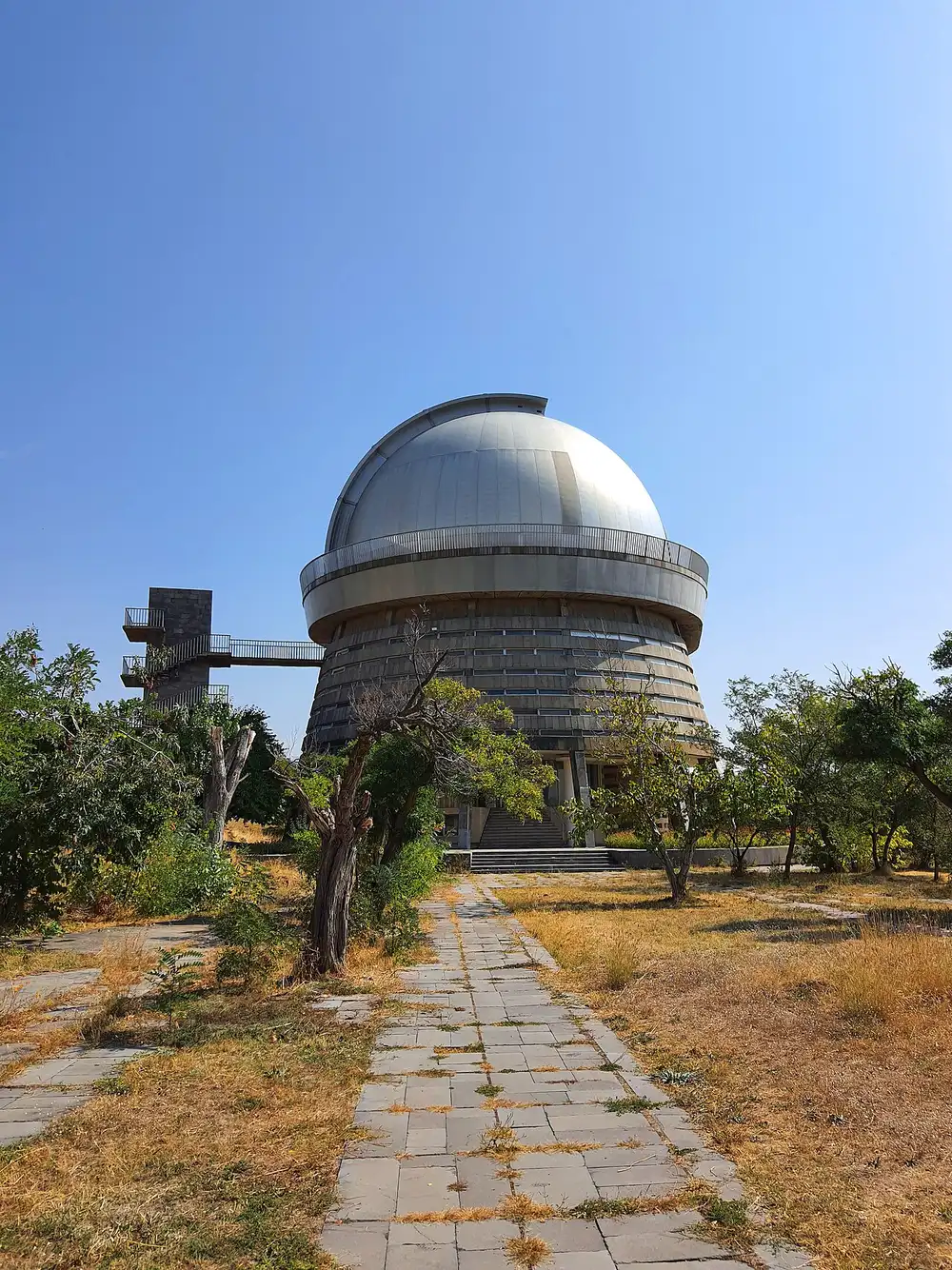
The 2.6 m ZTA telescope is the largest working instrument on the mountain. A day visit takes you into the viewing room behind glass - you won’t touch the optics, but you’ll see the bulk of the tube and hear how nightly surveys actually run. The house-museum is Ambartsumian’s former home, dense with the life of a scientist who shaped national academies and international unions, not just a plaque on a wall.
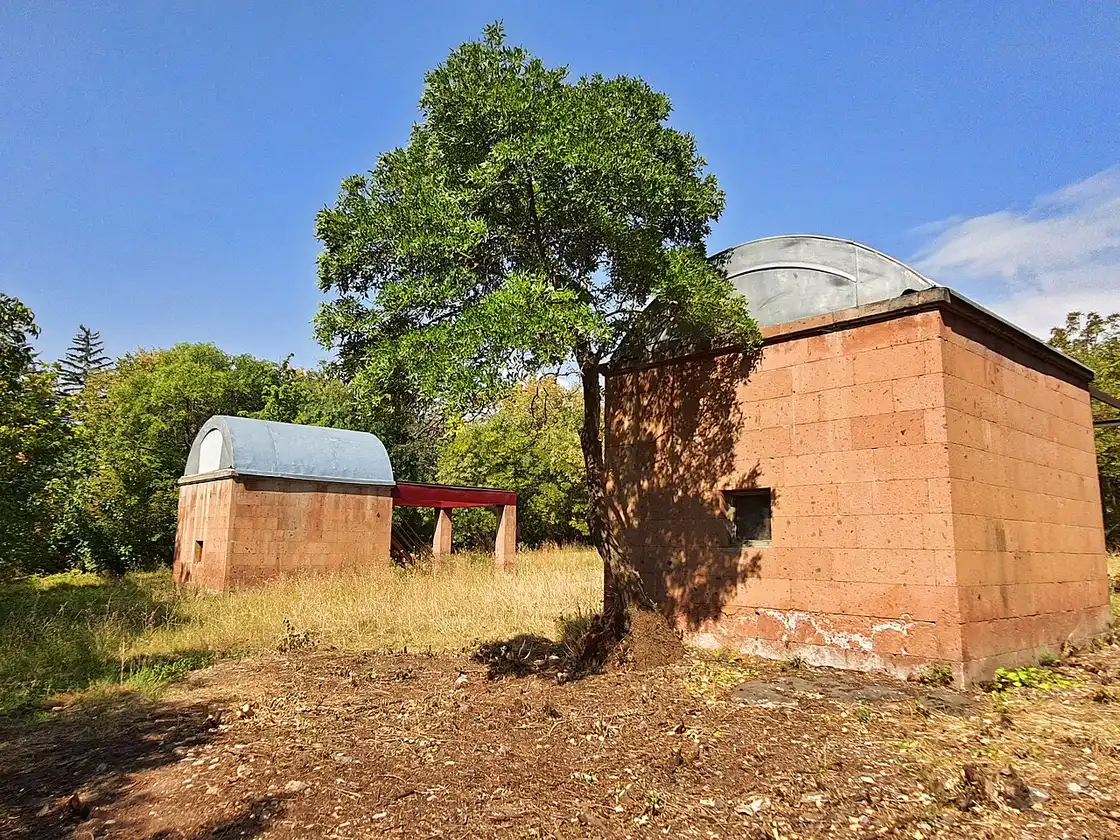
Smaller add-ons exist on the same price sheet - cemetery of staff, planetarium slots on weekends, popular lectures in Armenian, Russian or English at separate flat fees - but most travellers combine territory + museum + 2.6 m for about two and a half to three hours on the grounds, including the museum block and the dome visit.
Planetarium and the UNESCO archive
Weekend planetarium shows run as inflatable-dome films when the schedule lists them - useful if clouds kill your night slot but you’ve already driven up. The observatory lists a UNESCO heritage centre around the Markarian survey as coming soon - it isn’t bookable yet, so ask when you call. It explains Armenia’s other listed documents; hours overlap the day tour window, so ask at booking whether it’s open on your date.
Group size and language
Prices on the official sheet split six or more travellers from one to five. A couple paying the small-group night rate will feel the sting; a minibus of six suddenly looks cheap. Ask about language when you call 091 195903. Russian and Armenian slots are more common mid-week in summer.
Night observations: stargazing that depends on the sky
The product most people picture is Night Observations - Professional Small Telescope: one hour at the eyepiece with a guide who picks targets for the season and the moon phase. Official hours are April-September 20:00-24:00 and October-March 20:30-24:30. Foreign pricing on the same page runs 3,500 AMD per person for groups of six or more and 17,500 AMD for a private group of one to five - steep for a solo traveller, better value if you’re travelling with friends.
You’ll see whatever the sky allows - moon craters, Jupiter’s moons, Saturn’s rings, star clusters, nebulae, sometimes Andromeda - not a scripted planetarium show. Cloud, wind or a bright moon can shrink the menu fast. That’s why the observatory treats night sessions as weather-dependent and why you shouldn’t stack a midnight flight the same evening.
How to book (official channel)
The observatory asks you to book every visit in advance. The tours page lists 091 195903 for reservations; the main site also publishes (+374-91) 195901 and observ@bao.sci.am for general contact. English-language night slots aren’t guaranteed every evening - call or email early in your trip, especially if you’re set on a stargazing night after a long Aragats drive.
Yerevan tour operators sometimes sell evening stargazing packages with transport. Those can be easier logistically, but the telescope time still runs through observatory staff and the same weather rules. Ask what’s included: transfer only, or a confirmed BAO night slot.
Where Byurakan sits on an Aragats day
Byurakan village lies on the road up Aragats, between the plain and Lake Kari at 3,200 m. Most visitors meet it on the way down from the mountain, not as a standalone trip - which is the right instinct. Pair it with Amberd fortress, the Alphabet Monument, gorge monasteries and the lake in one long loop; our Aragatsotn day loop lays out the driving order, and the dedicated pages on Mount Aragats and Lake Kari and Amberd fortress cover the high stops in depth.
Timing matters. Lake Kari and the road above Byurakan are usually open only from about mid-May to mid-October; winter snow shuts the top even when the village road still works. A sensible summer day runs Amberd and Kari in daylight, dinner in Ashtarak, then a pre-booked night slot back at Byurakan if the forecast is clear. Trying to squeeze Kari, Amberd and midnight stars into one breathless July afternoon is how people miss the fortress light and arrive at the eyepiece tired.
Getting there
A village minibus from Yerevan reaches Byurakan in about an hour, but it won’t fit a night slot and it won’t wait at the gate. From Yerevan it’s 45-60 minutes by car via Ashtarak, on the same paved approach you’d use for Amberd. Taxis can drop you for a day tour if you’ve booked a time slot; for night observations you’ll want a return ride or a tour bus, because local taxis aren’t thick on the ground after 22:00.
If you’d rather not drive mountain switchbacks yourself, a guided Aragats and Amberd day trip can fold Byurakan into the loop - mention stargazing when you book, because night slots open at 20:00 in summer and 20:30 in winter, and a standard daytime circuit won’t wait.
Practical notes that save the evening
- Book before you climb. Day modules can sometimes align with same-day arrival, but night slots need a confirmed time and a clear sky plan.
- Dress for 1,400 m at night. July evenings still get cool; spring and autumn need a proper jacket.
- Moon phase matters. A full moon makes faint nebulae harder; a crescent or quarter moon is friendlier for deep-sky targets if the schedule allows.
- Photography etiquette. Tripods near working domes may be restricted; ask your guide instead of assuming.
- Combine with science, not only scenery. The UNESCO-linked Markarian survey archive has its own display centre on the price list when open - worth asking about if you’re already on the grounds.
Byurakan rewards planners more than wanderers: a phone call, a clear night, and a day already spent on the slopes of Aragats. Get those three aligned and you’ll understand why astronomers kept coming back to this ridge long before astro-tourism had a name. For phone photos without a tripod, blue hour after sunset works best - domes still read against Aragats before the sky goes black. A phone handles silhouettes fine; bring RAW if you already know where to stand without blocking technicians.
Winter usually keeps the village road open, but night slots are rarer and the cold bites harder than in Yerevan. From November through March, pack a thermos, gloves, and a backup plan if clouds cancel - rescheduling is the observatory’s call, not your guide at the telescope.
Photos
On the map
The map loads on click - to keep the page lightweight.
The map didn’t load. Check your connection and refresh the page.
Admission and opening hours
- Admission price
- Day territory tour from 900 AMD/person (foreign, 6+); night telescope session from 3,500 AMD/person (foreign, 6+); group rates higher for 1-5 visitors - see bao.am
- Opening hours
- Day tours 10:00-17:00; night observations Apr-Sep 20:00-24:00, Oct-Mar 20:30-24:30 (book ahead)
All visits must be booked in advance by phone (+374 91 195903 per official tours page). Night sessions are weather-dependent.
Details checked: August 26, 2026
Distance ≈35 km · 45-60 min by car
- Yerevan ≈35 km · 45-60 min by car Paved road via Ashtarak; a village minibus reaches Byurakan but does not suit a night slot; visits need advance booking.
Read also

What to see · 10 min read
Soviet Modernist Yerevan: An Architecture Walk
Verified · September 5, 2026Walk Yerevan's Soviet modernism: Rossiya Cinema, Komitas Hall, Cascade, Hrazdan Stadium and Demirchyan Complex - dates, route order, and what still stands.

What to see · 9 min read
Kond: Walking Yerevan's Oldest Neighborhood
Verified · September 3, 2026Walk Kond, Yerevan's oldest living quarter: Surp Hovhannes, Tepebashi mosque walls, Leo Street alleys, and how to visit without treating it like a set.
What to see · 8 min read
Sardarapat Memorial: Armenia's 1918 Battle Site
Verified · August 31, 2026Sardarapat Memorial near Armavir: 1918 battle site, Israelyan's red-tufa complex, ethnography museum tickets, hours and how to reach it from Yerevan.
What to see · 12 min read
Goshavank Monastery & the Village of Gosh
Verified · August 29, 2026Visiting Goshavank: Mkhitar Gosh's law code that reached Poland, the 1291 embroidered khachkar, his statue and hillside tomb, and the drive from Dilijan.