
Amberd Fortress: Castle on the Slopes of Aragats
How to visit Amberd, Armenia's dramatic fortress at 2,300 m on Mount Aragats: the 1026 church, the siege waterworks, and when the road is open.
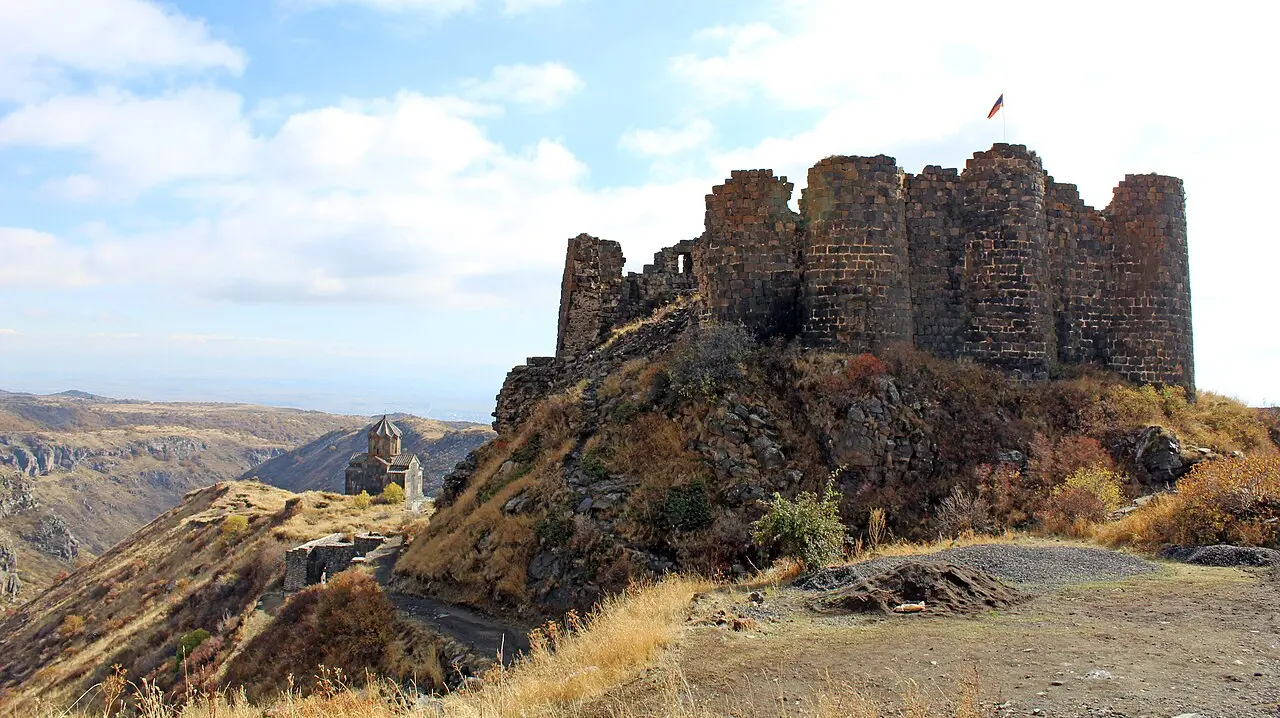
Amberd is the most dramatic castle in Armenia, and one of the least visited for its drama - a black-basalt fortress on a spur of Mount Aragats, wedged between two river gorges at 2,300 m, with a perfect little 11th-century church standing beside it. The name is usually translated “fortress in the clouds,” and on the right afternoon, with mist pouring up the ravines, it earns it. It sits about 50 km northwest of Yerevan and makes the best stop on the drive up toward Lake Kari - if you time it for the months the mountain road is open.
That timing is the one thing to get right. Amberd sits high on Aragats, and the road that reaches it’s generally clear only from about mid-May to mid-October; in winter snow closes the approach entirely, and even in high summer it’s cold and windy up top when Yerevan is baking. There’s no public transport anywhere near it, so this is a rental-car or organised-tour outing, best folded into a full day on the mountain. Get the season right and you get one of the country’s great medieval sites almost to yourself.
A fortress in the clouds
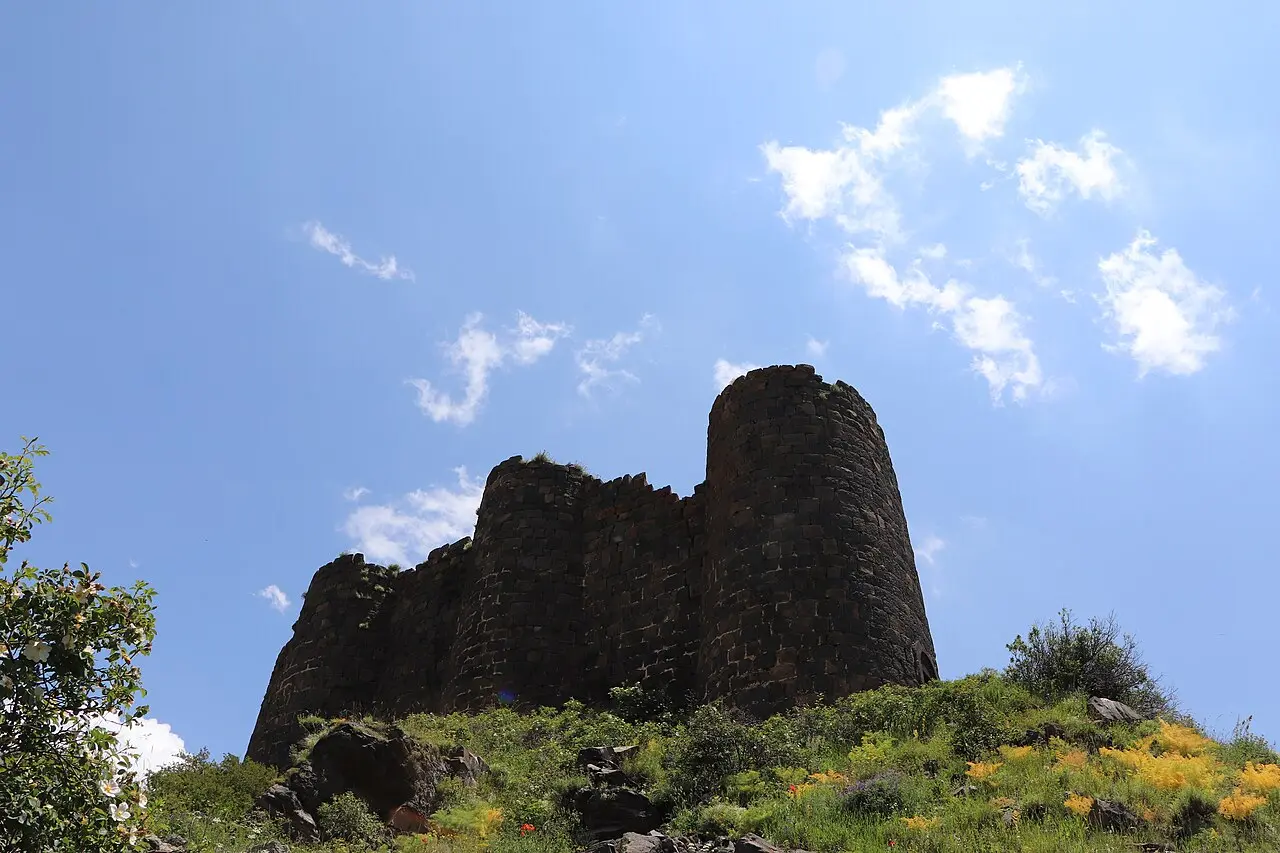
What makes Amberd so defensible is its site. It stands on a triangular promontory where the Arkashen and Amberd rivers meet, so two sides drop straight into gorges and only the third had to be walled - which is where the surviving basalt ramparts run, thick and round-towered, across the neck of the spur. The whole compound covers around 1,500 square metres, and the main keep once rose three storeys - no bare garrison tower, but a lordly interior, with medieval accounts describing oil lamps and fine ornament inside. Come at it head-on from the approach path and the wall of dark towers reads exactly like what it was: a stronghold built to be very hard to take.
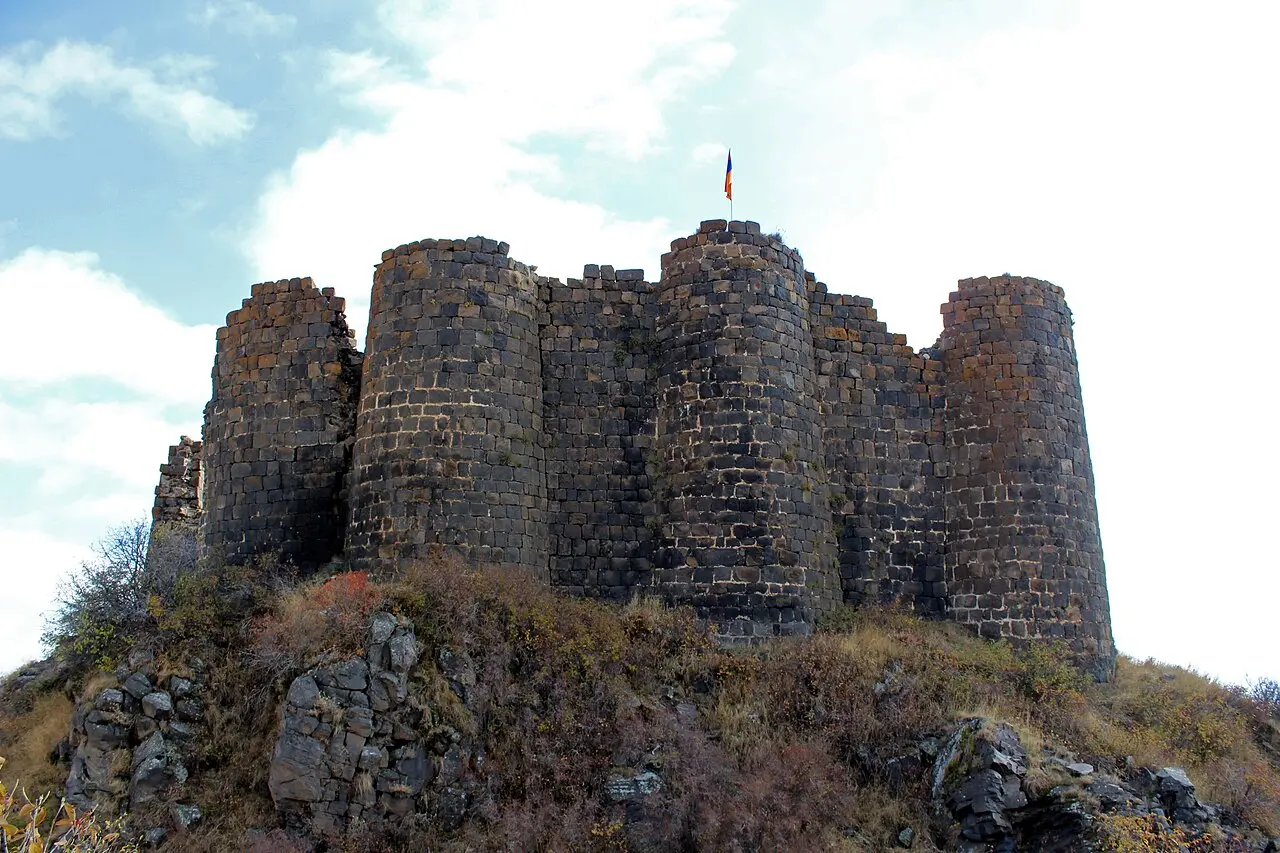
The dark volcanic stone is the local tuff and basalt of Aragats, which is why the fortress looks almost grown out of the mountain rather than set on it. Bring a jacket whatever the forecast: at this height the wind rarely stops, and cloud can swallow the whole spur in minutes, which is half the atmosphere and half the reason to keep an eye on the weather.
It’s worth remembering how rare this survival is. Armenia kept far more of its monasteries than its castles, so a medieval fortress standing at this scale - ramparts, keep, church and bathhouse together - is genuinely unusual, and large stretches of all of them are still intact. That’s why Amberd repays the climb even for anyone who feels they have already seen enough old stone in Armenia.
Who built it: from the Kamsarakans to the Pahlavunis
Amberd is old even by Armenian standards. The castle and its first walls were most likely raised in the 7th century by the noble house of Kamsarakan, one of the old princely families of the region. In the 10th century the Bagratuni kings handed the fortress to the Pahlavuni princes, and it reached its height under them - a military seat guarding the approaches to the Aragats uplands and the plain below.
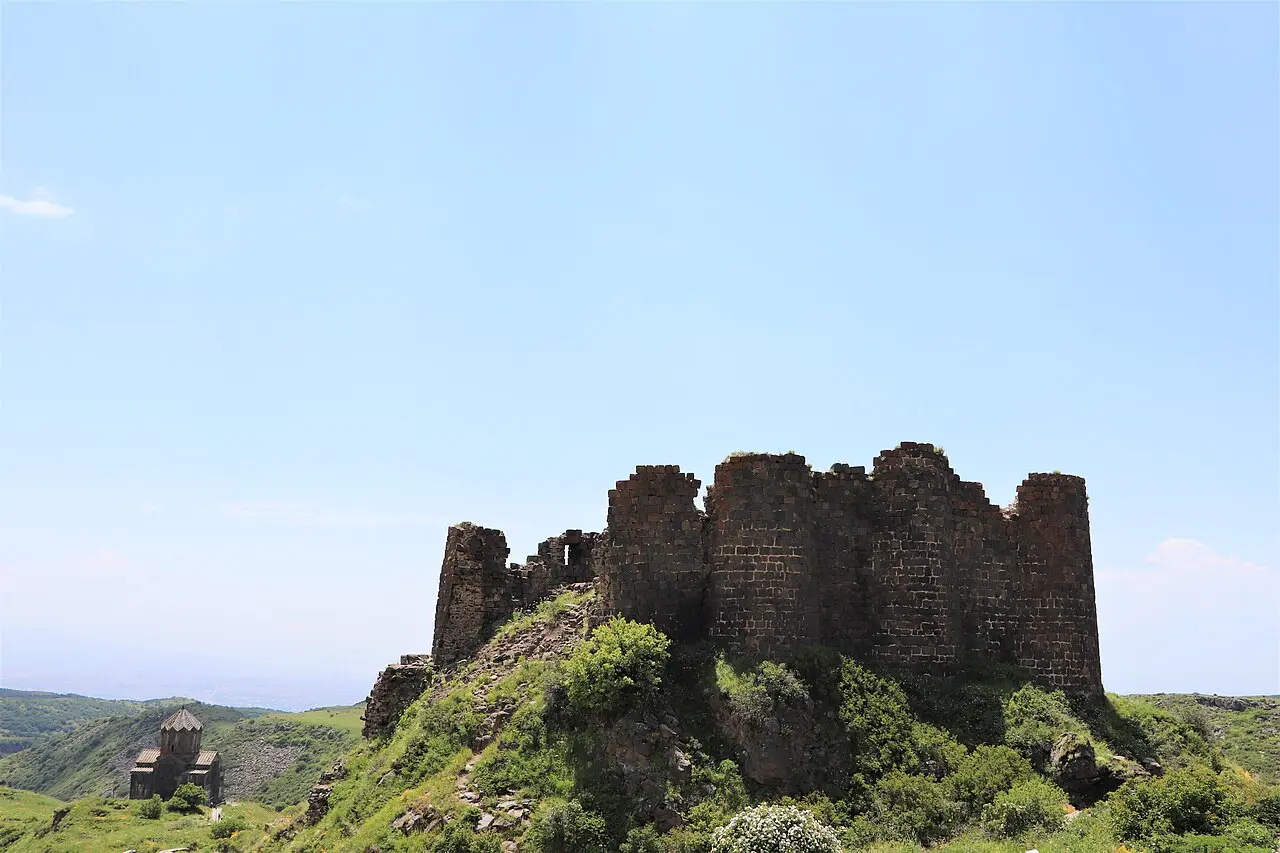
The place changed hands as the region did. Byzantium took it in 1047 and the Seljuk Turks in the 1070s; then in 1196 the brothers Zakare and Ivane Zakaryan, the great generals of the Armenian-Georgian revival, wrested it back. In 1215 it passed to Vache I Vachutyan, who made Amberd a dynastic seat - which is why the site is as much a lordly residence, with a church and a bathhouse, as it’s a raw military castle.
The Vahramashen church
The building most visitors photograph isn’t the keep but the church beside it. Vahramashen - properly Surb Astvatsatsin, the Holy Mother of God - was raised in 1026 by Vahram Pahlavuni, the family’s most famous member, and it still stands in fine condition a thousand years on. It’s a compact, cross-in-square church of the great medieval period, built of the same reddish tuff, with the restrained geometric carving that marks the best Armenian architecture of the age.
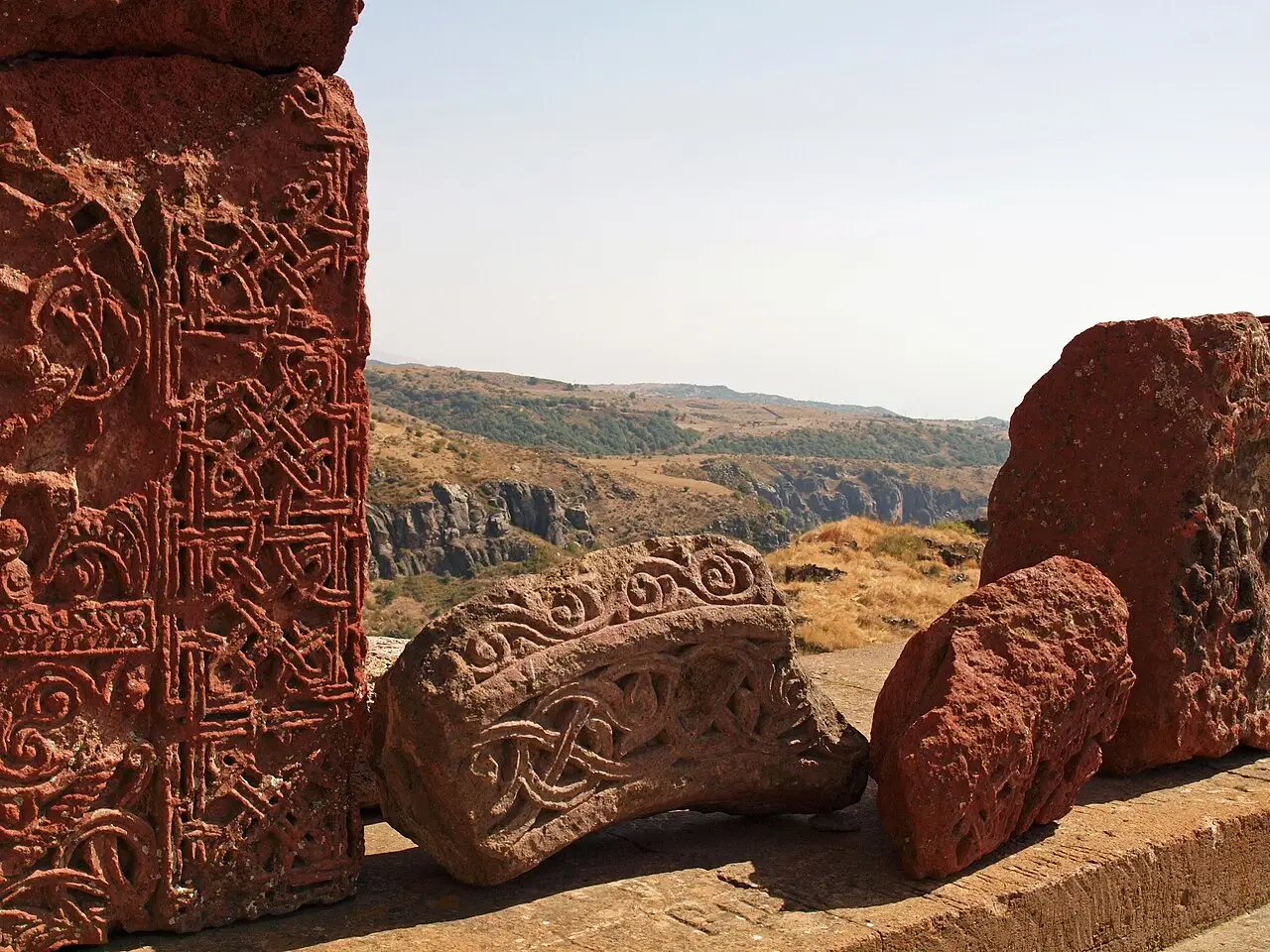
Because it’s a monastery-era church on the way to the country’s highest mountain, Amberd earns a place among the finest medieval architecture in Armenia; our roundup of the best monasteries in Armenia sets the Vahramashen church in that wider picture. Stand at the church end and you also get the view the builders had: straight down the ravine and out across the plain to Ararat on a clear day.
The clever part: bath, pipeline and a secret passage
Here’s the detail most people miss, and the one that turns Amberd from a pretty ruin into a genuinely clever piece of engineering. A fortress this high has one obvious weakness - water - and its builders solved it twice over. They ran a terracotta pipeline four to five kilometres across the slopes from higher springs and dammed reservoirs to keep the cisterns full, and they cut a secret covered passage down to the Arkashen River in the gorge, so the garrison could still draw water when the fortress was surrounded.
Amberd also holds one of the oldest bathhouses in the region, built in the 10th-11th centuries: a pair of small domed rooms heated by a hypocaust, with hot air and water piped through channels in the floor and walls - a Roman-style bath, high on an Armenian mountain, eight hundred years before indoor plumbing was normal anywhere. The bath is one of the structures that survive, so you can still make out the plan on the ground. It’s the kind of thing that rewards a slow walk rather than a quick photo, and it’s why Amberd is worth more than the ten minutes most tour itineraries give it.
Conquest, ruin and a fragile survival
For all its cleverness, Amberd couldn’t outlast the Mongols. They stormed and badly damaged it in 1236, and although it was partly restored later in the century, it was finally abandoned after the invasions of Tamerlane in the 1380s and never reoccupied. By then the age of the great princely fortresses in Armenia was ending, and Amberd was left to the wind and the snow. What you walk through today is essentially the medieval fortress left to the mountain - which is both its charm and its problem.
That fragility hasn’t gone unnoticed. In 2024, Amberd was shortlisted - one of 11 nominees - for Europa Nostra’s 7 Most Endangered programme, flagging the real risk of structural collapse from erosion, earthquakes and a lack of conservation funding. It’s a reason to visit - and a reason to tread lightly when you do: keep to the paths, don’t climb on the walls, and remember you’re walking through a thousand-year-old ruin that may not stand forever.
How to visit
Amberd is about 50 km northwest of Yerevan, a 1 to 1.5-hour drive up through Ashtarak and Byurakan on a paved road that keeps climbing the flank of Aragats. As with almost everything good on this mountain, there’s no public transport, so you need a car or a tour. Renting a car gives you the freedom to time the light, linger over the bathhouse and carry on higher afterwards - our guide to car rental in Armenia covers the paperwork and the mountain-road realities. If you’d rather not drive a high road, a guided Aragats and Amberd day trip takes the wheel and the route-finding off your hands.
The single rule is the season. The road up is generally open only from around May to October; outside that, assume snow has closed it, and even in summer confirm it’s clear on the morning you go. There’s no ticket office - Amberd is an open ruin - but equally there are few facilities up there, so carry water, sun cover and a windproof layer, and don’t count on a cafe. On the way down through Byurakan, the astrophysical observatory offers pre-booked day and night tours if you still have daylight or a clear forecast - our Byurakan Observatory guide covers booking. The last stretch from the road to the walls is a short walk over rough ground, and the gorge edges are open and unguarded, so wear proper shoes and keep children close. If you’re still choosing dates, our guide to the best time to visit Armenia lays out when the high country opens up.
Best of all, don’t make the drive for Amberd alone. It sits perfectly on a full day on the mountain: pair it with the drive-up alpine lake and easy summit walk at Mount Aragats and Lake Kari higher up, and with the gorge monasteries and giant carved letters of the Aragatsotn day loop, which circles Oshakan, Saghmosavank and the Alphabet Park before climbing to Amberd and the lake on a single tank of fuel.
On the map
The map loads on click - to keep the page lightweight.
The map didn’t load. Check your connection and refresh the page.
Good to know
Open ruin, no ticket office. The road up Aragats is usually clear roughly May to October and snowbound in winter - confirm it is open before you drive up.
Details checked: July 20, 2026
Distance ≈50 km · 1-1.5 h by car
- Yerevan ≈50 km · 1-1.5 h by car Paved road via Ashtarak and Byurakan; no public transport; the approach is snowbound in winter.
Read also

What to see · 10 min read
Soviet Modernist Yerevan: An Architecture Walk
Verified · September 5, 2026Walk Yerevan's Soviet modernism: Rossiya Cinema, Komitas Hall, Cascade, Hrazdan Stadium and Demirchyan Complex - dates, route order, and what still stands.

What to see · 9 min read
Kond: Walking Yerevan's Oldest Neighborhood
Verified · September 3, 2026Walk Kond, Yerevan's oldest living quarter: Surp Hovhannes, Tepebashi mosque walls, Leo Street alleys, and how to visit without treating it like a set.
What to see · 8 min read
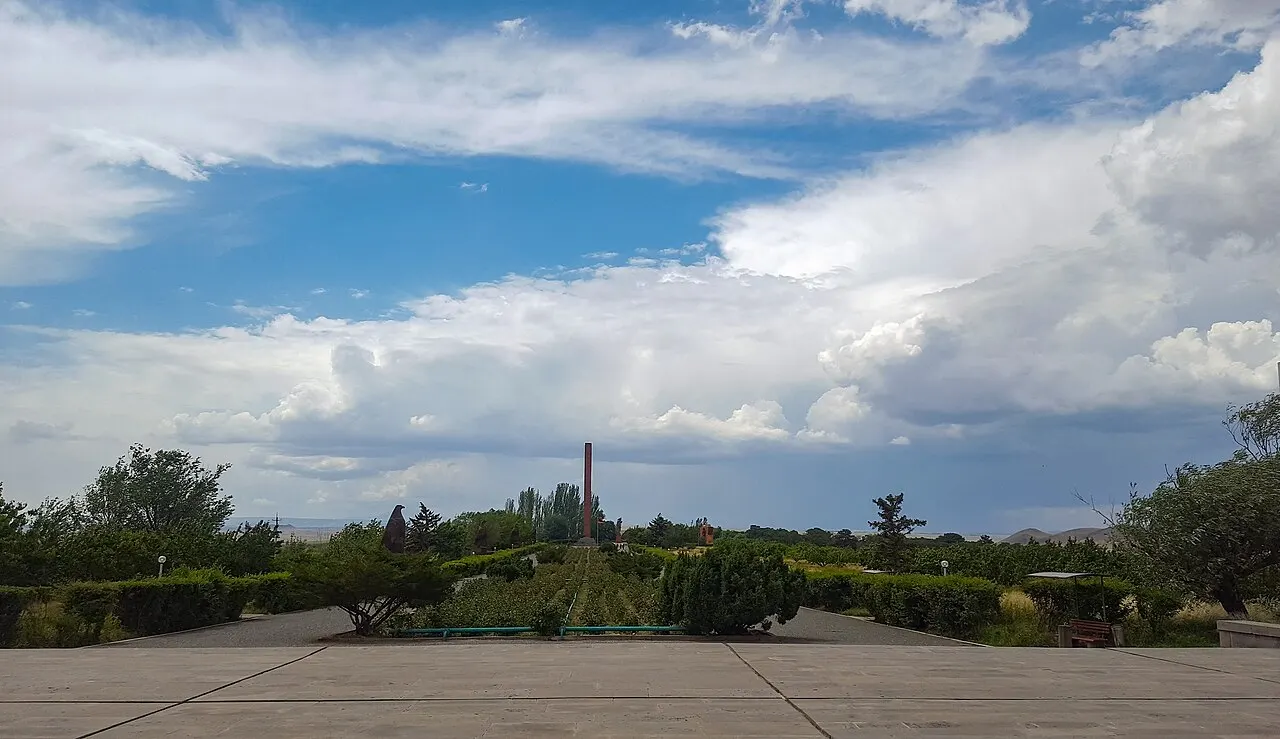
Sardarapat Memorial: Armenia's 1918 Battle Site
Verified · August 31, 2026Sardarapat Memorial near Armavir: 1918 battle site, Israelyan's red-tufa complex, ethnography museum tickets, hours and how to reach it from Yerevan.
What to see · 12 min read
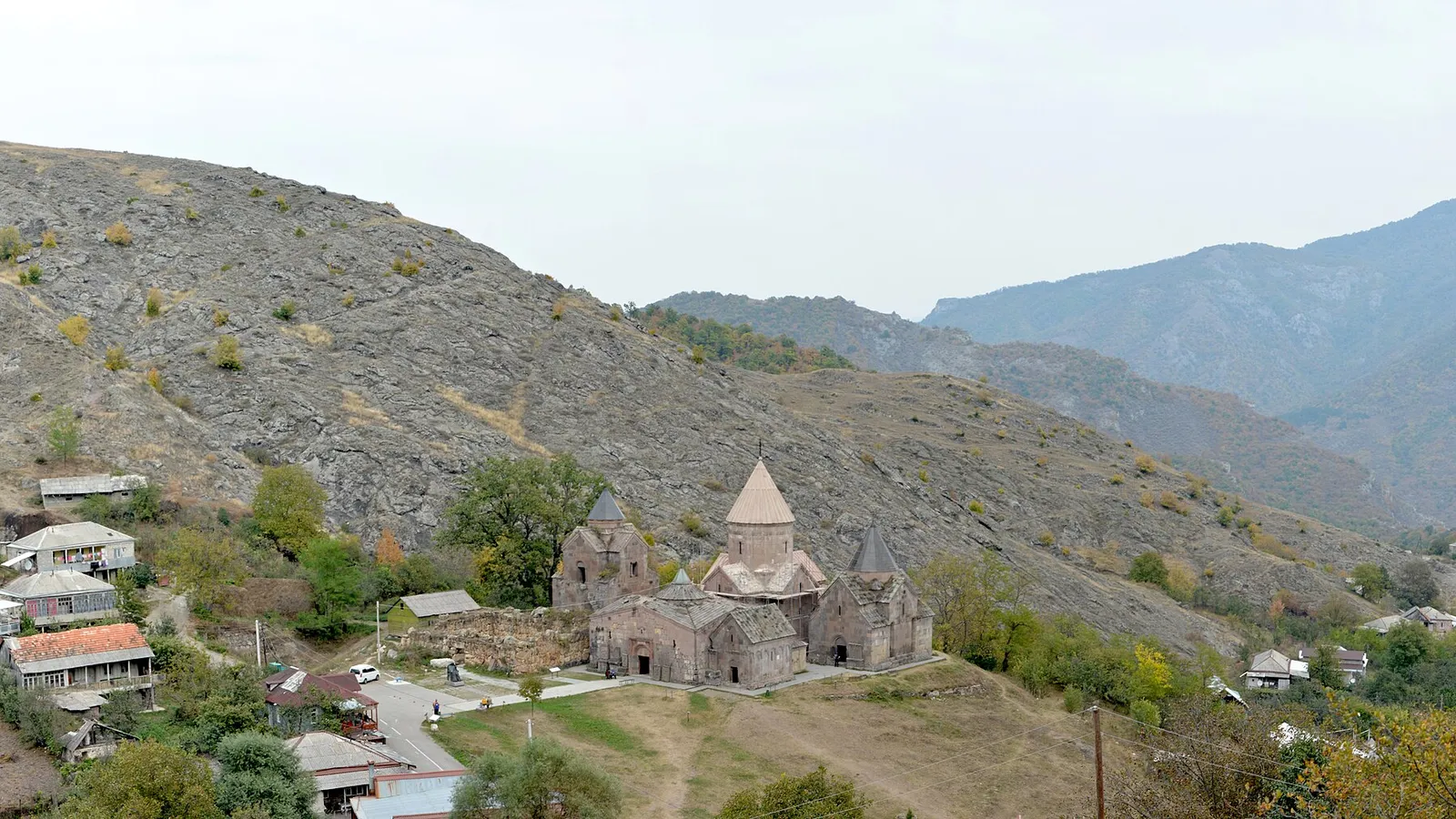
Goshavank Monastery & the Village of Gosh
Verified · August 29, 2026Visiting Goshavank: Mkhitar Gosh's law code that reached Poland, the 1291 embroidered khachkar, his statue and hillside tomb, and the drive from Dilijan.