Zvartnots Cathedral: Armenia's UNESCO Temple Ruins
Zvartnots Cathedral: the ruined 7th-century round temple near Yerevan, why the 45m rotunda fell, what to see today, and how to pair it with Etchmiadzin.
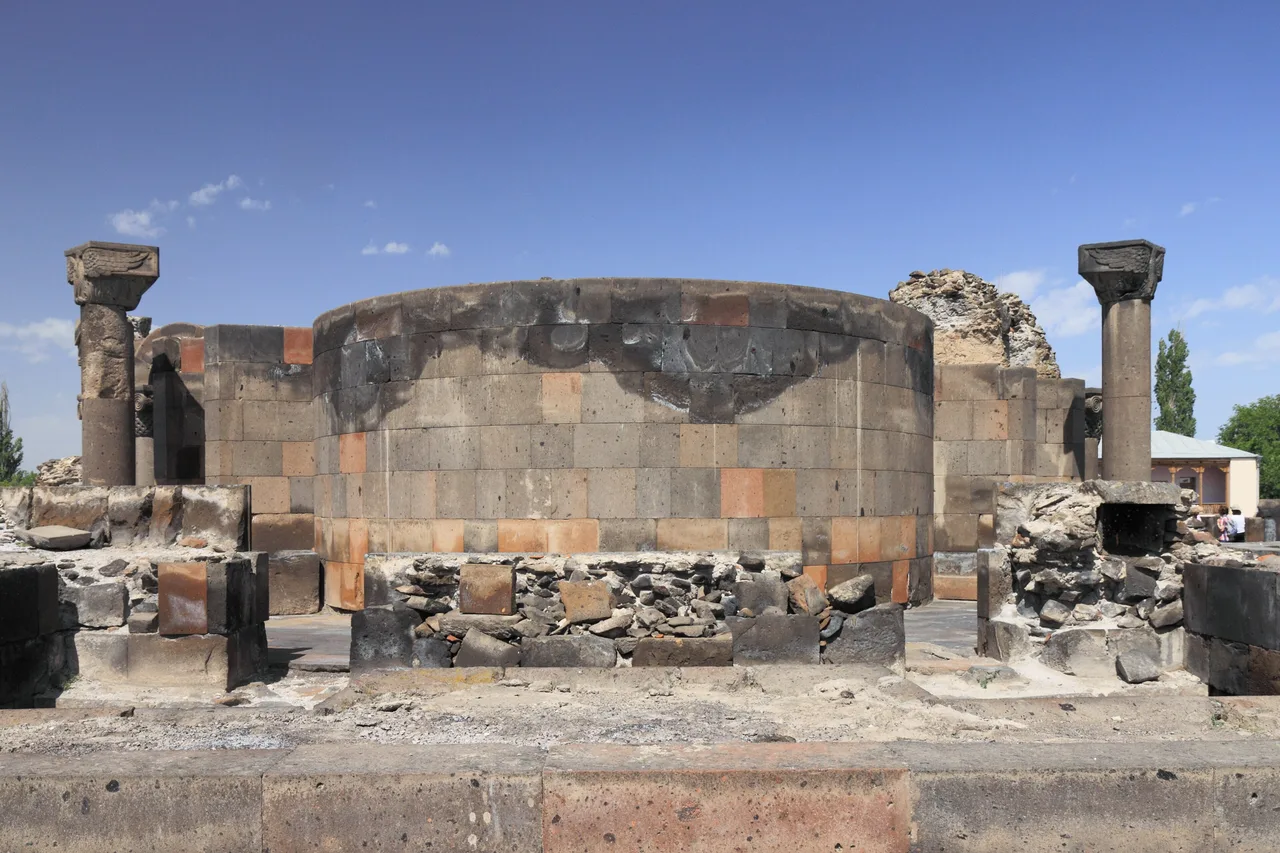
Zvartnots is what’s left of one of the boldest churches the medieval world ever built: a vast circular cathedral raised in the seventh century, three tiers tall and topped by a dome, that stood for barely 300 years before it came crashing down. Today it’s a field of carved stone - re-erected columns, eagle-carved capitals and the great ring of the foundations - on the plain about 15 km west of Yerevan, right beside the airport that borrows its name. Here’s what Zvartnots actually was, the argument over why it fell, what you can see among the ruins now, and how to fold it into a short run out to Etchmiadzin.
What Zvartnots was: a round cathedral 45 metres tall
Most Armenian churches are compact and vertical, built to survive earthquakes. Zvartnots was the opposite: an ambitious, almost show-off design that broke the mould. Commissioned by Catholicos Nerses III - nicknamed Shinogh, “the Builder” - construction began in 643 and the cathedral was consecrated in 652, and it was dedicated to St Gregory the Illuminator, traditionally on the spot where Gregory met King Trdat III. The name Zvartnots means roughly “the temple of the celestial angels.”
The form was a so-called aisled tetraconch: a four-lobed, clover-shaped core wrapped inside a circular outer wall of 32 sides, ringed by an aisle. Above that rose a three-tier rotunda carrying the dome, the whole thing reaching perhaps 45 m - a genuine skyscraper of a church for the era. Inside stood clusters of columns crowned with capitals carved with eagles and vine-work, and an inscription with the builder’s name. It was unlike anything else in the country, and it clearly impressed. Tradition has it that the Byzantine emperor Constans II, who passed through Armenia in the 650s, admired the church so much that he resolved to raise a copy in Constantinople and took its architect west with him - a good story whether or not it’s strictly true, and a fair measure of the impression the place made.
Why it collapsed - and why nobody is quite sure
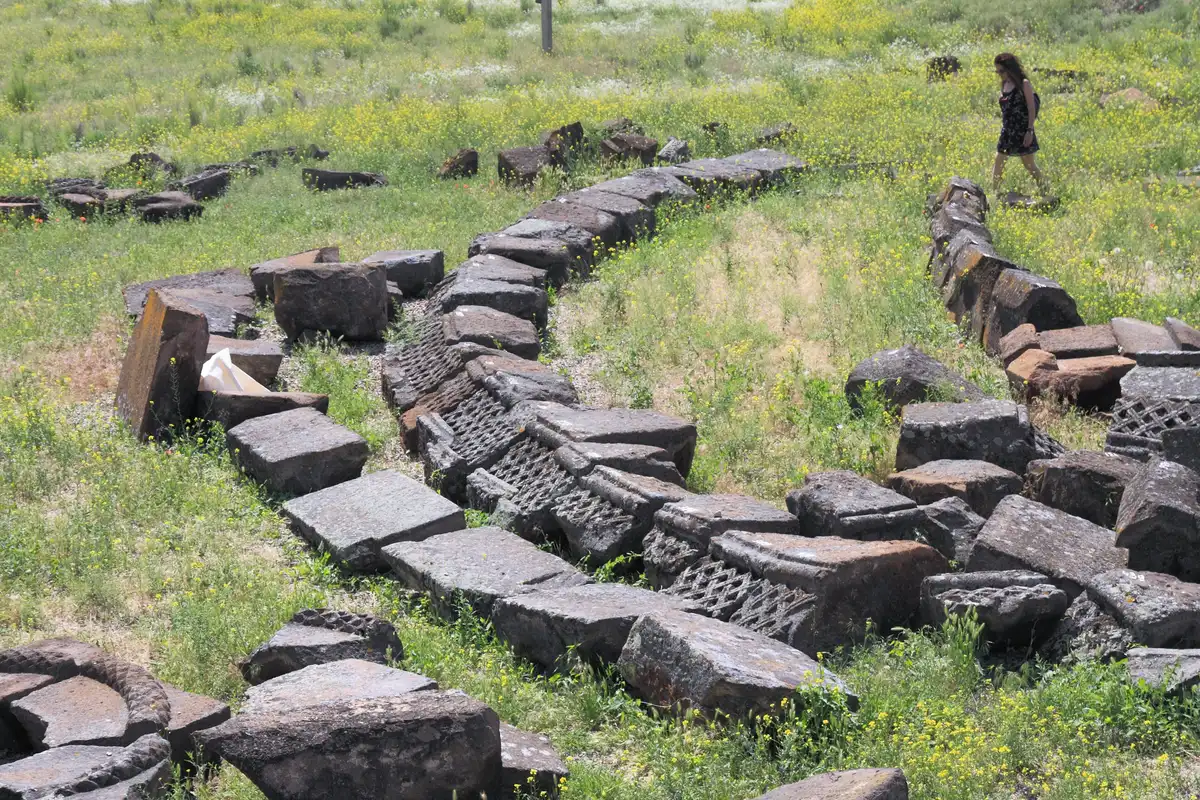
Here’s the part that gives Zvartnots its melancholy pull. The cathedral stood for about 320 years and then collapsed in the tenth century, and it was never rebuilt. What actually brought it down is still debated. The most common explanation is an earthquake - the tall, top-heavy rotunda would have been horribly vulnerable to one, which is exactly why later Armenian architects went back to squat, quake-proof designs. Others point to the Arab raids of the period. Either way, the ambition that made Zvartnots extraordinary is probably the same thing that doomed it: build a round tower this tall in this seismic a country, and gravity eventually wins. It’s a lesson the country’s builders took to heart. Nothing on this scale or this shape was tried again; the churches that followed hunkered down, thick-walled and low-domed, which is exactly why so many of them are still standing a thousand years later while Zvartnots is a field of stumps.
That’s the honest takeaway to carry round the site. You’re not looking at a ruin that was slowly abandoned; you’re looking at a building that fell, all at once, and left its pieces where they landed for a thousand years.
What you see today: an open-air field of carved stone
For nine centuries Zvartnots lay buried, its rubble grassed over. It was excavated between 1901 and 1907 under the archaeologist Khachik vardapet Dadyan, and it was the architect Toros Toramanian who studied the fallen stones and worked out the famous reconstruction of the three-tier round form - the drawing you’ll see on every information board. The dig turned up more than the church, too: the catholicosal palace that stood beside it, and even a wine press, a reminder that this was a working religious estate, not just a cathedral.
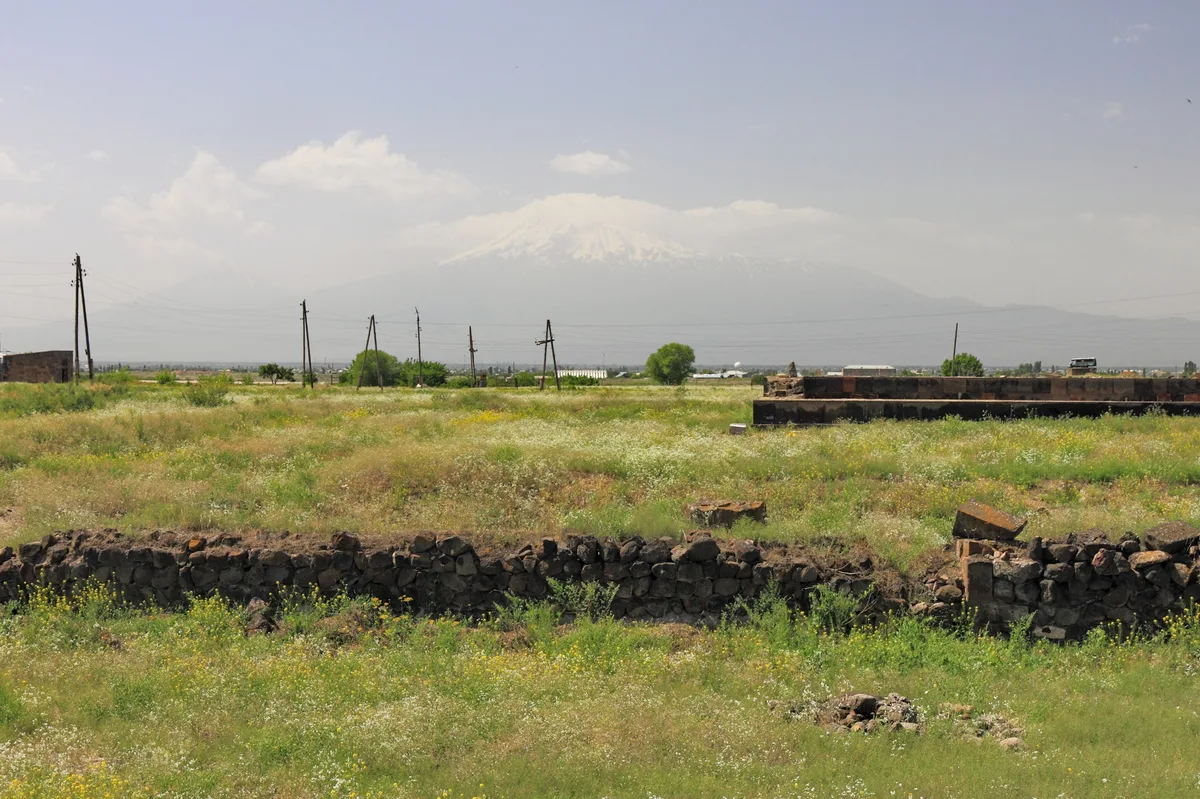
What all this means for a visit is that Zvartnots is an archaeological site, not a working church - closer in spirit to a Roman ruin than to Khor Virap or Tatev. You walk the ring of the foundations, look up at the columns that have been stood back up, and read the shape of the building in the ground. A small on-site museum holds the best carved fragments - the eagle capitals, a sundial, pieces of the inscriptions - and the reconstruction models that make sense of the rubble. Give yourself the museum first, then the ruins; the stones mean far more once you’ve seen what they were part of. On a clear day, Mount Ararat rises across the plain to the south, which is the backdrop the seventh-century builders had in mind.
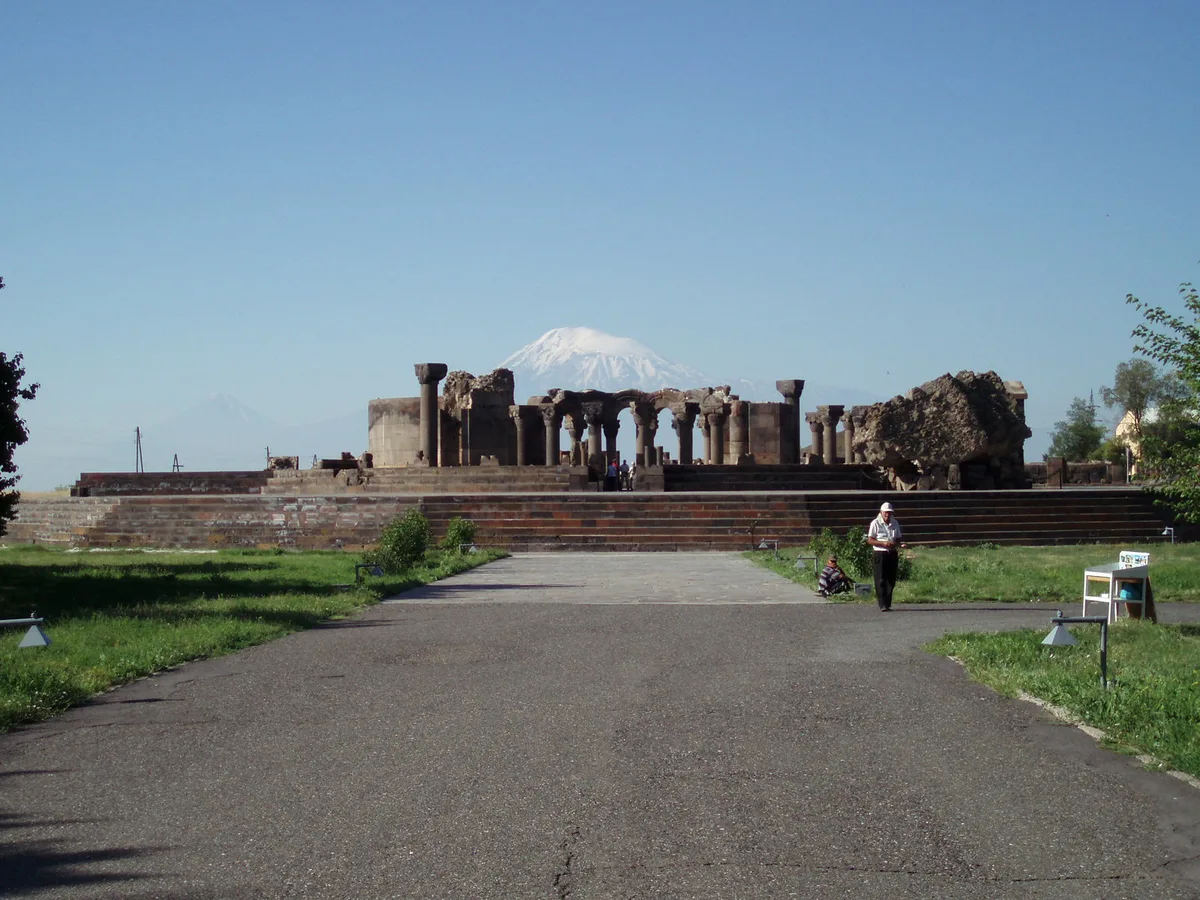
The eagle capitals and the classical touch
Look closely at the columns and you meet the detail that makes Zvartnots special: the capitals carved with eagles, wings spread, gripping the tops of the ground-tier columns. One of them has become a small national emblem in its own right, reproduced on stamps and in schoolbooks. Others carry baskets of acanthus leaves and vine, a clear echo of the classical, Greco-Roman world the seventh-century masons were still drawing on. Among the stones you’ll also find a sundial, capitals cut with the builder’s monogram, and fragments of Greek and Armenian inscriptions - the raw material from which Toramanian pieced the building back together on paper.
That classical streak is part of why Zvartnots feels so different from the tight, dark monasteries elsewhere in the country. This was an outward-looking, cosmopolitan commission, built when the catholicosate itself sat here beside the cathedral, and it wore its ambition openly. Give the museum a proper twenty minutes before you walk the ruins: the capitals are behind glass and worth studying up close, because once you’re out among the foundations they’re back on their columns and too high to read.
Getting there, tickets and hours
Zvartnots sits right on the main road between Yerevan and Vagharshapat (Etchmiadzin), only a few kilometres from Zvartnots International Airport, which was named after the cathedral - so if you fly in, you pass within sight of it. From central Yerevan it’s a 20-minute drive west; by public transport, buses and marshrutkas heading to Etchmiadzin pass the turn-off, leaving a short walk to the gate. A taxi or a rental car is simpler if you want to combine it with the cathedrals beyond.
Entry is a paid ticket, around 1,500 AMD at the time of writing - a couple of US dollars - and it is worth confirming the current price on the day, as it has crept up over the years. The site is generally open Tuesday to Sunday, roughly 10:00 to 17:00, and closed on Mondays, so do not build a Monday around it. There is little shade out on the plain, so a hot midday in July is punishing; morning or late afternoon is kinder, and the light is better for the columns and, if you are lucky, Ararat behind them.
Pair it with Etchmiadzin, four kilometres on
Almost nobody comes to Zvartnots on its own, and you shouldn’t either. Four kilometres further west lies Vagharshapat (our full town guide), home to the Etchmiadzin Cathedral - the mother church of the Armenian Apostolic faith and, with Zvartnots, part of the same UNESCO World Heritage listing inscribed in 2000, the “Cathedral and Churches of Etchmiadzin and the Archaeological Site of Zvartnots.” The two make a natural half-day: the ruins first, then the living cathedral and its treasury a few minutes down the road. If you’re driving and want Sardarapat and Khor Virap on the same loop, our Ararat plain heritage drive strings the whole UNESCO cluster into one day. Organised tours from Yerevan almost always bundle them together, often with the seventh-century churches of St Hripsime and St Gayane thrown in - both small masterpieces of Armenian building, and both tied to the same conversion story. Hripsime was one of a group of Christian virgins who fled Roman persecution to Vagharshapat; her martyrdom here, tradition says, set off the crisis that ended with King Trdat converting the whole country. It’s the same thread that runs through Khor Virap, and it began, more or less, on this patch of ground.
If you would rather see how Zvartnots fits into the country’s wider religious story, our roundup of the best monasteries in Armenia sets it against the great working monasteries, and our map of Armenia’s monasteries and UNESCO sites by region shows where it sits among them. For the other classical monument near the capital, the first-century Roman temple, see our Garni and Geghard guide. If you’re landing at the airport that carries its name, our guide to getting from Zvartnots airport into Yerevan covers the transfer, and the cathedral makes a fine first or last stop of a trip. For everything else within reach of the capital, browse our things to do in Yerevan and the full attractions section.
Photos
On the map
The map loads on click - to keep the page lightweight.
The map didn’t load. Check your connection and refresh the page.
Read also

What to see · 10 min read
Soviet Modernist Yerevan: An Architecture Walk
Verified · September 5, 2026Walk Yerevan's Soviet modernism: Rossiya Cinema, Komitas Hall, Cascade, Hrazdan Stadium and Demirchyan Complex - dates, route order, and what still stands.

What to see · 9 min read
Kond: Walking Yerevan's Oldest Neighborhood
Verified · September 3, 2026Walk Kond, Yerevan's oldest living quarter: Surp Hovhannes, Tepebashi mosque walls, Leo Street alleys, and how to visit without treating it like a set.
What to see · 8 min read
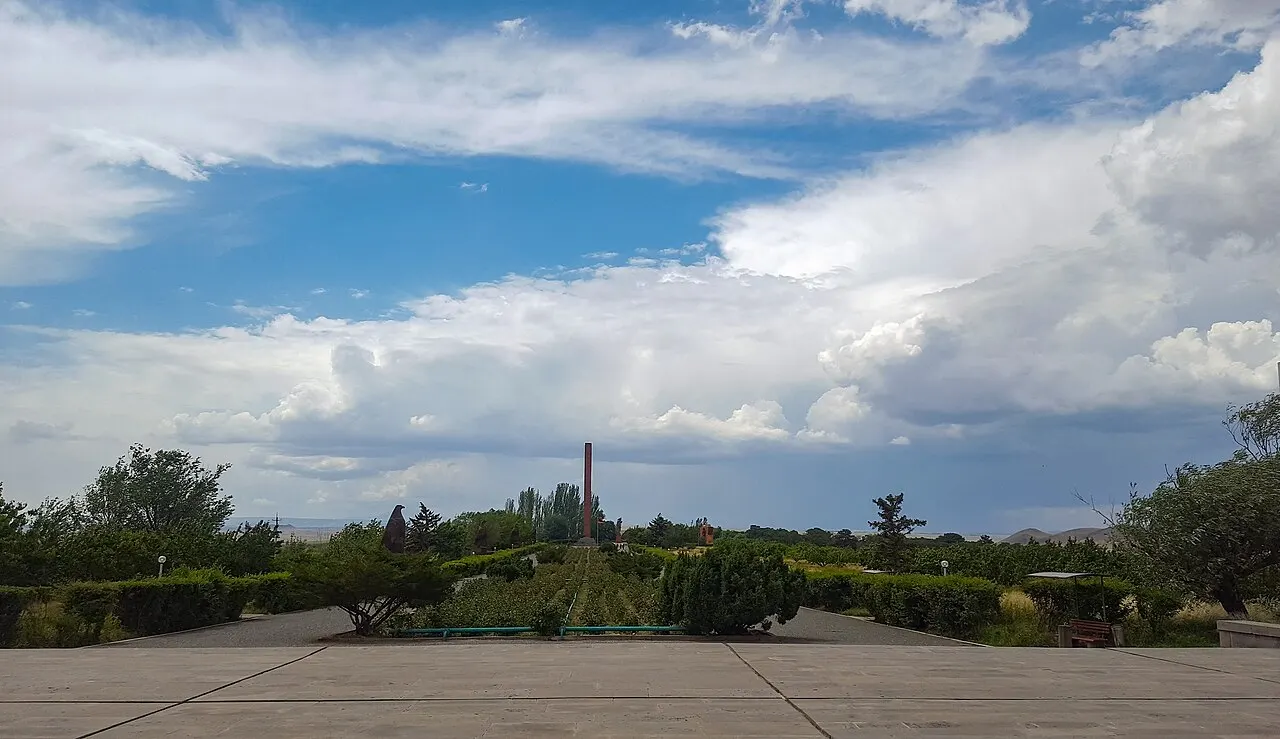
Sardarapat Memorial: Armenia's 1918 Battle Site
Verified · August 31, 2026Sardarapat Memorial near Armavir: 1918 battle site, Israelyan's red-tufa complex, ethnography museum tickets, hours and how to reach it from Yerevan.
What to see · 12 min read
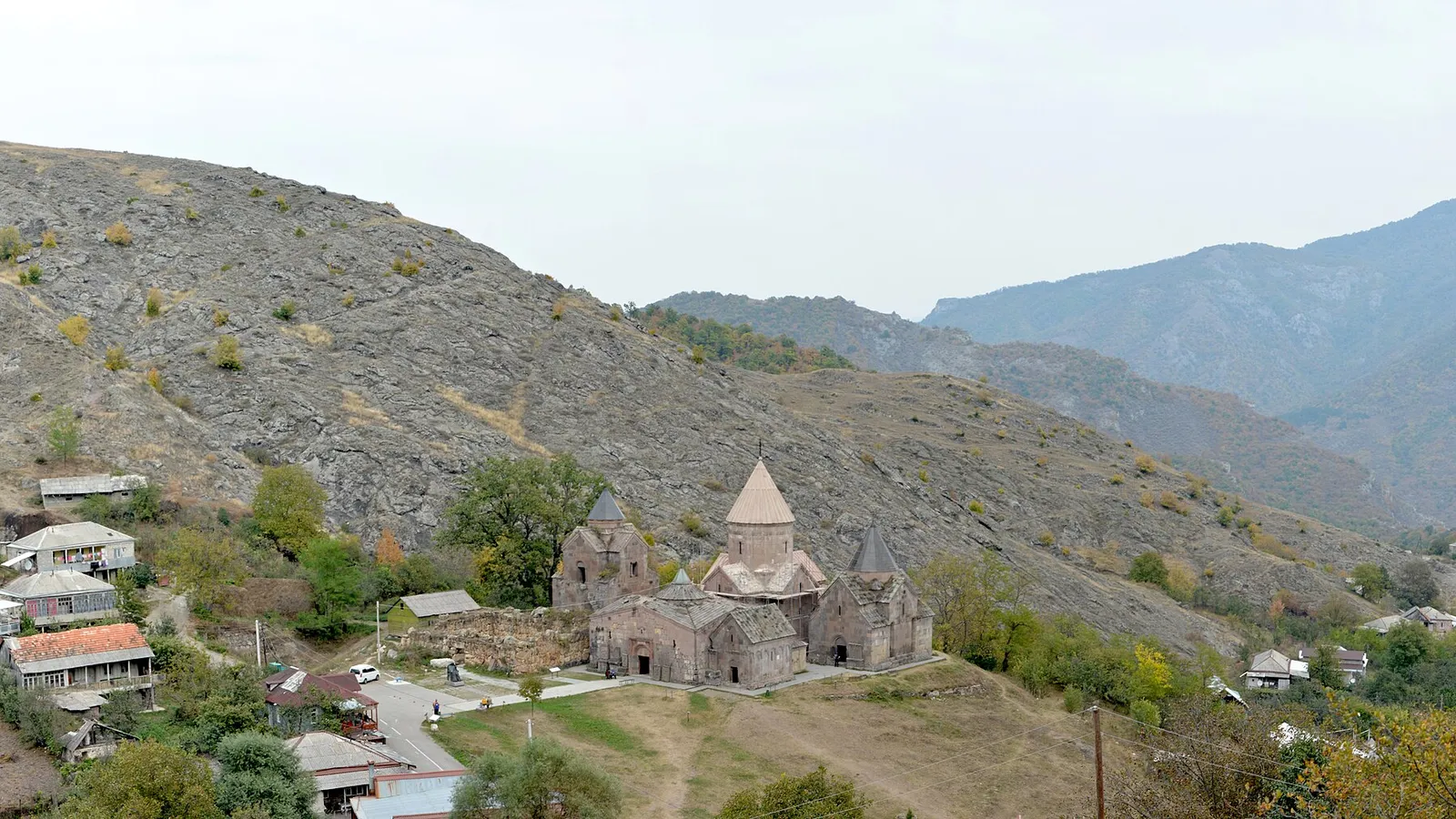
Goshavank Monastery & the Village of Gosh
Verified · August 29, 2026Visiting Goshavank: Mkhitar Gosh's law code that reached Poland, the 1291 embroidered khachkar, his statue and hillside tomb, and the drive from Dilijan.