Goris: Gateway to Tatev & the South
A guide to Goris, Armenia: the stone old town and rock cones, Old Khndzoresk and its swinging bridge, the base for Tatev, and how to get there.
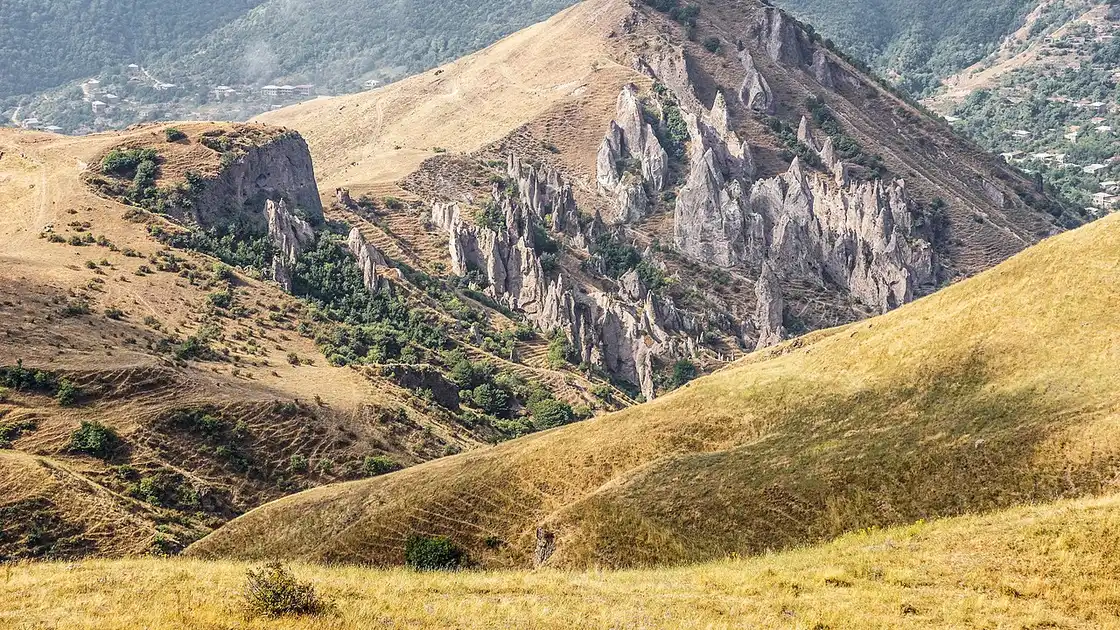
Goris is the base for southern Armenia: a low, walkable town of black-and-grey stone houses in a green valley in Syunik, ringed by hills of eroded rock cones and honeycombed with old cave dwellings, and the natural place to spend a night on the long haul to Tatev. Most travellers roll through it on a day tour and see only the petrol stations on the highway, which is a waste. Give it an evening and a morning and you get an unusually handsome provincial town, the extraordinary abandoned cave village of Old Khndzoresk with its swinging bridge, and a short hop to the Wings of Tatev cableway. This guide covers what to see, why it earns an overnight, and how to get here. For hotels and guesthouses specifically, see where to stay in Goris.
A stone town in a bowl
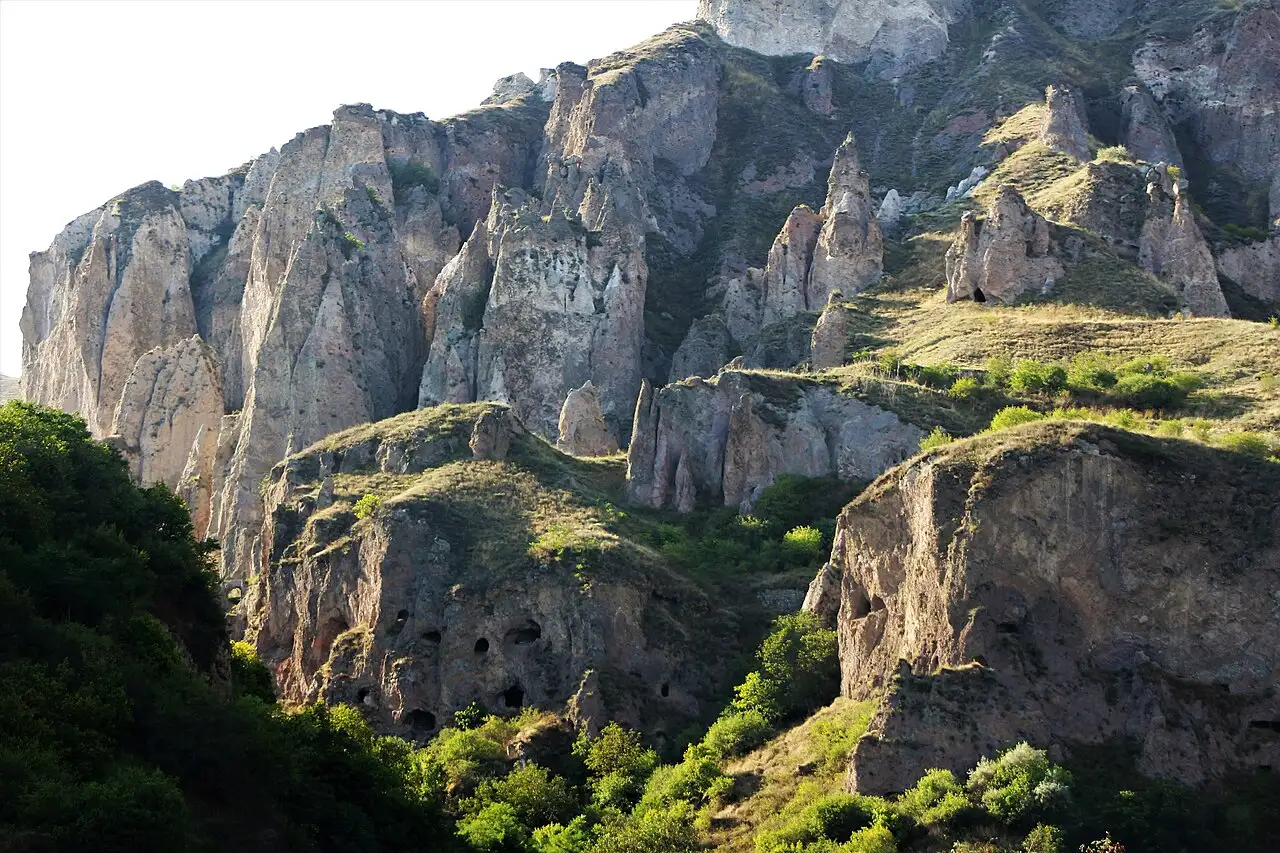
Goris sits at around 1,400 m in a wide valley in the far south, about 240 km and four hours from Yerevan and only 67 km from the provincial capital Kapan, and the setting is half the appeal. It’s the main town of Syunik, Armenia’s southernmost province, strung along the little Goris (Vararak) River. The town fills the flat floor of a bowl, and the slopes above it are studded with strange rock cones and pyramids worn out of the soft volcanic tuff, some of them hollowed into caves that people lived in until the middle of the last century. Come in the late afternoon and the light turns the whole rim gold. Being this high and this far east, it also has a real four-season climate, with cold, snowy winters and warm summers, so it’s a spring-to-autumn town for most visitors.
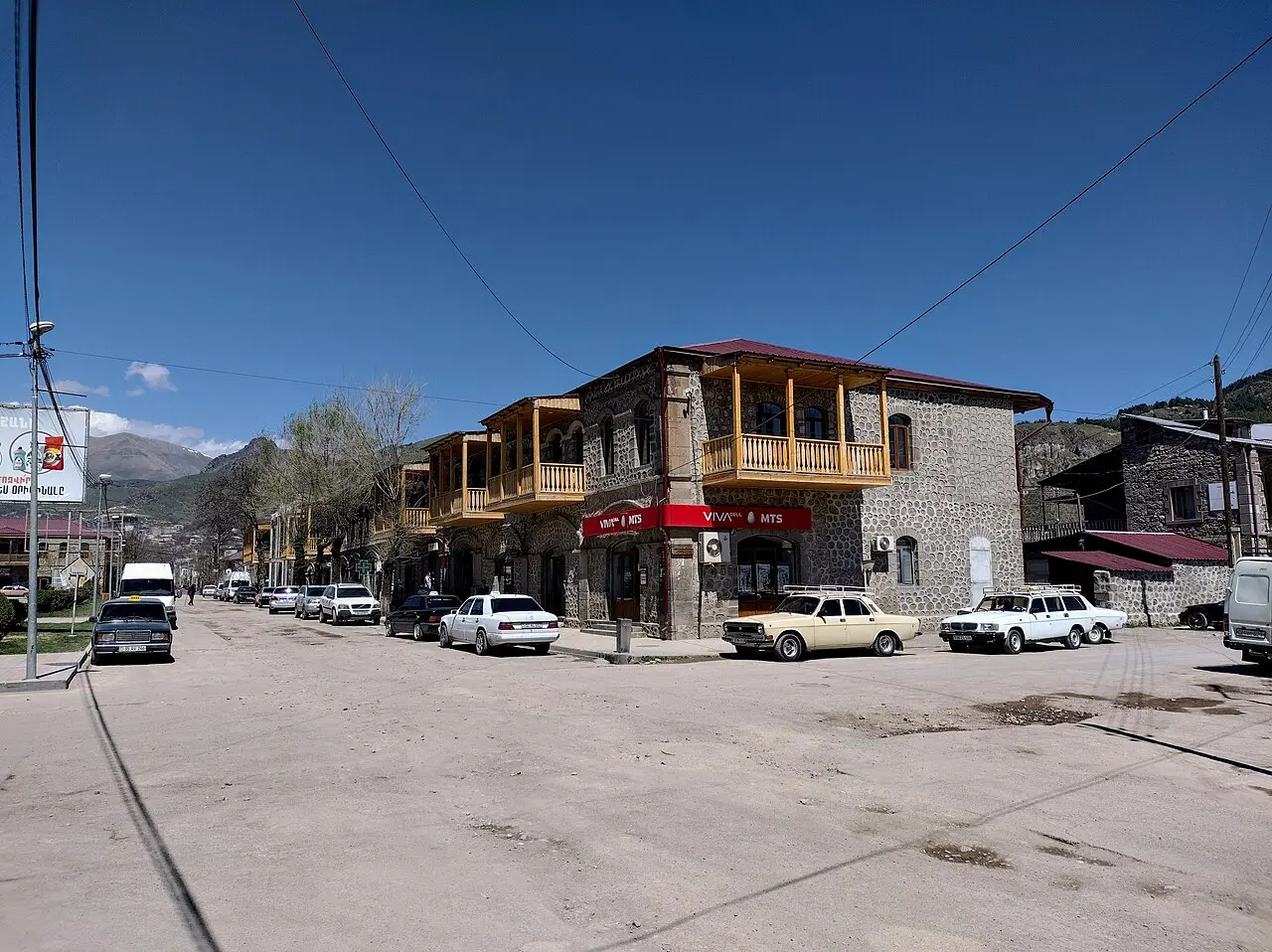
The town you walk through is younger than it looks. There was an ancient settlement here, Kores, on the eastern edge, but modern Goris was laid out from scratch under Russian rule: founded around 1870 and set on a neat grid from 1876, which is why the old centre feels so orderly, with straight streets of two-storey houses built from the local dark stone, many with carved wooden balconies and steep tiled roofs. It’s one of the better-preserved 19th-century townscapes in Armenia, and simply wandering it, especially the old quarter south of the centre, is the first thing to do. The population is about 17,000 today, down from over 20,000 a decade ago, so it’s quiet without being dead.
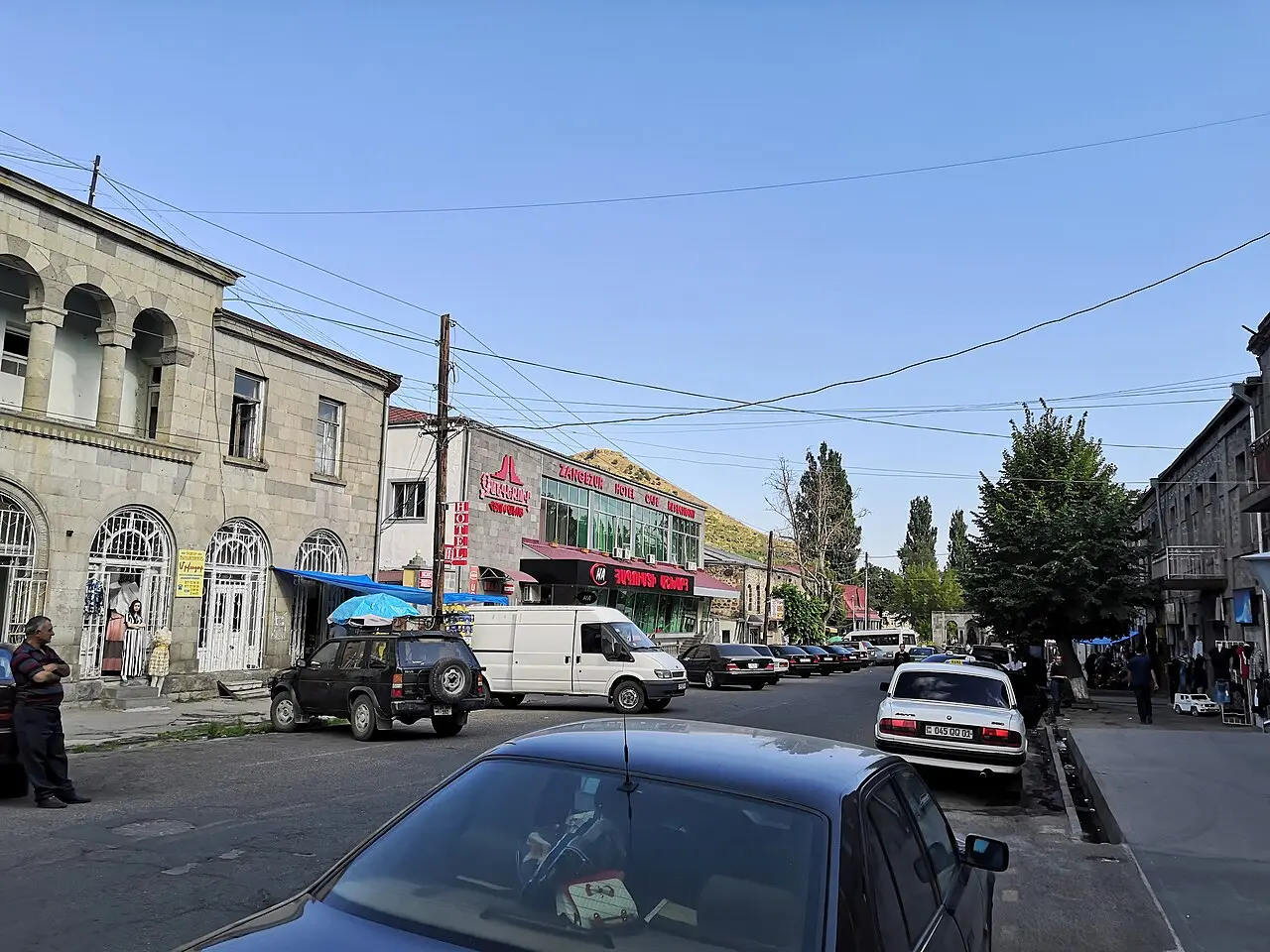
For a small town the list of sights is short and manageable. The Cathedral of Saint Gregory the Illuminator, seat of the Syunik diocese, was built between 1897 and 1904 and anchors the centre. The Axel Bakunts house-museum honours the Goris-born writer, one of the finest Armenian prose stylists of the 1920s and 1930s, arrested and shot in 1937 during the Stalinist purges; the museum has run in his home since 1970. And on the eastern edge, the caves and cones of Old Kores are an easy walk from town: this was the original settlement, and its rock chambers, cut into the pyramidal formations, were used as homes, stables and stores well into the 20th century, a first taste of the cave-dwelling landscape that reaches its peak at Khndzoresk.
Old Khndzoresk and the swinging bridge
The single best reason to base in Goris is a short drive east, and it’s a strange and memorable place. Old Khndzoresk is an abandoned cave village that spills down both walls of the deep Khor Dzor gorge, hundreds of dwellings, storerooms and even a couple of churches carved and built into the cliffs. People lived here for centuries, at least since the medieval period, and at the turn of the 20th century this was one of the largest villages in eastern Armenia, home to several thousand people. The residents were only moved up to the new village on the plateau in the 1950s, so within living memory this whole gorge was a working town.
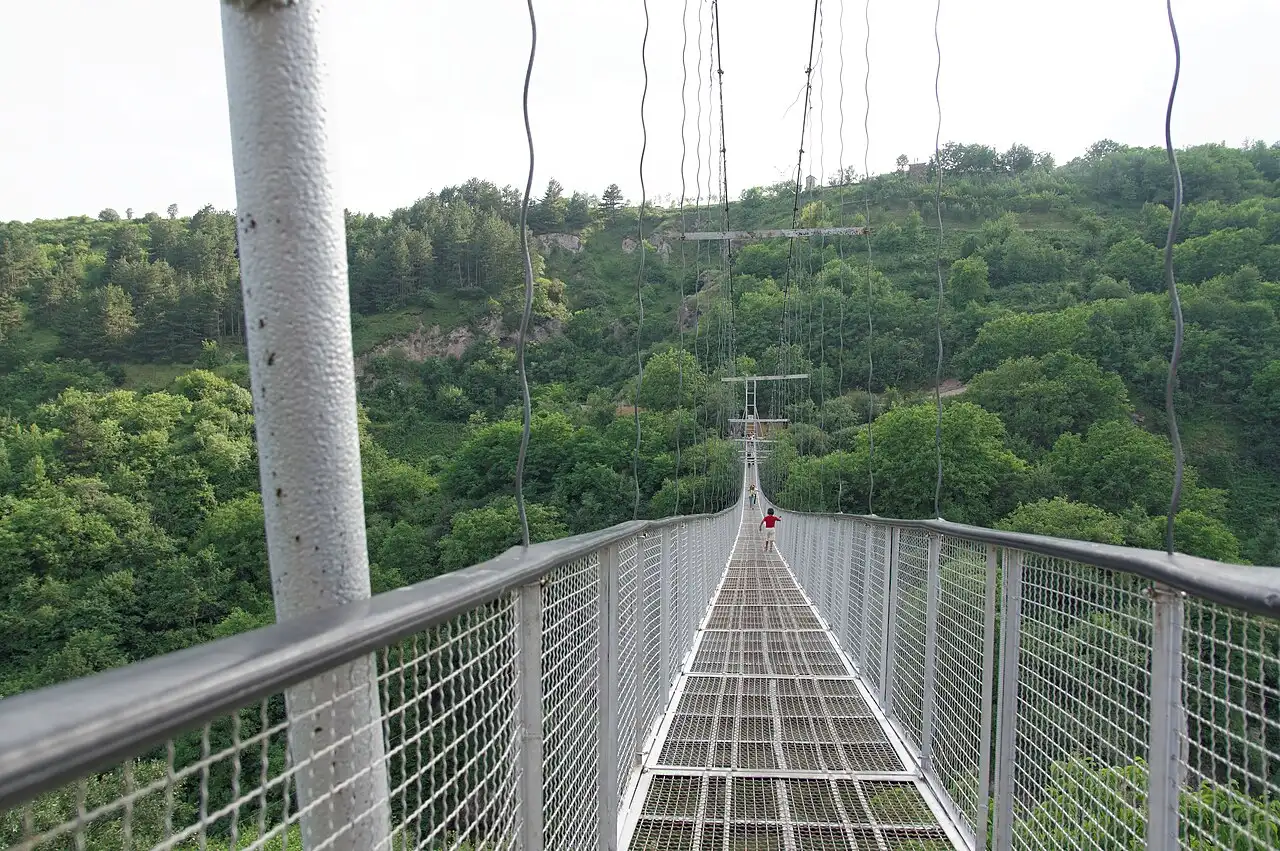
What makes the visit is the swinging bridge. In 2012 the locals strung a suspension footbridge across the gorge, 160 m long and hung 63 m above the valley floor, linking the two sides of the old village. It sways underfoot as you cross, which is the fun of it, and it turns a look at the caves into a proper loop walk: down from the car park, over the bridge, along the far slope past the cave openings and a small church, and back. Give it two or three hours and wear real shoes, because the paths are steep and rough, and take water, because there’s no shade and little in the way of facilities down in the gorge. The scale is easy to underestimate: the move up to the plateau ran through the 1950s, and the last resident is said to have left his cave in 1958, so the cliffs were still lived in within living memory. The gorge is also thick with history, having sheltered the 18th-century commander Mkhitar Sparapet as a base during the David Bek liberation struggle against Persian and Ottoman rule; his tomb stands here by the old church of St Hripsime, which gives the walk a genuine sense of place beyond the novelty of the bridge. Our full guide to Old Khndzoresk and the swinging bridge covers the loop walk, the caves and the history in depth.
The gateway to Tatev
Goris is the last real town before the south’s headline sight, and its main practical role is as the launch point for it. About half an hour west, at the village of Halidzor, is the base station of the Wings of Tatev, the aerial tramway that carries you 5.7 km across the Vorotan gorge to the medieval monastery of Tatev on the far cliff. It held the Guinness record as the world’s longest reversible cable car, and the ride, swinging high over the canyon and the river far below, is an event in itself before you even reach the monastery.
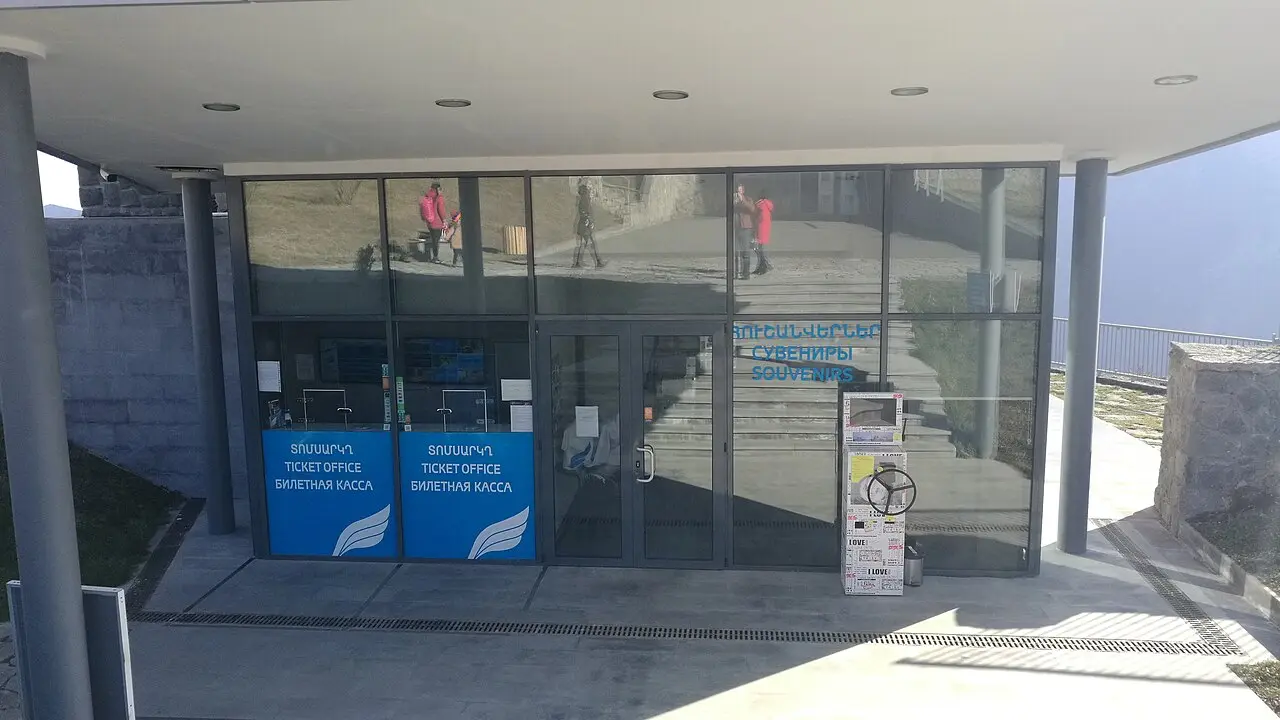
Basing in Goris the night before is the smart play here: you reach the cable car when it opens and beat the tour buses that grind down from Yerevan for a midday crossing. From town it’s a short taxi to Halidzor for a few thousand dram (confirm the fare locally), or you can drive yourself. There’s also a local bus, No. 08-006: on the ministry’s Syunik timetable, as we checked it on 2 October 2026, it leaves Goris bus station daily at 10:10 and stops in Halidzor at about 10:54, too late for the first cabin, and comes back through Halidzor at 17:16, reaching Goris at 18:00. The cable car itself is closed on Mondays unless it’s a public holiday; on those days the same bus carries on to Tatev village, where the monastery is, at about 11:22 and leaves it again at 16:48. Travellers report other times and the timetable prints no fare, so check at the bus station the day before. Our full guide to Tatev monastery and the Wings of Tatev has the cable-car hours, prices and the monastery itself, and if you’re planning the whole run down from the capital, our Yerevan to Goris and Tatev guide lays out every leg.
If you drive rather than ride the cable both ways, the road down into the Vorotan gorge below Tatev passes the Devil’s Bridge, a natural stone arch over the river with warm mineral springs and travertine pools beside it, an easy and worthwhile add-on that the cable car skips over entirely. Goris also sits on the road deeper into Syunik and, historically, on toward Karabakh, so it has long been a crossroads town. For most visitors it’s the sensible southern anchor: a night here breaks the long drive, puts Tatev, Khndzoresk and the prehistoric standing stones of Karahunj within easy reach the next morning, and gives you a genuine town to eat and sleep in rather than a roadside stop. If you’re continuing past Tatev to Kapan, Shikahogh and Meghri, our Goris to Meghri deep-south road trip covers the inland detours and the current advisory picture.
How to get to Goris from Yerevan
Goris is a long way south, and the drive is the main thing to plan around. It’s roughly 240 km from Yerevan and about four hours by car on the M2, a scenic but winding mountain road that climbs over several passes. Your options are the usual southern set:
- A rental car is the most flexible way to do the south, since it lets you string Goris together with Khndzoresk, Tatev and the Areni wine country at your own pace and stop for the views on the passes. It also means you catch the cable car early.
- A shared taxi from Yerevan is faster than the minibus and can be arranged for a fixed price, splitting the cost between a few passengers.
- A bus is the budget route: No. 602 leaves Yerevan’s Southern Bus Station, by Sasuntsi Davit metro, twice a day, at 08:30 and 15:00, and the ministry’s timetable allows 5 h 50 min for the 233 km. The Kapan bus (08:30) and the Meghri bus (07:30) also stop in Goris, and heading back you can leave Goris at 08:30, 10:00, 11:35 or 15:00. Travellers’ reports and many guides call the Goris minibus 607 and list more departures for it than the ministry’s timetable does, so check the times at the station the day before and buy your seat there. No fare is printed, so ask the price at the ticket office and pay in cash.
- A day tour will get you to Tatev and back, but honestly this is a long haul for a single day; the trip is far better broken with a night in Goris.
What makes Goris more than a fuel stop is that it’s a real town with its own texture: the 1870s grid of dark stone houses and carved balconies, the cave cones on the ridge above, the hollowed gorge at Khndzoresk half an hour east, and a position on the old road that has made it the crossroads of the far south for a century and a half. Stay the night and the logistics fall into place too, you’re at the cable car before the tour buses and through the Khndzoresk loop while the gorge is still cool, which is the difference between rushing the south and actually seeing it. If you’re weighing the wider region, our guide to the best day trips from Yerevan shows where Goris sits among the other long runs.
Photos
On the map
The map loads on click - to keep the page lightweight.
The map didn’t load. Check your connection and refresh the page.
Distance ≈240 km · about 4 hours by road
- Yerevan ≈240 km · about 4 hours by road Bus 602 (often called 607) from the Southern Bus Station, by Sasuntsi Davit metro, at 08:30 and 15:00, 5 h 50 min on the timetable; the Kapan and Meghri buses stop in Goris too. Check the times and buy your seat at the station the day before. A shared taxi is faster.
Read also
Cities · 13 min read
Yeghegnadzor: Wine Country Base in Vayots Dzor
Verified · July 23, 2026Why base yourself in Yeghegnadzor: Noravank and Areni on the doorstep, Gladzor, Smbataberd, a medieval Jewish cemetery and buried cheese.
Cities · 10 min read
Tsaghkadzor: Armenia's Ski Town in Every Season
Verified · July 21, 2026Armenia's flagship ski resort, 58 km north of Yerevan: the Kecharis monastery, a five-stage ropeway, the ski slopes and what to do here in summer.
Cities · 11 min read
Vagharshapat (Etchmiadzin): Armenia's Spiritual Capital
Verified · July 16, 2026A guide to Vagharshapat (Etchmiadzin): the Mother See cathedral, the martyr churches of Hripsime and Gayane, Sardarapat memorial and how to visit.
Cities · 9 min read
Gyumri: Armenia's Second City
Verified · July 4, 2026A guide to Gyumri, Armenia's second city: the Kumayri old town, Vardanants Square, the Black Fortress, the 1988 earthquake, and how to visit from Yerevan.