Khndzoresk Cave Village & Swinging Bridge
How to visit Old Khndzoresk in southern Armenia: the abandoned cave village, the 160 m swinging bridge over the gorge, the loop walk and getting there.
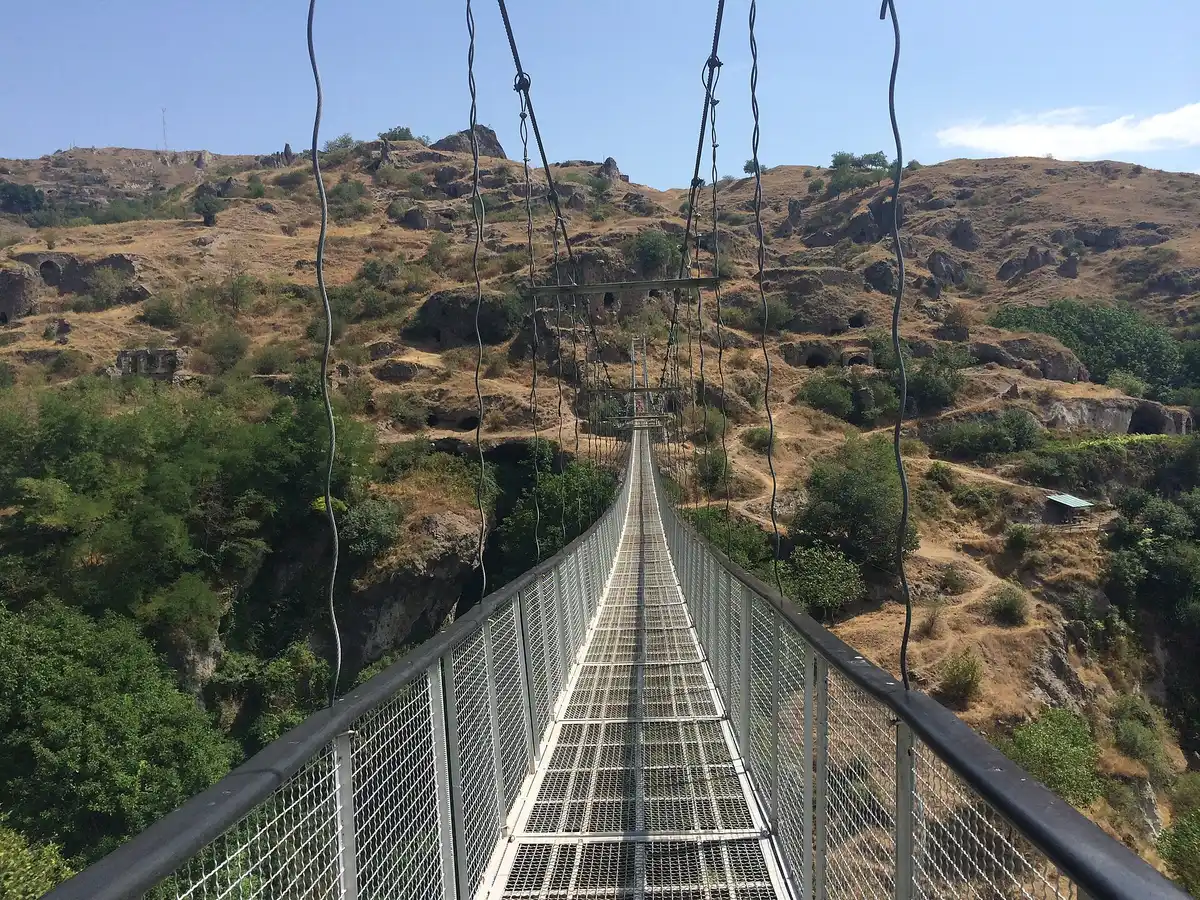
Old Khndzoresk is one of the strangest places in Armenia: an entire abandoned village of cave homes dug into the walls of a deep gorge, crossed today by a 160 m swinging footbridge that bounces underfoot as you walk it. It sits a short drive east of Goris in the far south, it is free to visit, and it turns into a proper two to three hour loop walk down through the caves, over the bridge and back. Wear real shoes and bring water, because the paths are steep and there’s no shade down in the gorge. Here’s what you’re looking at, why it earns the detour, and how to get there.
A village carved into a gorge
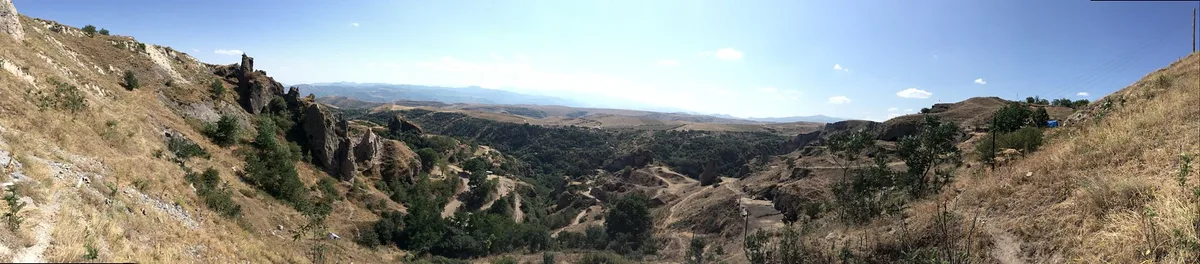
The name comes from Khor Dzor, meaning “deep gorge,” and that is exactly what you find: a canyon whose soft volcanic walls are honeycombed with hundreds of man-made caves. For centuries people didn’t build houses here so much as dig them, hollowing homes, stables and storerooms straight into the rock, with a few churches built out of stone among them. This was not a handful of hermits. At the turn of the 20th century Old Khndzoresk was one of the largest villages in eastern Armenia: the 1897 census counted 4,516 people, and by the early 1900s the settlement had grown to something like 8,300 residents in roughly 1,800 households, with 27 shops and 7 schools scattered along the gorge. A whole working town lived in these cliffs.
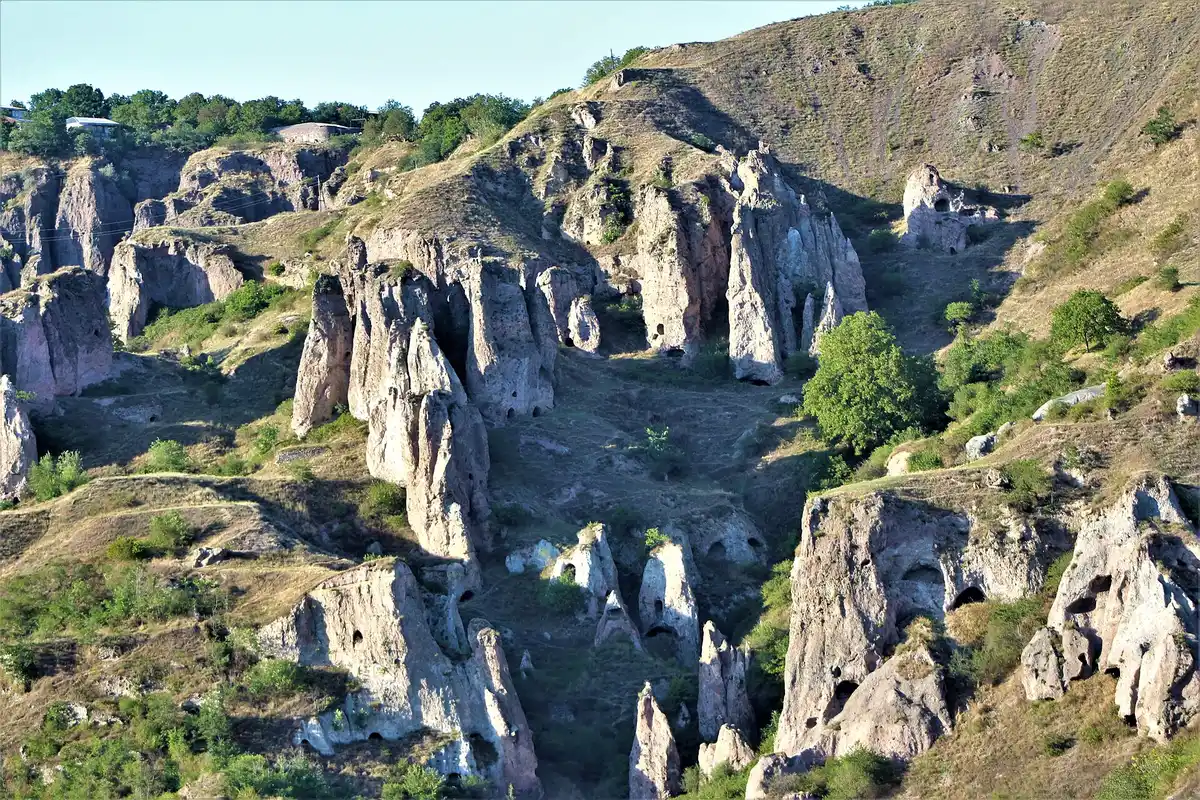
What makes it hit harder than most ruins is how recent the abandonment is. The residents were only moved up to a new village on the plateau above, today’s living Khndzoresk, through the 1950s, and some of the caves were still lived in within living memory. So this isn’t an ancient site frozen a thousand years ago but a town that emptied out about the same time as the first Sputnik, which is why the caves still feel domestic: you can pick out doorways, soot-blackened ceilings, animal pens and the odd carved niche. Some of the lower caves are still used by the plateau villagers as sheds and stables for animals, so the gorge has never gone fully quiet.
Why dig a town into a cliff at all? Partly the rock: the soft volcanic tuff here cuts easily with hand tools yet holds its shape, and a cave stays cool through the fierce southern summers and warm through the snowbound winters, better insulation than a stone hut. Partly the geography: Syunik sat on a fault line of empires, fought over by Persians, Turks and others for centuries, and a settlement tucked into a hidden gorge, reached by paths a stranger could not follow, was far easier to defend than a village on open ground. The site has been lived in since at least the medieval period, and by the 19th century it had become a substantial market village with its own crafts and trade, not a hideout but a genuine town that simply happened to be vertical. Walk the slopes and you can still read the logic of it, the way the dwellings stack up the walls to catch light and the paths thread between them like streets.
The swinging bridge
The reason most people come, and the thing that turns a viewpoint into a walk, is the swinging bridge. In 2012 the villagers strung a suspension footbridge across the gorge, 160 m long and hanging about 63 m above the valley floor, tying the two cliff-sides of the old village back together. It genuinely sways as you cross, more so if someone ahead is bouncing it, and that wobble over a long drop is half the fun and half the reason children and nervous walkers slow to a shuffle in the middle. It’s perfectly safe, sturdily cabled and railed, but it’s not a still, solid bridge, and it should not be.
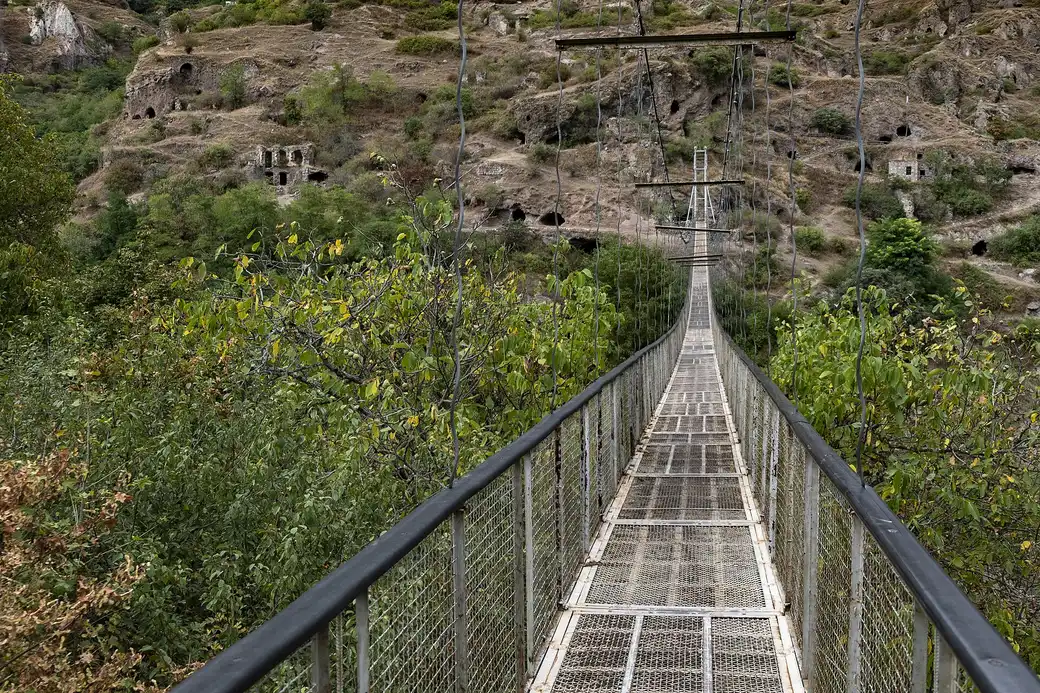
Crucially, the bridge is a link, not a destination in itself: it lets you make a full loop instead of an out-and-back. From the car park on the rim you walk down into the gorge, cross the bridge to the far slope, follow the paths past the cave openings and a small church, and climb back. Give it two to three hours if you want to poke around the caves rather than just tick the bridge, and take water and a hat, because there is next to no shade and no shop once you’re down. The paths are rough, stony and steep in places, fine for anyone reasonably sure-footed but not a stroll in sandals. Early morning or late afternoon is kinder in summer, when the gorge bakes.
The gorge that hid a rebellion
Khndzoresk isn’t just a curiosity, it’s a genuinely historic spot, and this is the part the bridge crowds tend to miss. In the 18th century the gorge was a stronghold of the Armenian liberation struggle led by David Bek against Persian and Ottoman rule, and the natural fortress of Khndzoresk served as a base for his commander Mkhitar Sparapet in 1728-1730. Down in the gorge, near the old church, is the Anapat (hermitage), and this is where Mkhitar Sparapet is buried, his tomb set by the chapel. Add the 17th-century church of St Hripsime on the gorge floor and the cave church of St Tatevos, and the walk stops being only about geology: you’re moving through a place that sheltered a rebellion and holds the grave of one of its leaders.
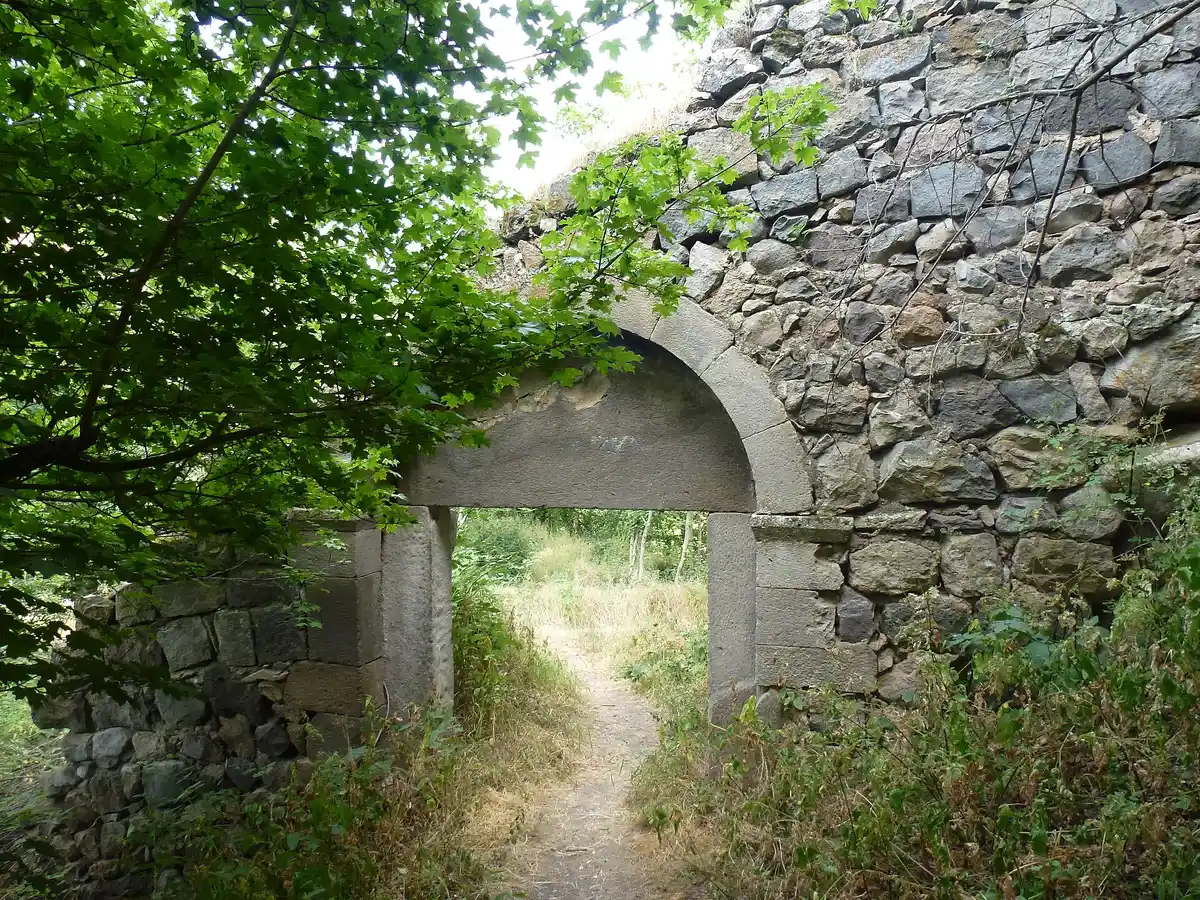
It helps to keep two Khndzoresks straight. New Khndzoresk is the ordinary modern village up on the plateau, where roughly 2,000 people live today, and it’s where you turn off and park. Old Khndzoresk is the abandoned cave town down in the gorge below it, which is the thing you’ve come to see. Signs and drivers sometimes just say “Khndzoresk,” so make clear you want the swinging bridge and the old village.
What to know before you go
A few honest practicalities save the day. The descent and climb back are the real effort, not the bridge: reckon on a steady 20 to 30 minutes each way on rough ground, more if you explore, so it’s not ideal for anyone with knee or mobility trouble, and it is a scramble rather than a boardwalk. Bring more water than you think in summer, when the gorge holds the heat and there’s no cafe or tap once you’re down; a hat and sunscreen matter for the same reason. Sturdy trainers or hiking shoes are enough, but leave the sandals in the car. Families do it happily with school-age children who like the wobble of the bridge, though keep toddlers close on the spans and near the cave mouths, which are unfenced. There’s no entrance building, ticket office or set closing time, so you can arrive early or stay for the good evening light, and the loop is quietest before the mid-morning tour vans roll in from Goris. If a full descent is too much, you can still walk to the rim for the view and only go down as far as the bridge, since the churches and the deeper caves are what reward the extra effort on the far side. A couple of seasonal stalls near the top sometimes sell water and snacks, but treat that as a bonus rather than a plan, and carry what you need.
How to get to Khndzoresk
Khndzoresk sits in the far south, so it’s nearly always visited as part of a southern trip rather than a day dash from the capital. The base is Goris, about 8 km west: from town it’s a short drive east toward the Stepanakert road, then a turn-off down to the car park on the gorge rim. There is no useful public transport to the site itself, so from Goris you take a taxi (agree the fare, and it is worth asking the driver to wait, as there’s nothing to flag down at the gorge) or drive yourself. Entry is free and so is parking, at the time of writing; confirm on the day.
One piece of context for the drive east: Khndzoresk lies east of Goris, and the US State Department bars its own staff from Syunik east of Goris, while the UK Foreign Office advises against all travel within 5 km of Armenia’s eastern border. The gorge, the bridge and the road in from Goris sit on the normal tourist route and are calm, but this is the closest a standard Armenian itinerary comes to a flagged area, so don’t carry on further east, and check the current wording before you travel; our is Armenia safe guide lays the four advisories out side by side.
From Yerevan it is a long haul, roughly 250 km and four to four-and-a-half hours each way, which is why almost no one comes just for the bridge. The smart way is to fold it into the south: base a night in Goris, and pair Khndzoresk with the Wings of Tatev cableway and monastery half an hour the other side of town. Our guide to Goris covers where to stay and eat and treats the town as the southern hub; Tatev monastery and the Wings of Tatev has the cable-car details for the region’s headline sight; and the full run down from the capital, leg by leg, is in Yerevan to Goris and Tatev. If you’re weighing the south against closer options, see where it lands among the best day trips from Yerevan.
Do it as part of that loop and Khndzoresk stops being a novelty photo of a wobbly bridge. You walk down into a gorge that housed thousands of people in caves within living memory, hid an 18th-century rebellion, and holds the tomb of one of its commanders, then bounce back across the span with the whole cave town spread out below. Few places in Armenia give you that much for a two-hour walk.
Photos
On the map
The map loads on click - to keep the page lightweight.
The map didn’t load. Check your connection and refresh the page.
Distance ≈250 km · about 4-4.5 hours by road
- Yerevan ≈250 km · about 4-4.5 hours by road No direct public transport to the site. Reach Goris first (bus 602, often called 607, from Yerevan's Southern Bus Station at 08:30 and 15:00, 5 h 50 min on the timetable), then a short taxi east to the gorge. Confirm departures locally.
Read also

What to see · 10 min read
Soviet Modernist Yerevan: An Architecture Walk
Verified · September 5, 2026Walk Yerevan's Soviet modernism: Rossiya Cinema, Komitas Hall, Cascade, Hrazdan Stadium and Demirchyan Complex - dates, route order, and what still stands.

What to see · 9 min read
Kond: Walking Yerevan's Oldest Neighborhood
Verified · September 3, 2026Walk Kond, Yerevan's oldest living quarter: Surp Hovhannes, Tepebashi mosque walls, Leo Street alleys, and how to visit without treating it like a set.
What to see · 8 min read
Sardarapat Memorial: Armenia's 1918 Battle Site
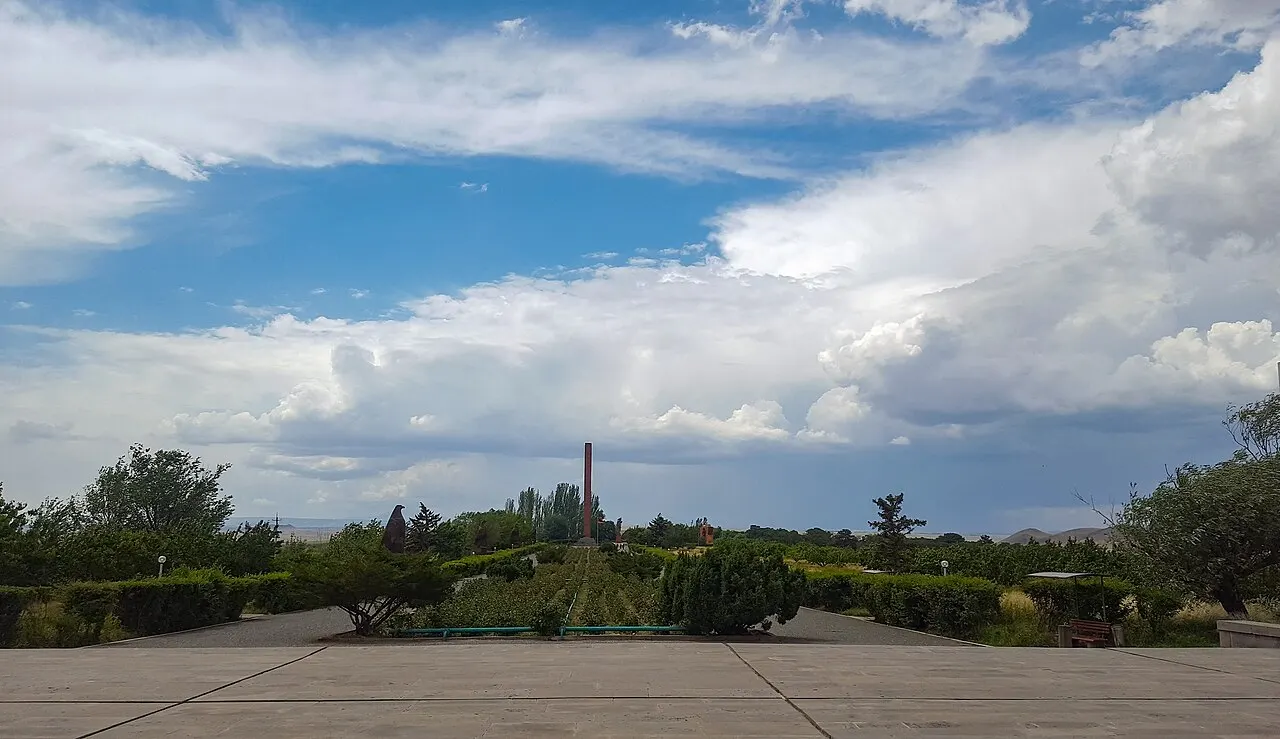
Verified · August 31, 2026Sardarapat Memorial near Armavir: 1918 battle site, Israelyan's red-tufa complex, ethnography museum tickets, hours and how to reach it from Yerevan.
What to see · 12 min read
Goshavank Monastery & the Village of Gosh
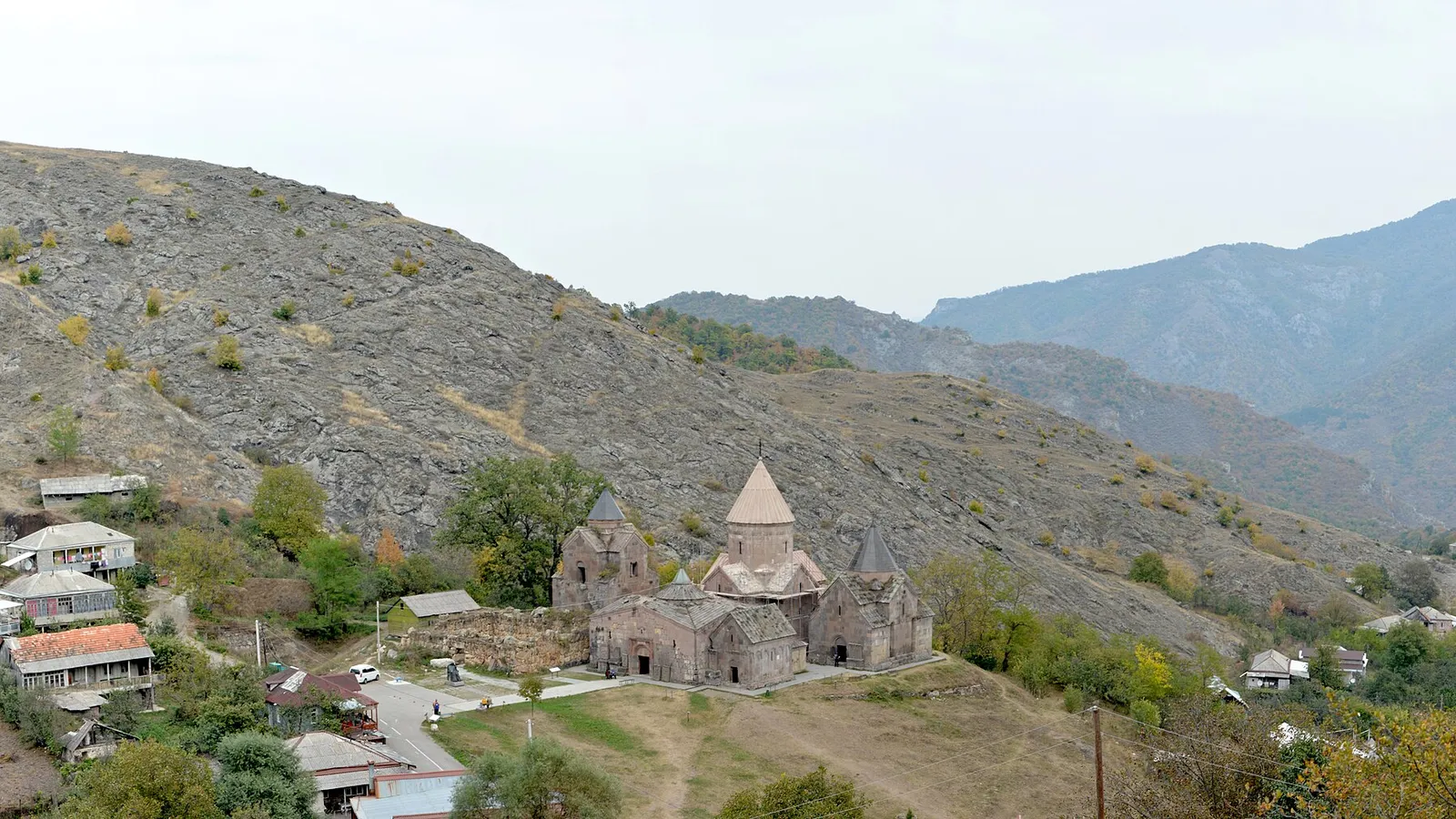
Verified · August 29, 2026Visiting Goshavank: Mkhitar Gosh's law code that reached Poland, the 1291 embroidered khachkar, his statue and hillside tomb, and the drive from Dilijan.