Gyumri: Armenia's Second City
A guide to Gyumri, Armenia's second city: the Kumayri old town, Vardanants Square, the Black Fortress, the 1988 earthquake, and how to visit from Yerevan.
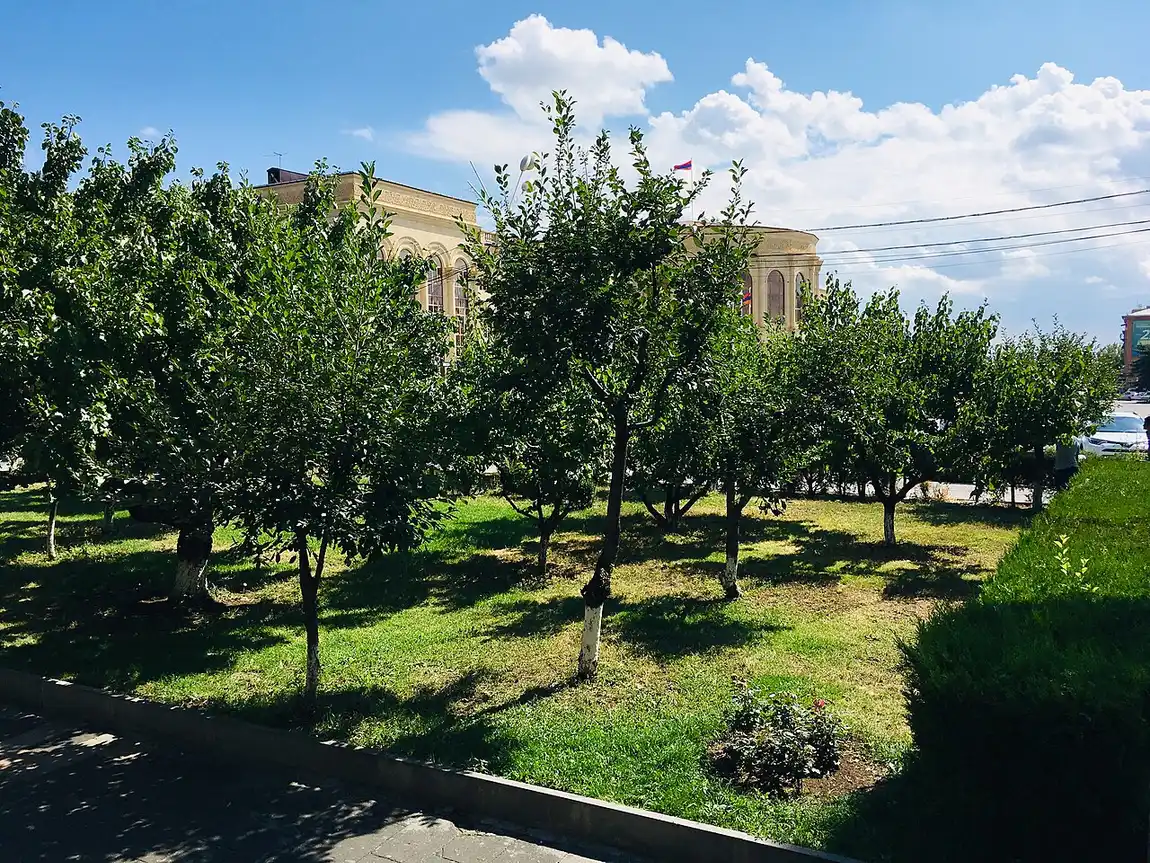
Gyumri is the city Armenians send you to when they want you to see a different side of the country. It’s the second city, capital of the Shirak plateau in the northwest, about 126 km and two hours from Yerevan, and it wears its character on its sleeve: streets of dark nineteenth-century stone, a big open central square, an art and craft tradition the capital cannot match, and a local wit so famous that Gyumretsi humour is practically a national institution. It’s also a city marked by tragedy, rebuilt but not fully healed after the 1988 earthquake. All of that makes it the most rewarding day trip or overnight beyond Yerevan, and this guide covers what to see, how to get there, and why it feels like nowhere else in Armenia. If you’re flying straight in, Gyumri Shirak Airport covers the Wizz Air routes and the transfer into town.
If you continue north, Gyumri to Tbilisi covers the border run.
A quick word on the name, because it confuses people. The city has been Kumayri, then Alexandropol under the Russians, then Leninakan in Soviet times, and Gyumri again since 1990. You will see all of those on old signs and in older guidebooks, and the historic core still carries the oldest of them.
Getting to Gyumri from Yerevan
This is an easy trip, which is half the reason to make it. Three options run all day. The marshrutka (minibus) is the most frequent: route 351 leaves Yerevan’s Southern Bus Station, by Sasuntsi Davit metro, every 45 minutes from 09:15 to 19:00 and is timetabled at 3 h 05 min; the timetable prints no fare, so ask the driver. The train is the atmospheric choice: three slow daily departures for 1,300-1,500 AMD, plus a Friday-to-Sunday express that crosses the plateau in 2 h 10 min for 2,500 AMD. A taxi or rented car gives you the freedom to stop, and puts Gyumri within reach of Lake Sevan and the Lori monasteries on a longer northern swing.
Whichever you pick, check the timetable the day before, since both the bus and the rail timetables get reissued now and then; our guide to getting from Yerevan to Gyumri sets the options side by side. If you’re weighing up how to move around the country in general, our guide to getting around Armenia lays out the marshrutka and train systems in detail. Gyumri works comfortably as a long day trip, but staying a night lets you catch the old town in the low evening light, which is when it looks its best.
Kumayri: the old town
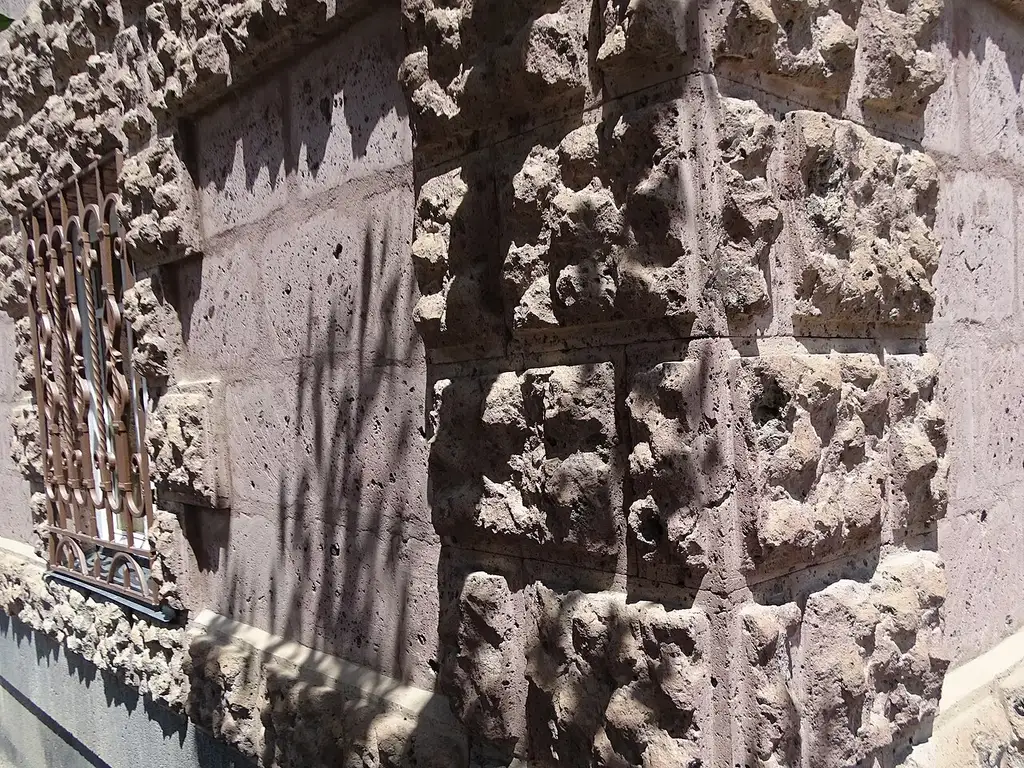
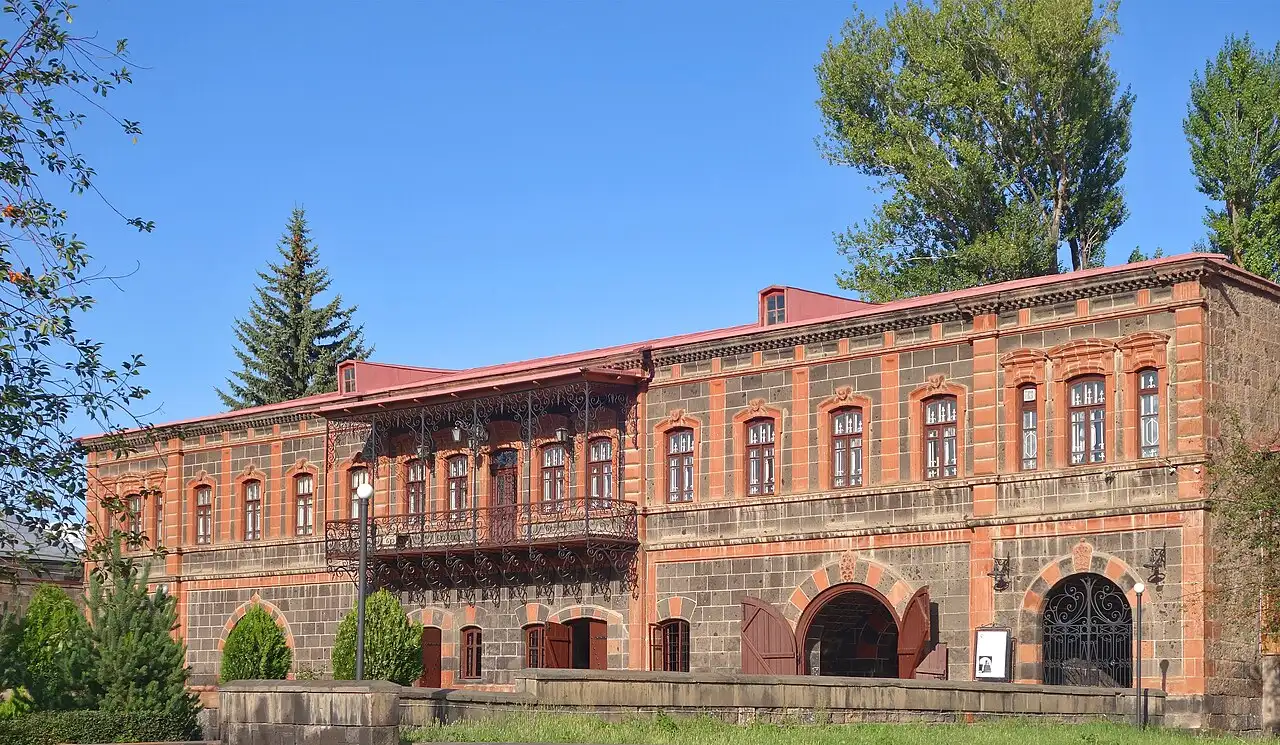
The heart of any visit is Kumayri, the historic quarter, and it’s genuinely special. More than a thousand buildings from the eighteenth and nineteenth centuries stand here, built from the local black and red tuff (a volcanic stone) and carved with the confident detail of a prosperous merchant town. What makes it rare is that most of it survived: the major earthquakes of 1926 and 1988 flattened much of the modern city but spared a great deal of the old stone core, so what you walk through is a real, lived-in nineteenth-century townscape rather than a reconstruction.
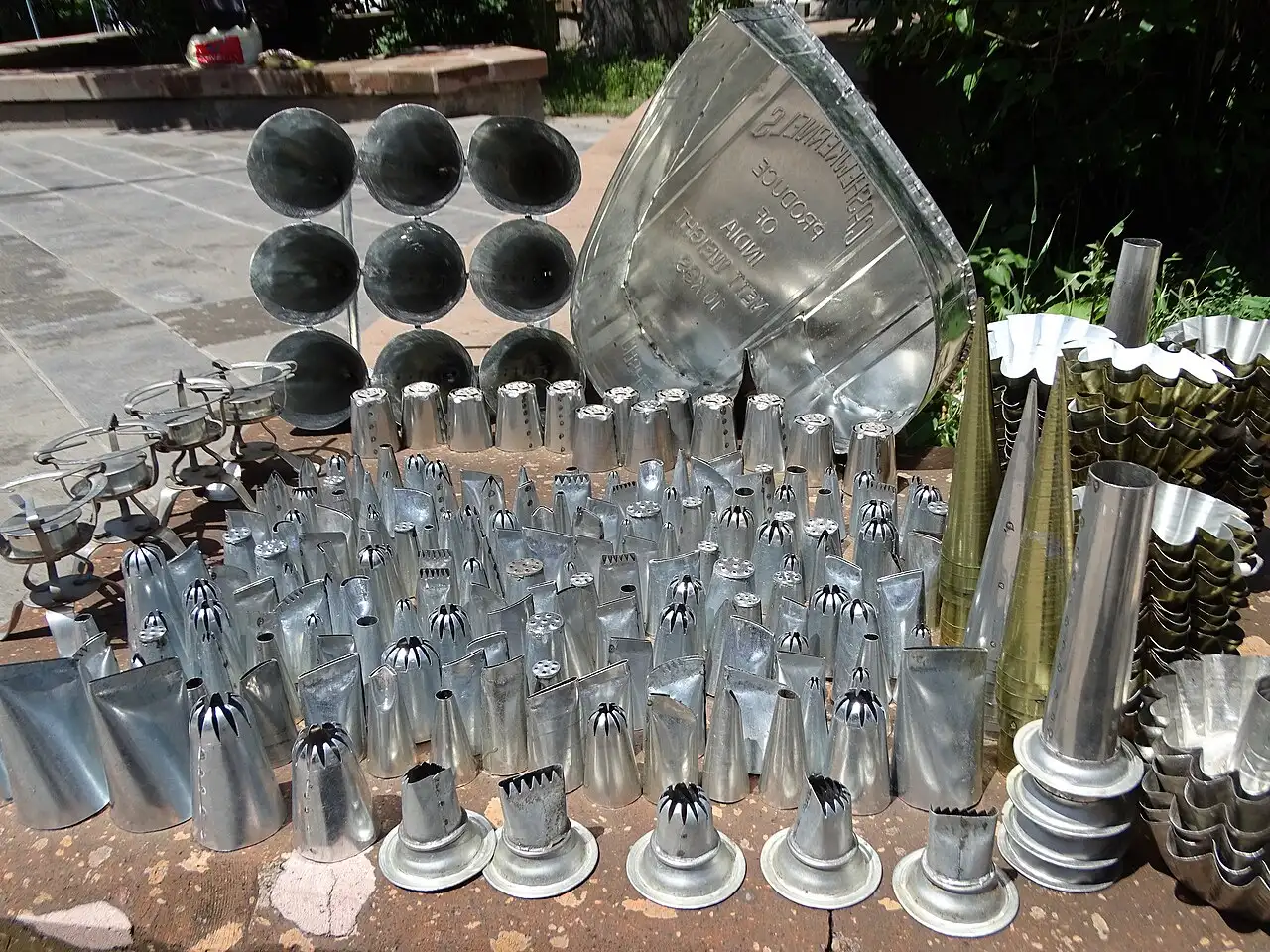
Give yourself an hour or two just to wander. The streets around Rustaveli and Abovyan are lined with balconied houses, ironwork, and shopfronts; some are beautifully kept, others peeling and propped up, and the mix is honest rather than polished. Duck into one of the house-museums, the grand Dzitoghtsyan mansion among them, to see how a well-off Alexandropol family lived. This is also where Gyumri’s craft reputation lives on, in the small workshops of woodcarvers, potters and metalworkers.
Vardanants Square and its churches
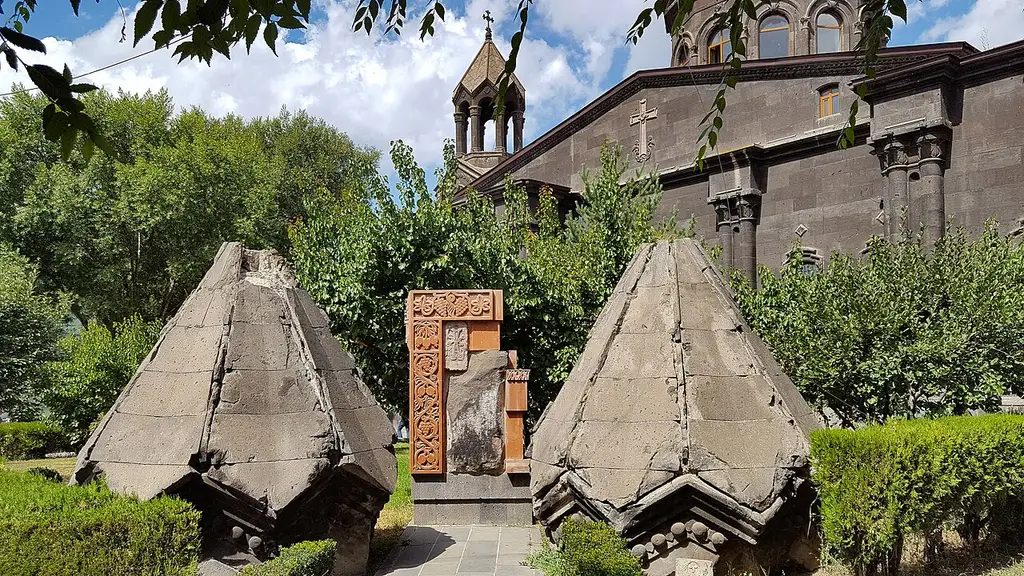
Kumayri opens onto Vardanants Square, the wide central plaza and the natural place to get your bearings. It’s named for St Vardan Mamikonian, the general killed at the fifth-century battle of Avarayr, and an equestrian statue of him presides over the space. Two churches bookend the square, both worth stepping inside. The Church of the Holy Saviour (Amenaprkich), built between 1859 and 1873, was wrecked in the 1988 quake and painstakingly rebuilt over the following decades, its story a small mirror of the city’s own. Facing it, the older Cathedral of the Holy Mother of God, known locally as Yot Verk or the Seven Wounds, dates from 1873 to 1884 and serves as the seat of the Shirak diocese.
Come back after dark and the square changes register entirely: the fountains switch on, families spill out, children whizz about in rented toy cars, and the whole city seems to gather here. It’s one of the friendliest evening scenes in Armenia, and a good reminder that Gyumri is a working city, not a museum piece.
The Black Fortress and Mother Armenia
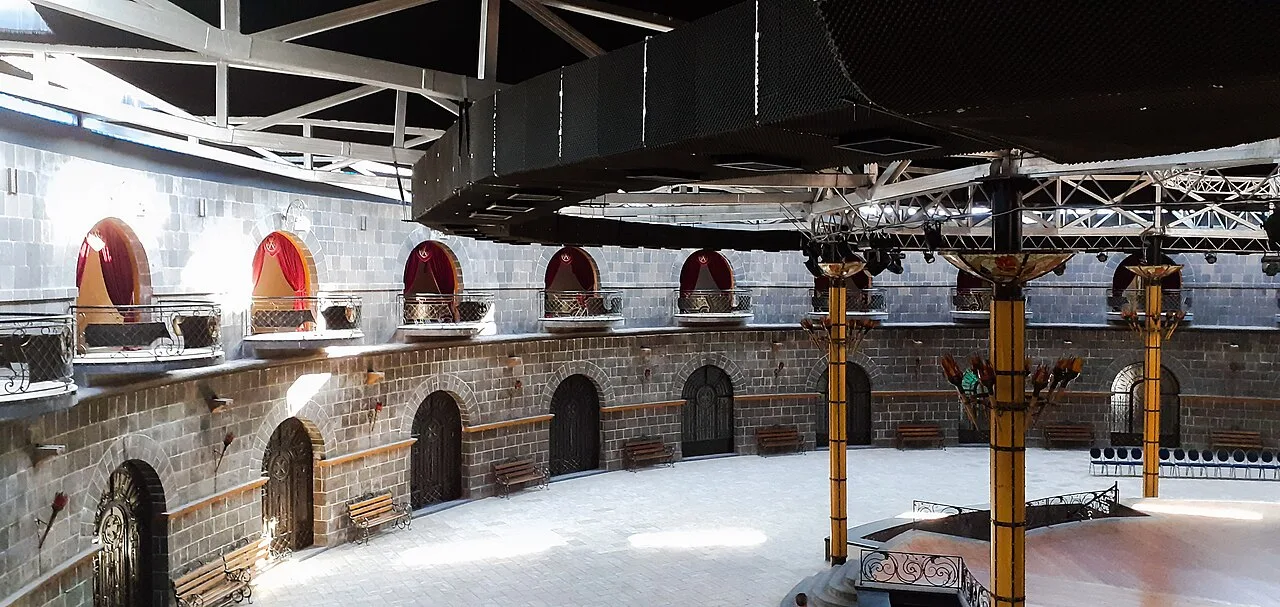
On a bare hill above town sit the two landmarks you can see from half the city. The Black Fortress (Sev Berd) is a perfectly circular Russian imperial fort of black tuff, thrown up after the Russo-Turkish war of 1828 to 1829 and standing only about eight kilometres from the still-closed Turkish border. Abandoned for decades, it was reconstructed with an amphitheatre inside and now hosts concerts and events; the reward for the climb is a sweep of views over the city, the plateau and the frontier. It has generally kept daytime hours with free entry, but check locally before you go up, since that can change.
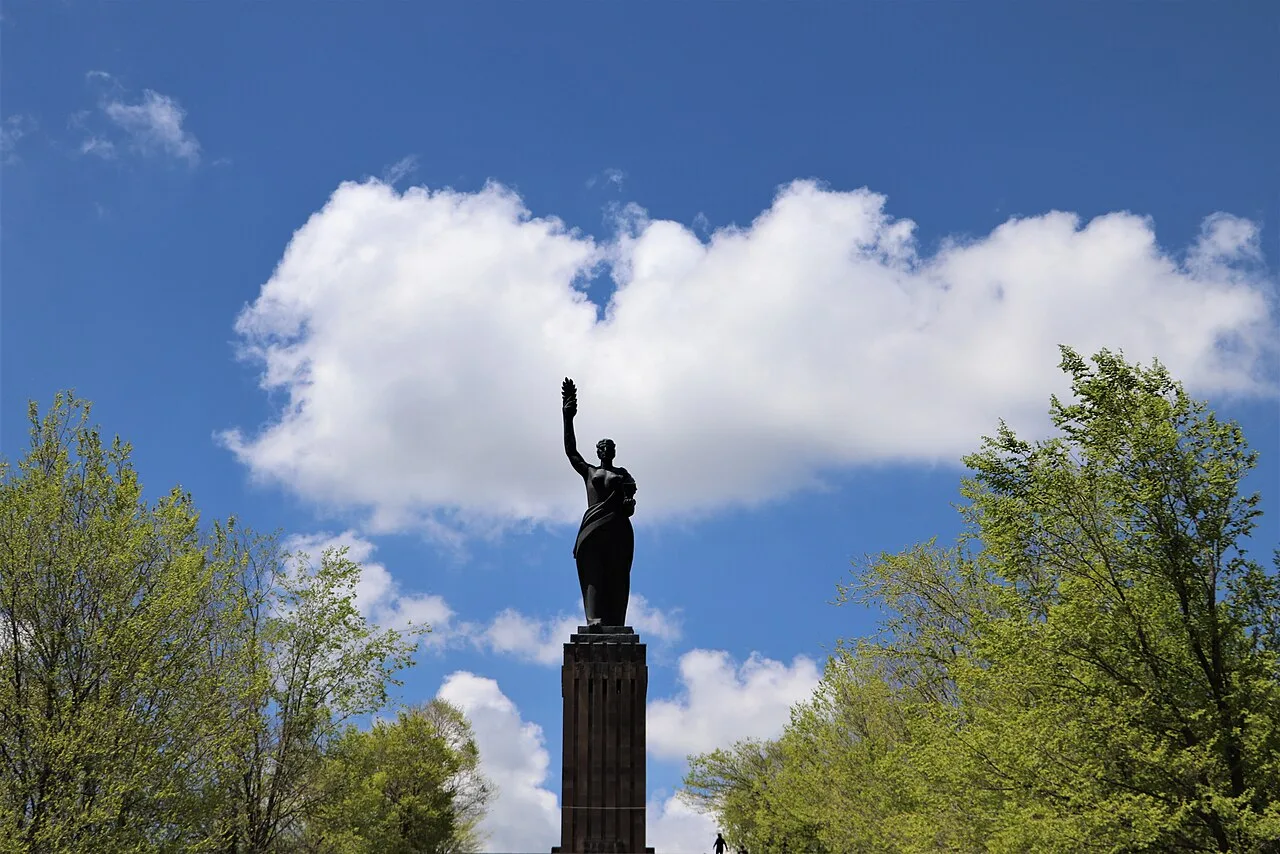
A short walk away stands Gyumri’s own Mother Armenia, a smaller sister of the giant in Yerevan, raised in 1975 on a tall pedestal. Like the one in the capital she looks out as a guardian figure, deliberately turned away from Turkey. Together the fort and the statue make the obvious spot to watch the sun go down over the Shirak plain.
The 1988 earthquake, and why it still matters
You can’t understand Gyumri without the earthquake. On the morning of 7 December 1988 a magnitude 6.8 quake struck the region around nearby Spitak, and the city, then called Leninakan, was devastated. Tens of thousands died across the affected towns, buildings folded in seconds, and Gyumri’s population, once over 200,000, was gutted. Nearly four decades on the recovery is still visibly unfinished: you’ll pass gaps, cracked shells, and families who spent years, in some cases decades, in temporary metal cabins known as domiks.
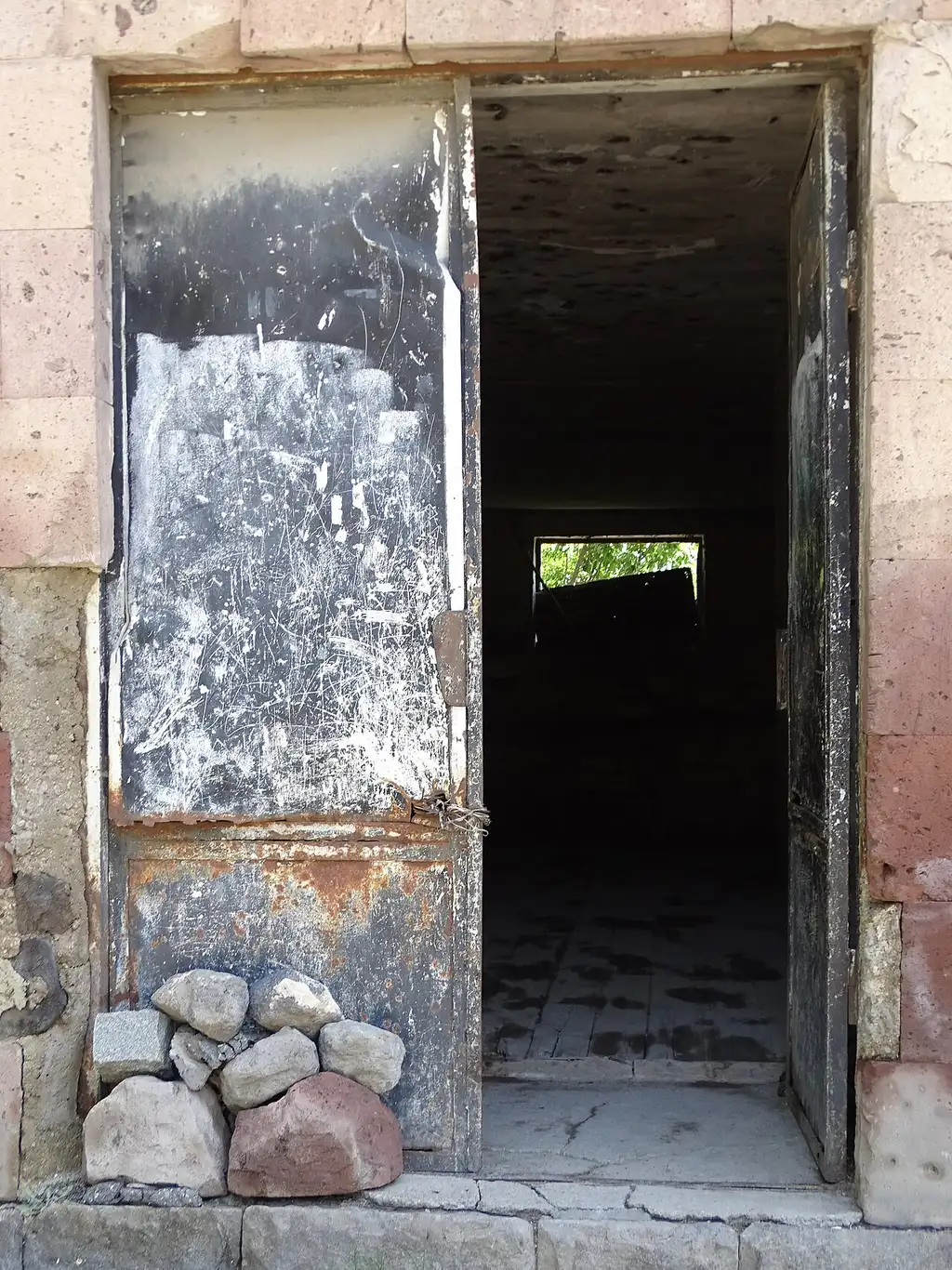
It is not a morbid thing to notice, and locals don’t tiptoe around it. Understanding what happened here explains the texture of the modern city, the patched-together feel beyond the old quarter, and the particular resilience and dark humour of the people who stayed and rebuilt. Treat it as part of the story rather than a sight to tick off.
Where Gyumri fits in a trip
Slot Gyumri in as your taste of provincial Armenia, the counterweight to a Yerevan-heavy itinerary. As a day trip it’s entirely doable, though a night rewards you with the old town at dusk and a proper sit-down in one of its taverns, where the food is hearty and the portions are Gyumretsi-sized (our guide to where to eat in Gyumri has the specific names worth booking); our guide to where to stay in Gyumri sorts the central areas and the best-value hotels and guesthouses if you do stay over. For a longer list of things to do in town, Fabio and Ryan’s 14 Things to Do in Gyumri on The Fabryk makes a good companion. With a car it pairs naturally with the wider north: swing east to Lake Sevan and the pass into Dilijan, or push on to the Lori monasteries and the Georgian border beyond. The sights right on Gyumri’s doorstep, the red monastery of Marmashen above the Akhurian and Harichavank on the road home, are worth a car in themselves, and our Shirak loop from Yerevan strings them together with the basilica of Aruch into a two-day drive. If the capital is your base and you’re still filling out your days there, our guide to things to do in Yerevan covers the other half of the picture. Give it a day for the stone streets and the local wit, and you’ll leave understanding Armenia a good deal better than the monasteries alone can teach you.
Photos
On the map
The map loads on click - to keep the page lightweight.
The map didn’t load. Check your connection and refresh the page.
Distance ≈126 km · about 2 hours by car, 2 h 10 min on the weekend express train, about 3 hours by bus or daily train
- Yerevan ≈126 km · about 2 hours by car, 2 h 10 min on the weekend express train, about 3 hours by bus or daily train Bus 351 from the Southern Bus Station every 45 minutes, 09:15-19:00, 3 h 05 min on the timetable; three daily trains plus a Friday-to-Sunday express. Check timetables before travelling.
Read also
Cities · 13 min read
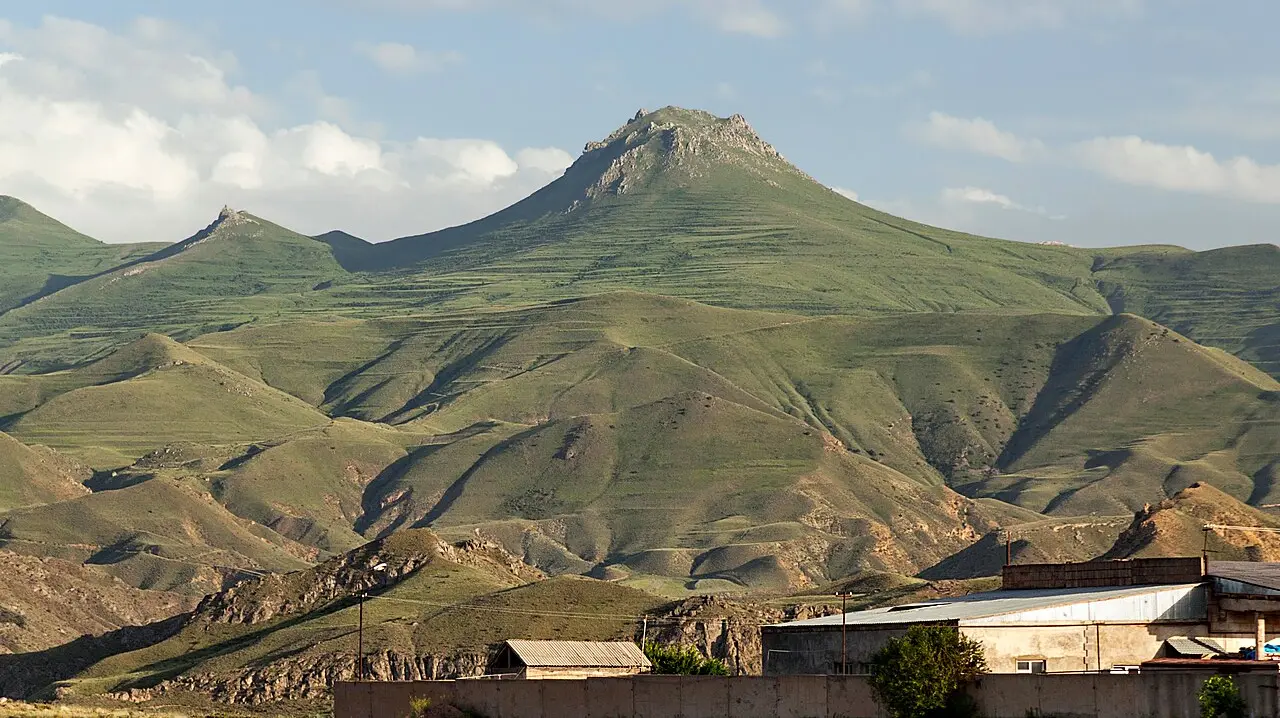
Yeghegnadzor: Wine Country Base in Vayots Dzor
Verified · July 23, 2026Why base yourself in Yeghegnadzor: Noravank and Areni on the doorstep, Gladzor, Smbataberd, a medieval Jewish cemetery and buried cheese.
Cities · 10 min read
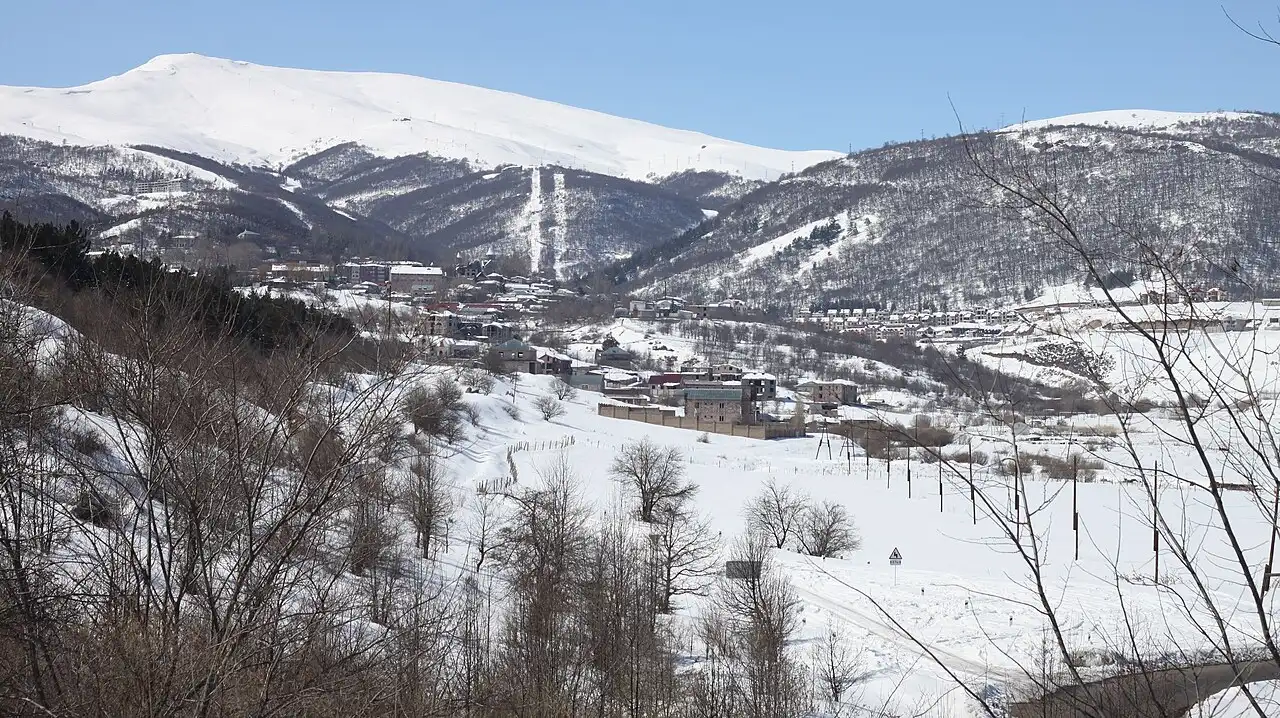
Tsaghkadzor: Armenia's Ski Town in Every Season
Verified · July 21, 2026Armenia's flagship ski resort, 58 km north of Yerevan: the Kecharis monastery, a five-stage ropeway, the ski slopes and what to do here in summer.
Cities · 11 min read
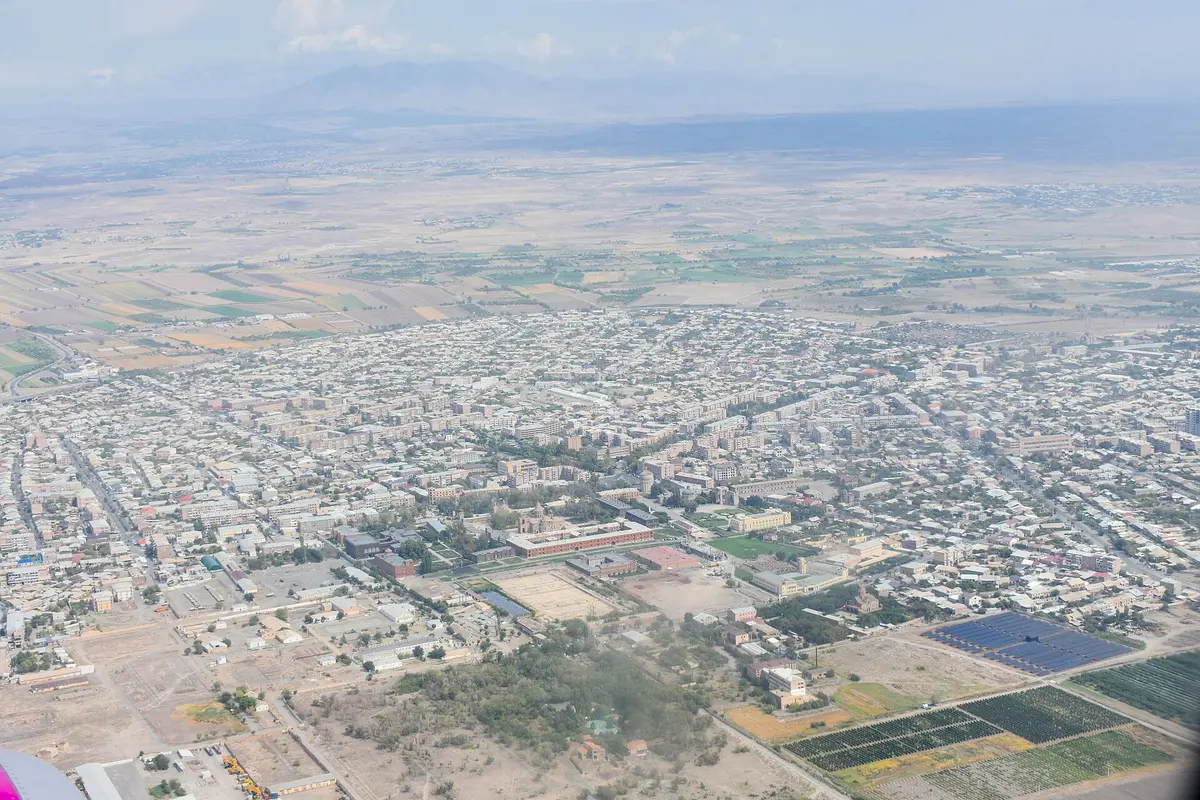
Vagharshapat (Etchmiadzin): Armenia's Spiritual Capital
Verified · July 16, 2026A guide to Vagharshapat (Etchmiadzin): the Mother See cathedral, the martyr churches of Hripsime and Gayane, Sardarapat memorial and how to visit.
Cities · 10 min read
Goris: Gateway to Tatev & the South
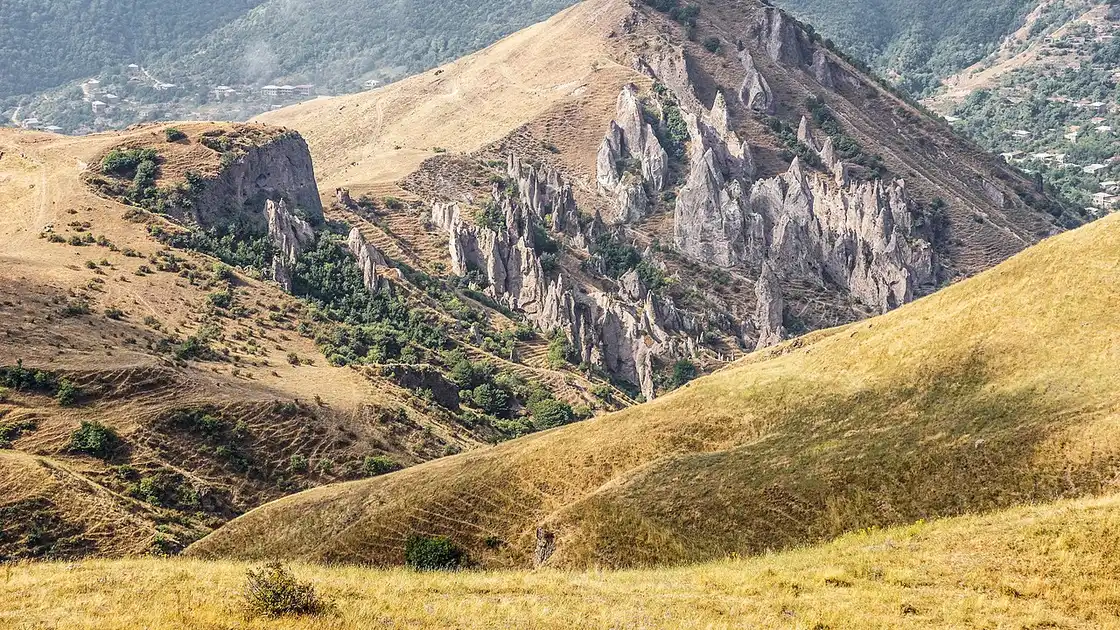
Verified · July 4, 2026A guide to Goris, Armenia: the stone old town and rock cones, Old Khndzoresk and its swinging bridge, the base for Tatev, and how to get there.