Getting Around Armenia Without a Car
Getting around Armenia without a car in 2026: marshrutkas and bus stations, trains to Gyumri and Tbilisi, taxi apps, and tours to the monasteries.
You can absolutely see Armenia without your own car, but you need to go in with the right expectations: the backbone is the marshrutka (a shared minibus), backed up by a couple of trains, cheap taxi apps for the gaps, and organised tours for the monasteries that public transport simply doesn’t reach. It’s cheap and characterful, but it’s also slow, the long southern routes see only one or two buses a day, and service thins out fast beyond the main towns. This guide covers which bus station serves where, the trains worth taking, when to just order a taxi, and how to reach the sights that no bus goes to (bus times here come from the official timetables and rail fares from the railway itself, but both get reissued, so check before you travel).
The honest overview
Let’s be straight about the network before you plan around it. Marshrutkas and buses connect Yerevan to just about every town, and they cost next to nothing, but they can be cramped and slow. Most of them do run to a clock, though: the Ministry of Territorial Administration and Infrastructure approves the intercity timetables and publishes them region by region as Armenian-language PDFs on mtad.am. The one region missing from that page is Vayots Dzor. The long southern buses stop in Yeghegnadzor on their own timetables, but the minibuses to Jermuk and to Yeghegnadzor itself run without a published one, so there you ask at the stand. What you won’t find is frequency or convenience. The long southern runs get one or two buses a day, there’s no national booking app, and the handy reference site t-armenia.com isn’t the ministry’s timetable. So the golden rule is to confirm the time and the departure station the day before, and to build slack into any plan.
The bigger thing that trips up most first-timers is this: buses go to towns, not to sights. A marshrutka will happily take you to Sevan town, Dilijan or Goris, but it’ll leave you a taxi ride short of the monastery, the lake shore or the cable car. For the headline monasteries strung across the mountains, your realistic options without a car are an organised tour or a hired taxi, not a bus. Keep that distinction in mind and the whole system makes sense.
Marshrutkas: the backbone, and which station is which
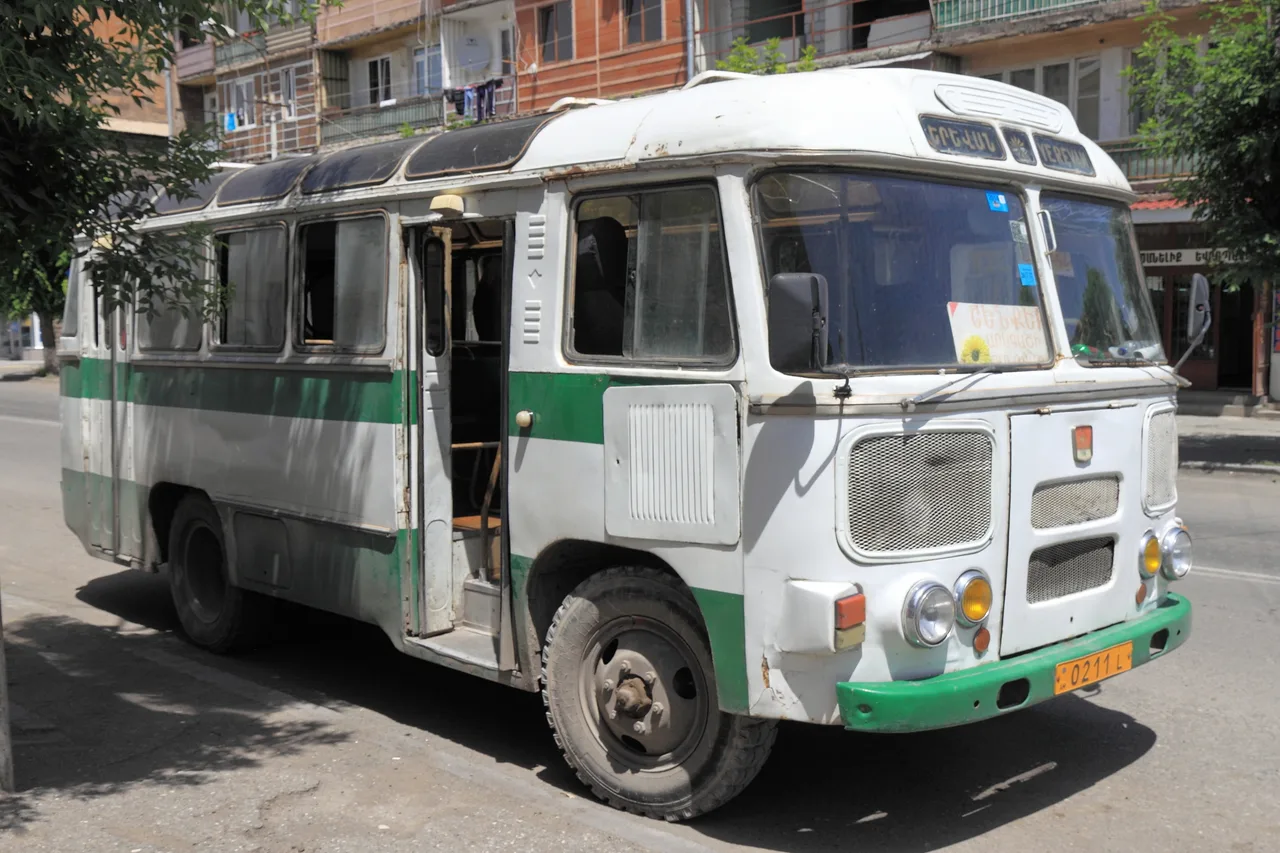
The shared minibus is how most Armenians travel between towns, and it’s dirt cheap. The one thing you must get right is the departure station, because Yerevan splits its routes between three hubs, and the ministry’s timetables name each one. The long southern routes leave from the Southern Bus Station (Haravayin avtokayan) on Sevan Street, a short walk from Sasuntsi Davit metro and the main railway station: No. 602 to Goris (the bus for Tatev, which travellers’ reports and many guides still call 607), No. 603 to Kapan and No. 604 to Meghri and Agarak. The Gyumri route, No. 351, starts there too. The Central Bus Station (Kilikia) on Isakov Avenue has the Sisian bus, No. 601, and the main Vanadzor route. The M4 routes to Sevan, Dilijan and Ijevan go from the Northern Bus Station (Hyusisayin avtokayan) on the highway out towards Sevan and Dilijan, at the city’s northern edge. Meghri is also the end of the road for a different reason: it sits right by Armenia’s only land border with Iran, and our guide to the Agarak border crossing picks up from there if that’s where you’re headed. Timetables do get reissued, and older guides still send southern travellers to Kilikia, so check which station your route uses before you set out.
For times, the ministry’s timetables are the firmest reference there is, but none of them prints a fare. Minibus 304 leaves the Northern Bus Station for Sevan 24 times a day between 08:00 and 20:30 and is scheduled at 1 h 20 min. Dilijan gets 24 departures a day from the same station between 08:30 and 18:45, spread across four routes and timed at about 2 h 10 min. Bus 351 to Gyumri leaves the Southern Bus Station every 45 minutes from 09:15 to 19:00 and is allowed 3 h 05 min. The long haul to Goris, No. 602, goes just twice a day on the ministry’s timetable, at 08:30 and 15:00, and is timetabled at 5 h 50 min; travellers’ reports, which call it 607, list more departures, so ask at the station which ones are actually running. On the shorter routes there’s no reservation: you ask the fare as you board, pay the driver in cash, keep small dram handy, and simply take a seat. The long southern runs are the exception. The ticket office at the Southern Bus Station sells Goris seats ahead of time and travellers report that they fill up, so for Goris, Kapan or Meghri go the day before, check the time and buy your seat there. For getting around Yerevan itself, the city buses, trolleybuses and metro all run on one cheap flat fare (150 AMD, now tapped with a bank card rather than paid in coins) - our full guide to Yerevan public transport covers the metro, the surface routes and how to pay.
Trains: slow, scenic, and only a few that matter
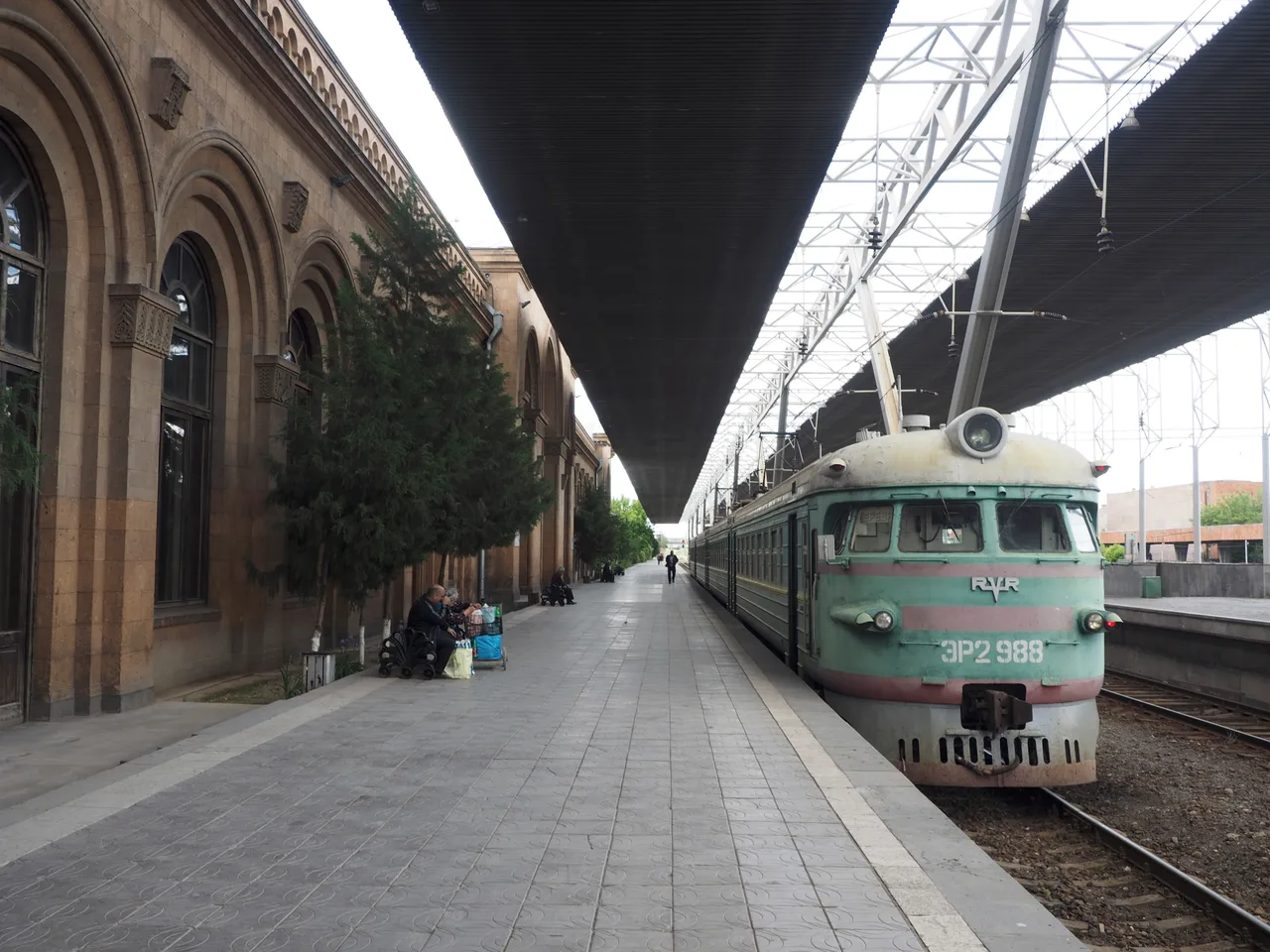
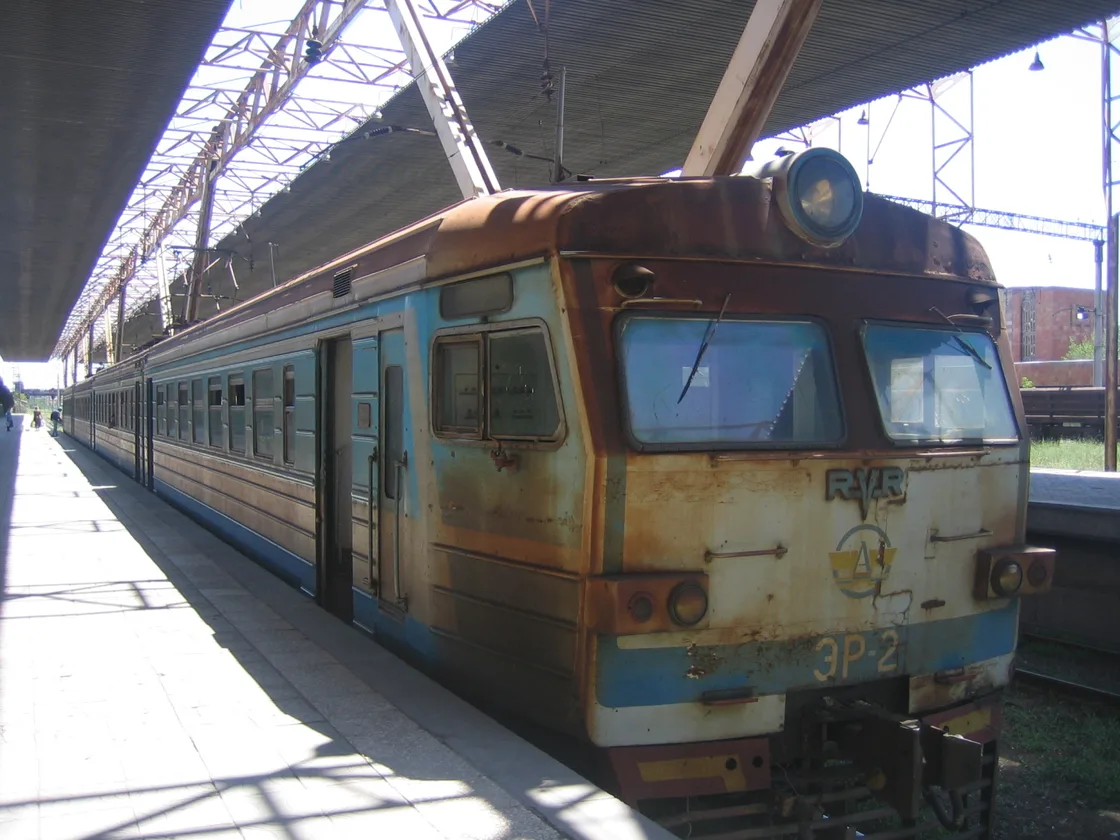
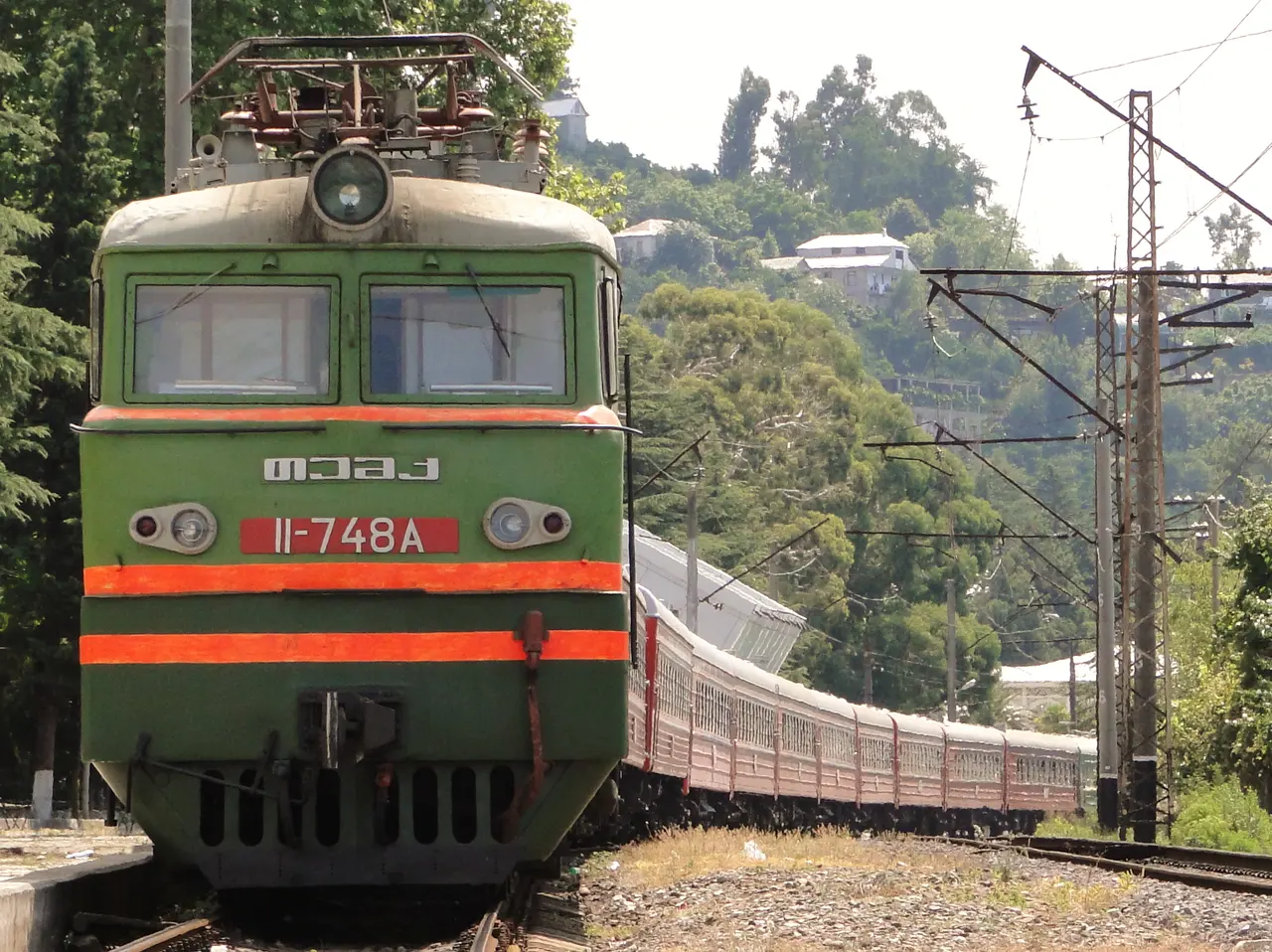
Armenia’s rail network is small, but two services are genuinely useful. The domestic one is the Yerevan to Gyumri line. The express, No. 100, runs Friday to Sunday, leaves Yerevan at 09:15 and takes 2 h 10 min for 2,500 AMD (roughly $7), which beats the bus’s scheduled 3 h 05 min, and it’s a far pleasanter ride. Three slower trains run daily and take a little over three hours for 1,300-1,500 AMD, depending on which rolling stock is on the run; those are South Caucasus Railway’s own fares for trips up to 31 December 2026. Our full guide to getting from Yerevan to Gyumri compares the express, the cheap daily trains and the minibus. There are also very slow suburban electric trains on some lines, more novelty than transport.
The one train that earns its keep for many travellers is the Yerevan-Tbilisi sleeper, the classic Caucasus rail link. It runs every other day all year, on two timetables. On the summer one (14 June to 1 October in 2026) it leaves Yerevan at 14:00 and pulls into Tbilisi just after midnight, which isn’t restful but makes a scenic ride, while the return leaves Tbilisi late in the evening and reaches Yerevan the next morning, so you save a night’s accommodation. From 2 October 2026 to 13 June 2027 the winter timetable makes it an overnight run both ways, leaving Yerevan on even-numbered dates. In late September 2026 South Caucasus Railway’s own booking site sold a Yerevan-Tbilisi berth on the summer train for about 11,700 AMD (roughly $32) in open-plan econom, 16,200 AMD (roughly $45) in a four-berth coupe and 26,500 AMD (roughly $73) in the two-berth lux, and listed the winter train at about 15,700-29,900 AMD (roughly $43-82); the prices shifted slightly between the two days we checked. In high summer that same sleeper runs all the way through to the Black Sea, covered in our guide to the Yerevan to Batumi train. Our full guide to travelling from Yerevan to Tbilisi breaks down the train, the marshrutka and the shared taxi side by side, with the current fares and the border crossing.
Taxi apps and intercity transfers
For everything the buses and trains don’t cover cleanly, Armenia’s ride-hailing apps are your friend. There’s no Uber or Bolt here; instead there’s GG (the local app) and Yandex Go, both cheap, reliable and priced up front in-app; our guide to taxi apps in Armenia walks through which to use, what rides cost and how to register a local number. You need data on your phone to open these apps on the street, so it pays to sort a local SIM or an eSIM early, and our Armenia SIM card and eSIM guide covers which network to pick and where to buy. In the cities they’re the easy way around, and both will also do longer intercity trips for a fixed price that’s higher than a marshrutka but far more comfortable and direct. If you are two or three people splitting the cost, an app car or a chartered taxi to, say, Dilijan or the monasteries can work out very reasonable and saves you the station scramble - our breakdown of Yerevan to Dilijan compares the minibus, taxi and transfer on that popular northern run.
For longer runs, airport pickups, or when you want a driver waiting rather than an app lottery, a pre-booked private transfer with a fixed price is the low-stress choice, especially with luggage or a group. It costs more than the shared minibus, but you go door to door on your own timing. This is also the neat way to bridge the “last mile” the buses leave out: take the cheap marshrutka to the town, then a short local taxi to the actual sight.
Reaching the sights no bus goes to
Here’s where the “buses go to towns” problem bites hardest. No bus goes up to the Geghard or Noravank monasteries themselves, and Khor Virap and the Wings of Tatev, the other sights most people come to Armenia for, are only half served. Garni is the happy exception: bus No. 266 leaves Yerevan’s Nor Nork terminus, running out via Gai Avenue, every 20-30 minutes from 07:50 to 19:20 and reaches Garni village, where the temple is, 55 minutes later on the ministry timetable; the timetabled last bus back leaves Garni at 19:15, so confirm the last return with the driver, and no fare is printed. It ends at Goght, the next village along, not at Geghard, and our Garni and Geghard guide sets out the ways to cover that last stretch. For Khor Virap, the Ararat-bound bus No. 453 from the Southern Bus Station runs all day on the ministry timetable and passes the turn-off on the highway, but no bus goes up to the monastery, so the last stretch is a long walk. For Tatev, the Goris buses take 5 h 50 min on the timetable from the Southern Bus Station, and from Goris the local bus No. 08-006 leaves at 10:10 and stops in Halidzor, the cable-car village, at about 10:54 and in Tatev village itself at 11:22; on the way back it passes Halidzor at 17:16 and reaches Goris at 18:00. It runs daily on the ministry timetable, which prints no fare, and travellers report other times, so check in Goris the day before; a taxi from Goris is the flexible alternative. So if you’re carless, the two easy ways to actually see the rest are a guided day tour or a chartered taxi.
For most visitors the tour is the sensible default: someone else drives the mountain roads, the sights are pre-grouped into sensible days (the southern loop, Garni plus Geghard, Sevan plus Dilijan), and you skip all the logistics. Prices vary a lot with group size and route, so compare a few rather than grabbing the first quote. A chartered taxi or private driver costs more but buys you your own pace and timing, which suits a small group. For real operator prices on a group tour versus a private driver versus renting yourself, our breakdown of whether you actually need a car in Armenia runs the numbers side by side. Our guide to the best day trips from Yerevan works through every headline sight and tells you what pairs into one day, which is the key to planning a carless trip well.
Putting it together
A realistic carless week looks like this: base in Yerevan, use the cheap taxi apps around the city, take marshrutkas or the train to the towns (Gyumri, Dilijan, Goris) for a night or two each, and use tours or chartered taxis for the monasteries and the harder-to-reach corners. Carry cash for buses and small taxis, confirm departure stations and times a day ahead, and always give yourself a time buffer, because nothing here runs to a tight clock. If you would rather have your own wheels for some of it, our guide to driving in Armenia covers the rules, the roads and the local driving style before you commit.
It is slower than driving yourself, and you’ll trade some freedom for it, but it’s cheap, sociable and perfectly doable. Before any of it, it is worth sorting cover for the trip: our guide to travel insurance for Armenia explains why a policy with solid evacuation cover matters here, given that hospitals charge foreigners upfront. Still working out how to reach the country in the first place? Our guide to how to get to Armenia covers the flights and the overland route from Georgia. If you arrive by air, our guide to getting from Zvartnots to Yerevan sorts your very first ride into town, and when you want to reach the water without a car, our Lake Sevan guide explains the marshrutka-plus-taxi combination that gets you to the shore. Plan around the network’s quirks rather than against them, and Armenia opens up just fine on public transport.
Photos
Read also
Transport · 10 min read
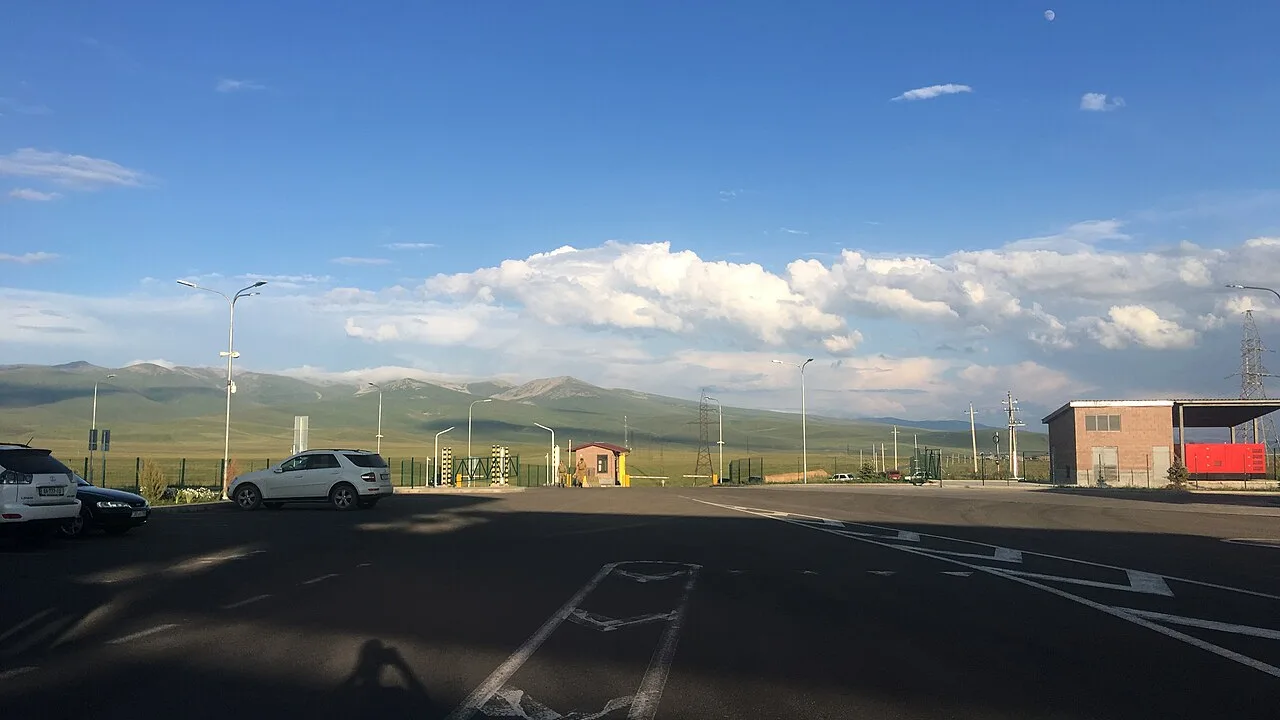
Gyumri to Tbilisi 2026: Train, Road & Border
Verified · August 12, 2026Gyumri to Tbilisi in 2026: SCR train times via Gyumri (summer 16:29→00:11; winter 23:59→07:35), Bavra road crossing, marshrutka and private transfer.
Transport · 13 min read
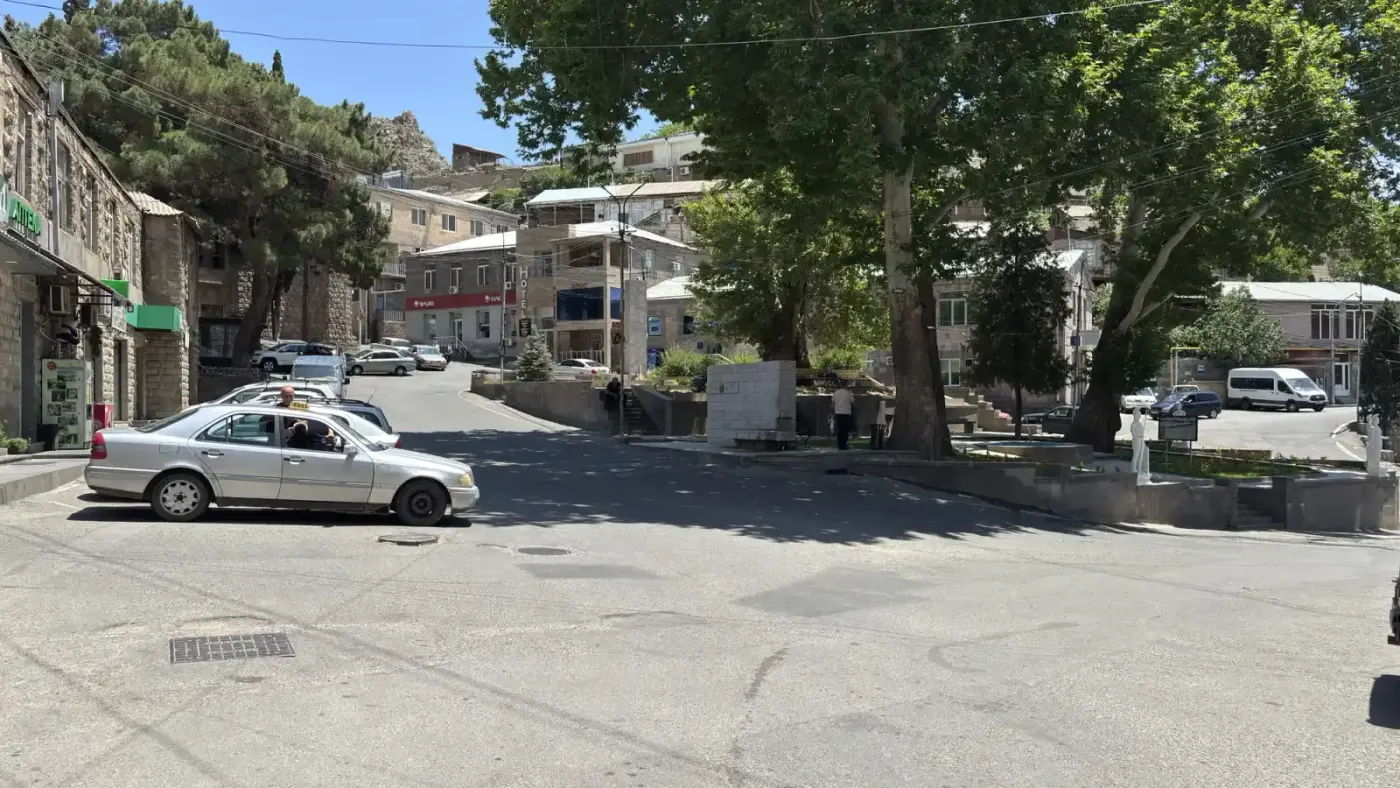
Armenia to Iran Border Crossing: Meghri-Agarak (2026)
Verified · August 9, 2026Armenia-Iran border crossing at Meghri-Agarak in 2026: visa rules by nationality, the Yerevan-Tehran bus, carnet rules and the current safety picture.
Transport · 8 min read
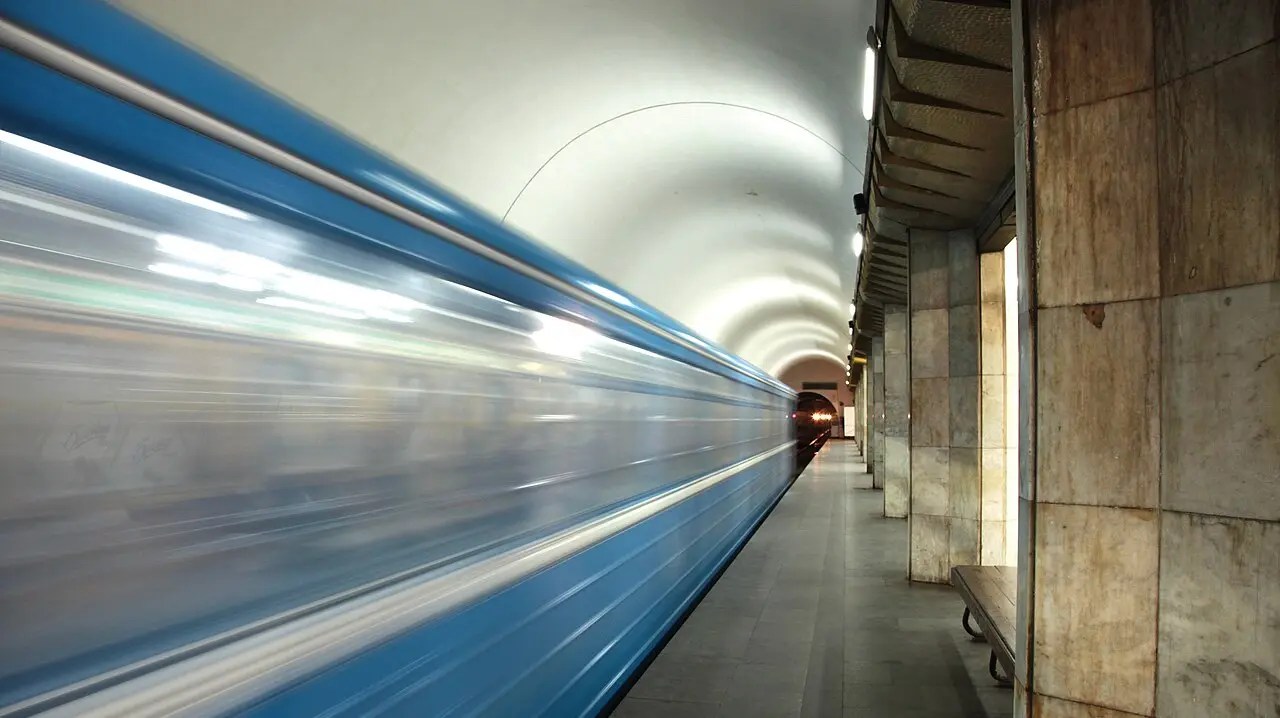
Yerevan Public Transport: Metro, Buses & Fares
Verified · July 12, 2026How Yerevan public transport works in 2026: the Soviet metro, city buses and trolleybuses, vanishing marshrutkas, and the new 150 AMD tap-and-go fare.
Transport · 9 min read
Yerevan to Jermuk: Bus, Taxi & Car
Verified · August 9, 2026How to get from Yerevan to Jermuk in 2026: the Kilikia marshrutka, taxis and private transfers, or self-drive - prices, times and the spa-town catch.