Yerevan to Jermuk: Bus, Taxi & Car
How to get from Yerevan to Jermuk in 2026: the Kilikia marshrutka, taxis and private transfers, or self-drive - prices, times and the spa-town catch.
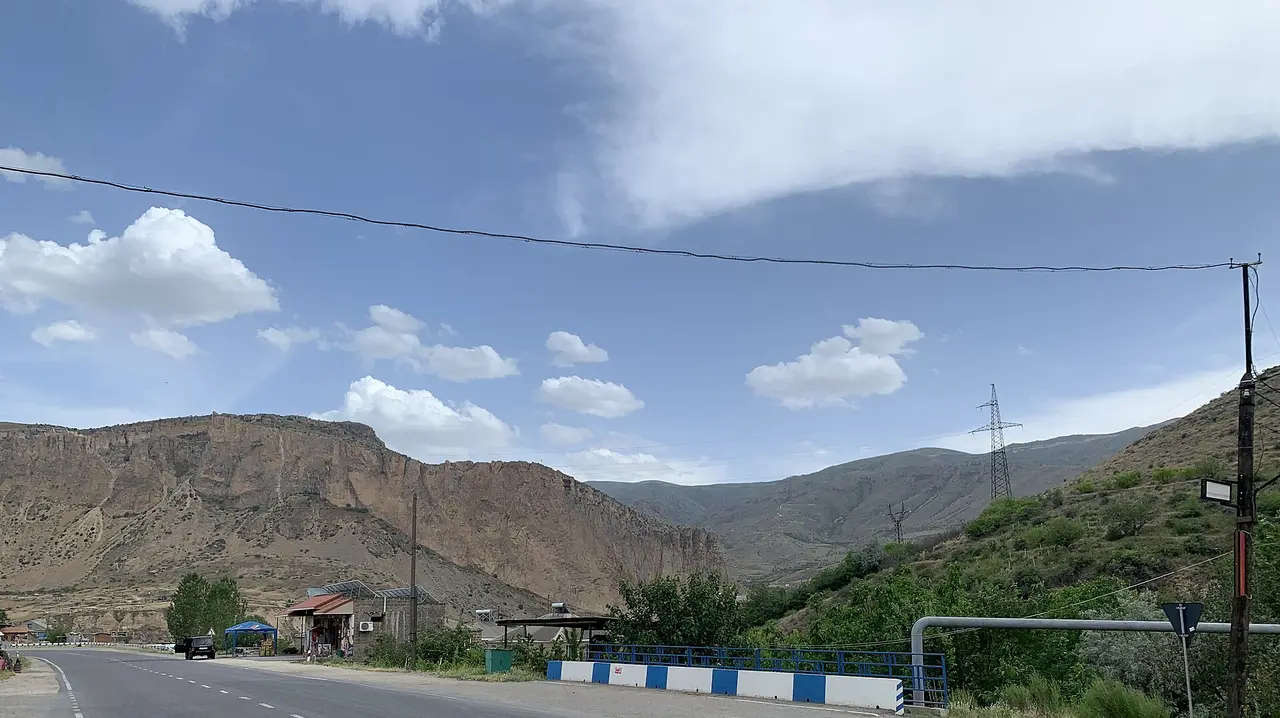
Jermuk sits about 170 km southeast of Yerevan, and it takes a little more effort to reach than the country’s nearer sights, because it’s not on the way to anywhere: the mineral-water resort sits at the top of a dead-end branch road, up on a plateau at 2,080 m. Your options are the cheap marshrutka (a shared minibus, roughly four hours from the Kilikia bus station, fare paid in cash to the driver), a taxi or private transfer door to door, or your own rental car, which is the one to pick if you want to make a trip of the drive rather than just endure it. This guide lays out what each costs and how long it takes, plus the one scheduling trap that catches people coming here to relax (prices are 2026 ballparks and shift, so treat every figure as a rough guide).
The quick answer
For the cheapest trip, take a marshrutka from Yerevan’s Kilikia central bus station: figure on about four hours, sometimes a touch more with the climb and the stops, and a fare you ask the driver for and pay in cash. For door to door on your own timing, a taxi or a pre-booked transfer takes you the whole way, faster and in comfort, for a lot more money. And if you can, drive it yourself, because the road south runs past the Areni wine country and the red-rock gorge of Noravank, and a car turns the transfer into a day out of its own.
There’s no train to Jermuk - the railway doesn’t serve this corner of the south - so it comes down to bus, taxi or car. And here’s the catch that matters most: Jermuk is a wellness destination, the sort of place you come to for two or three slow nights of thermal baths and mountain air, not a monastery you tick off in an afternoon. That changes the maths on how you get here, as we’ll come back to.
The marshrutka: cheapest, and slower than it looks
The budget route is the marshrutka, and it leaves from Yerevan’s Kilikia central bus station (Kilikia avtokayan) on Isakov Avenue, west of the centre. Don’t confuse it with the Southern Bus Station by Sasuntsi Davit metro: that’s where the ministry’s timetables put the long-distance buses to Goris, Kapan and Meghri, and of those southern routes only the Sisian bus uses Kilikia. Nobody publishes the fare to Jermuk, and the ministry has published no timetable for this route on mtad.am, so there’s nothing printed to check; ask the driver and pay in cash. There’s no online booking either: you turn up, find the minibus with “Jermuk” in the windscreen, take a seat, and it goes.
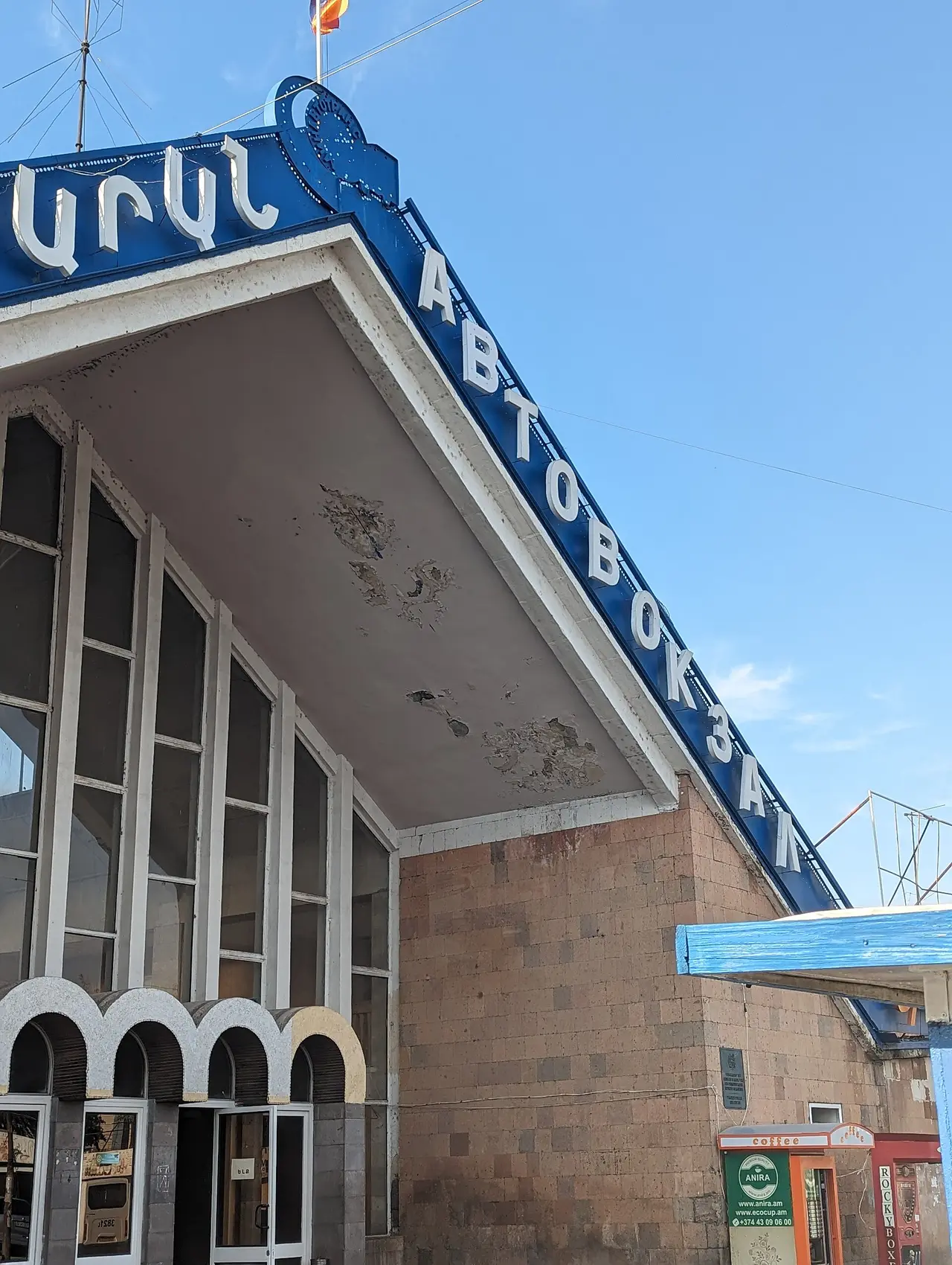
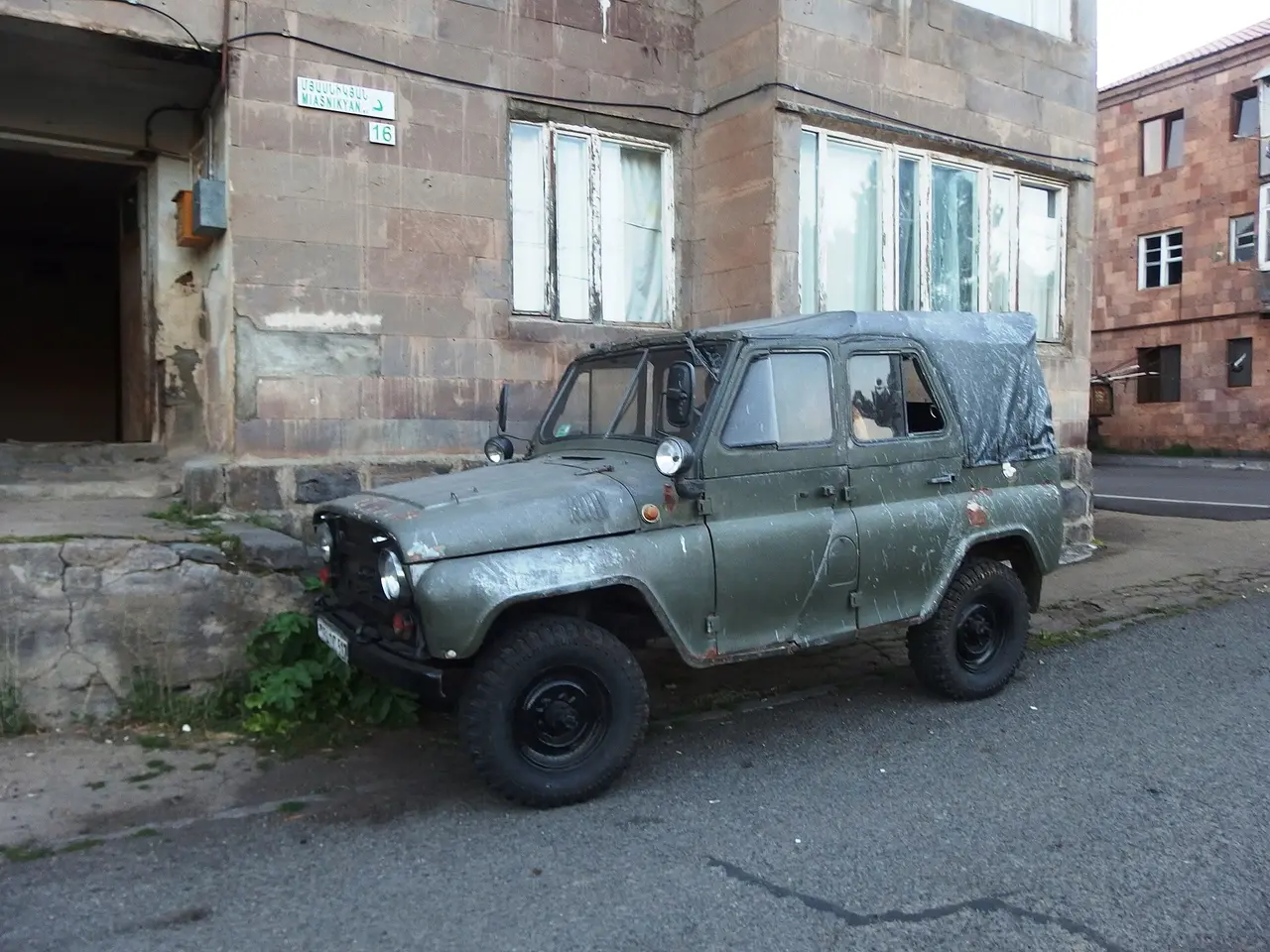
Two things to know before you commit to it. First, the timing is thin: recent schedules list only about four departures a day, most of them in the morning, so this isn’t a service you drift down to at lunchtime. Get to the station early, confirm the day’s departures at the ticket window the day before if you can, and don’t bank on a specific slot, because these shift. Second, the journey is long for the distance: reckon on four hours, sometimes four and a half, noticeably slower than a car, because the minibus stops along the M2 and then grinds up the branch road onto the plateau. The vehicles are the usual GAZelle-type vans, around sixteen seats, short on legroom and often full.
None of that is a problem if you’re counting drams and happy with a slow ride. But it feeds straight into the scheduling trap below, so read on before you settle on the bus.
Taxi, ride-hailing and private transfer
If you would rather travel on your own clock, a car for the whole trip is the comfortable answer. Flag or app a taxi and a negotiated one-way fare tends to land somewhere around $50-65 per car; a metered app ride works out a little less on paper (the local calculators put it near 17,000 AMD), but for a run this long you’re better agreeing a flat price up front than watching a meter. Split between three or four people, that is not far off the minibus per head, and you go point to point in about two and a half hours rather than four.
The easy way to arrange a fair-priced local car is through Armenia’s ride-hailing apps, GG and Yandex Go; there’s no Uber or Bolt here, and our guide to taxi apps in Armenia explains how they work and what to expect. For a fixed price agreed in advance, with a driver who meets you and will pull over for the Areni or Noravank detour, a pre-booked private transfer does the same job without any haggling. Online transfer quotes for the full Yerevan-Jermuk run cluster around 42,000-45,000 AMD (roughly $107-120) for the car, which is the premium you pay for zero fuss and a set pickup time.
Driving it yourself: the road is half the point
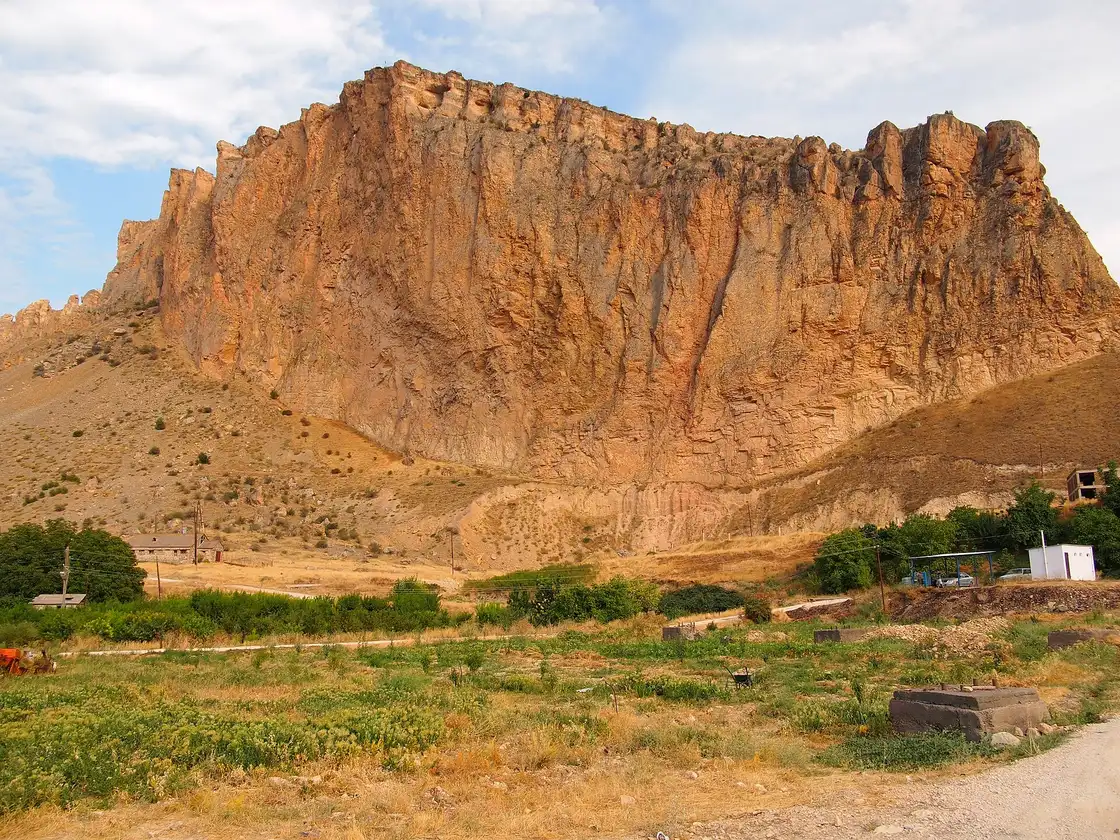
With your own car, the trip becomes flexible in a way the bus never is. You head southeast on the M2 through the province of Vayots Dzor, a good highway that carries you past the Areni wine villages and the turn for the red-rock gorge of Noravank, then you turn off and climb the branch road up onto the Jermuk plateau. That’s the real argument for driving: the Jermuk turn-off is on the same road as two of Armenia’s best southern sights, so a common plan is to stop for a wine tasting at Areni and an hour at Noravank on the way, and roll into Jermuk by evening. The minibus blasts straight past all of it.
The M2 itself is easy driving; the branch road up to the plateau is a mountain climb, steady rather than scary, but take the bends unhurried and keep an eye on the fuel gauge, since stations thin out once you leave the highway. At 2,080 m the air is cool even in July, and in the shoulder seasons and winter the upper road can be cold and icy, so check conditions if you’re coming outside summer. If you’re weighing up the wider self-drive question - the documents, the deposit, the border zones to avoid - our guide to car rental in Armenia covers all of it before you pick up the keys.
The scheduling trap for the wellness crowd
Here’s the thing most guides skate over. Jermuk exists to be stayed in. The waterfall and the famous drinking gallery are an afternoon’s sightseeing, but the point of the place is the slower cure: the thermal baths, a couple of nights in a sanatorium or spa hotel, the thin clean air. And that collides with the marshrutka timetable in an awkward way.
Because there are only a handful of buses a day and they dry up through the afternoon, a same-day return by minibus is a genuine risk, and trying to squeeze Jermuk into a day trip from Yerevan means four hours up, a rushed couple of hours, and four hours back in a cramped van, which rather defeats the object of coming to unwind. So match your transport to your plan. If you’re here for the wellness stay, either drive (so you’re not hostage to the timetable) or take a taxi or transfer one way and pre-book your ride back, and give yourself at least a night, ideally two or three. Only bounce in and out by bus if you genuinely just want the waterfall and the gallery and nothing more.
Which should you choose?
Line it up against your trip:
- Marshrutka: fare not published, so ask the driver; roughly four hours, only a few a day from Kilikia and mostly mornings. Best if you are on a tight budget, staying overnight, and happy with a slow, basic ride.
- Taxi / ride-hailing: around $50-65 per car, about two and a half hours, door to door. Best for a group, or when you want your own timing without driving.
- Private transfer: fixed price, roughly 42,000-45,000 AMD for the car, no haggling, and it will stop for Areni or Noravank. Best if you want the trip sorted in advance.
- Rental car: the pick if you want to fold in the wine villages and Noravank, explore the wider south, and leave when you like.
Once you are there
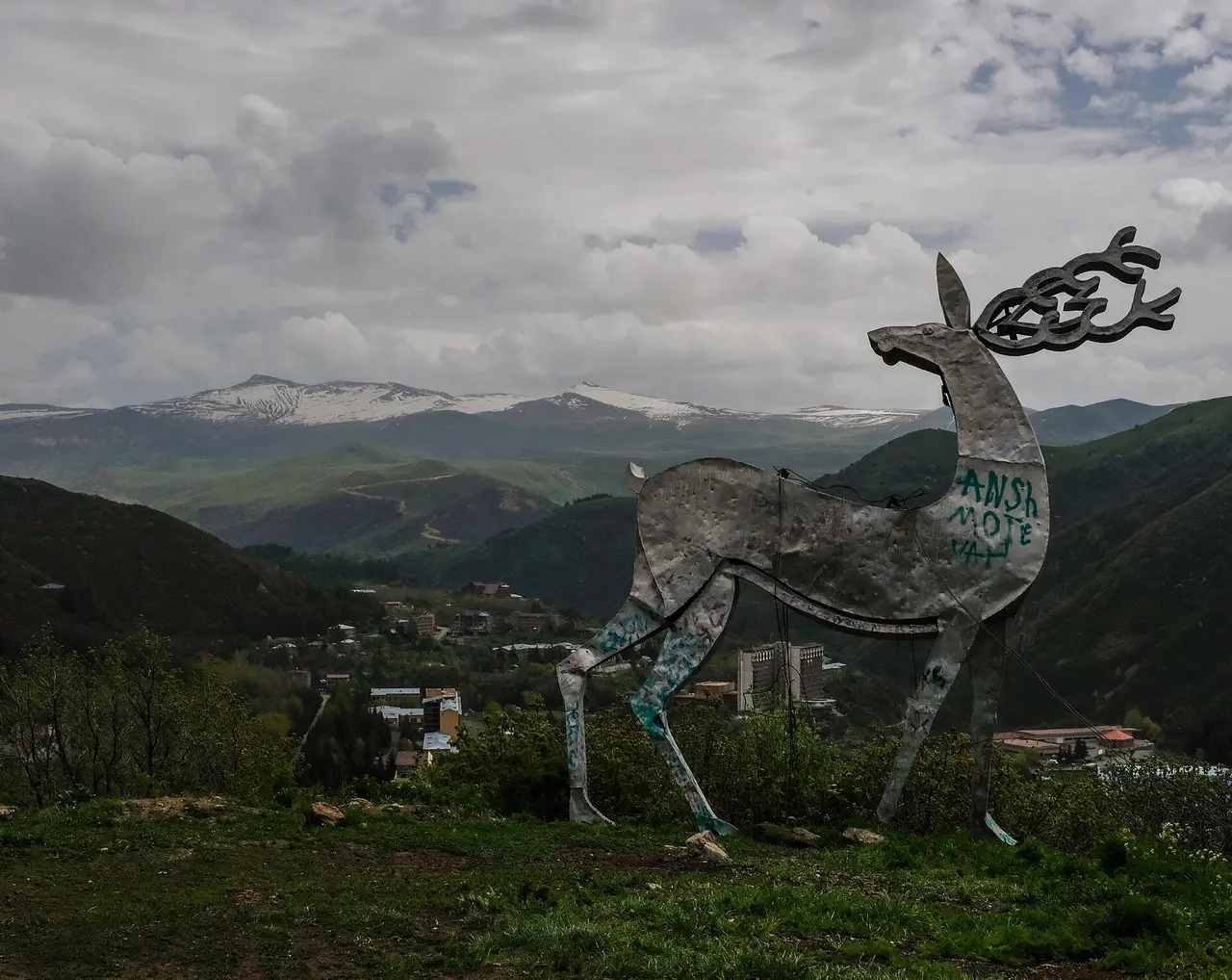
Whatever gets you up the hill, the reward is the same: a green plateau town built around its springs, with a 70 m waterfall, the arcaded mineral-water gallery where you taste the warm, faintly salty water at the source, and paths tracing the rim of the Arpa canyon. It’s cooler and quieter than the lowlands, and it rewards the traveller who slows to its pace rather than treating it as a checklist stop.
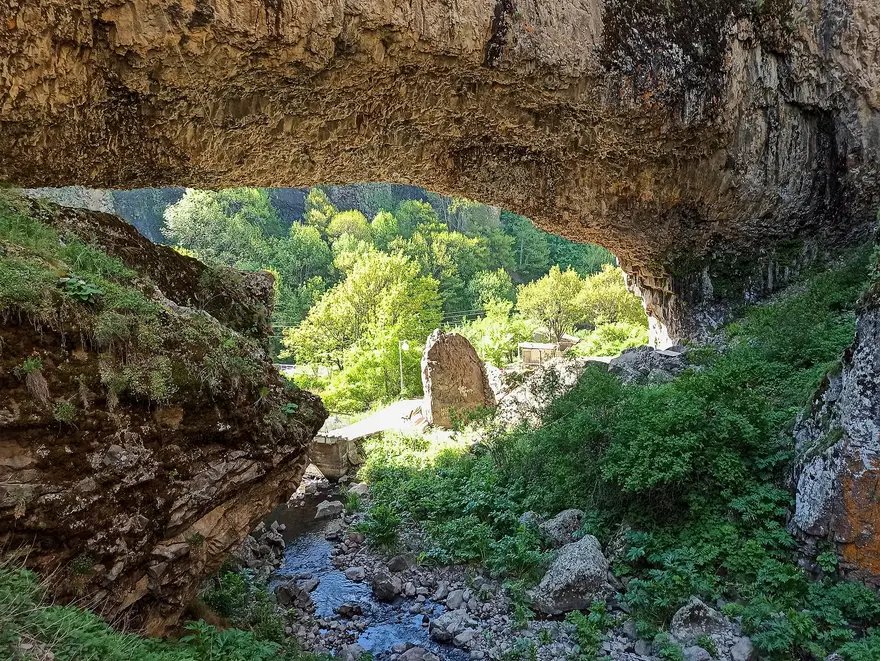
For everything to see, drink and do once you arrive, our full guide to Jermuk covers the waterfall, the gallery, the springs and the walks, and where to stay in Jermuk sorts the big spa resorts from the simpler sanatoriums. And for the bigger picture of how the buses, trains and taxis fit together across the country, getting around Armenia ties the whole network together, worth a read if Jermuk is one stop on a longer southern swing. Get there, slow down, and let the plateau do its work.
Photos
Read also
Transport · 10 min read
Gyumri to Tbilisi 2026: Train, Road & Border
Verified · August 12, 2026Gyumri to Tbilisi in 2026: SCR train times via Gyumri (summer 16:29→00:11; winter 23:59→07:35), Bavra road crossing, marshrutka and private transfer.
Transport · 13 min read
Armenia to Iran Border Crossing: Meghri-Agarak (2026)
Verified · August 9, 2026Armenia-Iran border crossing at Meghri-Agarak in 2026: visa rules by nationality, the Yerevan-Tehran bus, carnet rules and the current safety picture.
Transport · 8 min read
Yerevan Public Transport: Metro, Buses & Fares
Verified · July 12, 2026How Yerevan public transport works in 2026: the Soviet metro, city buses and trolleybuses, vanishing marshrutkas, and the new 150 AMD tap-and-go fare.
Transport · 8 min read
Gyumri Shirak Airport: Wizz Air Flights & Transfer
Verified · July 8, 2026Who flies to Gyumri Shirak Airport (LWN), the Wizz Air Larnaca route, how far it is from the city, and how to get to Gyumri and Yerevan when you land here.