Jermuk: Spa Town & Waterfall
A guide to Jermuk, Armenia: the 70 m waterfall, the mineral water gallery, hot springs and how to get to the mountain spa town from Yerevan.
Jermuk is Armenia’s mineral-water town: a small spa resort on a high plateau at 2,080 m in the southern province of Vayots Dzor, about 170 km and three hours southeast of Yerevan, built around hot springs, a bottled water that every Armenian knows by name, and a 70 m waterfall that drops off the plateau’s edge. It is where Soviet citizens once came to take the waters and where Armenians still go to walk, drink from the taps and breathe cool mountain air. This guide covers the waterfall, the famous drinking gallery, the springs, and how to reach a town that sits a long way up a dead-end road.
The town on the plateau
Jermuk is unusual among Armenian destinations in that its name is also its reason to exist. “Jermuk” comes from the Armenian word for warm, after the hot springs that rise here at 57 to 64°C from around forty sources across the town. The place sits high, ringed by mountains that climb to 2,500-3,500 m, and the Arpa River slices a canyon straight through the middle, splitting the plateau into two halves joined by bridges. It’s green, forested and noticeably cooler than the lowlands, with woods of oak, hornbeam, wild pear and juniper on the slopes.
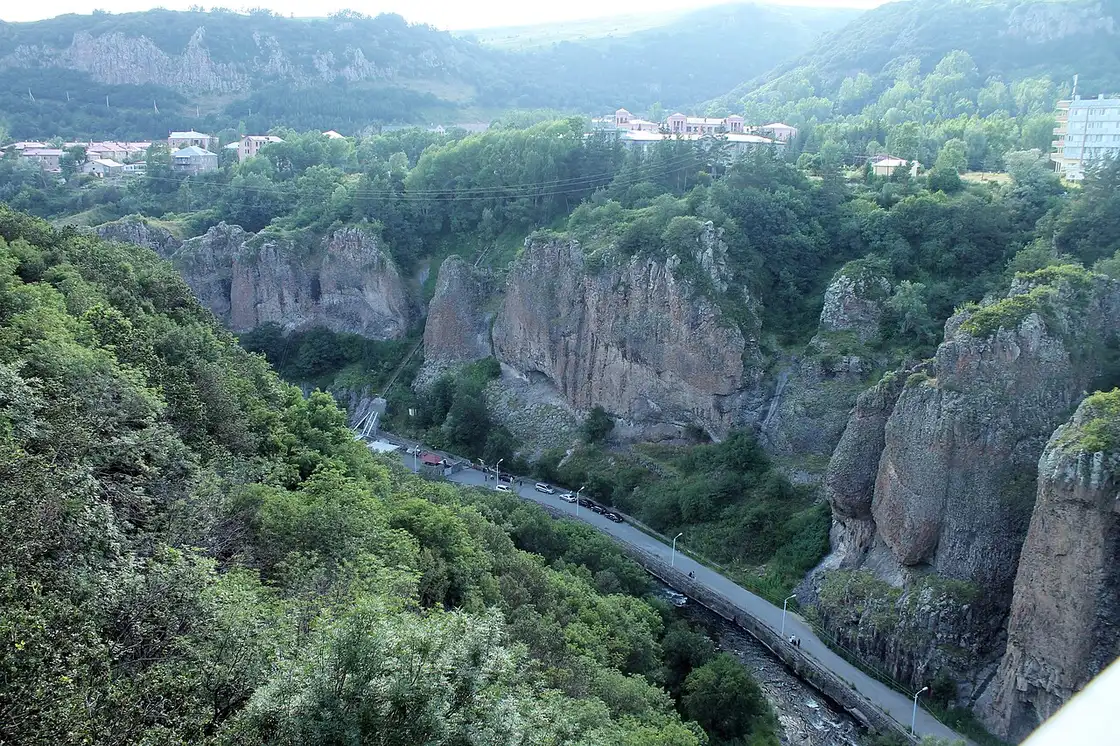
The town you see today is largely a Soviet creation. Jermuk had its first sanatorium in 1962 and a full mineral-water treatment centre by 1966, and through the 1980s it grew into a busy health resort with a population near 9,000. That number has since fallen to under 4,000, and some of the big concrete sanatoriums have a faded, between-eras feel. But the resort function never died: the town has been getting fresh investment, new hotels sit alongside the old blocks, and it remains the country’s go-to spot for a wellness break. Come for a day and you’ll see the waterfall and the gallery; come for two or three nights and the point is the slower rhythm of walks, thermal baths and clean air.
The waterfall: “Mermaid Hair”
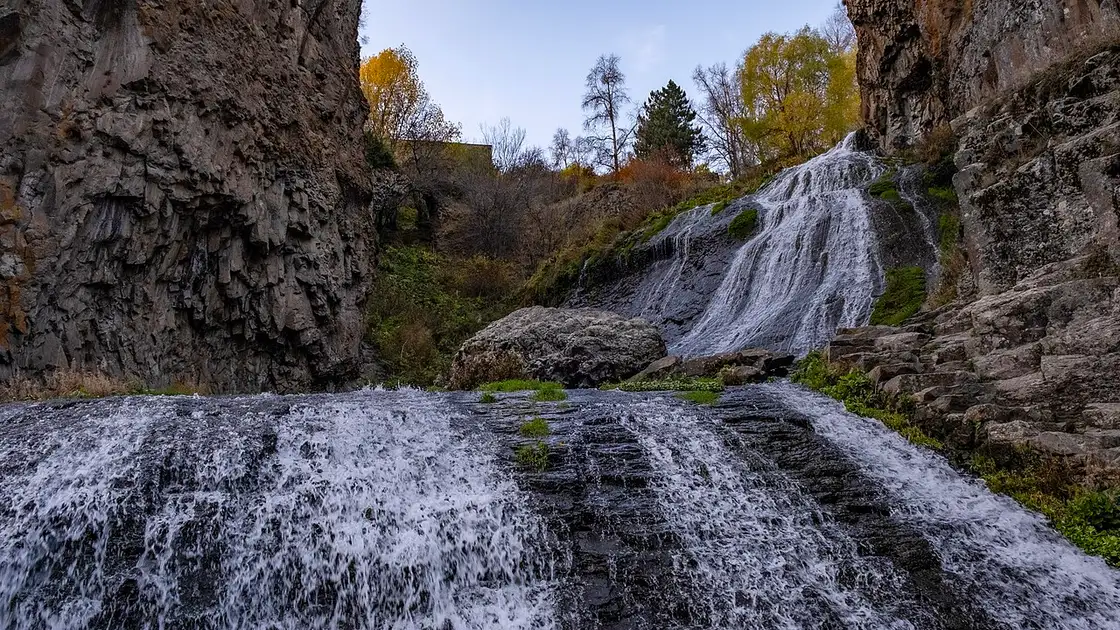
The waterfall is the sight everyone photographs, and it earns it. The Arpa’s water pours over the lip of the plateau and falls about 70 m down a stepped cliff face, fanning out as it goes so that it reaches the bottom in fine, hair-like strands rather than a single column. That look gives it its Armenian nickname, the “Mermaid Hair” waterfall, tied to a local legend of a village maiden who let down her hair over the rocks and turned into a mermaid; the strands of falling water are said to be her hair.
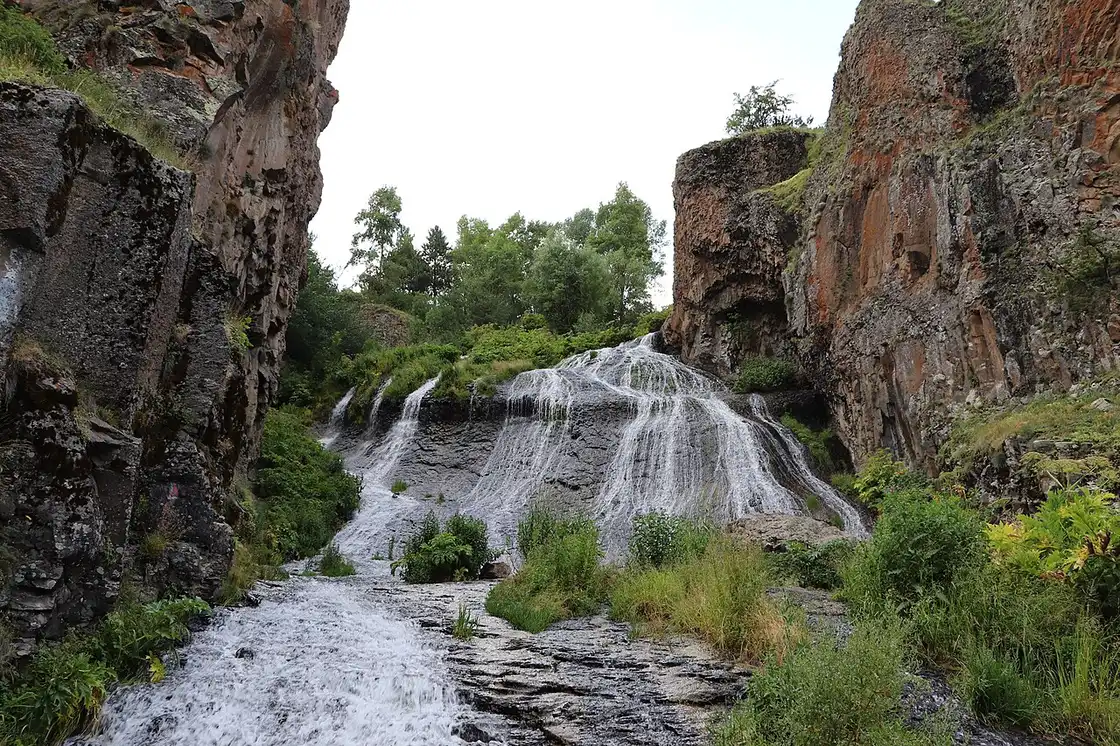
You reach it on foot from the town along a path that runs down into the gorge below the waterfall, a walk of a couple of kilometres that most people manage comfortably. Two practical notes are worth having in advance. First, the flow is strongest in late spring and early summer, when snowmelt fills the Arpa; by late summer it thins out, and in a dry year it can be modest. Second, the trail runs through the canyon, so in winter snow and ice make the descent slippery and it’s best treated as a warm-season walk. Wear proper shoes, because the path down to the base is uneven. It’s not the only fall worth a detour in Armenia: see how it compares to Kasakh, Trchkan and the rest in our guide to the country’s best waterfalls.
The Mineral Water Gallery
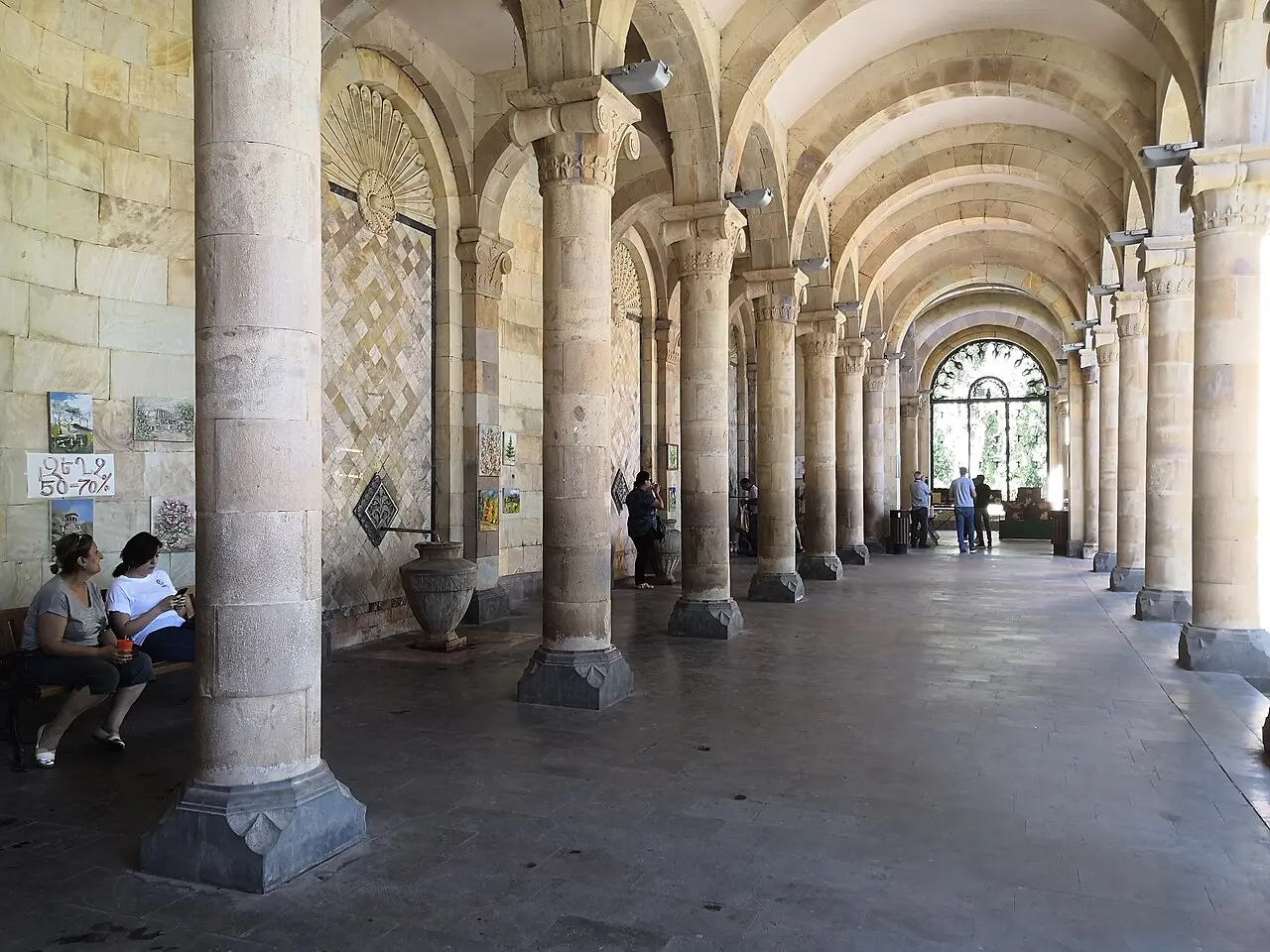
If the waterfall is the postcard, the Mineral Water Gallery is the ritual. This is the town’s drinking hall, a long arcaded colonnade of pale stone built in 1956 by the architect Gevorg Tamanyan - the son of Alexander Tamanyan, who laid out central Yerevan - and it is a genuinely handsome piece of mid-century design, open along its sides rather than sealed in as a building.
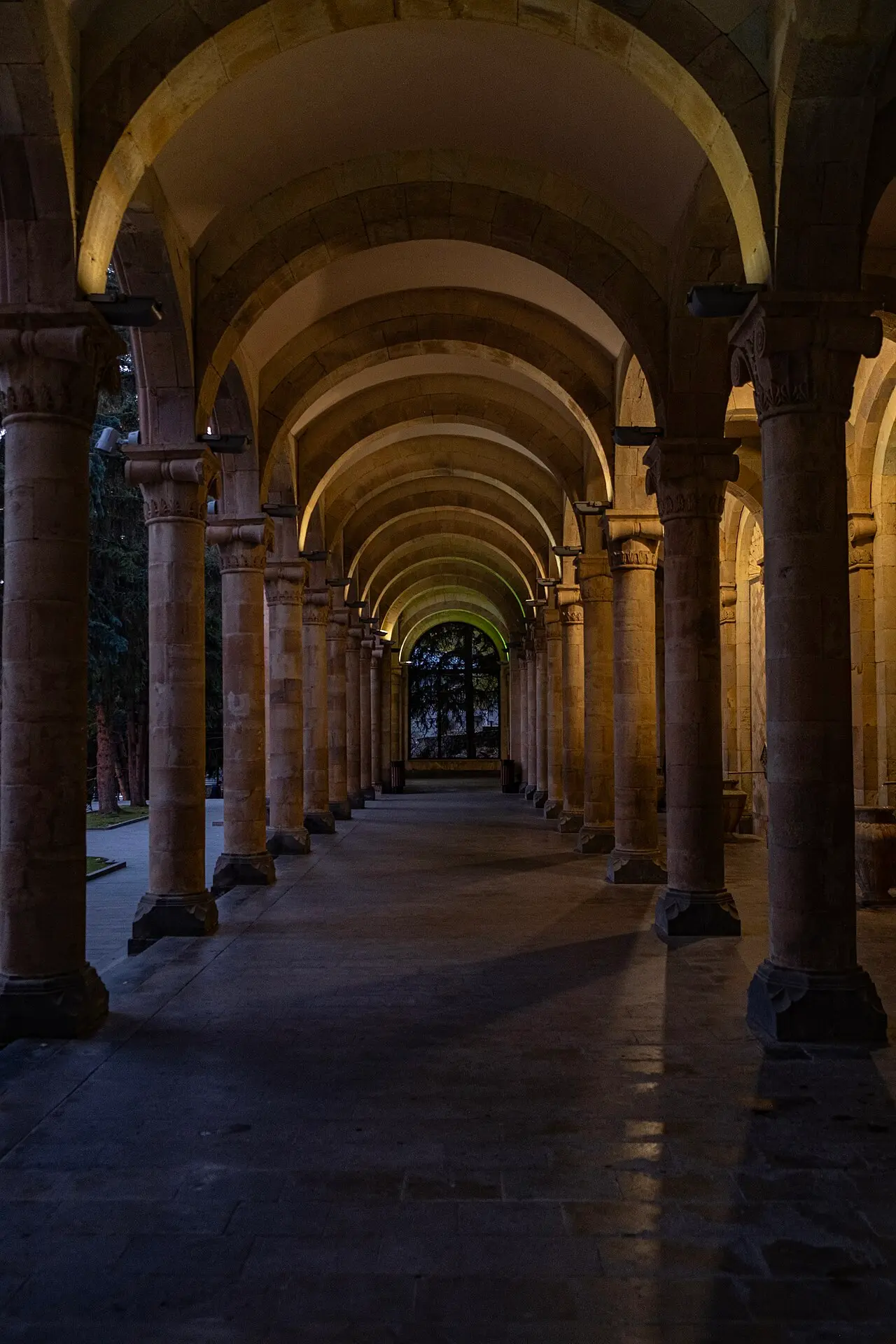
Inside, a row of taps runs the length of the corridor, and the trick is that each one pours the same mineral water at a different temperature - roughly 30°C up to around 53°C, cooling as you move along the gallery. The idea, in classic sanatorium fashion, is to sip your way through, comparing the warm end with the cooler. The water is warm, faintly salty and distinctly mineral, an acquired taste that locals swear does you good; its chemistry is often compared to that of Karlovy Vary in the Czech Republic. It’s free to try, so bring a cup or buy one at the entrance, and go slowly rather than gulping it like table water.
The bottled version of this water is the Jermuk brand, made in the town since the early 1950s and sold across Armenia and beyond; the sparkling green bottles are on every shop shelf in the country. Tasting it at the source, warm from the ground, is a different thing entirely.
Springs, walks and the canyon
Beyond the two headline sights, Jermuk is a place to slow down. The hot springs are the original draw, and the town’s spa hotels and treatment centres channel the thermal water into pools and baths; a soak in warm mineral water with mountain views is the classic Jermuk afternoon. Book a hotel with its own thermal pool if that’s the point of your trip, since access is easiest through the accommodation; our guide to Jermuk’s spa hotels and sanatoriums sorts the full treatment resorts from the simpler guesthouses. If you’re weighing Jermuk against Armenia’s other mineral-spring towns, our hot springs of Armenia guide sets it alongside Hankavan’s forest pools and Arzni’s cold, carbonated one.
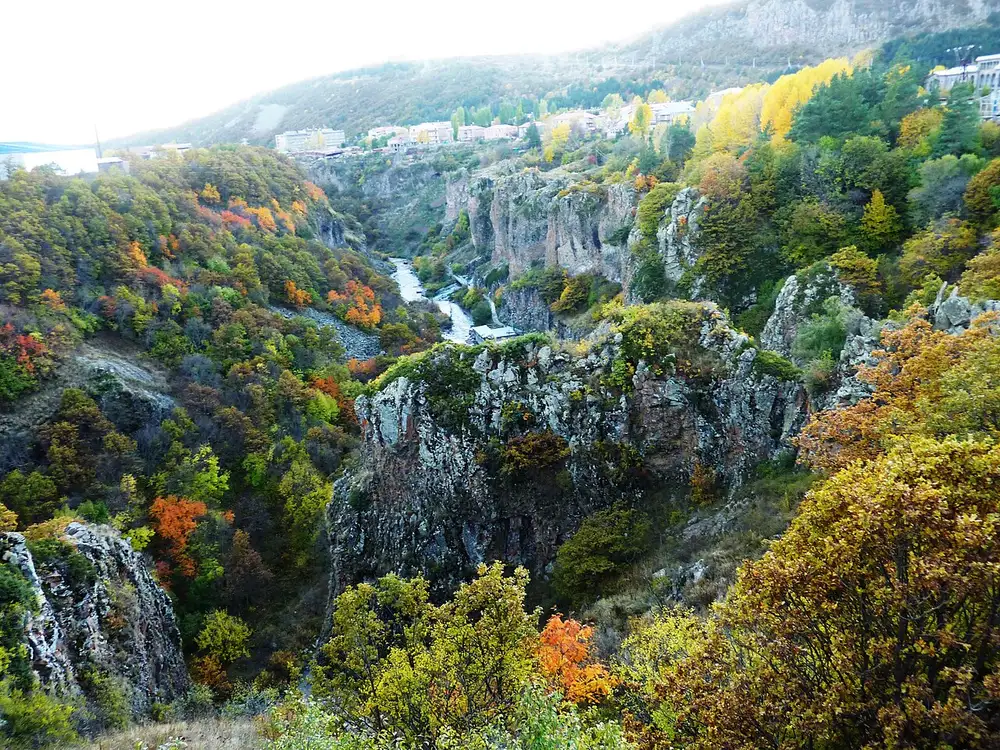
The setting rewards walkers. Paths trace the rim of the Arpa canyon and drop toward the water, the forests are full of birdlife, and just upstream sits the Kechut reservoir on the Arpa, a calm sheet of water framed by hills. In winter a short 900 m cableway serves a small ski area on the slopes southeast of town, so Jermuk doubles as a modest snow resort, though it’s a fraction of the size of the country’s main ski centre at Tsakhkadzor. Whatever the season, come prepared for mountain weather: at over 2,000 m it’s cool even in summer, and the highest ground holds snow well into spring. Our Armenia weather by month guide is worth a look before you fix dates.
How to get to Jermuk from Yerevan
Jermuk sits at the end of a branch road, so it takes a little more effort than the monasteries closer to the capital. It’s roughly 170 km from Yerevan and about three hours by car: you head southeast on the M2 highway through Vayots Dzor, then turn off and climb the side road up to the plateau. Your options are the familiar ones, with the prices and times laid out in our Yerevan to Jermuk transport guide:
- A rental car is the most flexible choice, because it lets you fold Jermuk into the wider south. The turn-off is on the same highway that serves the Areni wine villages and the red-rock gorge of Noravank, so a common plan is to stop at those on the way down and stay a night in Jermuk. If you’re already crossing from Lake Sevan via the pass, the Orbelian (Selim) caravanserai makes a natural high stop before you drop into Vayots Dzor and turn east for the spa plateau.
- A day tour from Yerevan will get you to the waterfall and the gallery, though it’s a long drive for a day; many operators pair Jermuk with Noravank in one trip.
- A private transfer or taxi gives a fixed price and your own timing without driving the mountain roads yourself.
- A marshrutka (shared minibus) is the budget route: a couple run from Yerevan to Jermuk each day, take around four hours with stops, and cost only a few thousand dram. Departures are limited and timings shift, so confirm the current schedule at the station and plan to stay overnight rather than trying to bounce back the same day.
Jermuk rewards the traveller who slows down to its pace. The waterfall and the gallery are done in an afternoon, but the town’s real currency is the quiet: the thin, cool air at 2,080 m, a warm soak with the mountains around you, and an evening walk along the canyon rim with nothing much to rush for. A single day gets you the postcards; a couple of nights get you the wellness ritual the resort was built for. Plan it as part of a wider southern swing, most naturally with the Areni vineyards and Noravank on the way in, and if you’re still mapping the region, our guide to the best day trips from Yerevan sets Jermuk against the other runs south.
Photos
On the map
The map loads on click - to keep the page lightweight.
The map didn’t load. Check your connection and refresh the page.
Distance ≈170 km · ≈3 h
- Yerevan ≈170 km · ≈3 h Southeast on the M2, then the branch road up to Jermuk; marshrutkas run from Yerevan a couple of times a day.
Read also
Cities · 13 min read
Yeghegnadzor: Wine Country Base in Vayots Dzor
Verified · July 23, 2026Why base yourself in Yeghegnadzor: Noravank and Areni on the doorstep, Gladzor, Smbataberd, a medieval Jewish cemetery and buried cheese.
Cities · 10 min read
Tsaghkadzor: Armenia's Ski Town in Every Season
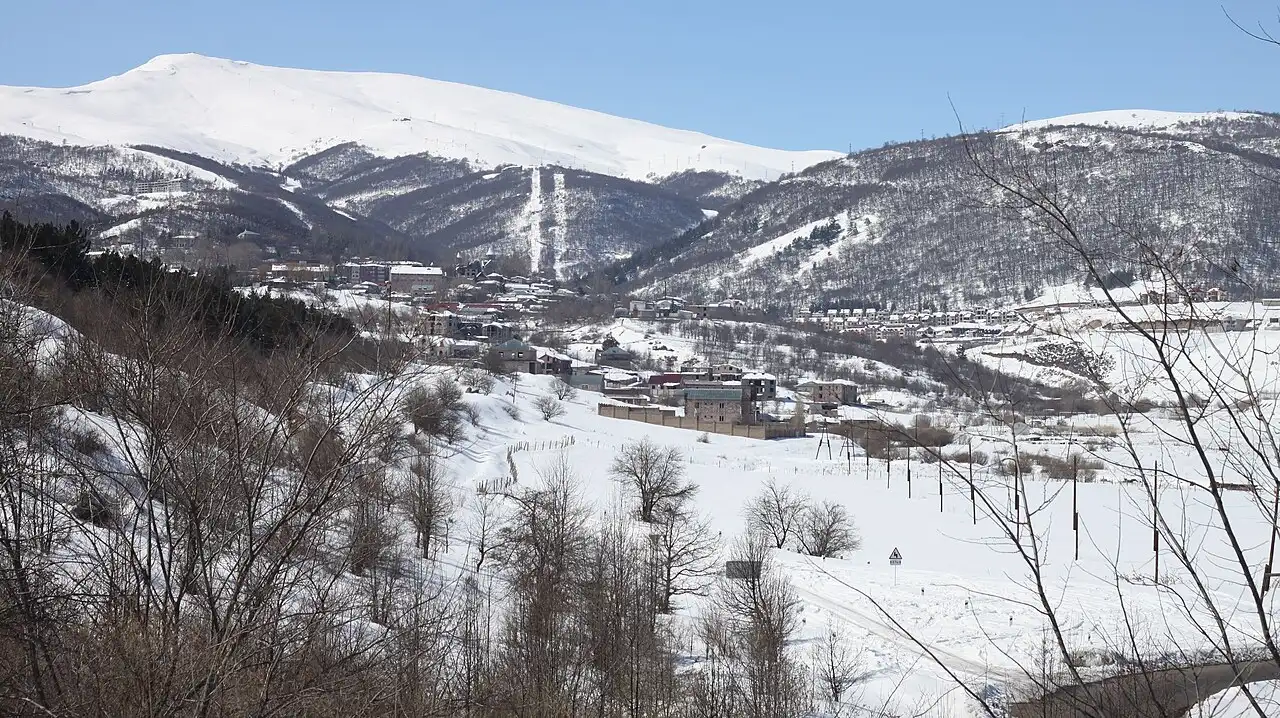
Verified · July 21, 2026Armenia's flagship ski resort, 58 km north of Yerevan: the Kecharis monastery, a five-stage ropeway, the ski slopes and what to do here in summer.
Cities · 11 min read
Vagharshapat (Etchmiadzin): Armenia's Spiritual Capital
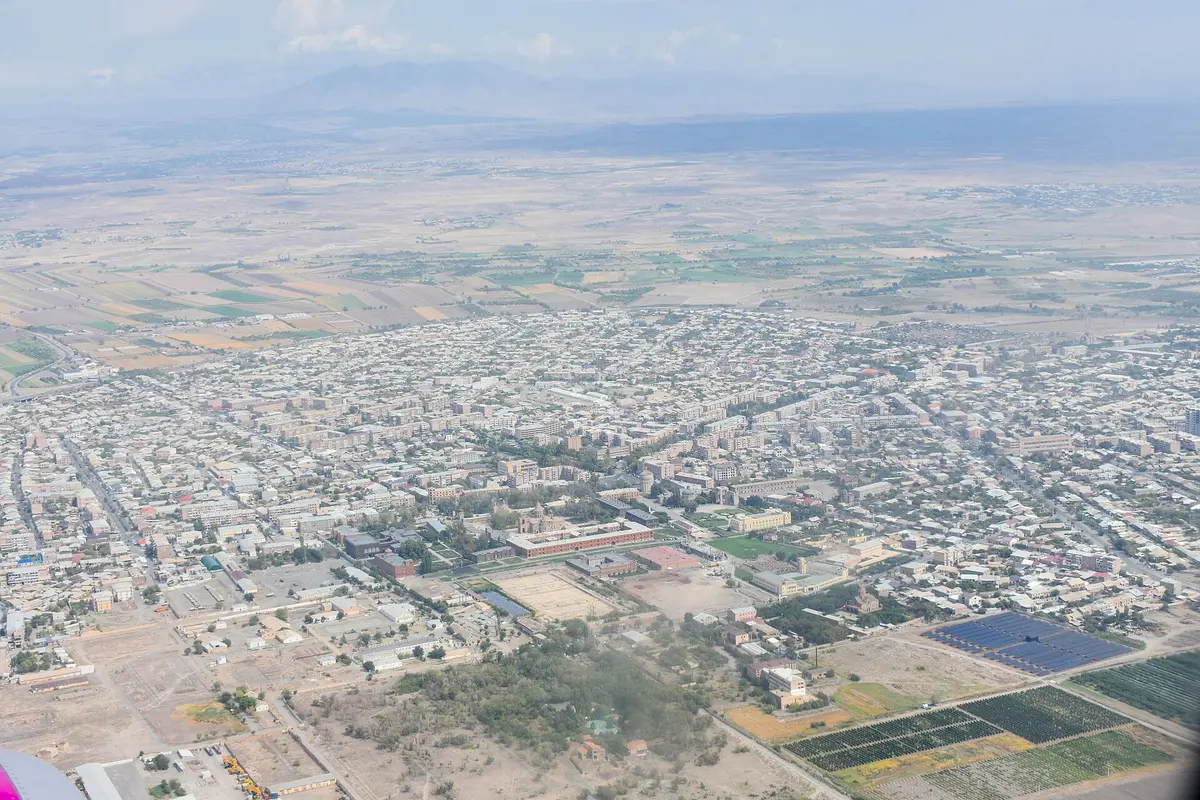
Verified · July 16, 2026A guide to Vagharshapat (Etchmiadzin): the Mother See cathedral, the martyr churches of Hripsime and Gayane, Sardarapat memorial and how to visit.
Cities · 10 min read
Goris: Gateway to Tatev & the South
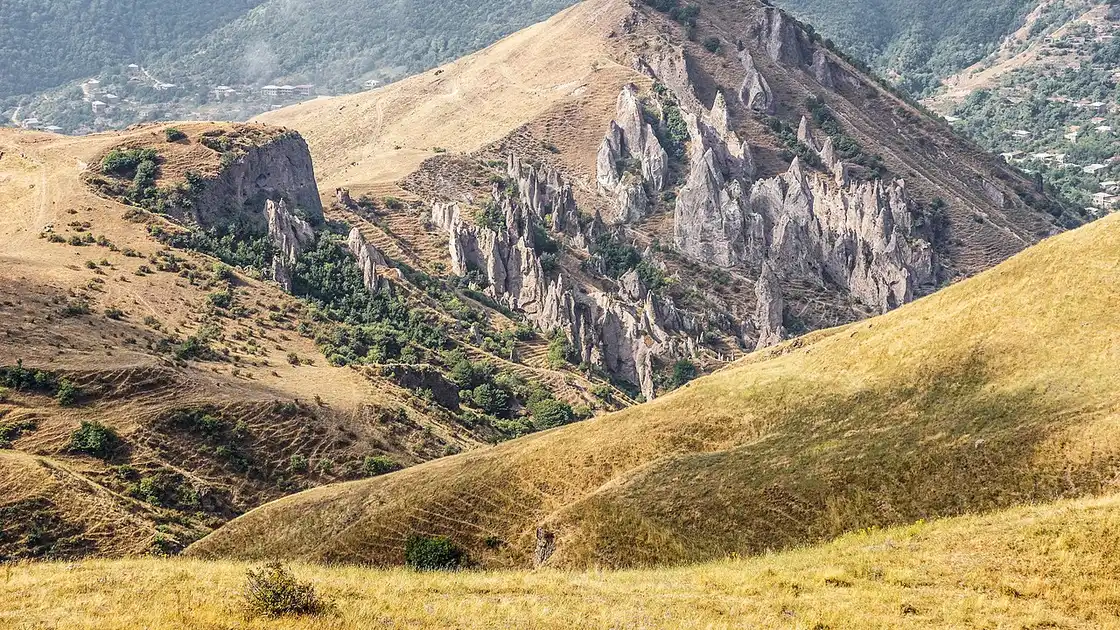
Verified · July 4, 2026A guide to Goris, Armenia: the stone old town and rock cones, Old Khndzoresk and its swinging bridge, the base for Tatev, and how to get there.