Do You Need a Car in Armenia? Tours vs Rental
Group tours from $30 a person include admissions; a private car from $240 doesn't. What actually gets you to Armenia's monasteries, and what it costs.
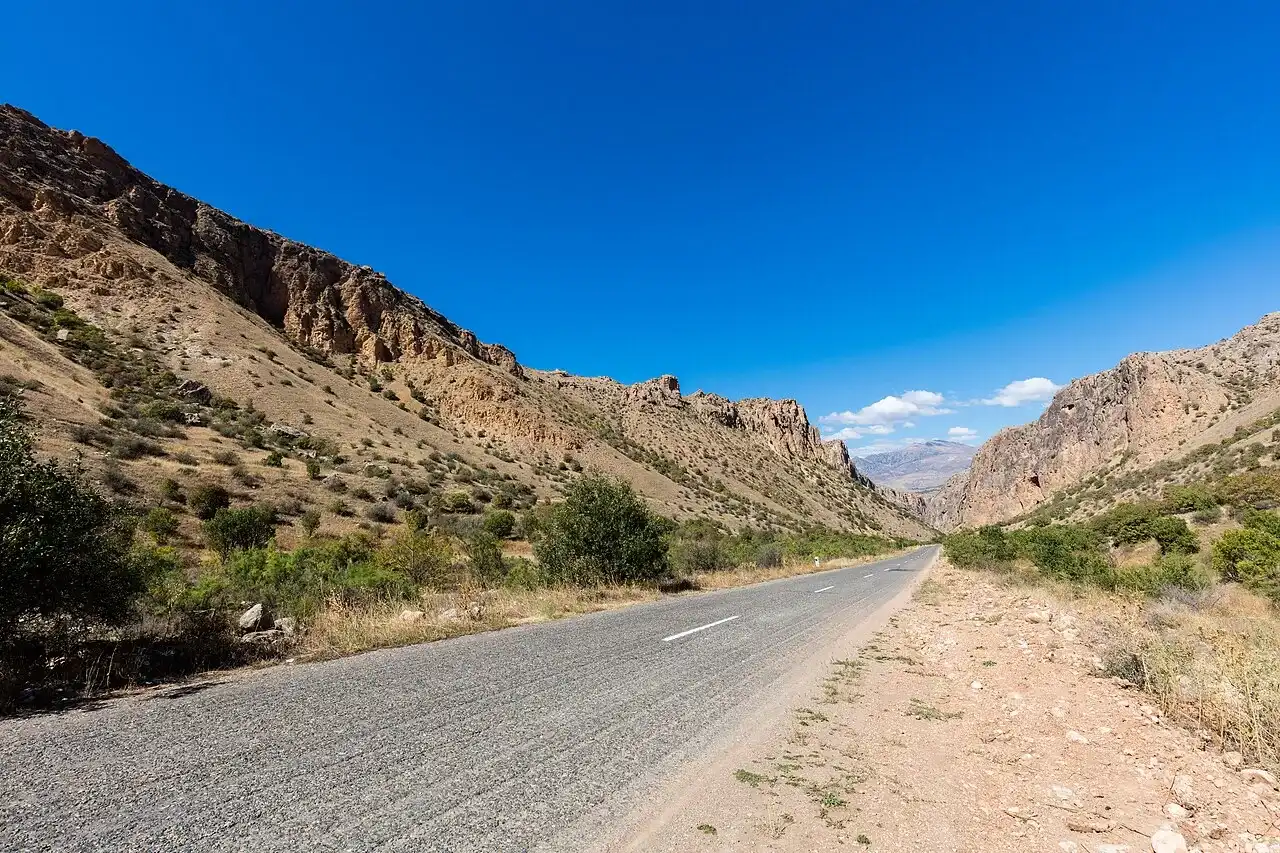
Yes, probably, but not for every kind of trip. Armenia’s headline sights, the cliff monasteries, Lake Sevan, the wine country south of Yerevan, sit almost entirely off the public transport network, so the real question isn’t whether you need wheels, it’s whose. A rental car pays for itself once you’re doing several trips over a week or more; for a single big day out, a group tour often works out cheaper and takes the mountain roads off your plate entirely.
| Way to get there | What it actually costs | Best for |
|---|---|---|
| Group day tour | From about $30 a person for a half day, $64 for a long day south | Solo travelers and pairs, no driving stress |
| Private driver | Around $240 for the car, plus ~$50/person in admissions not included | Your own pace and privacy, not savings |
| Self-drive rental | $150-300 refundable deposit, a few tens of dollars a day | A week or more, several trips, full flexibility |
| Marshrutka + local taxi | Cheap between towns, but stops well short of the sites | Budget travel between cities, not the monasteries themselves |
Why this is even a question
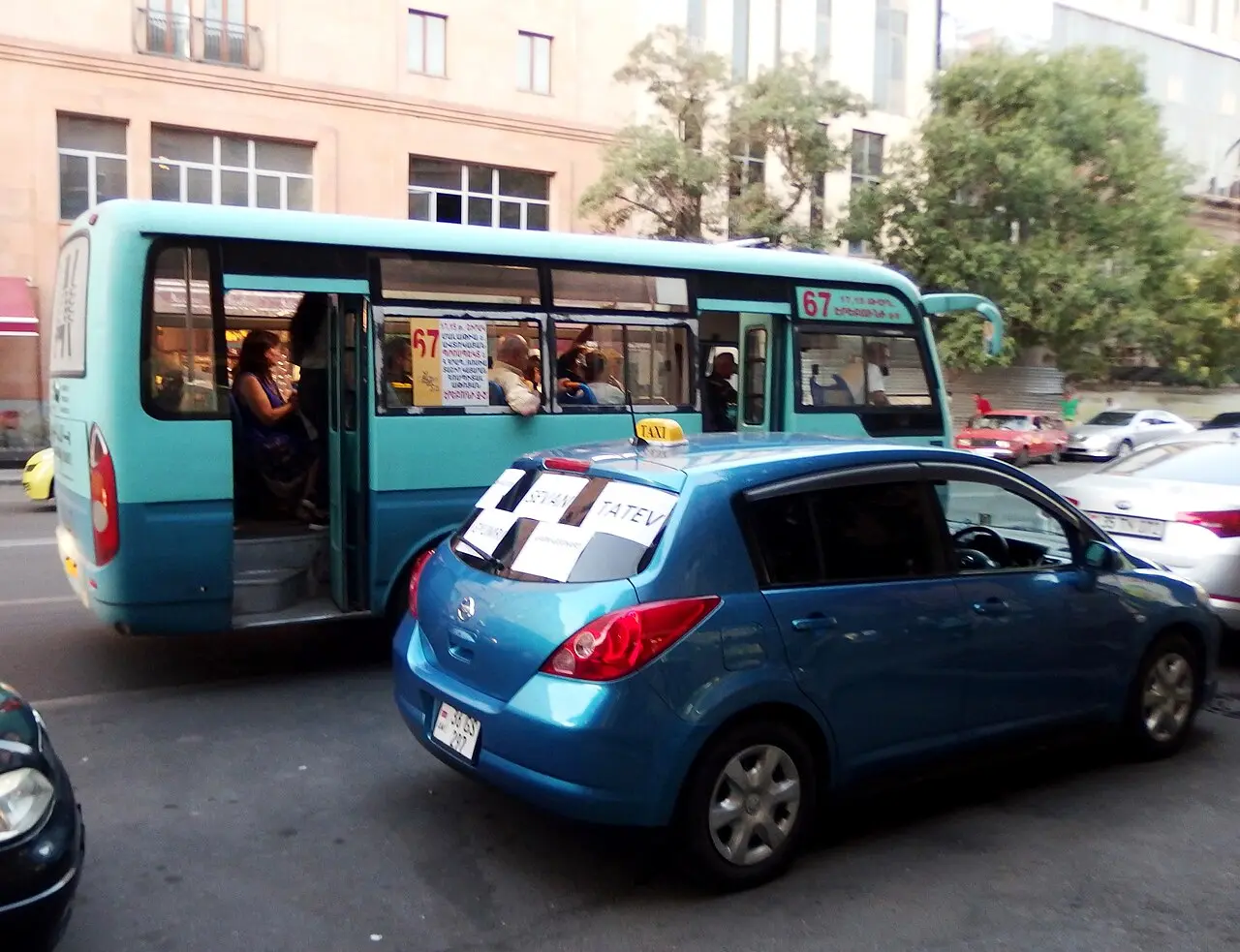
It comes down to geography. Armenia’s buses and shared minibuses connect towns to towns: Yerevan to Sevan, to Dilijan, to Goris, all cheap and frequent enough. What they mostly don’t do is reach the actual sights. No scheduled bus goes up to Khor Virap itself (the Ararat bus only passes the turn-off on the highway), nor to the Geghard or Noravank monasteries, and the Wings of Tatev cable car gets only a local bus from Goris to Halidzor, twice a day, so a bus ticket usually gets you only partway, and you’re left arranging the last stretch anyway. Garni is the exception: bus No. 266 from Yerevan runs all day to Garni village, where the temple is. That’s the gap this whole decision is about: not whether Armenia has public transport, it does, but whether it goes where you’re actually headed.
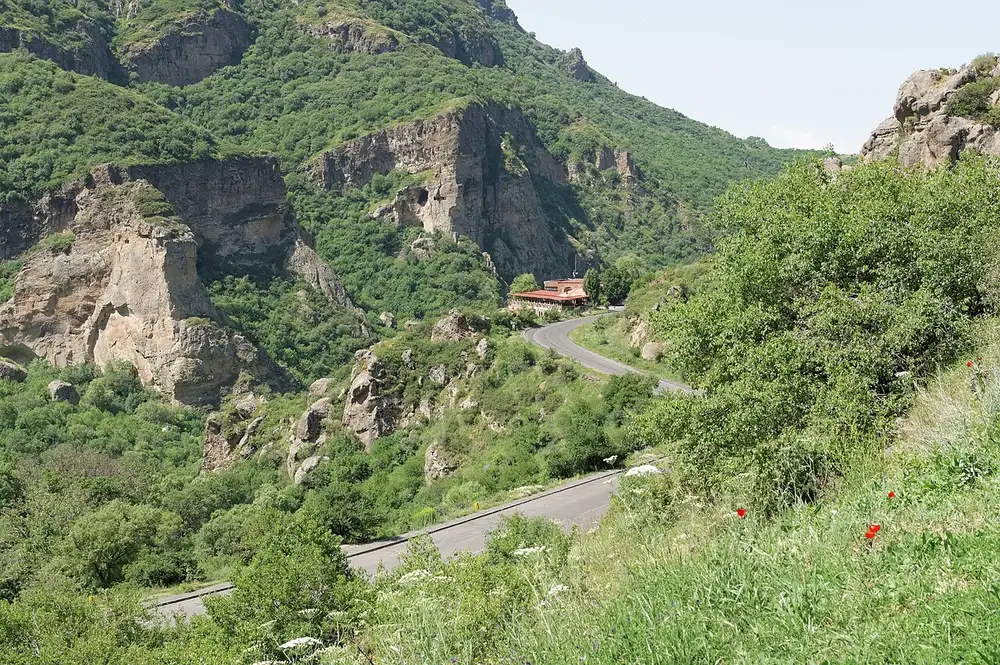
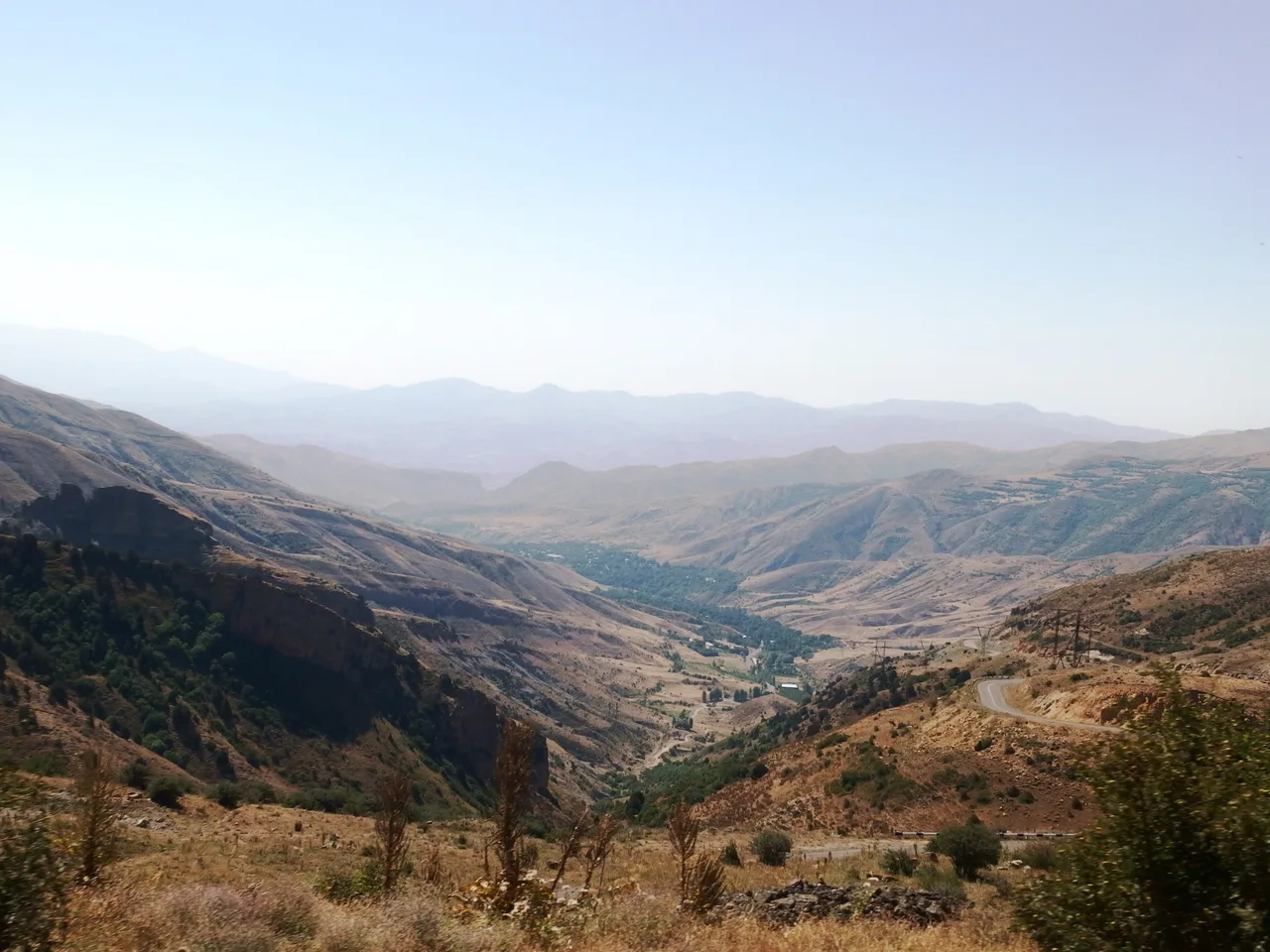
Part of that comes down to where these places actually sit. Monasteries here were mostly built for defence and isolation, not access, so they cling to cliff edges, gorge tops and mountain saddles that a minibus route was never going to serve. Tatev is the extreme case: about 250 km of road from Yerevan, only around 175 km as the crow flies, and a four-hour drive each way once you account for the mountain roads, which is exactly why the way you cover that distance matters so much more here than the number of kilometres on the map.
Group tours: real prices from a real operator
To put actual numbers on “a group tour,” here’s what one of Armenia’s largest operators, Hyur Service, charges on its own booking site rather than a rough estimate (checked 8 August 2026): the half-day loop to Garni, the Symphony of Stones gorge and Geghard monastery, with a lavash-baking stop, runs 30.25 US dollars a person for around five to six hours. The big one, Khor Virap, Noravank and Tatev with the Wings of Tatev ropeway, a 14-to-15-hour day, runs 63.55 US dollars a person and already includes the admission tickets and a guide. Those are one operator’s live prices, not the market average, so treat them as a real example rather than a promise of what you’ll pay everywhere.
What a tour buys you is somebody else driving the switchbacks, a pre-built itinerary that groups the sights sensibly, and a ticket that already includes the ropeway or the entrance fee. What it costs you is a fixed schedule and a bus full of other people’s photo stops. For one or two travelers who’d rather not drive Armenia’s mountain roads themselves, this is usually the cheapest way to see the country’s best sights properly.
A private driver: paying for the car, not the seat
The middle option nobody explains clearly enough is the private tour, a car and driver booked just for you. Confusingly, it isn’t priced per person, it’s priced per car, and that changes the math completely. The same operator’s private version of the Khor Virap, Noravank and Tatev route runs around 240 US dollars total for the vehicle, seating up to about three passengers on a standard sedan, and that price covers the driver, the car and water, not the admission tickets, which run close to 25 dollars a person more on top. Split three ways, the car alone is roughly 80 dollars a person; add the admissions and the real figure lands closer to 105 dollars a person, well above the group tour’s 63.55. What you are buying is your own pace, not a lower price: you stop where you like and skip nobody else’s souvenir break.
Traveling solo or as a couple, the gap is wider still: two people split the car for 120 dollars each, then add the admissions on top, for close to 145 dollars each on exactly the same route a group tour covers for 64. A private car here is never really the cheap option, at any group size - book it for the schedule and the privacy, and budget for both.
Renting and driving yourself
For a trip that runs longer than a day or two of sightseeing, renting your own car usually wins on cost per day and wins outright on flexibility. Budget a refundable deposit of roughly 150 to 300 US dollars and a daily rate that starts in the tens of dollars for an economy car, climbing for anything with real ground clearance, which you’ll want if the itinerary runs deep into the back roads. You’ll need a passport, a driving licence, a credit card for the deposit, and a 1968 International Driving Permit alongside your licence - UK guidance states outright that British drivers need both the IDP and their home licence to drive in Armenia, and that pairing is the safer default for any nationality, not just licences printed outside the Latin alphabet.
The appeal isn’t really the per-day price, it’s what you do with the freedom: a sunset at Noravank instead of the tour bus’s fixed slot, a detour to a village nobody put on the itinerary, the ability to leave Sevan’s crowded beach for a quieter stretch of shore. Our full guide to car rental in Armenia covers the paperwork, the fuel situation and the mountain roads in detail, everything you need once you’ve decided this is the option for you.
The marshrutka: cheap, but it stops at the town line
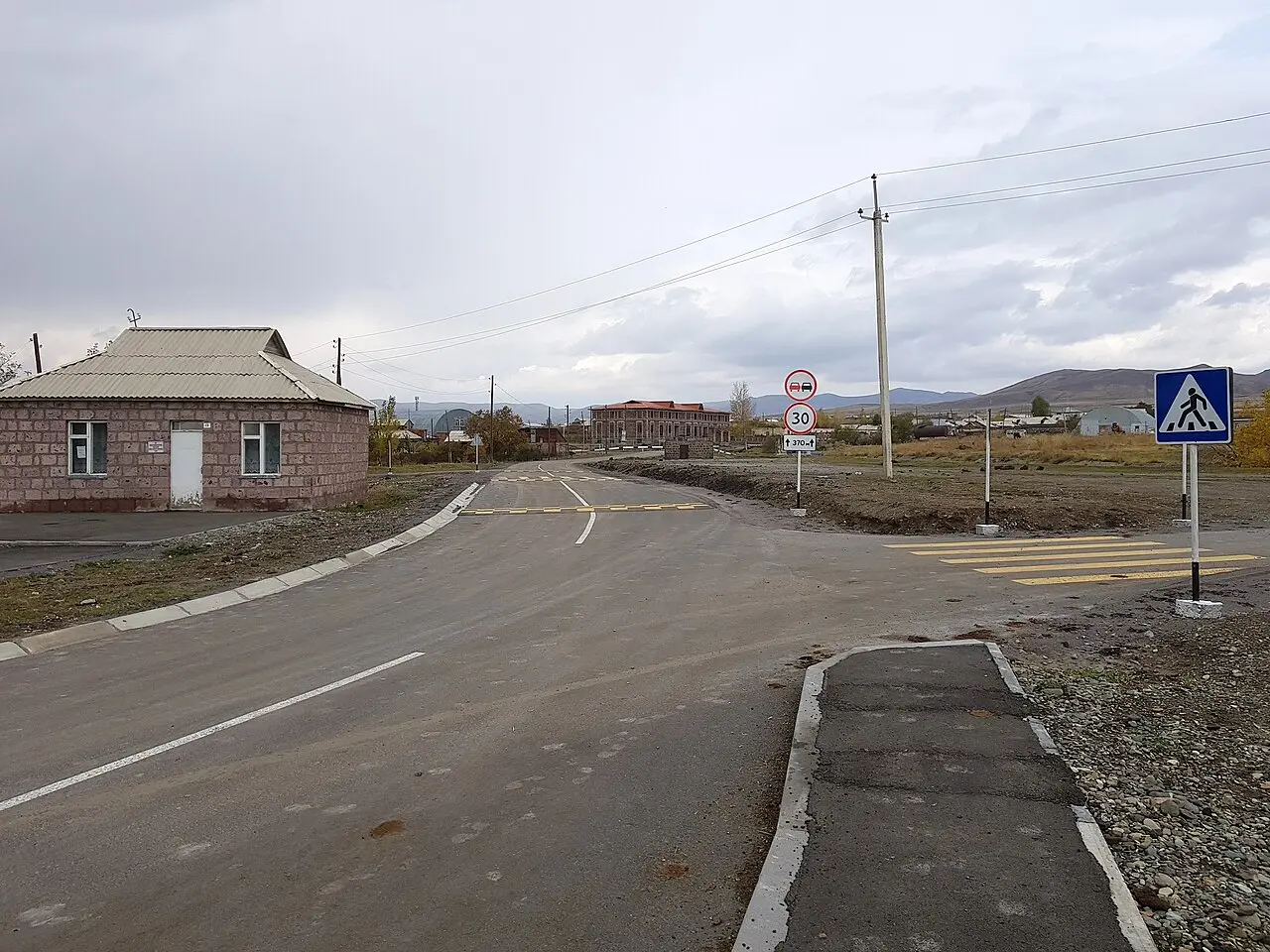
It’s worth being honest about the budget option rather than pretending it doesn’t exist. Marshrutkas and buses run to ministry-approved timetables from Yerevan to Sevan (24 a day), to Gyumri (every 45 minutes) and down to Goris (twice a day, 5 h 50 min). The Sevan and Gyumri runs need no booking, just cash and patience; the timetables print no fare, so you ask the driver as you board. Goris is different: with two buses a day the seats fill, so buy yours at the Southern Bus Station the day before. The real exceptions are Etchmiadzin and Zvartnots, where bus No. 203 from the Central (Kilikia) Bus Station runs past Zvartnots and into Vagharshapat, the cathedral town itself, and Garni, where bus No. 266 leaves Yerevan’s Nor Nork terminus every 20-30 minutes from 07:50 to 19:20 and takes 55 minutes to the village the temple stands in. Elsewhere the bus usually drops you in a town and you’re negotiating a local taxi for the last stretch to the actual monastery, which is workable but adds friction, delay and a second fare on top of the first.
If your trip is mostly city time with the odd nearby day out, that combination can work fine and it’s certainly the cheapest way to move around. It just isn’t a plan for a day built around three or four monasteries, where the waiting and negotiating eats the hours you came for.
What to actually choose
Match the option to the trip rather than the other way round. Traveling alone or as a couple with one or two big sightseeing days, book a group tour and let someone else handle the mountain roads. Traveling as three or more and want your own schedule, a private driver still costs more per person than the group tour once you add the admissions, but nothing else buys you the same flexibility. Staying a week or longer with several different regions on the list, rent the car: the daily cost drops the more days you spread it over, and nothing else gets you to a quiet village or an early monastery before the crowds. And if you’re sticking close to Yerevan with only the odd nearby trip, the marshrutka and a local taxi will do the job without you paying for a car you’d barely use.
None of this has to be one choice for the whole trip, either. A common pattern that works well: rent a car for the week to handle Yerevan’s easy day trips at your own pace, then book a single group tour for the one genuinely exhausting drive, the Tatev round trip, so somebody else takes the four hours each way on mountain roads. You keep the flexibility where it’s cheap and easy, and hand off the one day that would otherwise wear out a whole afternoon of your holiday.
Whichever way you go, our guide to getting around Armenia without a car covers the buses, trains and taxi apps in more depth, and our roundup of the best day trips from Yerevan groups the sights by direction so you can plan a route that fits whichever option you’ve picked.
Photos
Read also
Car rental · 11 min read
Car Rental at Yerevan Airport: Pickup, Deposits & Tips
Verified · August 18, 2026Zvartnots pickup: 24h desks vs meet-and-greet, card holds from 50,000 AMD (Sixt) to 800,000 (Hertz), documents, and why this is not your ride into town.
Car rental · 10 min read
Rental Car from Georgia to Armenia
Verified · July 9, 2026Taking a Georgian rental car into Armenia in 2026: the cross-border permit, the insurance gap, the Bagratashen crossing and the Azerbaijan catch.
Car rental · 10 min read
Driving in Armenia: Roads, Rules & Tips
Verified · July 4, 2026How to drive in Armenia: which side, speed limits, the traffic-police reality, mountain roads and winter, plus the eastern border zones to stay out of.
Car rental · 10 min read
Car Rental in Armenia: Tips & Where to Book
Verified · July 3, 2026Renting a car in Armenia in 2026: the IDP rule, age and deposit, fuel and mountain roads, winter passes, and the border zones you must not drive into.