
Rental Car from Georgia to Armenia
Taking a Georgian rental car into Armenia in 2026: the cross-border permit, the insurance gap, the Bagratashen crossing and the Azerbaijan catch.
Yes, you can usually drive a Georgian rental car into Armenia, and it’s one of the best ways to link the two countries on a Caucasus road trip - but only if you get three things right, and the rental desk won’t always spell them out. You need written cross-border permission from the rental company (arranged in advance), you need to understand the insurance gap (your Georgian cover almost certainly stops at the border, and Armenia isn’t in the Green Card system), and you need to know that you can’t drive on to Azerbaijan from Armenia at all. Get those sorted and the crossing at Bagratashen is straightforward. This guide walks through each, with the border process and the documents to carry (this is orientation, not legal advice, and rules and prices change - verify the current position with your rental company and official sources before you drive).
The quick answer
Rent in Tbilisi, which is the Caucasus car-rental hub with the biggest, cheapest fleet, tell the company at booking that you are taking the car to Armenia, and pay for the cross-border authorization they issue. At the Sadakhlo-Bagratashen border, about 80 km south of Tbilisi, you show that letter with your rental agreement and passport, buy compulsory Armenian insurance at a kiosk just past the gate - for a foreign-plated car the contract runs a minimum of 10 days, so there is no shorter week-long option - and carry on. Reckon the crossing takes 30 to 60 minutes, longer on a summer weekend.
The catch that costs people real money is insurance, so if you skim one section, make it that one. And if all you actually want is to get between Yerevan and Tbilisi rather than to explore with a car, it’s often simpler to skip the cross-border hassle entirely and take the train or a marshrutka, then rent locally in each country.
Can you even take the car across?
Not with every company, and never without asking first. Some Georgian agencies allow cross-border trips to Armenia and some flatly prohibit taking the car abroad, so this is the first question to settle before you book, not at the counter. The companies that do allow it issue a cross-border permit, a letter of authorization (sometimes a notarized power of attorney) naming the driver and the countries you may enter, and you must request it in advance - a week ahead is a sensible margin, and it has to be ready and in your hand at pickup.
The fee varies, and it is worth comparing. Some firms charge a one-time cross-border fee, while others fold the permit into the contract at no extra daily cost. A neat alternative some offer is a one-way rental from Tbilisi to Yerevan: you drop the car in Armenia rather than driving it back, and these packages often bundle the authorization and insurance together, though you pay a one-way drop fee instead. Whichever route you take, expect the deposit to be higher for a cross-border hire, and read the contract’s territory clause before you sign.
The insurance gap: read this twice
This is where the trip can go expensive and quiet, because two separate things catch people out.
First, Armenia isn’t part of the European Green Card system. If you’re used to driving around Europe on a Green Card, it buys you nothing here; the sticker in the windscreen isn’t recognised. Armenia has required compulsory third-party liability (TPL) insurance for all motorists since 2018, and a foreign car needs its own Armenian TPL. You buy it at a kiosk about 100 m past the Bagratashen gate (there are several, and the police at the first checkpoint will ask for your “strakhovka” before anything else), or online in advance through the Armenian insurers’ bureau. It is cheap, but the shortest contract a foreign-plated car can buy is 10 days, and insurers set their own rates rather than working from a fixed state tariff, so ask at the counter. It is mandatory: driving without it earns a 100,000 AMD fine, cut to 25,000 if you buy cover and show it to the traffic police within 24 hours.
Second, and more important for your wallet: that Armenian TPL only covers damage you do to other people and their property. It doesn’t cover the rental car itself. And here’s the trap - your Georgian rental company’s own damage cover (CDW) usually stops at the Georgian border. Several agencies state plainly that their insurance does not apply in Armenia. So unless your specific company extends its cover across the border (a few do, but only when you add the cross-border option, and only if they say so in writing), you’re personally liable for any damage to the rental car while you’re in Armenia. Don’t assume; ask the company to confirm in writing exactly what’s and is not covered in Armenia, and if it’s not, arrange standalone travel or car-hire excess insurance that is valid abroad before you go.
One more, for completeness: going the other way, a foreign-plated car entering Georgia also needs local Georgian insurance, which you can buy online before the crossing. So both directions have their own compulsory local cover, separate from whatever the rental includes.
A note on the legal and insurance bits. Cross-border permissions, insurance rules and border procedures vary between rental companies and change over time, and they are enforced by officials on the day. Treat everything here as orientation gathered in 2026, not legal advice or a guarantee. Before you drive, confirm the current requirements with your own rental company in writing, check your government’s official travel advisory for Armenia and Georgia, and verify the insurance position with the insurer. When in doubt about a rule or a road, do not risk it.
The Sadakhlo-Bagratashen crossing
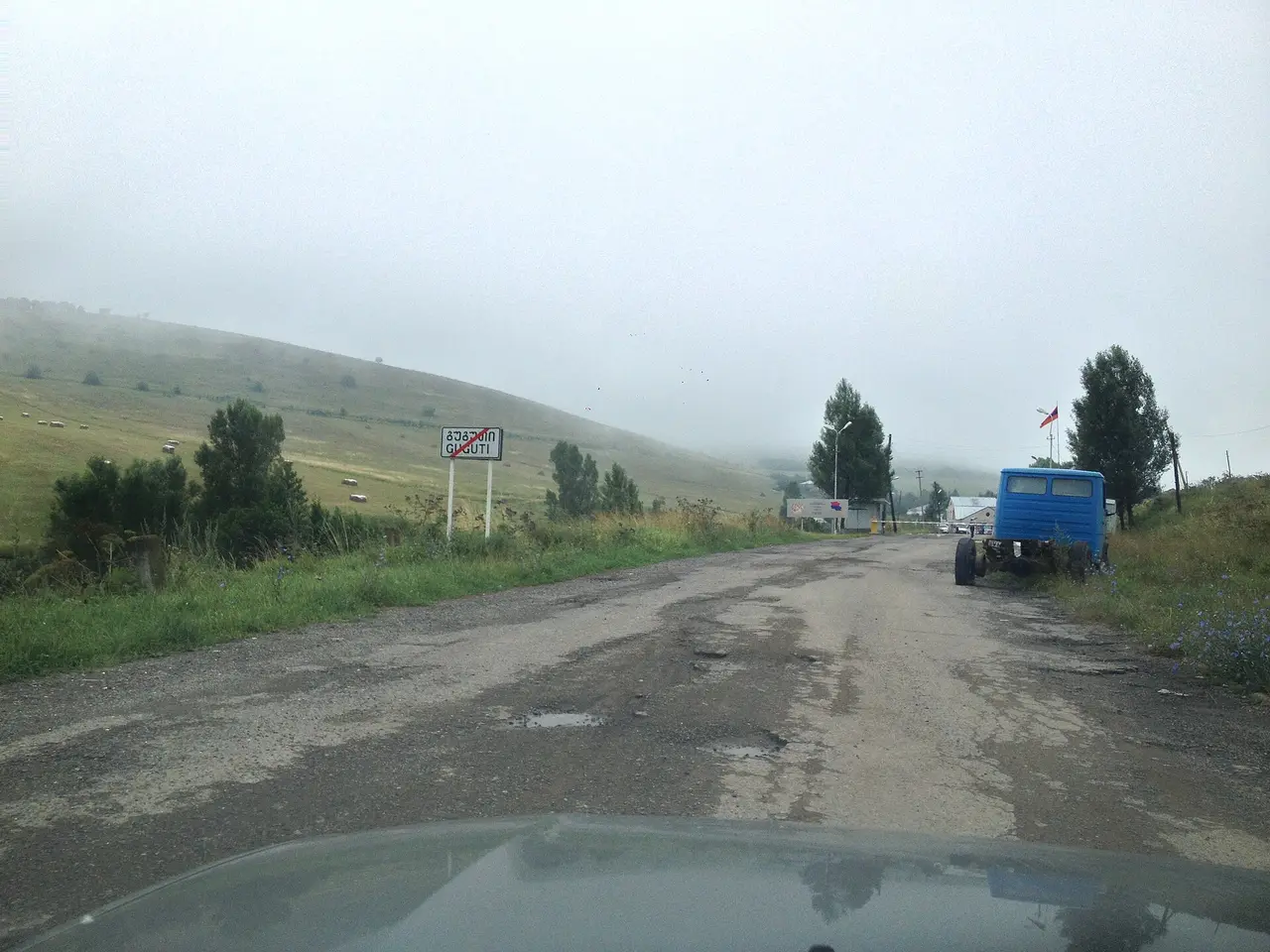
Every road route between the two countries uses the same main crossing: Sadakhlo on the Georgian side, Bagratashen on the Armenian side, down in the green farming country of the far north, roughly 80 km south of Tbilisi. It’s open 24 hours and is an easy crossing for most Western passports. You keep your seat in the car: you roll up to Georgian exit control, then Armenian entry control, show your documents, and once the vehicle is cleared you buy your Armenian insurance and drive on.
How long it takes is all about timing. On a quiet weekday morning it can be 30 minutes; on a summer weekend or a holiday it can stretch past an hour as the queues build. Keep your passport and the car papers in the cabin, not the boot, so you are not digging for them at the window. Our guide to travelling from Yerevan to Tbilisi covers the same border from the bus-and-train angle if you want the wider picture of the crossing.
Azerbaijan: the one route you cannot drive
This trips up people planning a grand Caucasus loop, so it matters. The land borders between Armenia and Azerbaijan, and between Armenia and Turkey, are closed and have been since the 1990s. You can’t drive directly from Armenia into Azerbaijan (or the reverse) at all. A road trip that takes in all three Caucasus countries has to be built around Georgia in the middle: you drive Georgia to Armenia and back to Georgia, then Georgia to Azerbaijan separately. Even rental permits that list both Armenia and Azerbaijan as allowed still can’t get you across a border that doesn’t open. A realistic Caucasus road trip therefore loops through Georgia and Armenia and leaves Azerbaijan for a separate trip; our Armenia and Georgia itinerary maps that two-week route out day by day.
Beyond that, the eastern border zones with Azerbaijan carry real risk, including the possibility of landmines in places, and the US State Department flags parts of that frontier as “Do Not Travel”. Rental insurance won’t cover you there. Plan routes that stay well clear of the eastern border, and see our guide to car rental in Armenia for the specific zones to avoid once you’re driving in the country.
The documents to carry
Have all of these in the car before you reach the border:
- Your passport (and a visa only if your nationality needs one; most Western travellers get Armenia visa-free, but check yours in our Armenia visa and entry guide).
- Your driving licence, plus an International Driving Permit if your licence isn’t in the Latin alphabet - and it is worth carrying one anyway.
- The vehicle registration / technical passport, or the hire paperwork that stands in for it.
- The rental agreement and the cross-border authorization letter from the company.
- Proof of, or the means to buy, compulsory Armenian TPL insurance at the border.
For the rules of the road once you’re driving in Armenia - the speed limits (60 in town, 90 on the open road, 110 on motorways), the strict zero drink-drive limit, fuel that’s often cash-only and the mountain-road etiquette - our guide to driving in Armenia has the detail.
Is it worth it, or should you skip the car?
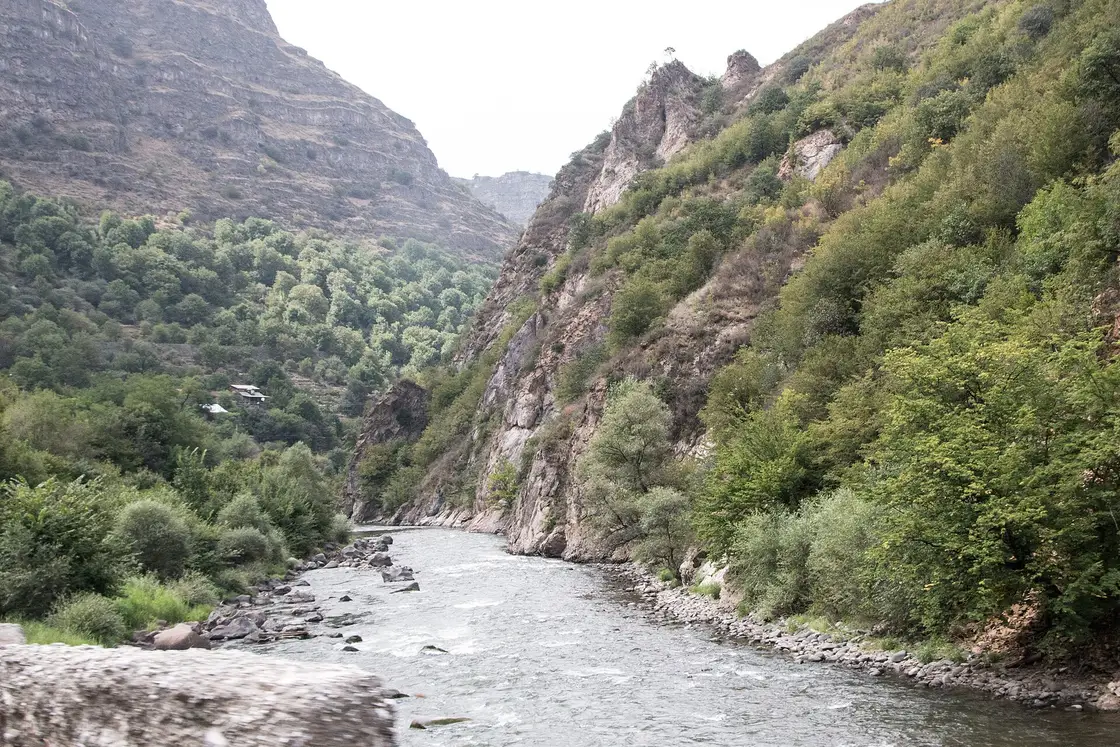
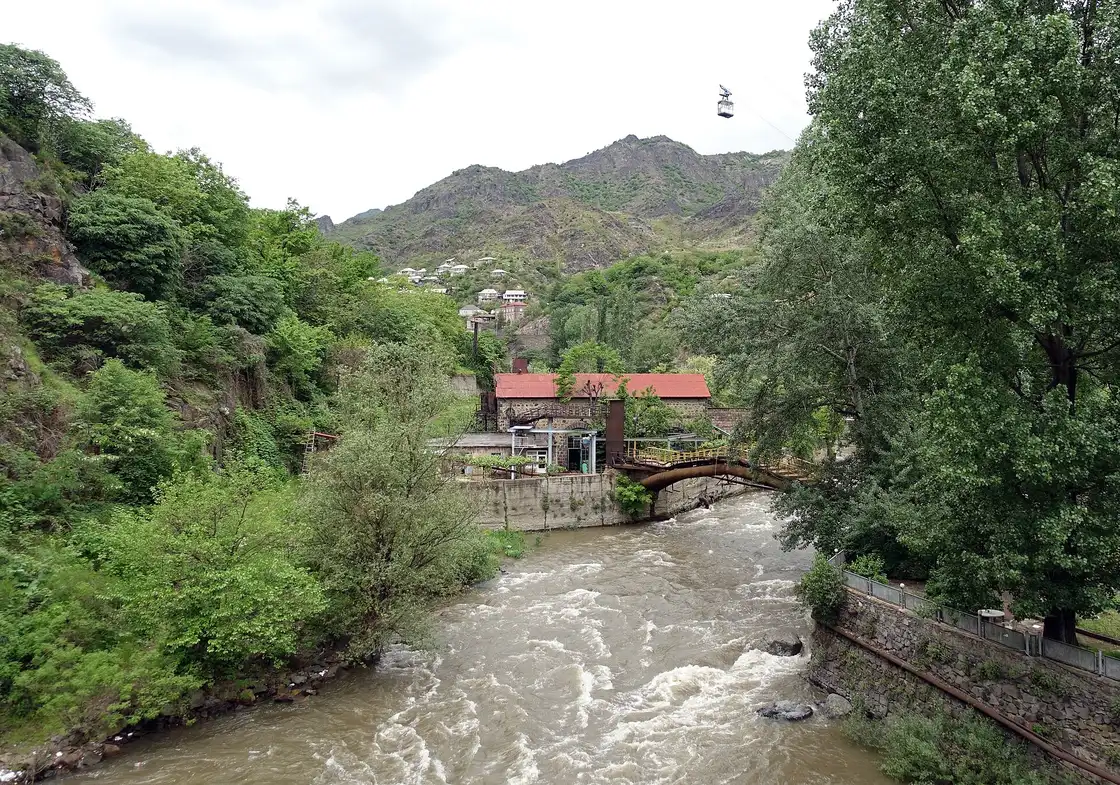
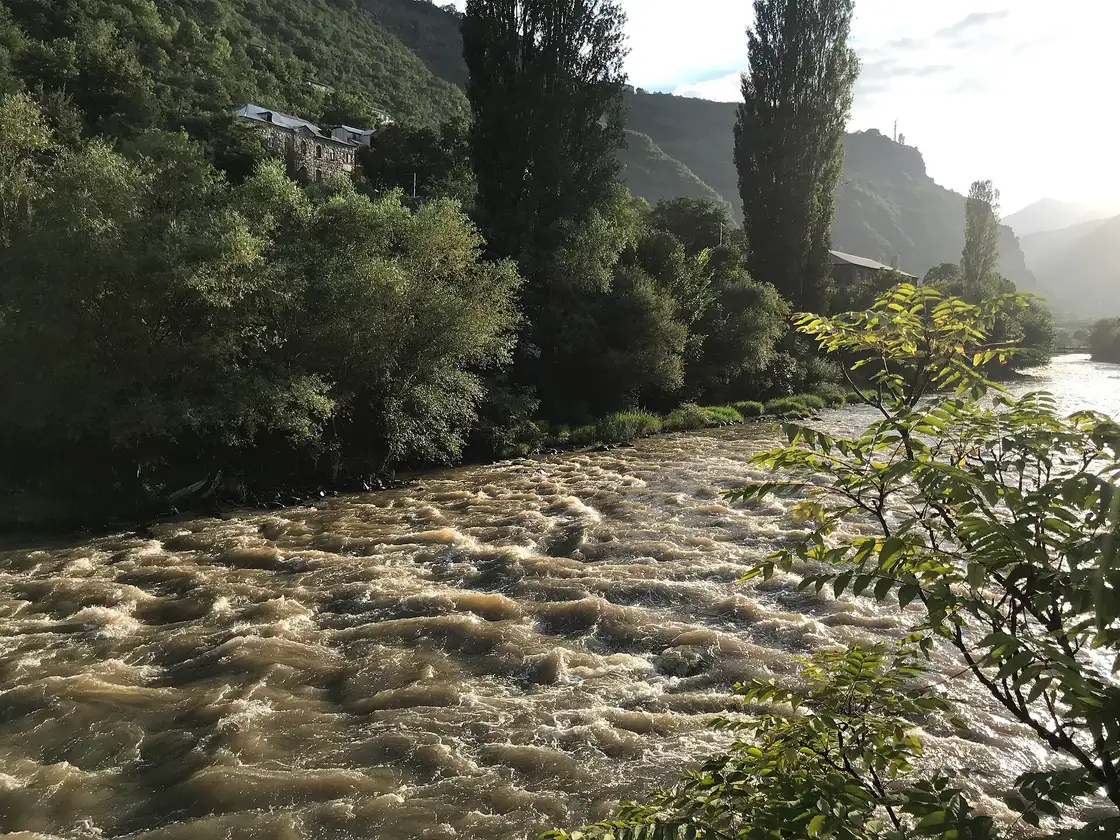
It depends on what you want. If your plan is to explore both countries at your own pace, the freedom of one car across the border is hard to beat, and the drive south through the Debed canyon past Alaverdi, Haghpat and Sanahin is a highlight in itself. If you mostly want to get between the two capitals, though, the sums often favour skipping the cross-border car: the train or a marshrutka handles the Yerevan-Tbilisi leg cheaply and without the permit-and-insurance dance, and you rent locally in each country for local trips. Renting inside Armenia is its own topic, covered in our car rental in Armenia guide.
If you’re starting in Tbilisi and building the trip from there, our sister site’s guide to Tbilisi is a good place to plan the Georgian half. Sort the permit, close the insurance gap in writing, keep clear of the eastern border, and a Georgia-to-Armenia drive becomes exactly the kind of open-road trip the Caucasus is made for.
Photos
Read also
Car rental · 11 min read
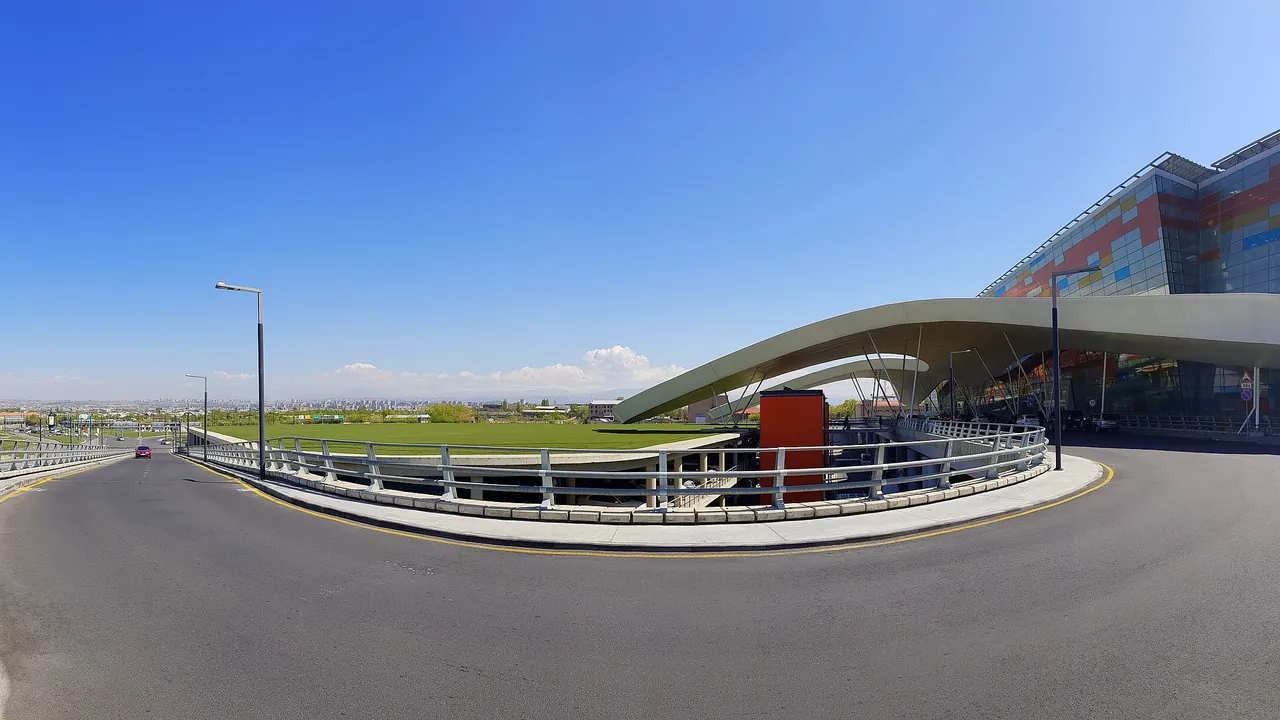
Car Rental at Yerevan Airport: Pickup, Deposits & Tips
Verified · August 18, 2026Zvartnots pickup: 24h desks vs meet-and-greet, card holds from 50,000 AMD (Sixt) to 800,000 (Hertz), documents, and why this is not your ride into town.
Car rental · 9 min read
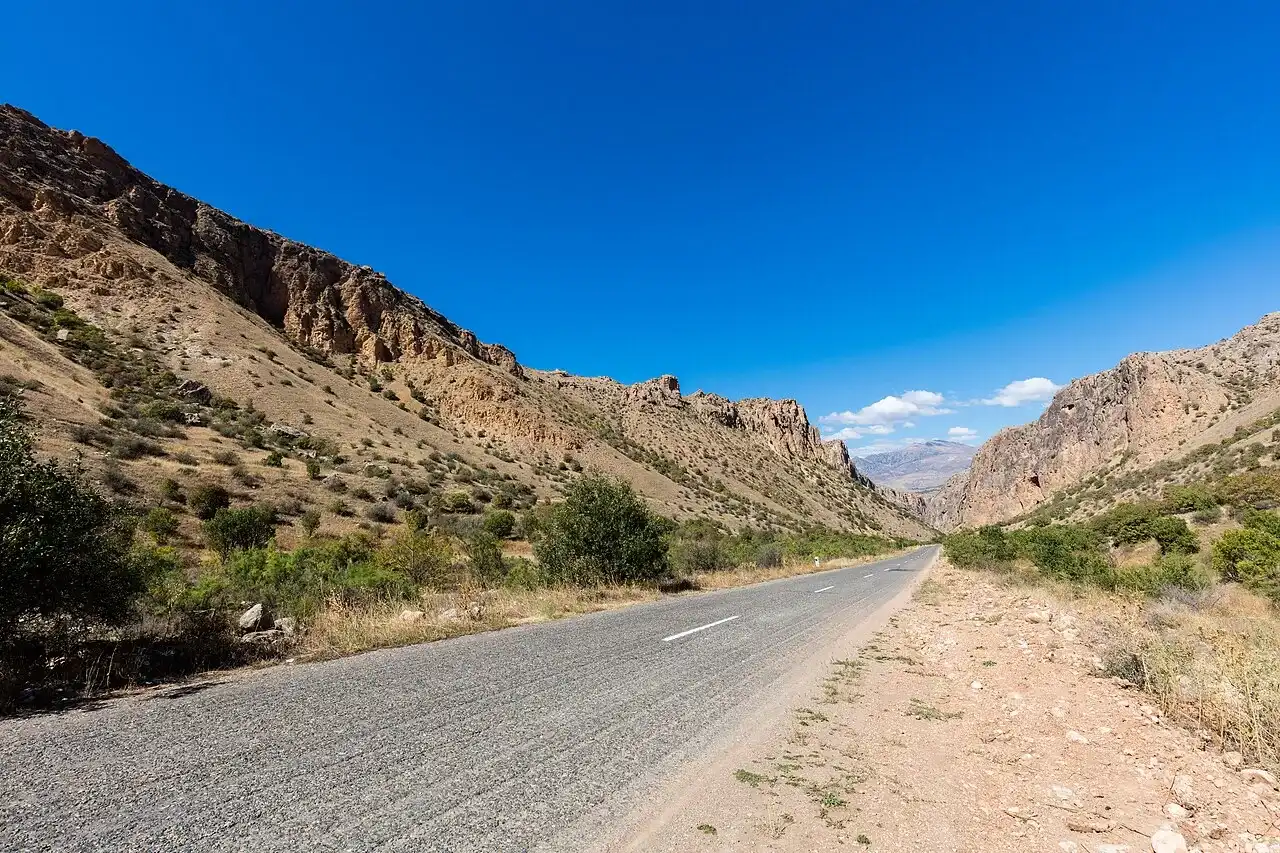
Do You Need a Car in Armenia? Tours vs Rental
Verified · August 8, 2026Group tours from $30 a person include admissions; a private car from $240 doesn't. What actually gets you to Armenia's monasteries, and what it costs.
Car rental · 10 min read
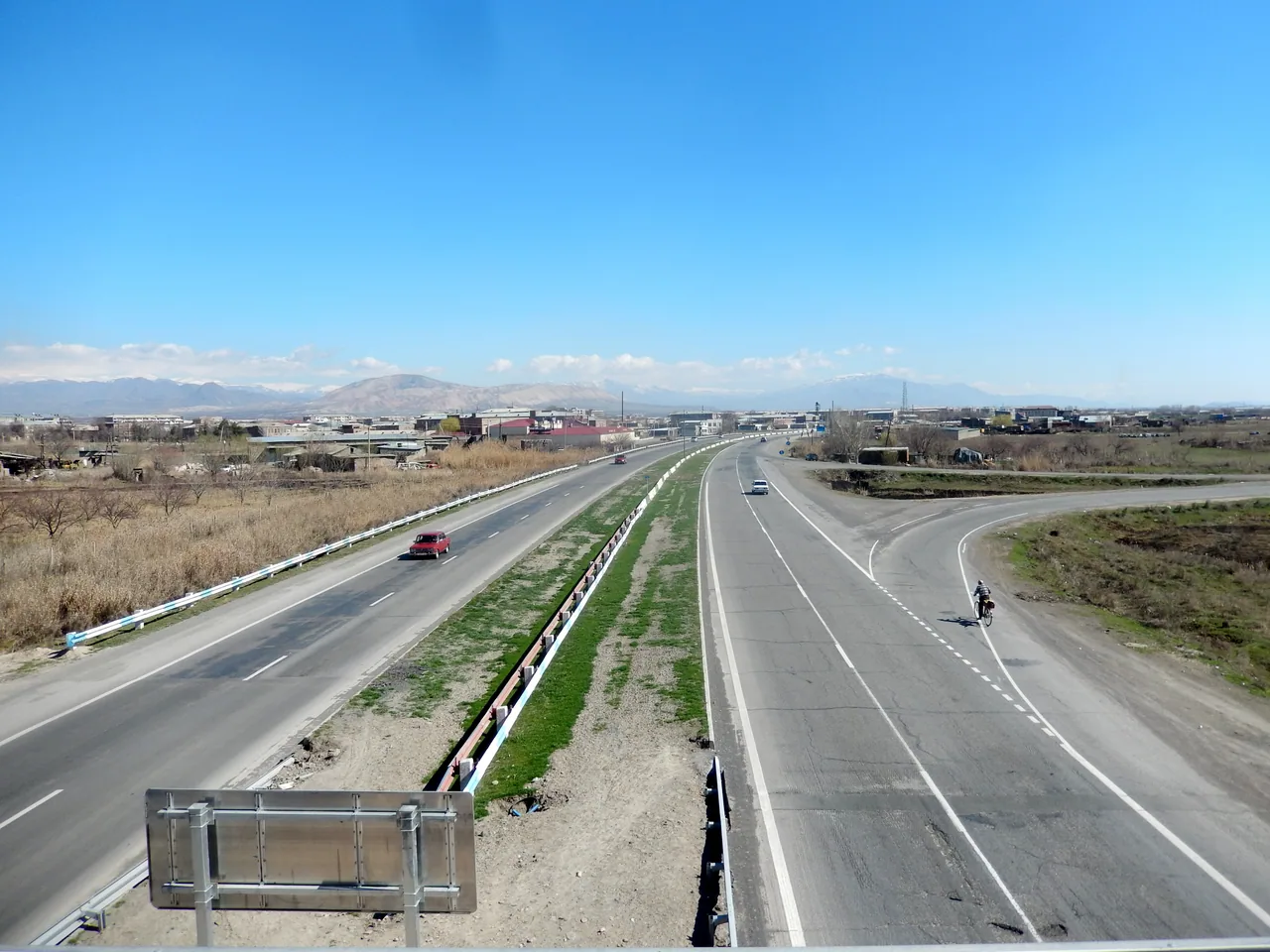
Driving in Armenia: Roads, Rules & Tips
Verified · July 4, 2026How to drive in Armenia: which side, speed limits, the traffic-police reality, mountain roads and winter, plus the eastern border zones to stay out of.
Car rental · 10 min read
Car Rental in Armenia: Tips & Where to Book
Verified · July 3, 2026Renting a car in Armenia in 2026: the IDP rule, age and deposit, fuel and mountain roads, winter passes, and the border zones you must not drive into.