Armenia Visa & Entry Rules (2026)
Armenia visa and entry rules in 2026: who is visa-free for 180 days, the e-visa for everyone else, passport rules and the closed land borders.

For most Western travellers, entering Armenia is refreshingly simple: if you hold a passport from the US, the UK, the EU, Australia, Japan and dozens of other countries, you need no visa at all and can stay up to 180 days within a one-year period. Canada is not on that unilateral passport list - Canadian travellers need an e-visa or a visa on arrival at the border (typically 120 days, for a 15,000 AMD fee), unless they qualify under the temporary residence-permit waiver described below. Everyone else can usually apply for a quick e-visa online. There’s no visa on arrival to bank on for many nationalities, so the one job before you fly is to confirm your own passport’s status on the official portal. This guide explains who’s visa-free, how the e-visa works, the passport and border rules, and a temporary residence-permit waiver that now runs to mid-2027. Rules like these change, so treat this as a starting point and verify the current position for your nationality before you travel. Comparing Armenia with the rest of the region: Balkan and Caucasus entry rules for US and UK passports puts the visa-free lengths side by side.
Check the official source. This reflects the Armenian government’s rules as published on evisa.mfa.am and the Ministry of Foreign Affairs (mfa.am), checked on 4 July 2026; the wording of the 180-day rule was re-checked against mfa.am on 20 August 2026. Fees, day limits and eligibility can change without much notice. Always confirm your own nationality’s requirement on the official e-visa portal before booking. Nothing here is legal advice.
Do you even need a visa? (Most likely not)
Start with the good news, because it applies to the large majority of visitors. Armenia lets citizens of a long list of countries enter visa-free for up to 180 days within a one-year period. That list covers the United States, the United Kingdom, every EU member state, the wider Schengen and EFTA countries, Australia, New Zealand, Japan, South Korea, Brazil and many more - see the current unilateral list on mfa.am. Canada isn’t on that passport list. If you hold a visa-free passport, you simply turn up, get an entry stamp, and you’re in. No form, no fee, no advance paperwork.
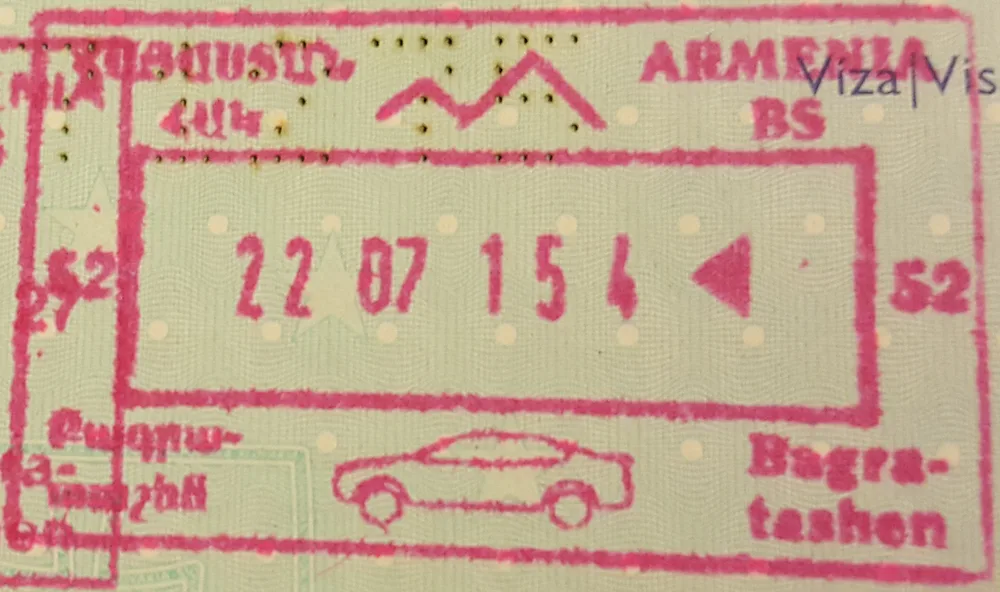
The 180-day allowance is generous by any measure, which is part of why Armenia has become such a magnet for remote workers and long-stay travellers. A couple of nationalities sit on a different rule: citizens of China and Iran, for instance, are visa-free but on a shorter 90-day-per-180 basis. Because these lists are set country by country and do get revised, the single reliable move is to run your passport through the eligibility checker on evisa.mfa.am, which tells you your exact status in a few clicks. Do that once and you’ll know precisely where you stand.
The e-visa: for everyone else
If your nationality isn’t on the visa-free list, Armenia’s electronic visa is usually the answer, and it’s genuinely easy. You apply online through the official portal at evisa.mfa.am, upload the basics, pay by card, and the standard guidance is to do it at least three business days before you travel to allow for processing. There’s no need to visit an embassy for most applicants.
The e-visa comes in short and longer versions (commonly a 21-day option and a 120-day option), each with its own fee. Because those fees and durations are exactly the kind of detail that gets adjusted, this guide won’t pin you to a number that might be stale by the time you read it. The portal shows the current price and validity for your passport at the point of application, so check it there rather than relying on a figure quoted second-hand. A handful of nationalities (Canada among them) can also obtain a visa on arrival, but don’t assume it for your own passport, since for many the e-visa is the route and turning up without one is a mistake.
Staying longer than your allowance
Because Armenia draws so many long-stay visitors, it is worth knowing what happens at the far end of your welcome. The visa-free 180 days are counted within a one-year period (that is how the Foreign Ministry words it), not per calendar year with a reset on 1 January, so keep your own tally of days if you come and go. If you plan to stay beyond your visa-free or e-visa period, the proper route isn’t an endless string of border runs to Georgia and back; it is a residence permit, which is a separate process handled by Armenia’s migration service, and the sensible move is to look into it before your days run down rather than after. Overstaying carries fines on exit, so if your plans stretch, sort the status deliberately. The details of permits change and sit outside a visitor guide, so check the current requirements on the official migration channels if a long stay is on the cards.
Passport validity and what to have ready
The detail that quietly refuses more travellers than any visa question: your passport should be valid well beyond your stay, and the common requirement is at least six months of remaining validity from your date of entry. Check the exact expiry math against your own dates before you fly, because a passport running low on validity can see you refused boarding, not just refused entry. It is worth confirming your specific case on the official channels if you are close to the line.
Beyond the passport, keep the basics to hand in case a border officer asks: proof of onward or return travel and an address for your first night or two are the usual ones. Armenia doesn’t accept travel documents issued by unrecognized entities (such as Abkhazia or South Ossetia) and will refuse entry on them, which is a niche point but worth knowing if it applies to you.
A temporary visa waiver for residence-permit holders (to July 2027)
This one needs care, because the version that circulated in early 2026 carried an expiry date that has since moved. Armenia first ran the scheme for the first half of 2026, then extended it to run from 1 July 2026 to 1 July 2027. Under the current window, nationals of a long list of countries who hold a qualifying residence permit from the US, an EU or Schengen state, the UAE or a Gulf state (Bahrain, Qatar, Saudi Arabia, Kuwait, Oman), valid for at least six months from entry, can come in visa-free for up to 180 days even if their nationality would otherwise have needed one.
The wrinkle worth flagging: when the list was renewed, it went from 113 countries to 111, with Sudan and Yemen dropped, so the exact eligibility isn’t identical to the version you may have read about last winter. Because that country list and its dates are precisely what changes, this guide will not reproduce all 111 entries. Confirm your own case against the official list published on mfa.am (the Ministry of Foreign Affairs PDF) and the checker on evisa.mfa.am before you count on it, and fall back on the standard visa-free list or the e-visa if your permit does not qualify.
The land borders: only Georgia and Iran are open
If you’re arriving overland rather than flying, one geopolitical fact shapes everything. Armenia’s borders with Turkey and Azerbaijan have been closed since 1993, a legacy of the Nagorno-Karabakh conflict, and you cannot cross into the country from either. Talks toward normalising the Turkish border have been under way through 2026, but at the time of writing it remains shut, so do not build a route on it reopening. That leaves two open land frontiers, with Georgia and Iran.
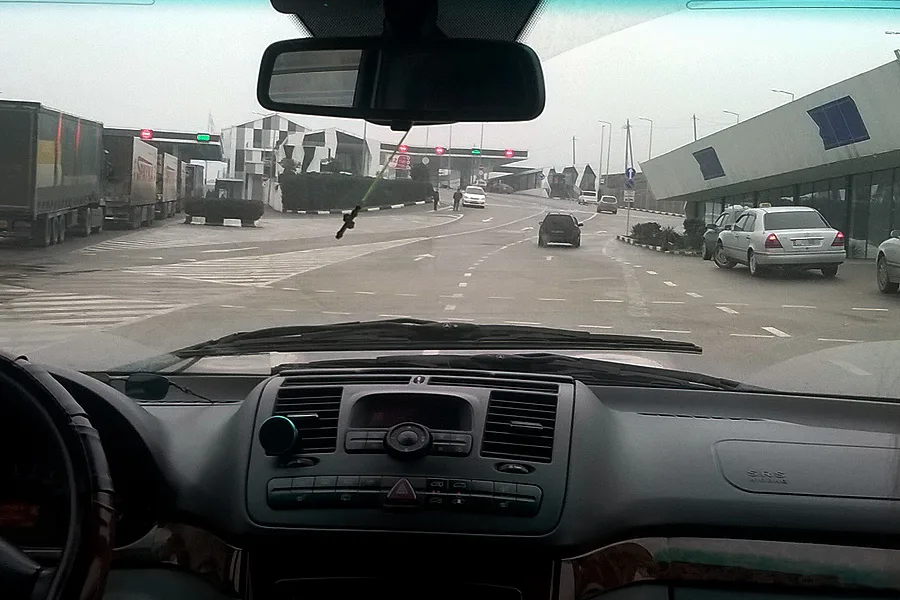
For nearly everyone arriving by road, that means coming from Georgia, and the visa rules are identical whether you fly in or cross a land border: a visa-free nationality gets its stamp at the frontier, and the e-visa (where needed) covers land crossings too. The practical detail of the routes themselves, the marshrutkas and the overnight train, sits in our guide to how to get to Armenia, which covers the Tbilisi run in full.
Before you go: the short checklist
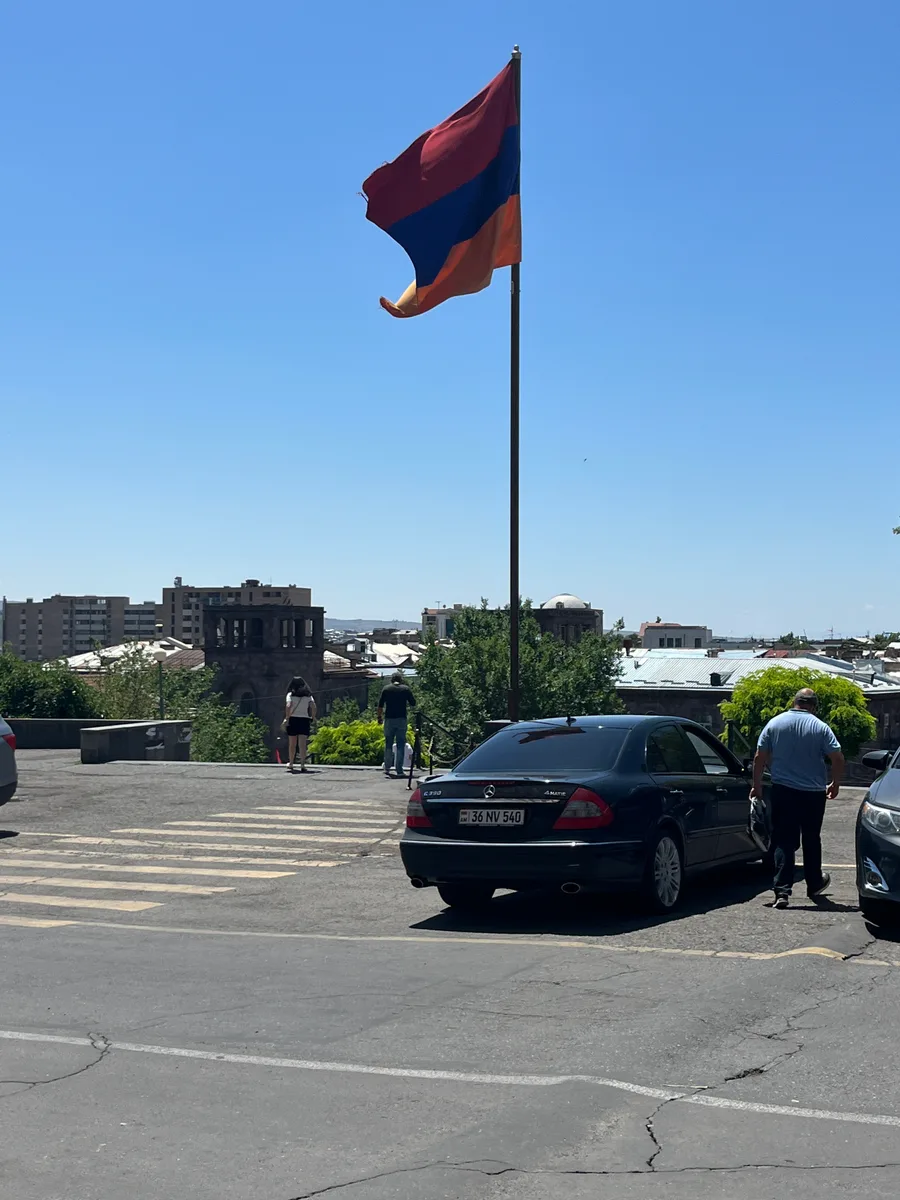
Pull it together into a few quick steps and you’ll not be caught out at check-in or the border:
- Check your nationality’s status on evisa.mfa.am. Most Western passports are visa-free for 180 days; if yours isn’t, apply for the e-visa at least three business days ahead.
- Check your passport validity, aiming for at least six months beyond your entry date.
- Residence-permit holders can use the temporary waiver (111 countries), which Armenia renews by decision - the current one runs through 1 July 2027; verify your eligibility on mfa.am and evisa.mfa.am.
- Overland means Georgia or Iran; the Turkey and Azerbaijan borders are closed.
- Confirm the current fees and dates on the official portal rather than any second-hand figure, including this one.
With the paperwork squared away, the rest of the planning is the fun part. Our guide to how many days you need in Armenia helps you shape the trip to the time you have, and if safety is on your mind before you book, our is Armenia safe to visit guide covers the one border caveat and the everyday picture. Once you land, getting around Armenia covers the cars, taxis and marshrutkas that connect the sights, and our things to know before visiting Armenia roundup handles the money, water, language and etiquette basics for a first trip. Pin down the entry rules in writing from the official source, and the flights get a lot easier to book with a clear head.
Read also
Before you go · 10 min read
What to Pack for Armenia: Plugs & Layers
Verified · August 7, 2026Armenia packing list: Type C/F plugs at 230V, summer heat in Yerevan vs cold mountain nights, layers, eSIM and insurance to sort before you fly.
Before you go · 8 min read
Where to Stay in Goris: Hotels for Tatev
Verified · August 7, 2026Where to stay in Goris for Tatev: centre hotels and guesthouses, honest day-trip warning (12-13 hours), and what a night in Syunik actually costs.
Before you go · 8 min read
Solo Female Travel in Armenia: Is It Safe?
Verified · August 6, 2026FCDO reports low crime in Armenia. Solo women should avoid informal or street-hailed taxis and use app, licensed or arranged transport.
Before you go · 12 min read
Armenia in October: Autumn Colour and Wine Festivals
Verified · September 23, 2026Armenia in October: peak leaf colour 15-20 October, the Areni wine festival on the 3rd, five times September rain, and what shuts for winter.