Things to Know Before Visiting Armenia: First-Timer Tips
First-timer tips for Armenia: cash vs cards, drinkable tap water, which language works, plugs, etiquette, closed borders and the 112 emergency number.
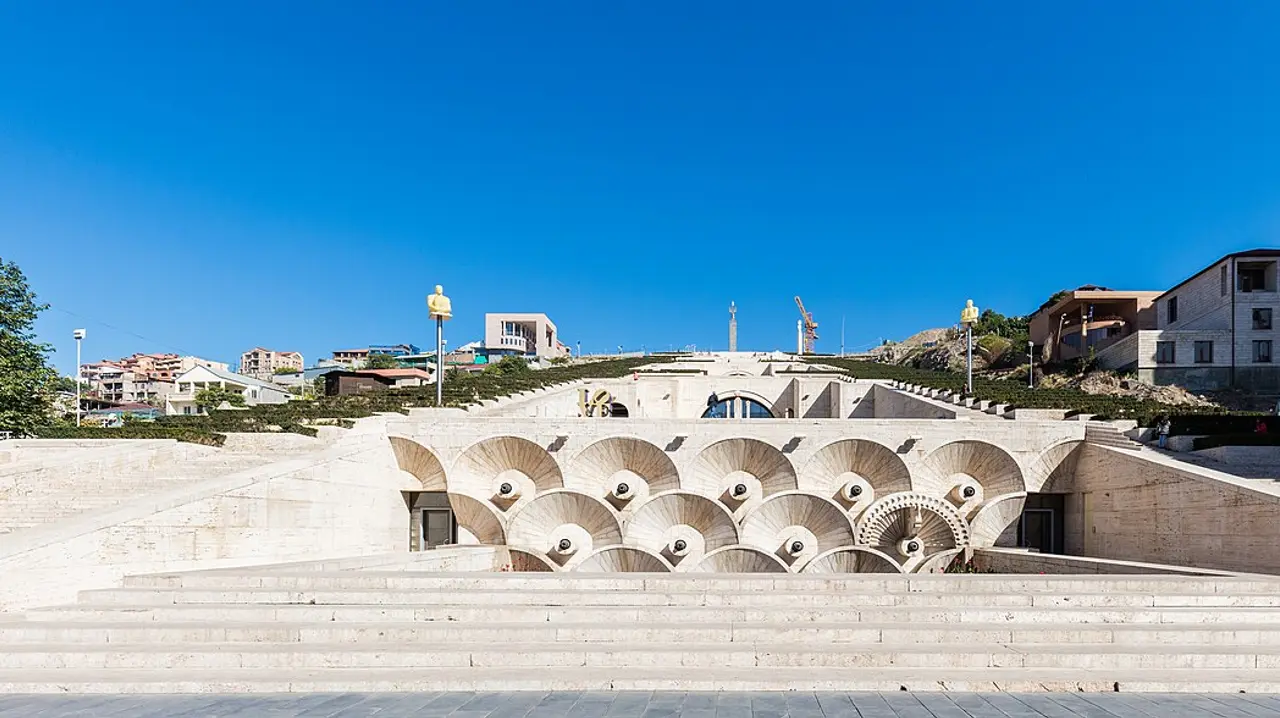
Armenia is one of the easier countries in the region to travel: most Western passports get in visa-free, the tap water is genuinely drinkable, Yerevan takes contactless everywhere, and violent crime is rare. The things that catch first-timers out are smaller and stranger. Cards stop working roughly where the capital ends. Your rusty school Russian will get you further than English in a village. And two of Armenia’s four land borders are shut, which quietly rules out half the routes people sketch on a map before they arrive.
Get those four straight and the rest of the trip runs itself. Everything on this page was learned the way people usually learn it, by getting it slightly wrong first.
Money: Yerevan taps, the provinces don’t
The currency is the Armenian dram (AMD). Through July 2026 the Central Bank’s average market rate sat in the mid-360s to the dollar: 366.68 AMD to USD 1 on 21 July 2026, having drifted between roughly 366 and 367.5 all month. Handy mental maths: 1,000 dram is a shade under three dollars, 10,000 dram is about 27.
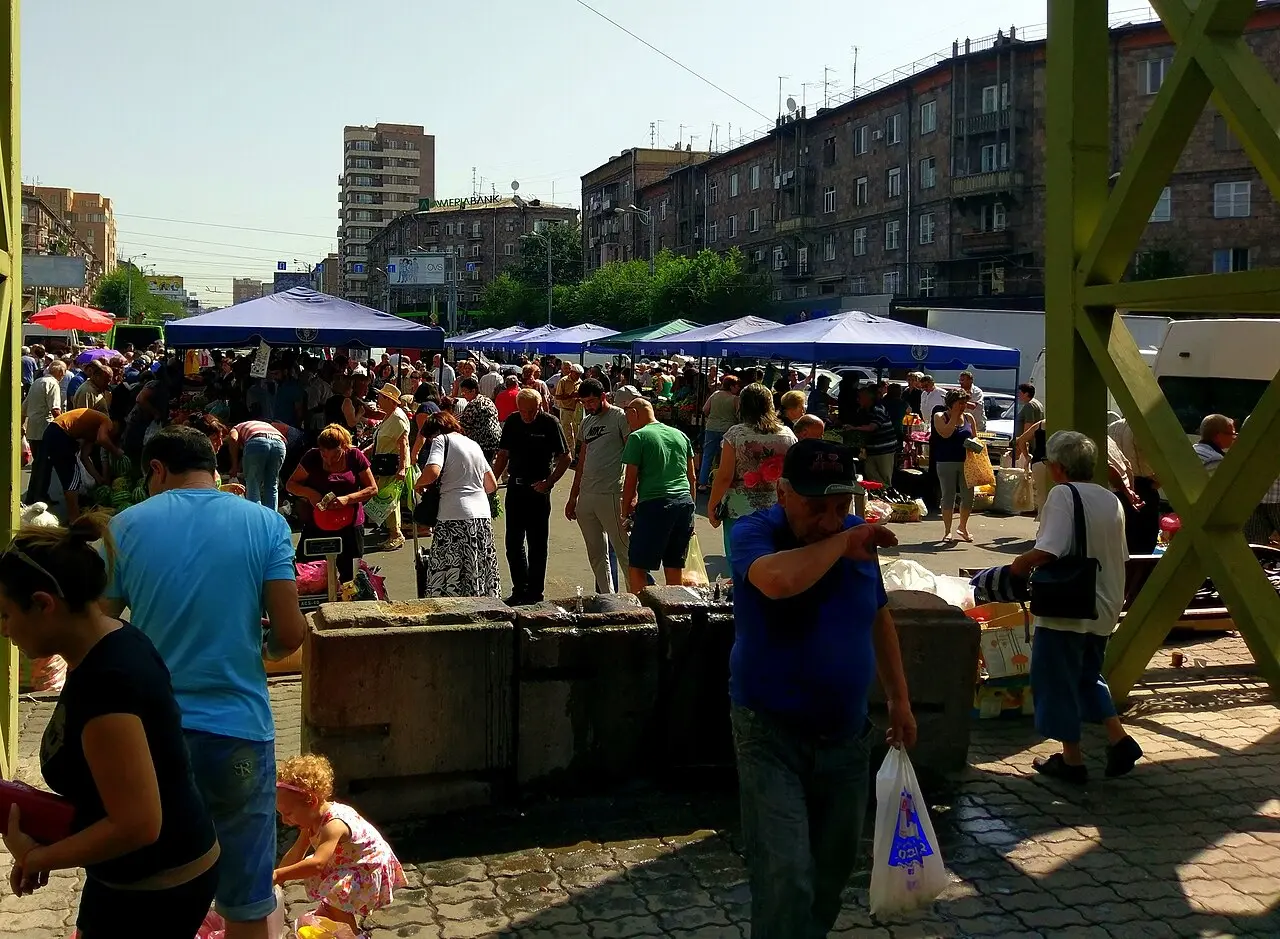
In Yerevan you can pay by card almost anywhere: cafes, supermarkets, museums, most taxis. Step outside the capital and the picture flips fast. Marshrutka drivers take cash only, in dram, and since the official timetables print no fare, you ask the price as you board; village shops, roadside fruit stands, monastery candle stalls and small guesthouses are the same. Carry more cash than feels necessary for any day trip, and get it in the city, because ATMs thin out quickly in the regions.
Break the big notes early. A village shop, a marshrutka driver or a monastery candle stall will struggle with anything large, so split them at a supermarket in Yerevan on your first day and keep a stock of 1,000s and 500s for minibuses, markets and bread stalls. Tipping runs at about 10% in Yerevan sit-down restaurants, cash preferred, and some tourist-facing venues already add a 5-10% service charge to the bill, so read it before you double up. Our guide to money, ATMs and cards in Armenia goes into exchange booths, ATM fees by bank and how much to bring.
Yes, drink the tap water
This is the one thing every visitor gets told and half of them still don’t believe. Yerevan’s supply is drawn from ten sources, nine of them springs plus one deep well in the Ararat valley, and it is chlorinated. That breakdown, and the claim that the water fully complies with local quality standards, comes from the utility itself, in 2013 and again in July 2026. The network is run by Veolia Jur, which has held the concession for the capital and several regions since 1 January 2017. Fill your bottle from the tap and stop buying plastic.
There’s a live argument attached to that, and it peaks exactly when you’re likely to be here. The deep well is blended in only from July to late September, and hard water is what people notice: in July 2026 a former justice minister accused the operator of pushing hardness past health-ministry limits in some settlements, and Veolia Jur answered that hardness is geology, not a safety criterion. Limescale in the kettle, not a reason to buy bottled.
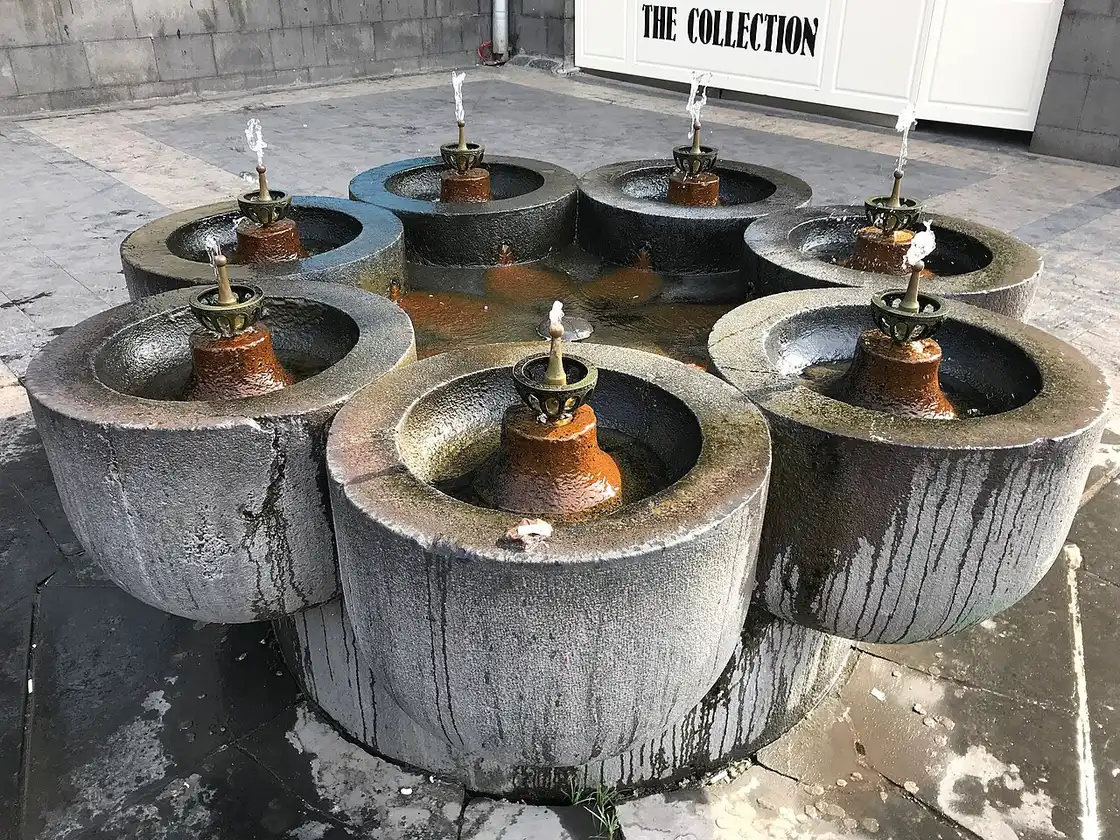
Better still, fill it in the street. A pulpulak is a small public drinking fountain, usually a stone block about a metre high with a constant trickle of spring-fed water, and they’re everywhere: parks, pavements, bus stops, monastery courtyards. They appeared on Yerevan’s streets in the 1920s and became a fixture of Armenian public life, used as meeting points, as places to loiter, and sometimes as memorials, built by a family in someone’s name so that a stranger’s drink counts as a blessing for the dead. The famous one on Republic Square is Yotnaghbyur, “seven springs”, built by Spartak Kndekhtsyan in 1965 and restored in 2008.
In a hot country that adds up fast: in a July heatwave you can walk Yerevan all day and never buy water. Check the flow looks fresh and steady, and switch to bottled at altitude or in remote villages, where the supply may be a local spring line rather than the municipal network. That caveat is not decoration: in April 2026 coliform bacteria in the local supply made around 300 people ill in Byureghavan, 16 km from Yerevan, and the town had a second cluster in July. The capital’s network wasn’t involved either time, but Armenian tap water is a lot of separate pipes rather than one guarantee.
Which language actually works
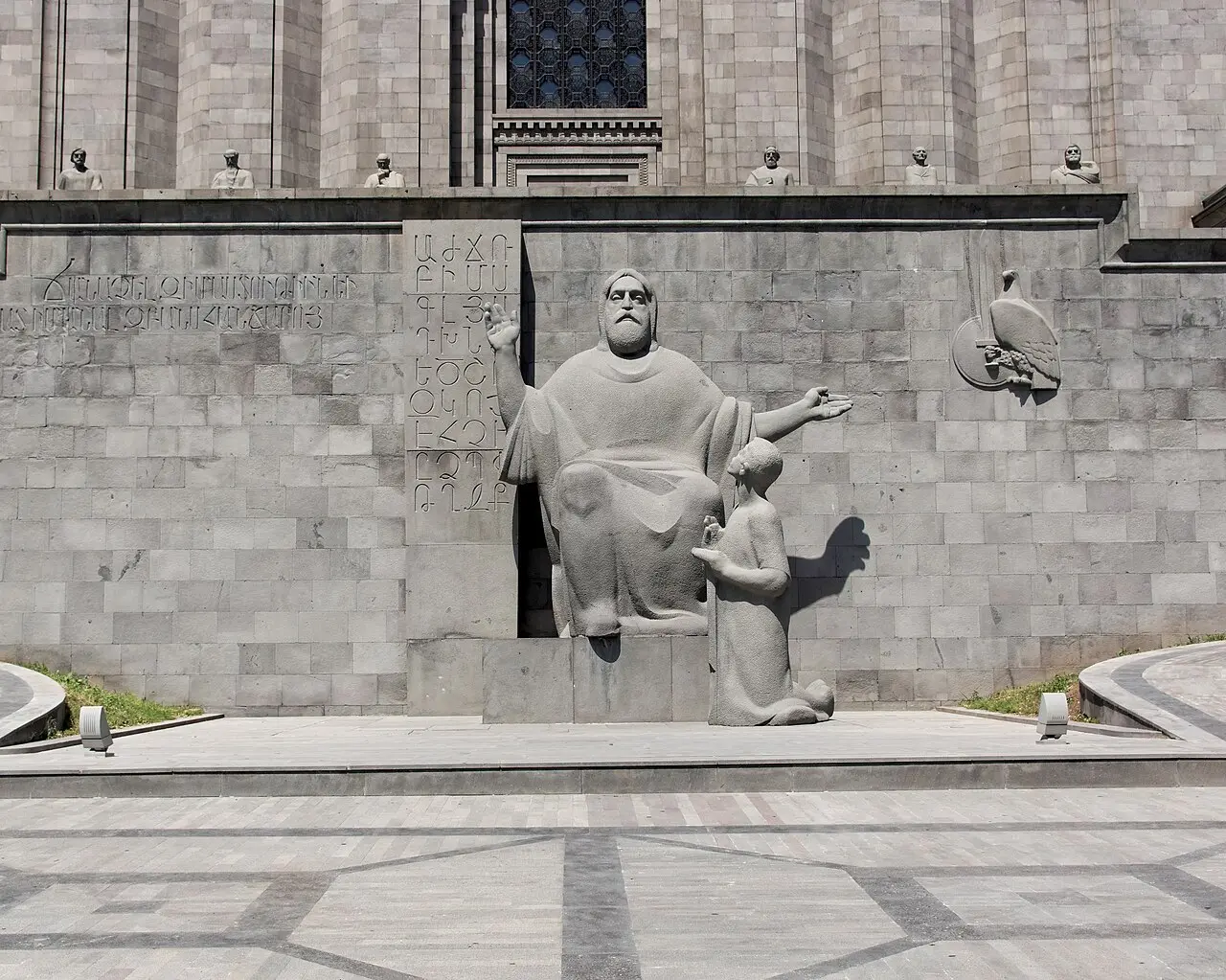
Armenian is the state language, written in its own 38-letter alphabet, which means shop signs, bus destinations and menus outside tourist streets are simply unreadable if you don’t know the script. That sounds worse than it is, because almost everyone you deal with has a second language. The question is which one.
Here are the numbers that surprise people. At the 2011 census, 52.7% of the population spoke Russian as a second language; a 2012 poll put 94% at basic Russian or better, 24% of them advanced. English in the same poll reached 40% with at least basic English, and that 40% already contains the 16% at intermediate level and the 4% at advanced. Since then a generation of Yerevan twenty-somethings has grown up on the English-language internet, and in the capital’s cafes, hostels and tour offices you’ll be fine. But in a Vayots Dzor village, at a rural bus stop or negotiating with a fifty-year-old taxi driver, half-remembered Russian is the more useful tool by a wide margin. If you have any at all, use it.
Armenian itself buys you enormous goodwill for very little effort. The ones worth memorising:
- barev (hello), or barev dzez if you want to be polite
- shnorhakalutyun (thank you) - though what people actually say is merci, borrowed from French and used constantly
- ayo (yes), voch (no), khndrem (please, and also “you’re welcome”)
- inchqan e? (how much is it?)
- tstesutyun (goodbye)
Say “merci” to a shopkeeper and watch the temperature of the conversation change.
Getting around: the marshrutka reality
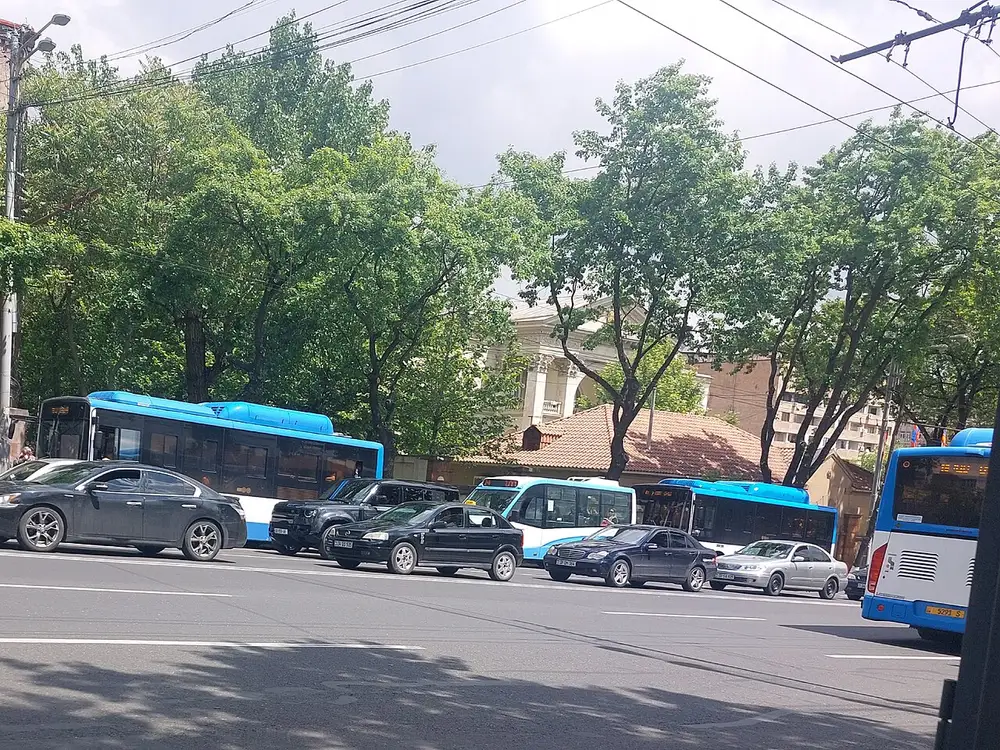
Intercity transport is dominated by the marshrutka, a minibus that, on most routes, runs to a timetable approved by the ministry in charge of transport, takes cash, stops anywhere along the route if you ask, and usually needs no booking. The long southern runs to Goris, Kapan and Meghri are the exception: seats can run out, and the Southern Bus Station sells Goris seats ahead, so buy yours there the day before. It is cheap and it works. It’s also inflexible in one specific way that ruins itineraries: many routes have only a handful of departures, and the long southern runs just one or two a day, so the last bus back from a smaller town can leave in the afternoon. Check the return time before you set off, and be ready to stay the night.
For anything with more than one stop in it, most visitors end up with a taxi, a driver for the day, or a rental car. Yerevan has working ride-hailing apps with fares that feel unreal to anyone arriving from Western Europe, and hiring a driver for a full day out to Khor Virap and Noravank is a normal, unextravagant thing to do here. The full breakdown is in our guide to getting around Armenia, and the app comparison is in taxi apps in Armenia.
Etiquette that actually matters
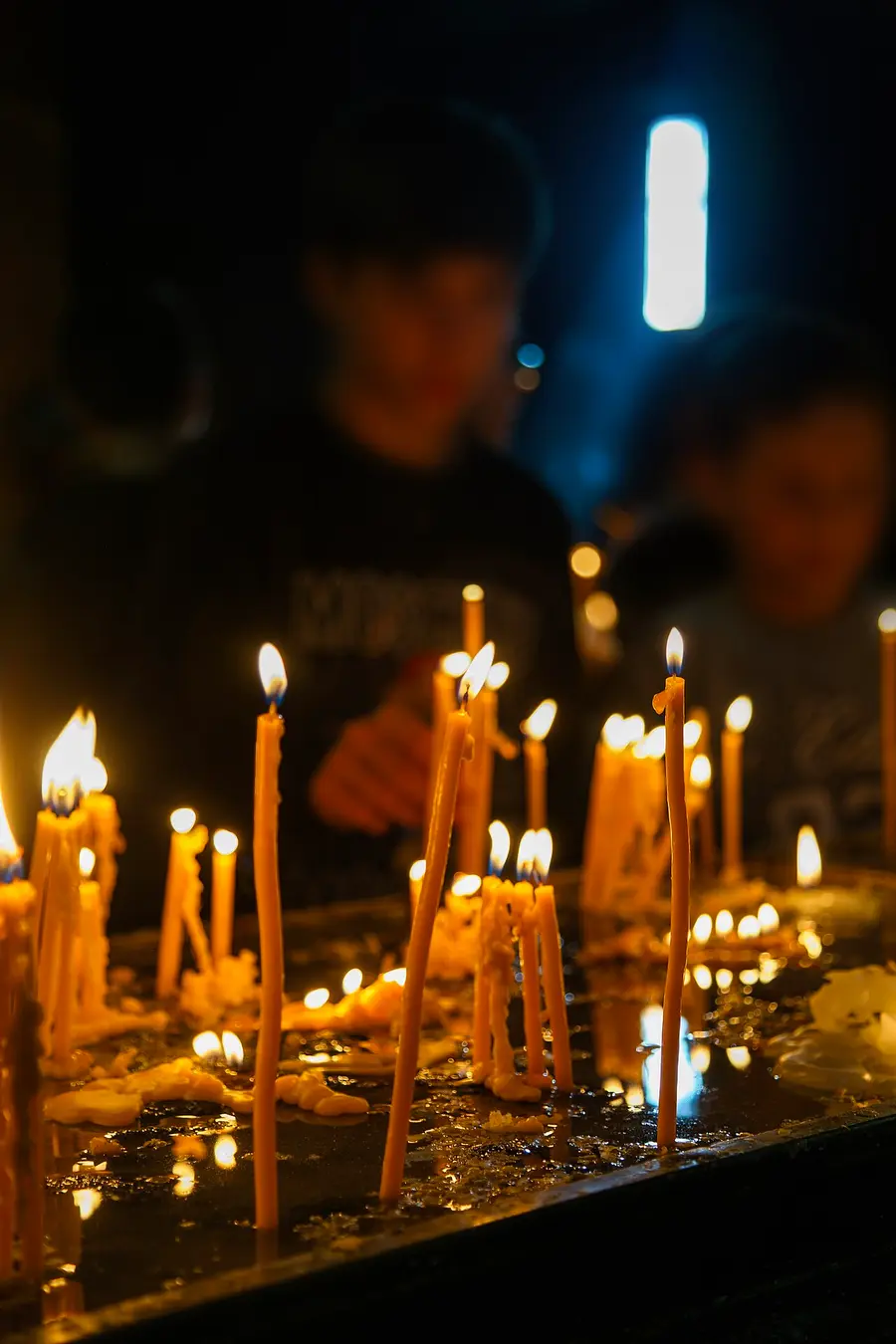
Armenia is a Christian country with a very old church, and the churches you’ll visit are working ones, not museums. Dress modestly: shoulders and knees covered, no shorts or vests for either sex. Women are not required to cover their hair in Armenian Apostolic churches, though doing so reads as respectful, and busier churches keep a basket of scarves by the door for people who arrive unprepared. Services happen constantly; if you walk in on one, stand at the back, keep your voice down and skip the flash.
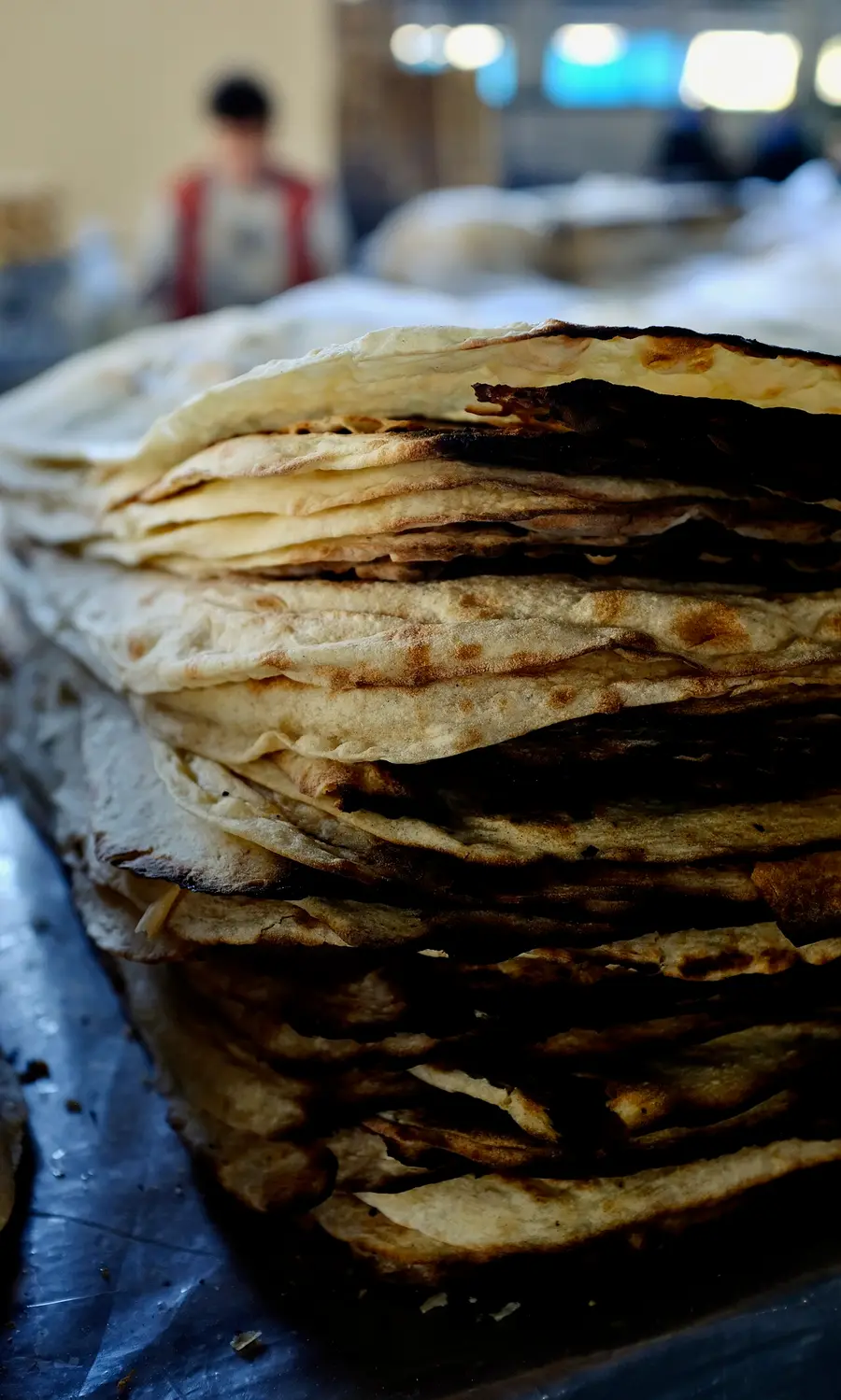
At the table, what matters is food and toasts. Refusing food outright lands badly, so take a small portion even if you’re full. And when someone raises a toast, they mean it: toasts in Armenia are short speeches, in a set order, and the drinking is secondary to the words. Make eye contact when you clink, don’t talk over the toast, and don’t be the person who drinks before it finishes. If you would rather not drink much, nurse the glass rather than declining the round.
Plugs, phones and emergencies
Electricity is 230 V, 50 Hz, with type C (Europlug) and type F (Schuko) sockets. European kit plugs straight in. UK, US and Australian travellers want an adapter, and American devices have to be rated for 220-240 V; if yours isn’t, changing the plug shape won’t save it and you want a voltage converter. The full packing list - adapters, layers for altitude swings, documents - is in what to pack for Armenia.
Get connectivity sorted on day one, because you will want maps and a ride-hailing app immediately. A local SIM is cheap and easy at the airport, and an eSIM saves you the counter queue entirely; our guide to SIM cards and eSIMs in Armenia compares the operators and the current data bundles.
For emergencies, dial 112: since February 2026 it’s been the single number for the police and the fire and rescue service, and the old 911, 101 and 102 redirect to it. For an ambulance, call 103. Don’t assume an English-speaking operator will pick up: if you are anywhere near your hotel or guesthouse, having a local make the call is faster. Armenia is a low-crime country by regional standards and the everyday risks here are traffic and mountain weather rather than people; our is Armenia safe guide covers that properly, including the areas that advisories tell you to avoid.
Borders: what you cannot do
This is the planning constraint that catches people, so read it before you book anything. Armenia’s land borders with Turkey and Azerbaijan are closed to regular traffic, and have been since the early 1990s. The Margara crossing on the Turkish frontier was renovated in 2024 and declared technically ready, and it has opened three times since 2023, always for a few days and always for aid convoys: February 2023 for earthquake relief into Turkey, March 2025 for aid to Syria, and 12-22 June 2026 for aid to Lebanon. Normalisation moved visibly in 2026, with scheduled Istanbul-Yerevan flights from March and talks on simplifying visas, but as of 23 July 2026 no general opening had been announced.
Watch for the right wording if you’re hoping it opens. Under the July 2022 deal between the two countries’ special envoys, the first people to be let across are third-country nationals and diplomatic passport holders. A Western tourist is a third-country national, so visitors become eligible before Armenian and Turkish citizens do.
Check the official source. Border status here reflects Armenian and Turkish government announcements and agency reporting as of 23 July 2026, and it can change at short notice. Confirm the current position with your own foreign ministry’s travel advice before booking a route that depends on it.
What that leaves: Georgia and Iran are the open land borders. In practice almost everyone doing a regional trip pairs Armenia with Georgia, by road or on the seasonal Yerevan-Tbilisi train, or flies in and out of Yerevan. Fly into Istanbul and out of Yerevan if you like, just don’t plan to walk across.
Entry itself is straightforward for most visitors, with a long visa-free allowance for many nationalities, but the details change and are worth verifying against the official position rather than a blog: see Armenia visa and entry rules.
Last few things nobody mentions
It is higher than you think. Yerevan sits near 1,000 m, Lake Sevan near 1,900 m, and mountain passes climb past 2,400 m. The sun is fierce at that altitude even when the air feels mild, and evenings cool off hard. Bring sunscreen, a hat and a layer, in July as much as in October. Our month-by-month weather guide sets out what to expect through the year.
Distances are short, roads are slow. The country is small, but mountain roads, herds of livestock and hairpin descents mean the map lies. Assume half the speed you would drive at home.
Eat before you think you’re hungry. Portions are enormous, hospitality is relentless, and the good food is often in unmarked places; our guide to Armenian dishes worth ordering is a decent shortlist to start from.
Insurance earns its keep here for reasons you can read off the map: Goris and the deep south are four to five hours of mountain road from a Yerevan hospital, and the best hiking is exactly where the roads are worst. Compare a policy before you go rather than at the airport.
Women travelling alone: see solo female travel in Armenia.
Photos
Read also
Before you go · 10 min read
What to Pack for Armenia: Plugs & Layers
Verified · August 7, 2026Armenia packing list: Type C/F plugs at 230V, summer heat in Yerevan vs cold mountain nights, layers, eSIM and insurance to sort before you fly.
Before you go · 8 min read
Where to Stay in Goris: Hotels for Tatev
Verified · August 7, 2026Where to stay in Goris for Tatev: centre hotels and guesthouses, honest day-trip warning (12-13 hours), and what a night in Syunik actually costs.
Before you go · 8 min read
Solo Female Travel in Armenia: Is It Safe?
Verified · August 6, 2026FCDO reports low crime in Armenia. Solo women should avoid informal or street-hailed taxis and use app, licensed or arranged transport.
Before you go · 14 min read
Armenia in October: Autumn Colour and Wine Festivals
Verified · September 23, 2026Armenia in October: peak leaf colour 15-20 October, the Areni wine festival on the 3rd, five times September rain, and what shuts for winter.