Armenia in October: Autumn Colour and Wine Festivals
Armenia in October: peak leaf colour 15-20 October, the Areni wine festival on the 3rd, five times September rain, and what shuts for winter.
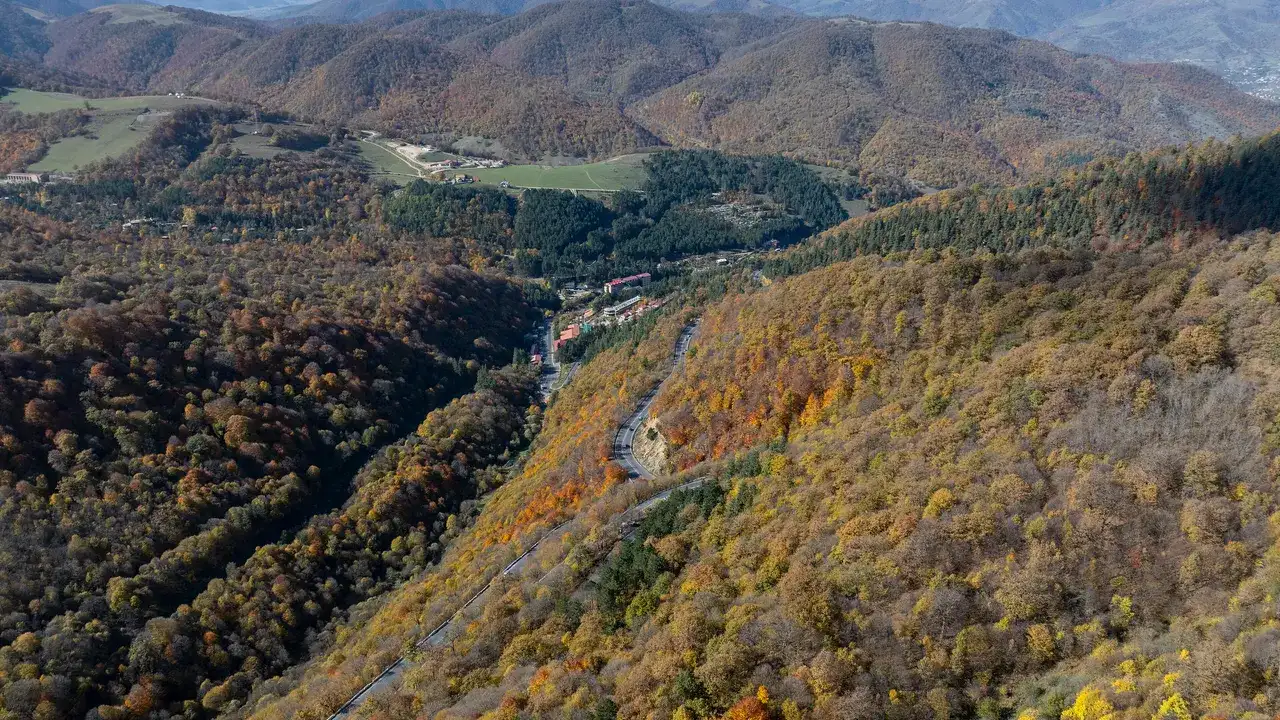
October is the month Armenia looks its best and behaves its worst. The forests in the north turn properly, the wine country is at full volume, and Yerevan spends the first fortnight throwing parties. It’s also the month the rain comes back: about 50 mm over eight wet days in the capital, against September’s 10 mm over four, with daytime highs down to 21.6°C and nights at 7.2°C.
The trap is timing, and nobody selling an autumn trip will point it out. The Areni Wine Festival lands on 3 October 2026, HighFest runs 1-8 October and Yerevan’s birthday is on the 11th, while the national tourism board puts peak leaf colour at 15-20 October. A five-day trip catches one side or the other, not both. Decide which one you actually came for before you book the flight.
Two Octobers, two weeks apart
Think of the month as two separate trips that happen to share a name.
The first fortnight is the events half. Wine in Areni on the 3rd, theatre in Yerevan all week, the capital’s birthday on the 11th. The weather is still generous, the vineyards are being picked, and the forests are only starting to turn: green with rust creeping in, photogenic but not the postcard. In the capital those same days put pomegranates on the GUM Market stalls.
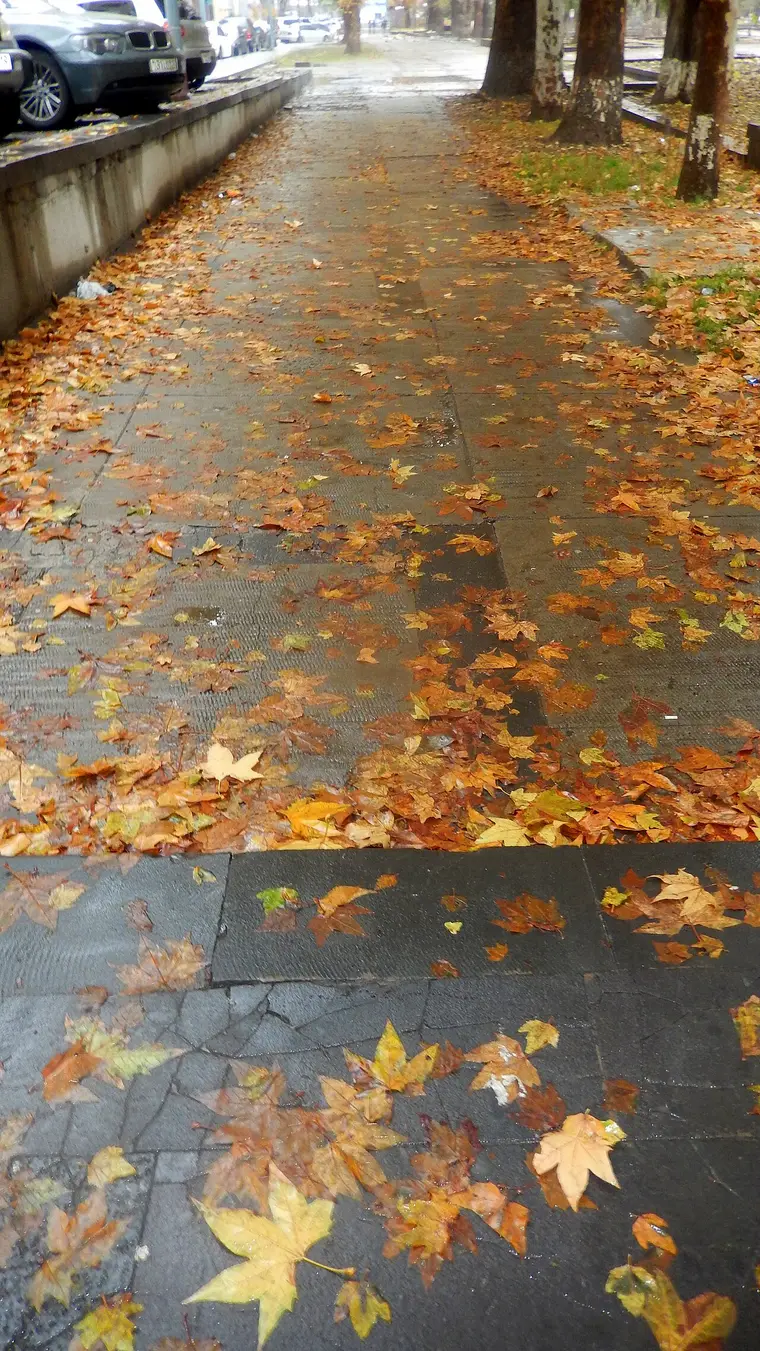
The middle of the month is the colour half. By the 15th the beech and oak around Dilijan are going through orange into deep red, the light is low and soft, and the roads through Tavush and Lori become the reason people come back. The big festivals are over, the crowds have gone home, and the rain is more likely. Yerevan Fashion Week is the one thing still to come, at the end of the month.
If you have ten days you get both and the choice is easy. If you have five, the honest answer is that first-timers should take the festivals, because Yerevan in party mode plus a wine village on harvest day is a more memorable week than a good forest. Repeat visitors, photographers and anyone who has already done the monastery circuit should aim at the middle of the month, landing a couple of days before the 15th so they’re in place when the colour peaks.
The weather, and the number people miss
Yerevan in October averages 21.6°C by day and 7.2°C at night, with around seven hours of sun and 50 mm of rain spread over eight days. Those are pleasant sightseeing numbers. The catch is that it’s roughly five times September’s rainfall on twice as many wet days, which changes what a bad day feels like: in September a shower passes through, in October a grey front can sit over the country for two days at a time.
Now leave the capital, because that’s where the real gap opens up. Dilijan, at about 1,500 m, averages 16.4°C by day and 3.9°C at night in October, with 48.6 mm of rain over roughly eight days. In the Debed canyon, Alaverdi records 13.1°C by day and 4.1°C at night despite sitting some 800 m lower, at 715 m (the two sets of normals come from different stations and reference periods, so read them as two local readings rather than a neat altitude rule). Either way, those are single-figure evenings in a guesthouse that may or may not have got round to switching the heating on. The middle of October is exactly when small mountain places are still in summer mode and the nights have stopped cooperating.
So pack for two climates in one suitcase: a shirt for a Yerevan afternoon and a proper fleece and waterproof for a Dilijan evening. Our month-by-month weather guide has the full annual table if you’re weighing October against May, and Armenia in September covers the warmer, drier sibling month if the rain worries you.
Where the colour actually is
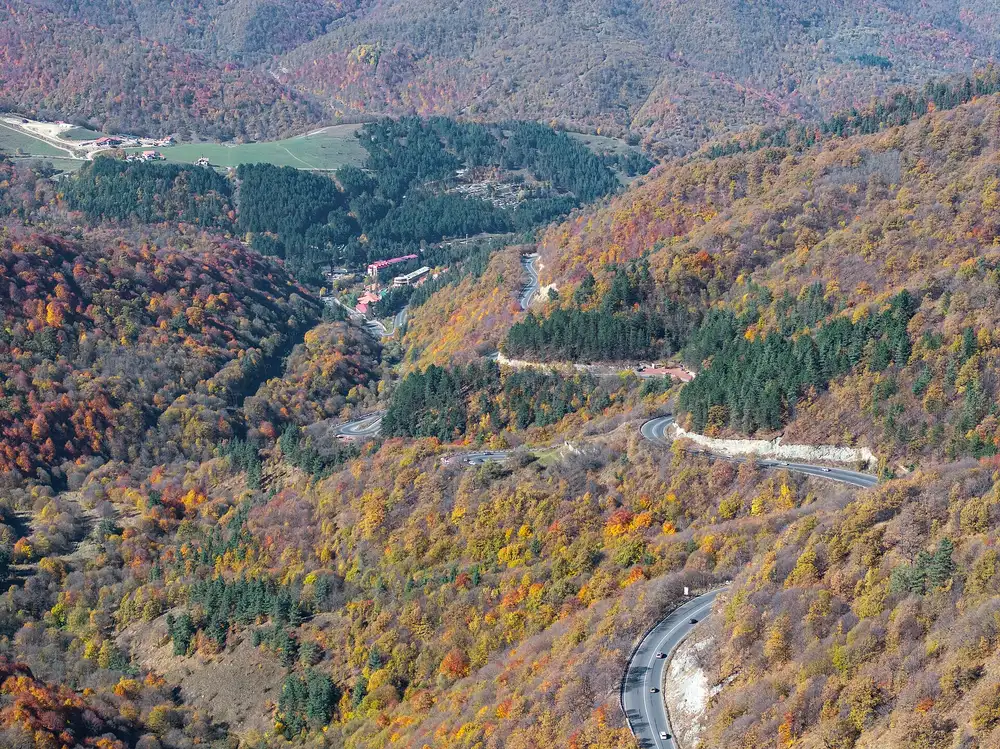
The official line from the tourism board is that foliage usually peaks between 15 and 20 October, weather permitting, and the flagship location is Dilijan National Park: beech and oak, thick and continuous, seen best from the M4 as it winds down into the town. Our Dilijan guide covers the walks and the old Sharambeyan street once you’re there.
You don’t need to leave the capital to see any of it, though. The same tourism board points at Jrvezh Forest Park on Yerevan’s eastern edge, the Children’s Railway Park in the Hrazdan gorge and the Botanical Gardens as city-side colour, all a short taxi ride from the centre. That’s worth knowing if your trip is Yerevan-based and the mountain forecast turns ugly.
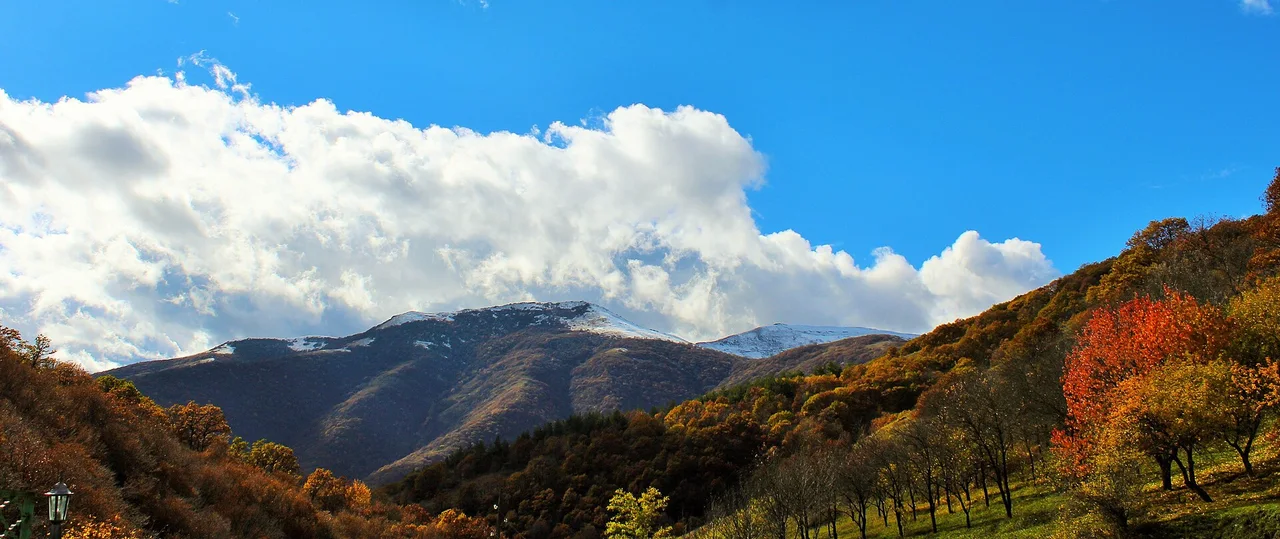
The south does something different. Around Vayots Dzor and Syunik there is far less forest, so instead of a wall of gold you get bare red and brown mountainsides with vineyards and poplars burning yellow in the valley floors. Whether that beats Dilijan is genuinely a matter of taste, but it photographs better in flat light, which in October is a practical advantage.
The Areni Wine Festival, 3 October 2026
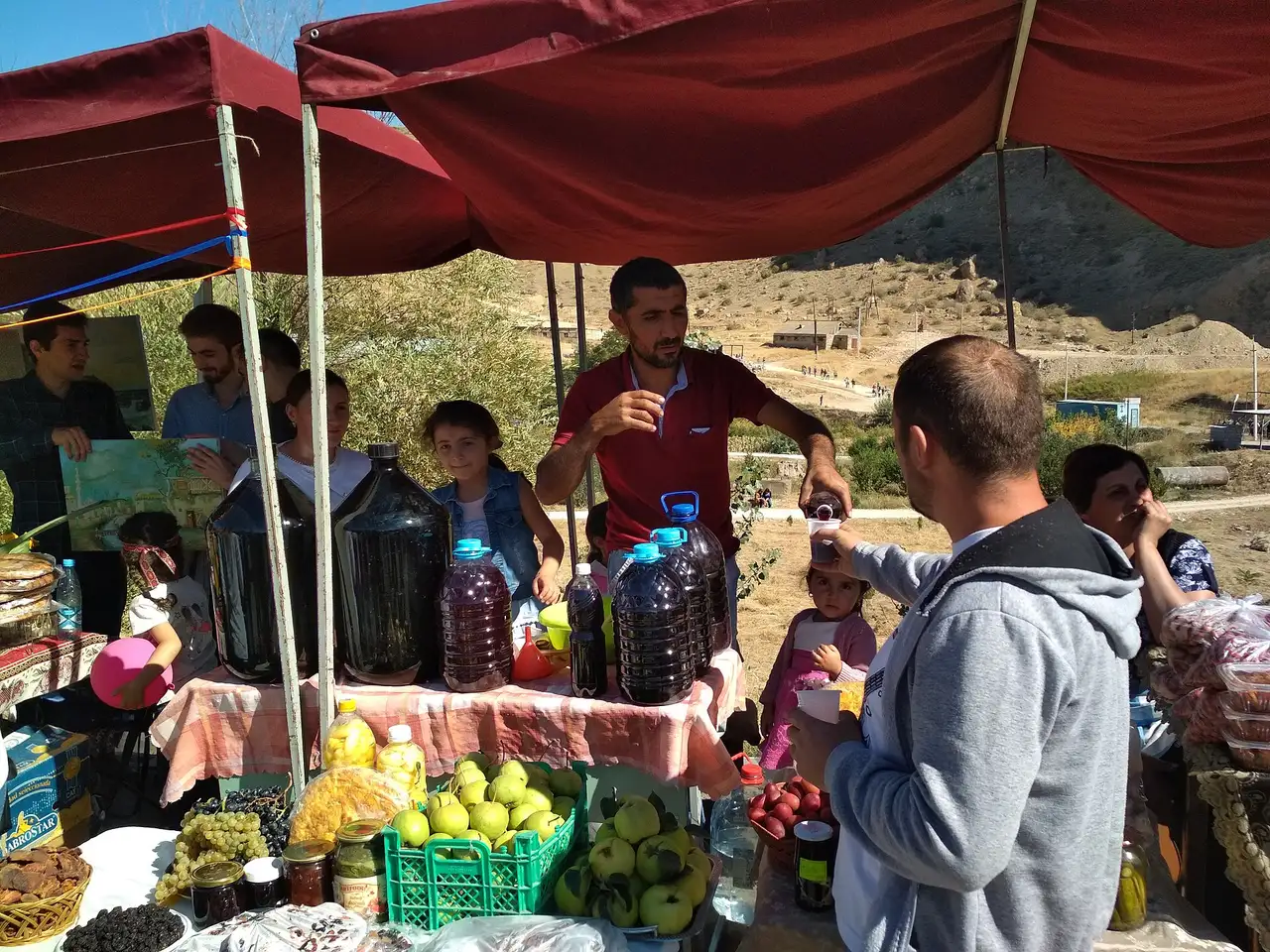
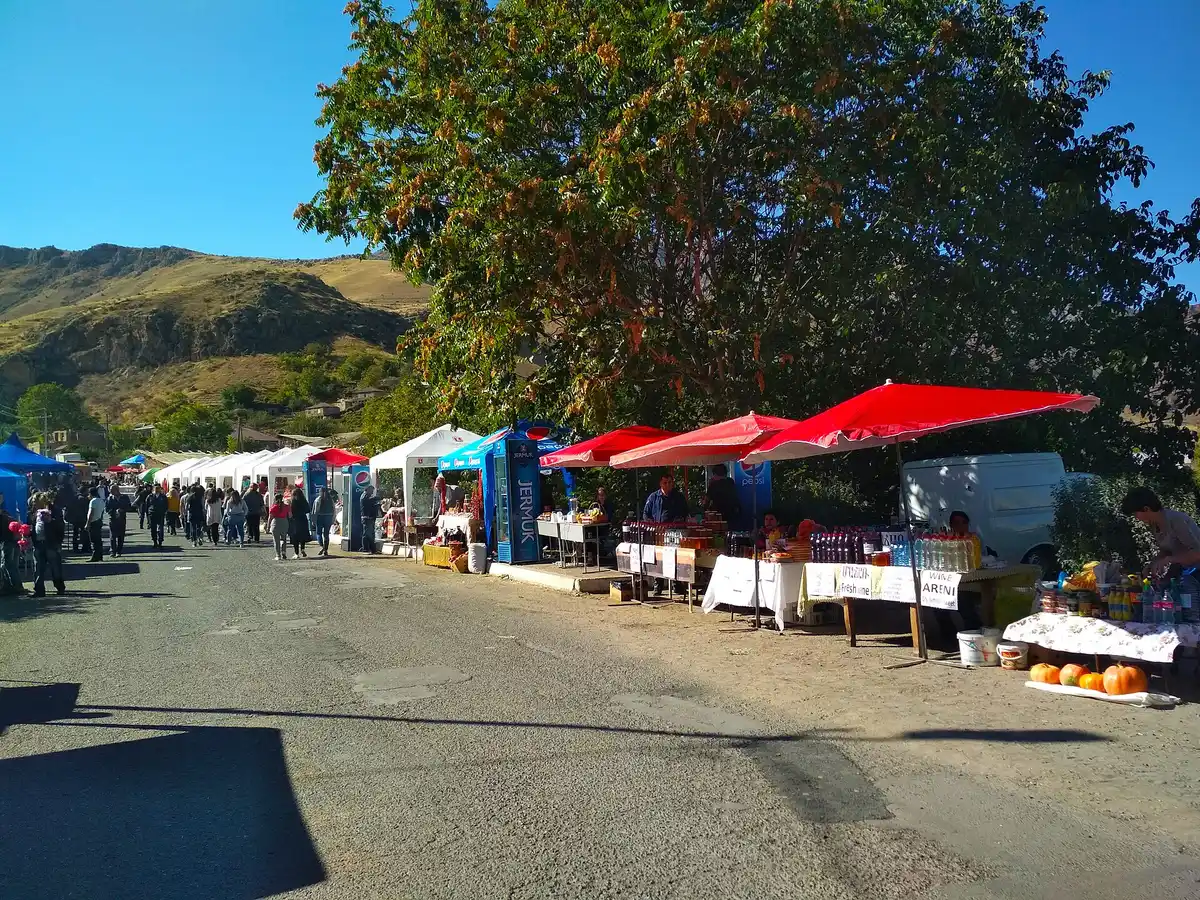
The one date most autumn trips are built around. The festival takes place in the village of Areni in Vayots Dzor, runs 11:00 to 20:00 and is free to enter, with producers pouring straight from demijohns, food stalls, grape stomping, music and dancing among the vineyards. In 2026 it falls on a Saturday, which is the traditional first-Saturday-of-October slot.
Two practical things. First, the beds. Vayots Dzor is a thinly populated province with a small stock of guesthouses, and the festival takes them; if you want to sleep near the village rather than drive back to Yerevan at midnight, book weeks ahead, and look at Yeghegnadzor as the obvious base. Second, the driving. This is a wine festival at the end of a ninety-minute drive, so either bring a designated driver, take a tour, or plan on a taxi. Our guide to Armenian wine and the Areni region covers the cellars worth visiting on the other 364 days, when nobody’s queuing.
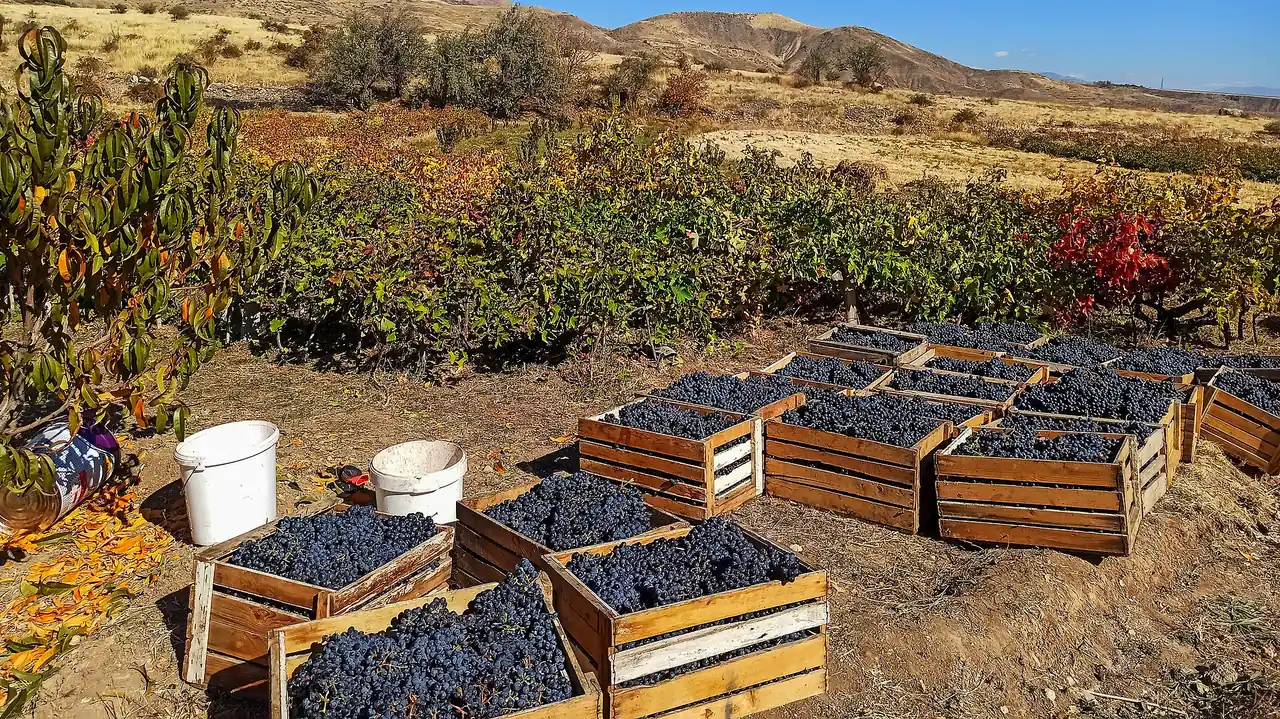
If the festival date doesn’t fit, the harvest itself still does. Picking runs from late September into mid-October across Vayots Dzor and the Ararat plain, and smaller wineries are often glad of an extra pair of hands. Arrange a visit a day or two ahead rather than turning up.
Yerevan’s own fortnight
The capital front-loads the month. HIGH FEST, the international performing arts festival, holds its 24th edition from 1 to 8 October 2026, filling Yerevan’s stages with theatre, dance and performance companies from abroad. It’s the least touristy thing on this page and the most likely to give you an evening you didn’t plan.
Erebuni-Yerevan Day falls on 11 October 2026, the city’s birthday, with concerts, open-air exhibitions and fireworks - details in our Erebuni-Yerevan Day guide. Yerevan counts its founding from 782 BC, and the first modern celebration was held in October 1968 to mark the 2750th anniversary, which tells you how seriously the city takes the number. Later in the month, Yerevan Fashion Week runs 22-25 October, worth a note if your dates land there and you want something indoors on a wet evening.
Beyond that, the tourism board describes a SkyBall hot-air balloon gathering as an annual October fixture on Republic Square, but no 2026 dates had been published as of late July 2026, so treat it as a maybe rather than a plan. The Armenia festivals calendar carries the whole year if you would rather build the trip around an event than a forecast.
What starts shutting for winter
October is the month the country quietly closes doors, and most of it isn’t signposted anywhere you’d look.
The Wings of Tatev cable car loses an hour. From October the operator’s timetable drops to 10:00-18:00, last cabin 17:45, where from May to September it runs until 19:00. Worth separating from that, because it catches people in every month: the cableway is shut on Mondays all year round, summer included, not just in winter. Arriving at Halidzor on a closed Monday after a four-hour drive is a memorable way to waste a day. A round trip is 9,000 AMD (about $24.50 at the late-July 2026 Central Bank rate) from March to November; check tatever.am before you commit. The full picture is in our Tatev monastery guide.
The high road onto Aragats closes. The paved road up to Lake Kari at 3,200 m is generally open only from about mid-May to mid-October, and snow can arrive early. If a drive-up alpine lake is on your list, it belongs in the first half of the month; see Mount Aragats and Lake Kari for the detail.
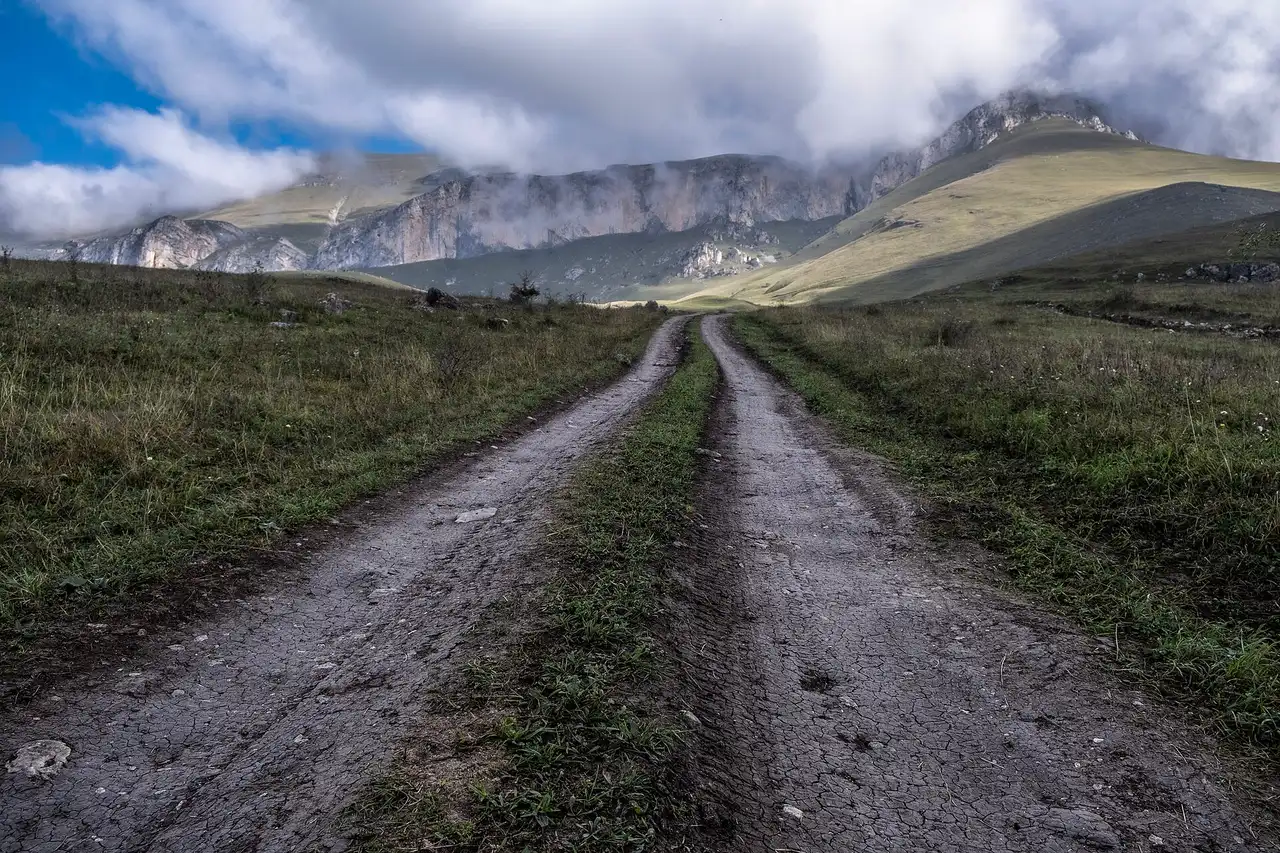
The Selim Pass becomes a gamble. The old caravanserai road over Vardenyats Pass sits at 2,410 m and shuts during winter weather, with blizzards, black ice and fog the usual causes. It’s the scenic shortcut between Lake Sevan and Vayots Dzor, and in late October it’s exactly the kind of road that’s fine on Tuesday and closed on Wednesday. Have the motorway route as a plan B, and check road bulletins the morning you drive.
Lake Sevan is done for swimming. By October the shore stations of Armenia’s weather service log the water at roughly 14°C, down from about 18°C in September. That’s the first real drop of the season: the lake held most of its summer warmth through September and then let it go. Sitting beside it is still lovely; getting in is a dare. Our Lake Sevan guide covers the lake out of season and the daily minibus from Yerevan.
The clock shift nobody warns you about
Here’s the one that catches business travellers and anyone booking a connection. Armenia doesn’t change its clocks. It has been on AMT, UTC+4, all year round since daylight saving was abolished in 2012. Europe and the UK, however, go back an hour on 25 October 2026, and the United States on 1 November 2026.
So the gap moves under you mid-trip. London to Yerevan is three hours until the 25th and four hours after it. New York to Yerevan is eight hours until 1 November and nine after. Your flight times don’t change, but your morning call home does, and so does the moment it gets dark: sunset comes noticeably earlier by the end of the month, and the golden light everyone came for arrives in the late afternoon rather than the early evening. If you’re working remotely from Yerevan in late October, redo the maths on your meetings before the week starts.
Food, and the thing to bring home
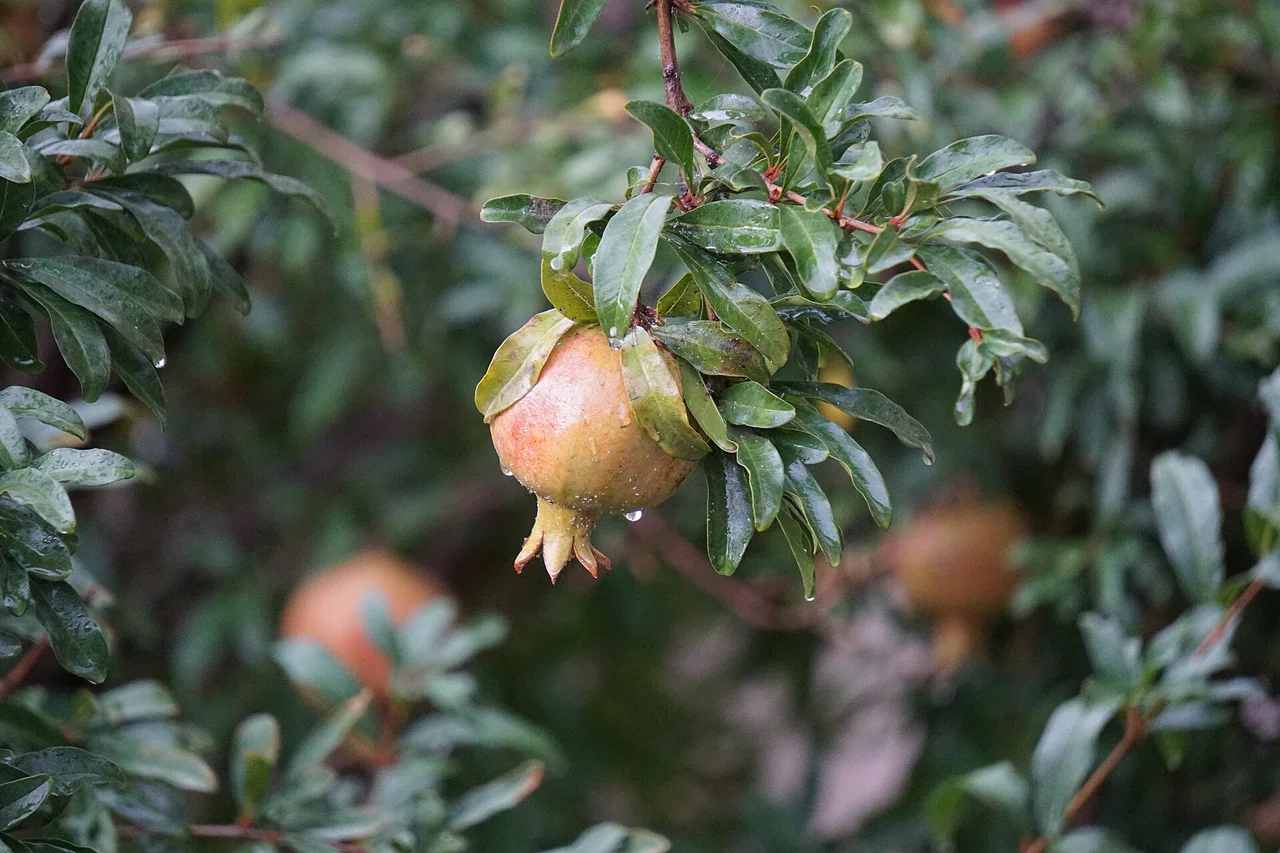
Pomegranates are the October crop. They hang red and heavy on the trees south of Yerevan, and September and October are the two best months for them, with picking running on into November down in Meghri, the warm southern pocket that grows most of Armenia’s commercial crop. October is when the markets are at their fullest and the juice stands appear on street corners. Grapes overlap into the middle of the month, so for a couple of weeks the stalls carry the last of the grapes alongside the pomegranates.
So, which week
For a first trip with the widest margin for error, take 1-11 October: the wine festival, HighFest, the city’s birthday, warm enough afternoons, and the mountain roads still open. For colour, take 13-20 October: arrive a day or two before the 15th and you’re set up for the peak, and accept that you trade some events and some open roads for the best light of the year and quiet monastery courtyards. Avoid building a tight itinerary in the last week unless you’re relaxed about a grey front parking over the country.
Either way, hire a car if you can drive. October rewards being able to chase clear weather, and the run up to Dilijan is worth doing on a whim rather than a schedule. Check car hire in Armenia for what to expect from local suppliers, read our first-timer tips before you land, and if you’re still choosing between months, the best time to visit Armenia sets October against the rest of the year. Bring a waterproof, bring an empty bag for the pomegranates, and pick your week rather than hoping the month sorts itself out.
Photos
Read also
Before you go · 10 min read
What to Pack for Armenia: Plugs & Layers
Verified · August 7, 2026Armenia packing list: Type C/F plugs at 230V, summer heat in Yerevan vs cold mountain nights, layers, eSIM and insurance to sort before you fly.
Before you go · 8 min read
Where to Stay in Goris: Hotels for Tatev
Verified · August 7, 2026Where to stay in Goris for Tatev: centre hotels and guesthouses, honest day-trip warning (12-13 hours), and what a night in Syunik actually costs.
Before you go · 8 min read
Solo Female Travel in Armenia: Is It Safe?
Verified · August 6, 2026FCDO reports low crime in Armenia. Solo women should avoid informal or street-hailed taxis and use app, licensed or arranged transport.
Before you go · 10 min read
Armenia in September: Weather, Harvest and Events
Verified · September 23, 2026What September is really like in Armenia: hot first half, perfect second half, the grape harvest, Independence Day on 21 September and what is open.