
GUM Market: Yerevan's Fruit & Spice Bazaar
Dried fruit, sweet sujukh, basturma and chechil at Yerevan GUM Market: address, hours, what to taste, sampling etiquette and how to bargain.
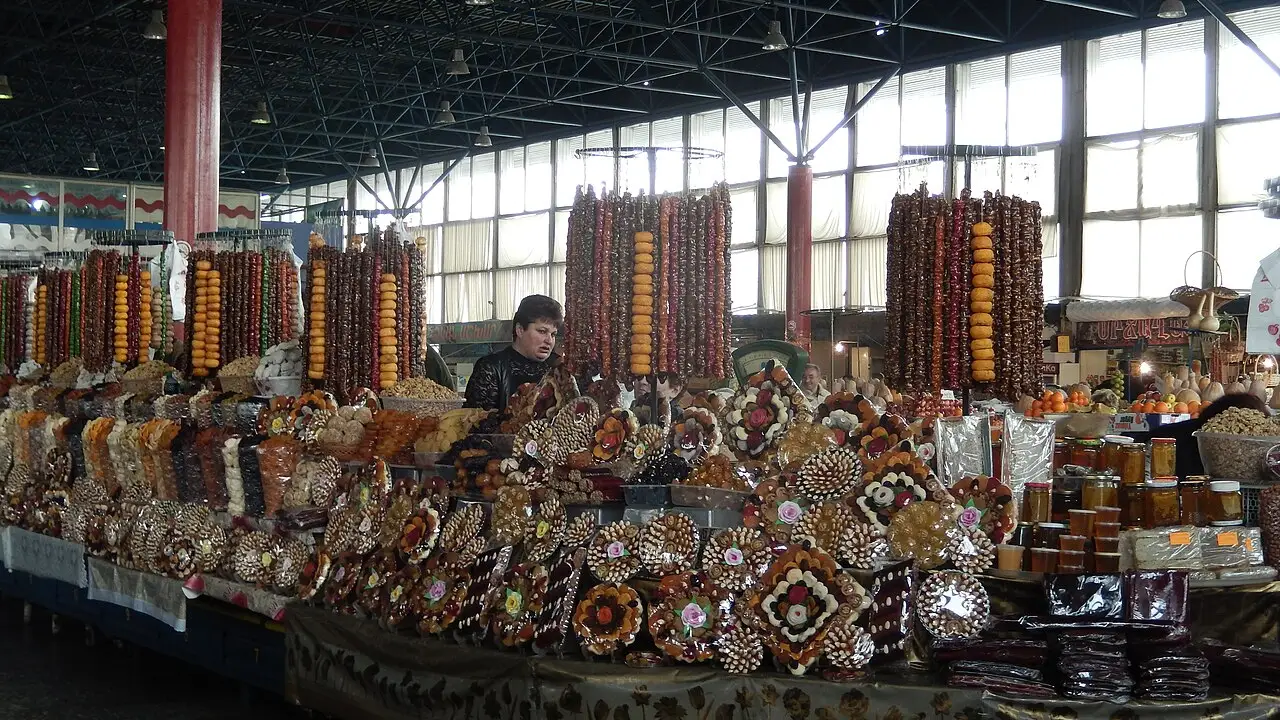
GUM Market is Yerevan’s main covered bazaar for dried fruit, spices, cured meats and the sweet walnut ropes locals call sujukh. You’ll find it at 35 Movses Khorenatsi Street in Kentron, roughly a 7-8 minute walk from the Zoravar Andranik metro stop and a few blocks south of Saint Gregory the Illuminator Cathedral. The market runs 11:00 to 18:00 daily; a few travel guides put the close closer to 17:00, so don’t count on that last hour - individual stalls thin out well before either time.
This isn’t the weekend craft fair at Vernissage, and it isn’t a supermarket. It’s a working market where farmers and small producers sell what they made themselves, and half the pleasure is being fed samples until you’re too full for lunch. For the wider picture of what those tastes mean on a plate, our Armenian dishes and drinks guide names every cured sausage, cheese and sweet you’re about to meet. For sit-down meals after you shop, our pick of the best restaurants in Yerevan lists who to book and what to order.
What you’ll find in the front halls
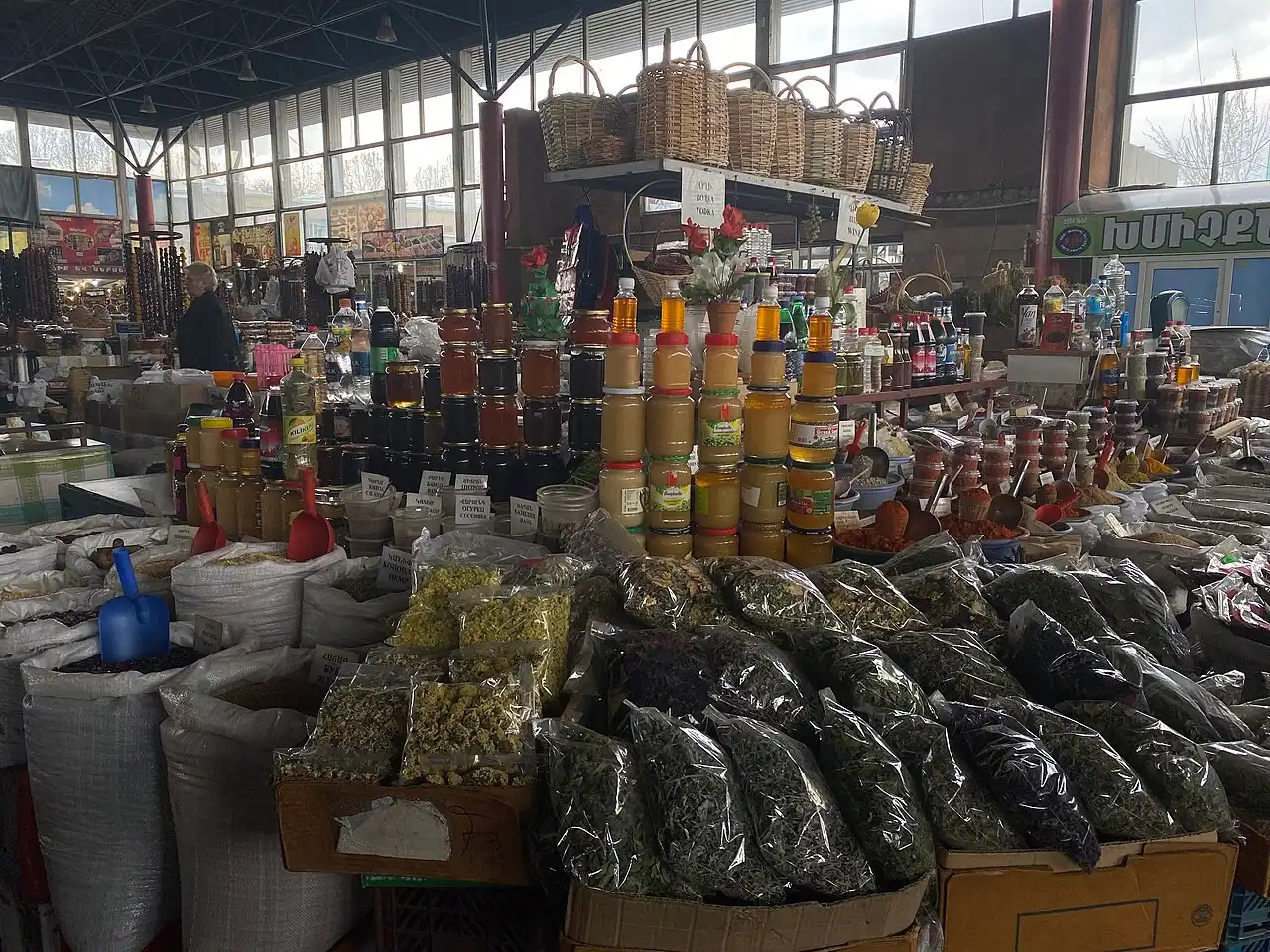
Walk in and the first thing that hits you is colour: amber apricots, dark figs, green pumpkin strips and trays of walnuts in every form. The front section is essentially a cathedral of dried fruit and nuts. Vendors stack pyramids of chir (dried apricot; tsiran is the same fruit fresh off the tree), alani (dried peach or fig stuffed with ground walnuts, sugar, cinnamon and cardamom), sheets of fruit leather called ttu lavash, and tubs of mixed nuts dusted with spice. Many counters also sell the candied tomato strips locals call tomato tsukat, which sounds odd until you try one.
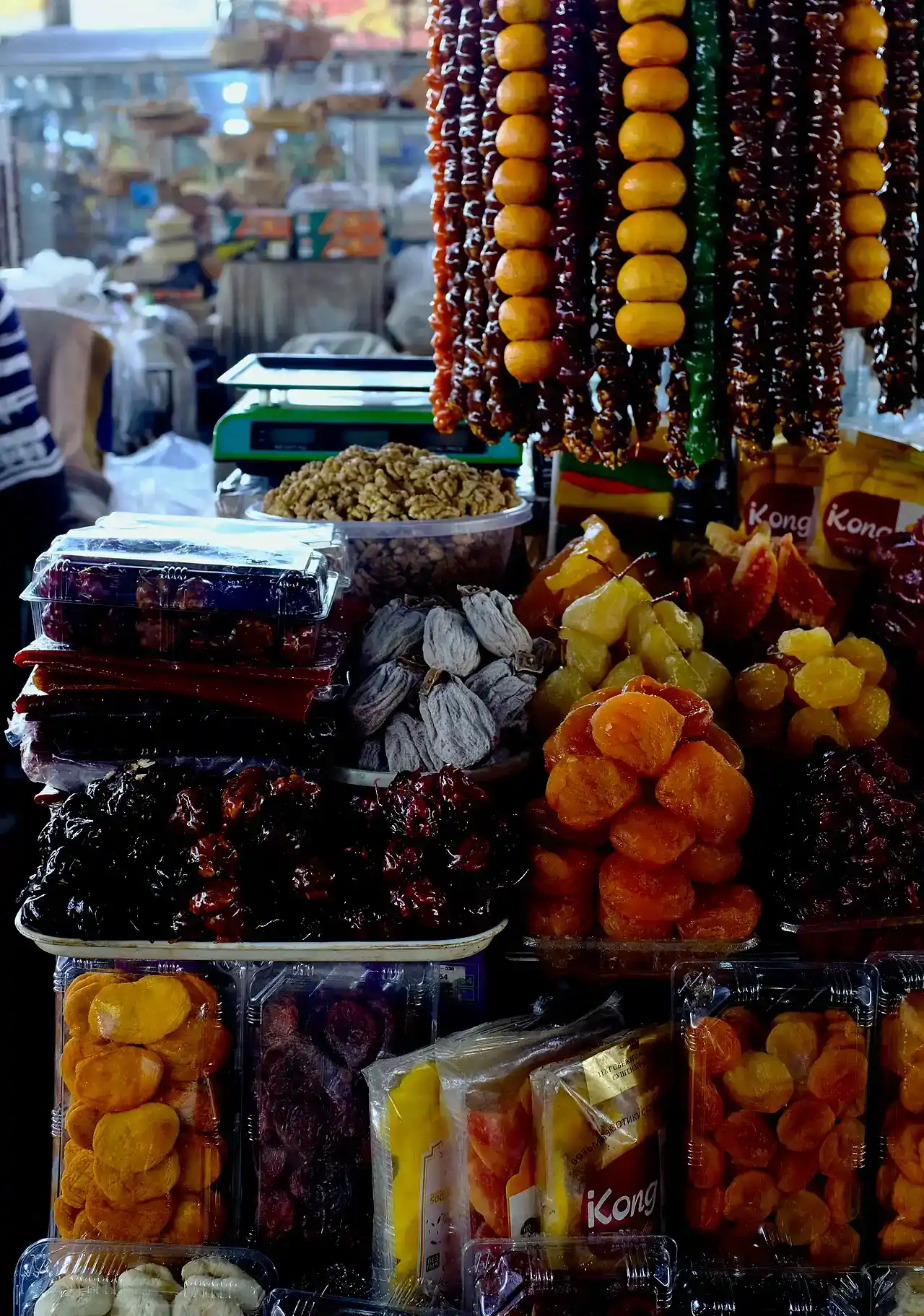
Look up and you’ll see strings of sweet sujukh hanging like burgundy candles: whole walnuts threaded on a cord and dipped repeatedly in thickened grape juice until the coating sets firm. Order the word carefully at a restaurant and sujuk means a dry cured sausage; here, among the sweets, sujukh is entirely different and closer to what Georgians call churchkhela. The stallholder will slice you a coin-sized piece to try. Take it. It’s an easy souvenir to pack, and it keeps for weeks.
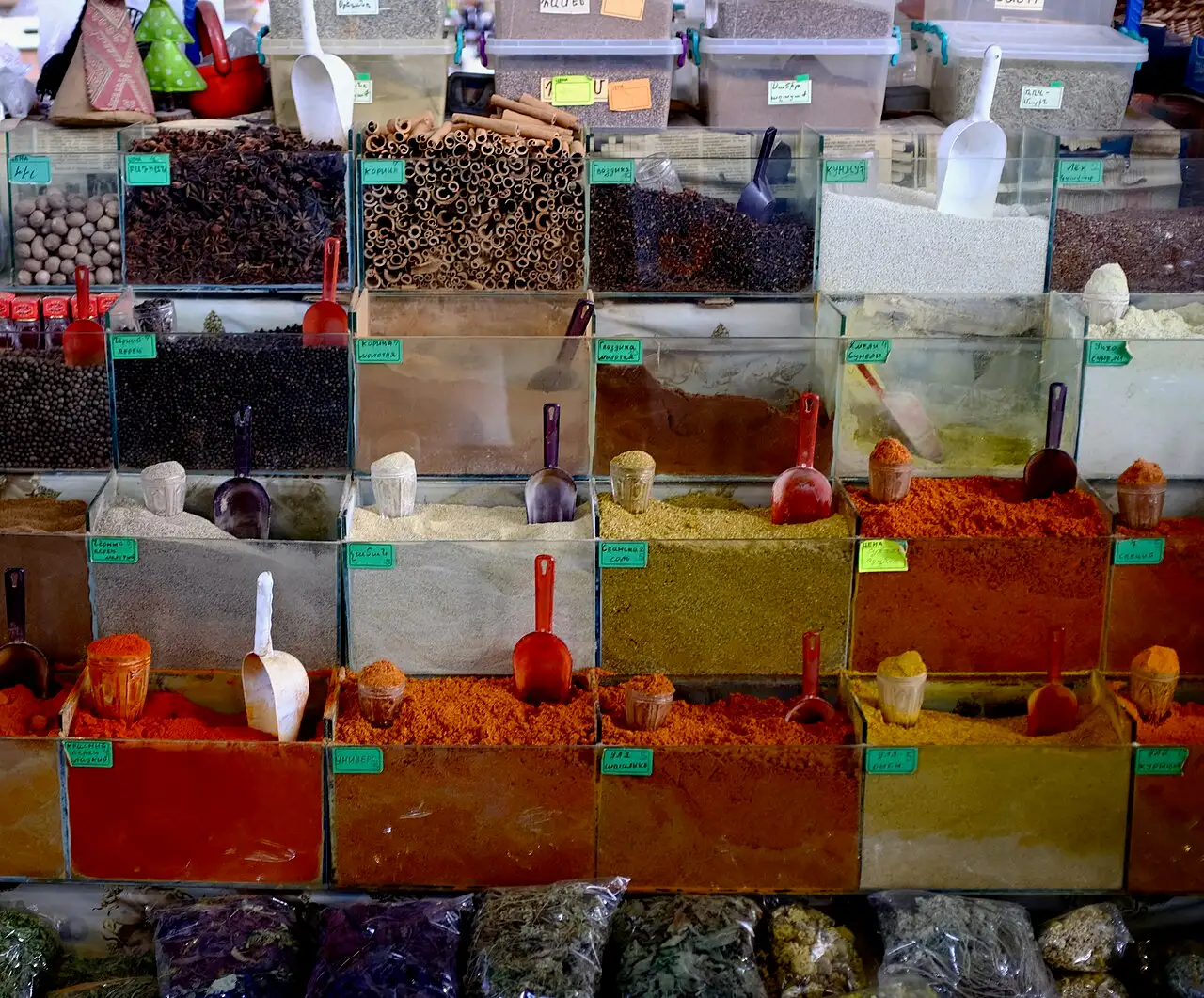
Spice sacks line the next aisles: paprika, cumin, coriander, dried basil, mint bundles and the bright red chaman paste that coats basturma, the air-dried beef Armenians treat like a national charcuterie board. You’ll smell fenugreek before you see it.
Cheeses, basturma and the cured-meat counter
Turn a corner and the tone shifts from sweet to salty. Chechil arrives in braided ropes you peel apart strand by strand; it’s mild, salty and designed for eating with lavash and herbs. Sharper motal and mild lori sit nearby, often under plastic wrap with a knife ready for shaving off a taste. Don’t be shy about asking for a small piece before you commit to a half-kilo block.
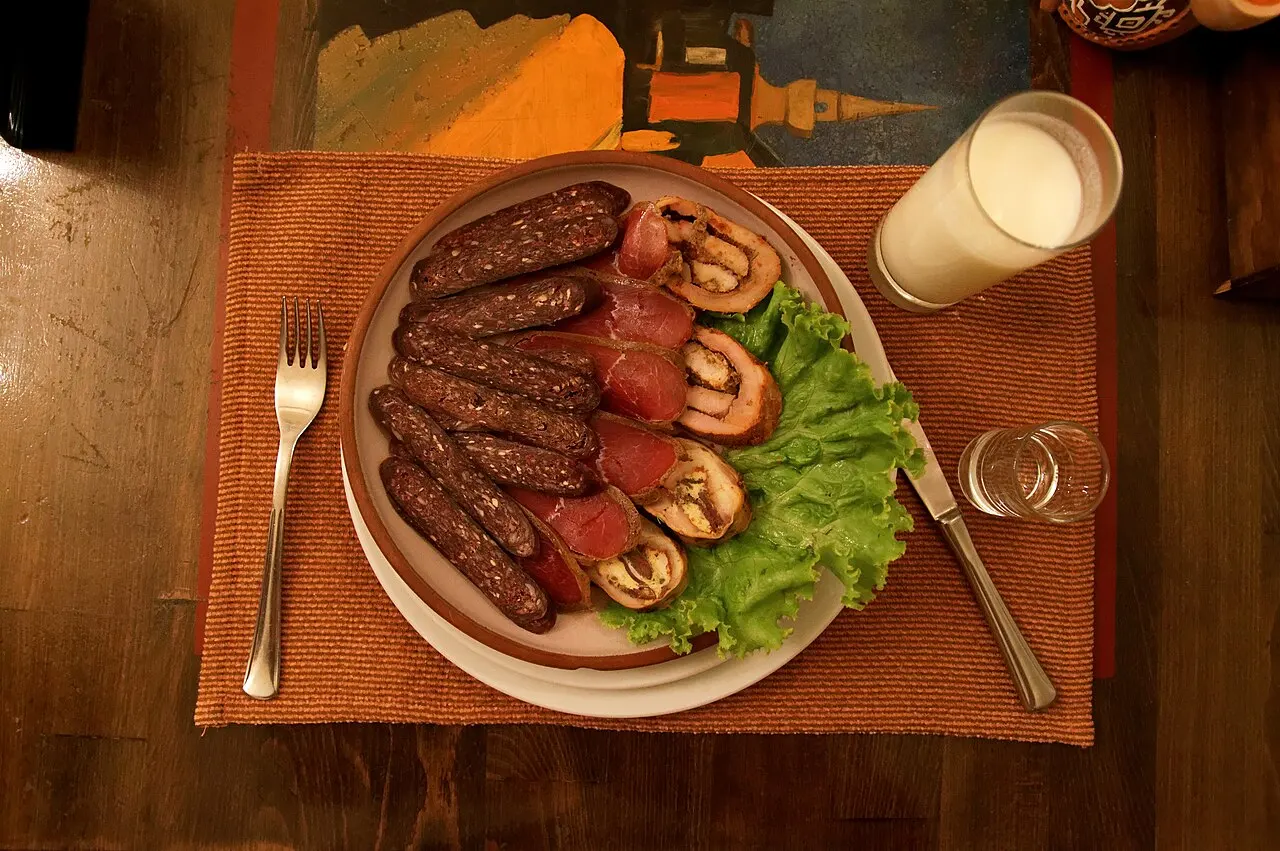
Basturma and dry sujuk sausage hang in deep-red sheets, sliced to order. Basturma is intense: fenugreek, garlic and air-drying turn beef into something that fills a whole meze plate in a few slices. Sujuk here is the savoury sausage, not the sweet walnut rope. If the names blur, point at what you mean and let the vendor slice it - they’ll understand the confusion.
Honey and wild herbs fill the gaps between the meat and the fruit: mountain honey in glass jars, bundles of dried thyme and mint, and sometimes fresh greens depending on the season. It’s the sort of stock you’d use to fill a picnic basket before a drive south toward Areni or Noravank.
The produce hall out back
First-time visitors often stop at the dried-fruit wall and never find the rest. Two narrow corridors flank the central stairway; walk through either one and you reach a second hall devoted to fresh produce. Here the stalls sell herbs tied in neat bundles, tomatoes, cucumbers, peppers, potatoes and seasonal fruit when it’s in. In summer the colour shifts from amber to green; in autumn you’ll see grapes and quince. Meat and fish counters sit at the edges for locals shopping for khash ingredients or a midweek dinner, which is a different rhythm from the tourist tasting circuit up front.
Tasting etiquette: samples aren’t a free lunch
Armenian market culture runs on hospitality, and that means you’ll be offered tastes constantly. A cube of basturma, a corner of dried fig, a sliver of cheese, another piece of sujukh because you smiled at the wrong moment - it’s genuine generosity, and it’s also how vendors sell. The etiquette is simple: accept what you’re offered, eat it, and if you don’t plan to buy, say so politely before they cut a large portion. “Just tasting, thank you” goes a long way.
Photography is generally fine for the displays; most merchants don’t mind tourists shooting the pyramids of apricots. If you’re close enough to capture someone’s face or hands, ask first. And don’t treat samples as a substitute for lunch - the market expects reciprocity. Buy something small if you’ve eaten your way through three stalls.
Bargaining: gently, and only where it fits
Prices are quoted by weight in dram, and nothing is labelled uniformly, so ask “How much for 100 grams?” before they slice a slab you didn’t mean to buy. Bargaining isn’t aggressive here the way it can be at a tourist bazaar elsewhere; a polite “Is there a better price for two?” when you’re buying several bags of dried fruit often works better than haggling over a single snack. Pay in cash - small bills in 1,000 and 5,000 AMD notes. Cards rarely appear on these counters, and change can be a problem if you hand over a large note for a tiny purchase.
If a price feels wrong, walk one stall down and compare. Dried apricot quality varies sharply: sun-dried halves taste different from the oiled, plumper export grade, and the cheaper sack isn’t always the worse one for snacking on the train to Gyumri.
Getting there and timing your visit
Address: 35 Movses Khorenatsi Street, Kentron. Metro: Zoravar Andranik station, then roughly 550-600 metres on foot, about 7-8 minutes (flat 150 AMD tap-to-pay fare on Yerevan’s single metro line). Hours: 11:00 to 18:00 daily by the most recently checked map data, though other write-ups put the close nearer 17:00 - go soon after opening to catch every stall at its fullest, since individual vendors pack up on their own schedule through the afternoon.
Bring a tote bag - vendors will happily pack wax paper bundles of fruit and cheese, and you’ll leave with more weight than you planned. Leave room in your luggage if you’re flying home: sweet sujukh, spice packets and a jar of honey clear customs as food gifts more easily than fresh cheese, but check your own country’s import rules for meat products before you buy basturma to go.
Market walking tours
GUM Market shows up on a good share of Yerevan’s food-walk itineraries, and the reason is simple: a guide clears up which sujukh is walnut and which is almond, which basturma is mild and which is loaded with chaman, and generally translates the vendor banter you’d otherwise have to mime through. Formats range from free, tip-based city walks that treat the market as one stop among several to paid multi-stop tours pairing it with other Kentron food spots - check what a given listing actually includes before you book.
After the market: where to eat
You’ll be full of samples and still hungry for a proper meal - that’s normal. Walk north toward Tumanyan and Pushkin streets for the restaurants locals actually book: modern Armenian at Lavash or Sherep, a grand tolma at Dolmama, or an evening on Saryan Street’s wine bars. Our restaurant guide maps those out with addresses and what to order at each. The market taught your palate the raw materials; dinner is where someone else cooks them.
Photos
On the map
The map loads on click - to keep the page lightweight.
The map didn’t load. Check your connection and refresh the page.
Read also

Food · 8 min read
Where to Eat in Dilijan: Best Restaurants
Verified · September 4, 2026Where to eat in Dilijan: Haykanoush on Sharambeyan, Hovk and Old Winery on Myasnikyan, Flying Ostrich, plus resort dining with real menu prices.
Food · 9 min read
Yerevan Cafe Culture: Coffee, Courtyards & Cakes
Verified · August 30, 2026Yerevan cafe culture: soorj in a cezve, specialty roasters, vine courtyards and cakes. Where to sit with coffee in Kentron - not dinner restaurants.
Food · 9 min read
Gyumri Restaurants: 5 Places by Dish, Panrkhash 1,950 AMD
Verified · August 23, 2026Gyumri restaurants by dish: trout at Cherkezi Dzor (open 09:00-23:00), panrkhash 1,950 AMD at Gwoog, the Poloz Mukuch beerhouse, new Rustaveli Street row.
Food · 9 min read
Wine Tasting in Yerevan: Bars, Prices & In Vino
Verified · August 20, 2026Saryan Street's wine bars, In Vino, prices by the glass, organised tastings and Yerevan Wine Days: how to actually drink well in the city.