Yerevan to Dilijan: Marshrutka, Taxi & Car
How to get from Yerevan to Dilijan in 2026: the cheap marshrutka, taxis and ride-hailing, private transfers and self-drive - prices, times and tips.
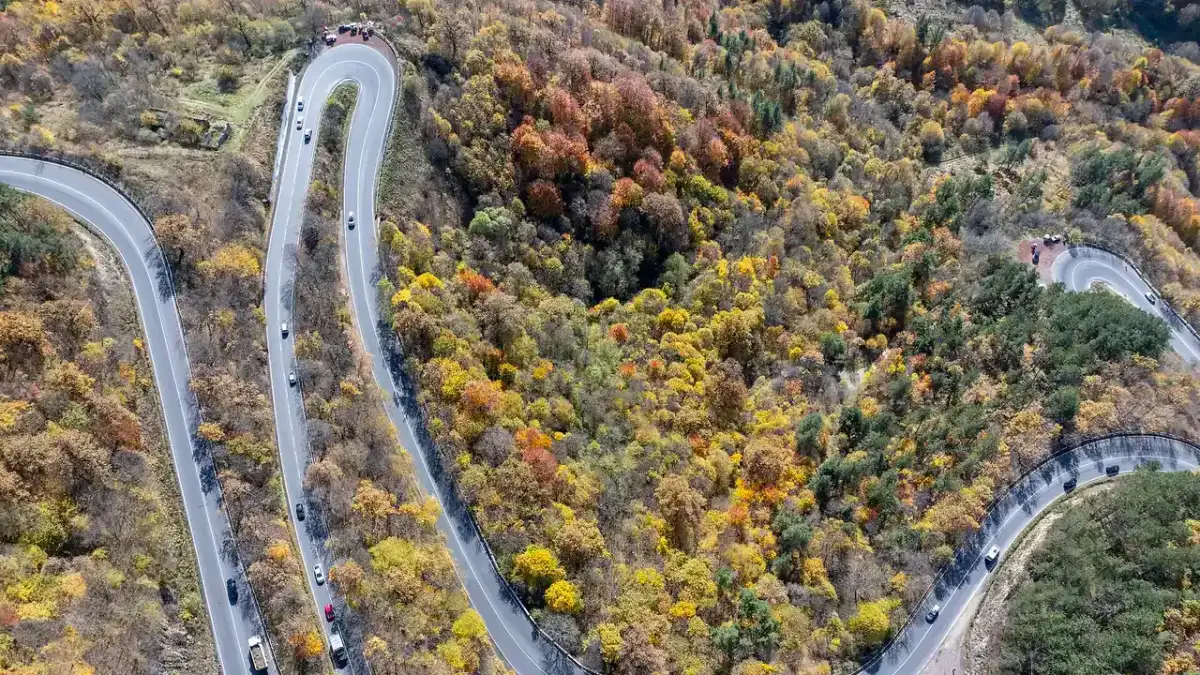
Dilijan, the forested spa town Armenians call their “little Switzerland”, sits about 95-100 km north of Yerevan, and getting there’s cheap and simple. The marshrutka (a shared minibus) is the budget option, with 24 departures a day and about 2 h 10 min on the timetable; a taxi or ride-hailing car costs more but runs on your schedule; and a private transfer or a rental car is the one worth paying for if you want to stop for the views, because the best part of this trip is the road itself. Here’s what each option costs, how long it takes, and the one thing the minibus flatly won’t do for you (taxi prices are 2026 ballparks and shift, and the bus timetable prints no fare at all).
The quick answer
For the cheapest hop, take a minibus from Yerevan’s Northern Bus Station: there are 24 departures a day between 08:30 and 18:45, the timetable allows about 2 h 10 min, and you ask the driver the fare as you board. For door-to-door on your own timing, order a taxi through Armenia’s ride-hailing apps, or agree a private car; reckon on 10,000 to 13,000 AMD for the whole vehicle. And if you can, drive it yourself or book a transfer with a stop, because the marshrutka blasts straight through the two things you actually came for: the shore of Lake Sevan and the tunnel where the bare highland suddenly turns to green forest.
There’s no direct passenger train to Dilijan, so it comes down to minibus, car or transfer. The railway in this part of the country runs to Sevan and on to Gyumri and Vanadzor, but not to Dilijan, so do not go looking for a train here. Get the timing right, especially for the return, and Dilijan is an easy day trip or, better, an overnight from the capital.
One more thing to decide up front is whether to make Dilijan a day trip at all. You can, and plenty of people do, but the town rewards an overnight: the forest is at its best in the soft light of early morning and evening, the monasteries in the hills take a full day to do properly, and staying over takes all the pressure off the last marshrutka home. If you only have the daylight hours, a car or transfer that lets you leave early and linger makes far more of it than a round trip on the minibus.
The marshrutka: cheapest and easy
For sheer value, the marshrutka wins. Shared minibuses leave from Yerevan’s Northern Bus Station (Hyusisayin avtokayan), on the highway out towards Sevan and Dilijan at the city’s northern edge. Four routes serve Dilijan, all numbered in the 650s: No. 651 ends there, while No. 652 to Ijevan, No. 653 to Berd and No. 655 to Noyemberyan call at Dilijan bus station on the way. Between them the ministry’s Tavush timetable lists 24 departures a day from Yerevan, the first at 08:30 and the last at 18:45, and each is timed at about 2 h 10 min to Dilijan. The timetable prints no fare, so ask the driver as you board and pay in cash, ideally in small notes.
Two practical notes. First, getting to the Northern Bus Station: it is a short ride-hail from the centre (around 1,000 to 1,500 AMD), or a city bus for a fraction of that if you want to save every dram. Give yourself a buffer: departures are timetabled, so aim to be there ten minutes early, before the seats go. Second, and more important, the return. The last bus the timetable shows leaving Dilijan bus station for Yerevan is the Ijevan service at 18:38, so don’t plan a late day trip without a backup; if you miss it, you’re looking at a taxi. Ask your guesthouse to confirm the last departure on the day you travel, because the ministry does reissue these timetables.
The minibus is basic, and on a run the timetable puts at over two hours you’ll feel the seat. Skip the roadside views, though, and it’s simply the cheapest way to Dilijan there is.
Taxi, ride-hailing and private transfer
Prefer to set your own pace? A taxi hailed on the street or booked through an app runs roughly 10,000 to 13,000 AMD (around $25-33) for the whole car - haggled if you flag one down yourself, split three or four ways if there’s a group, and the per-head cost barely beats the minibus while buying you the door and the timing. GG and Yandex Go are Armenia’s ride-hailing apps; there is no Uber or Bolt here, and our guide to taxi apps in Armenia explains how they work and what to expect on the meter.
Book a private transfer ahead of time instead, and a driver who meets you at the price agreed in advance will happily pull over at Lake Sevan or the tunnel viewpoint - no haggling, no rush. That freedom to stop wherever you like is the real reason to pay for a car over the minibus.
Driving it yourself: the road is the point
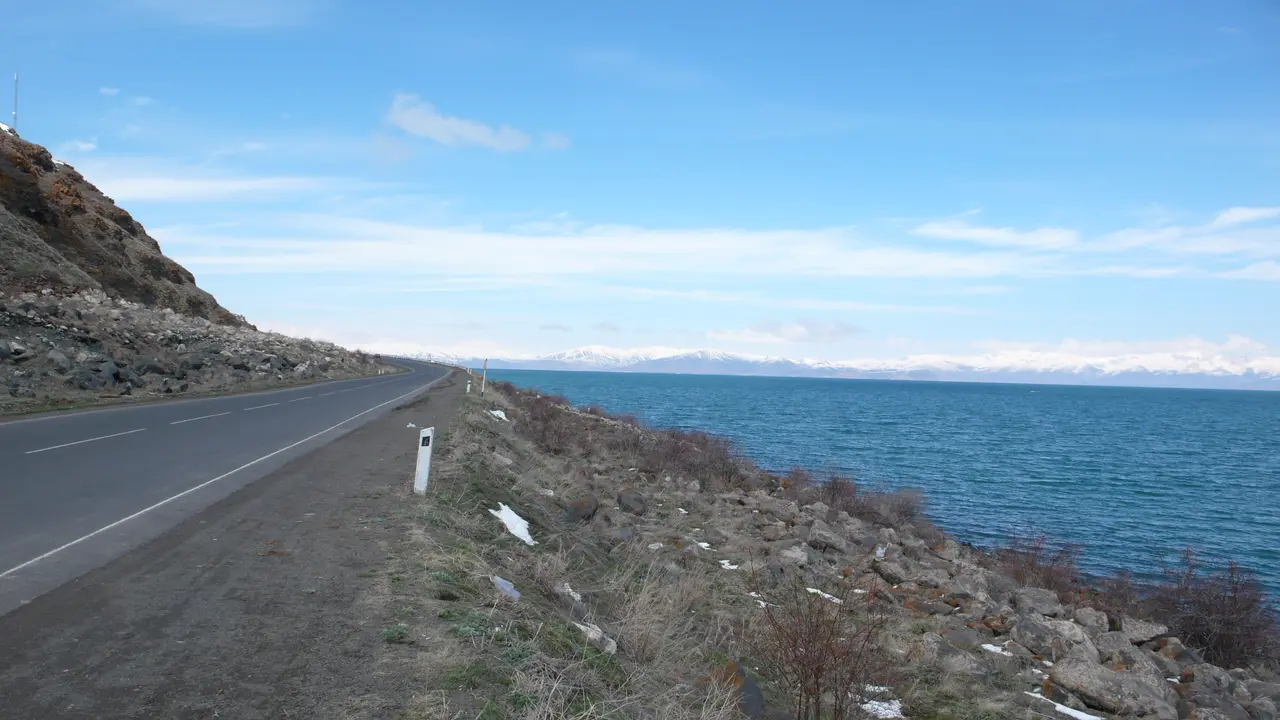
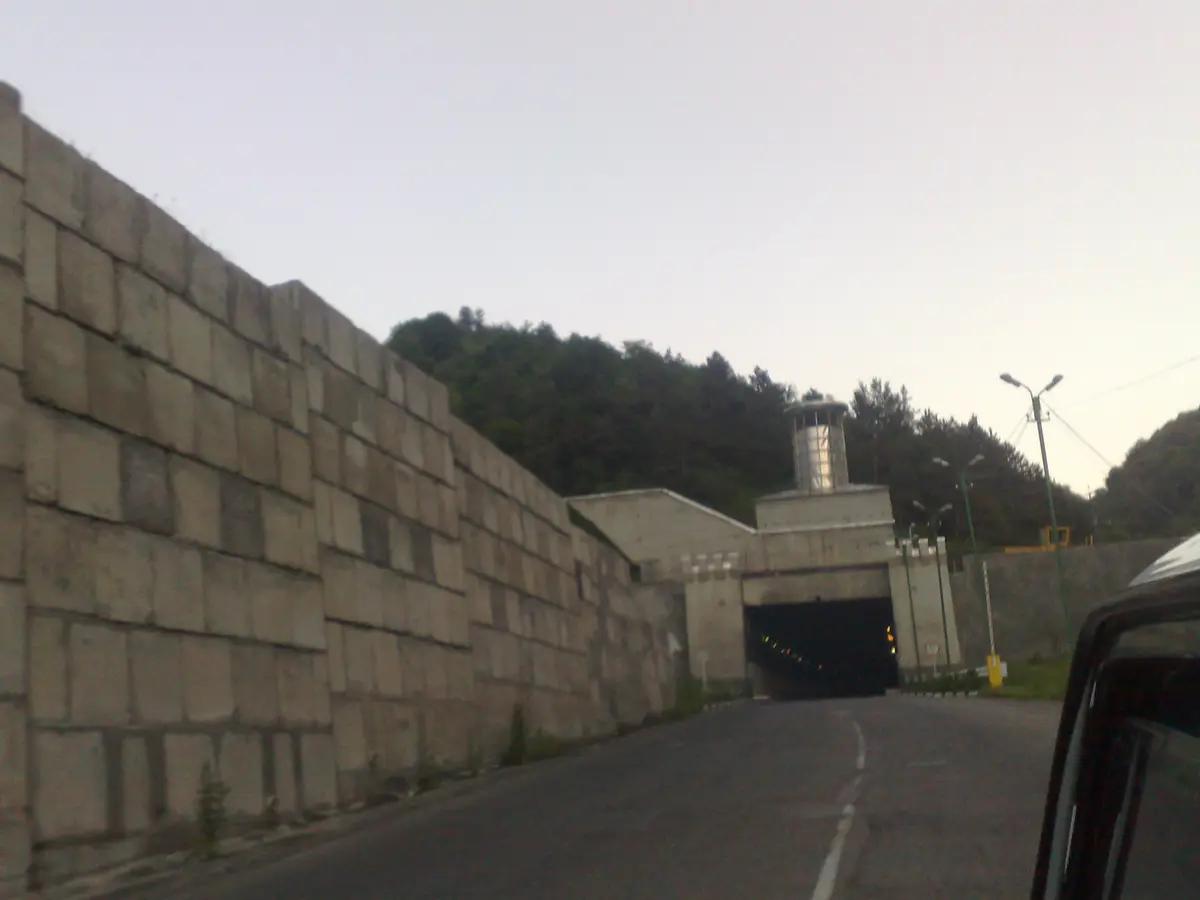
Dilijan is one of the drives where the journey beats the destination, and if you have a car you should treat it as a slow trip, not a transfer. The route is the M4 north out of Yerevan. It runs up to and along the western shore of Lake Sevan, Armenia’s vast blue high-altitude lake, then climbs the Sevan pass and dives through the Dilijan tunnel, a couple of kilometres long. Come out the far side and the change is dramatic: the bare, treeless highland around Sevan gives way in the space of a tunnel to the deep green forest of the Dilijan valley. It genuinely feels like another country.
The road is good tarmac, but it’s a mountain road with winding sections and that long tunnel, so take the bends steadily, especially in rain, and keep an eye on fuel before the climb. In winter and the shoulder seasons the pass can be icy and fogbound, which is one more reason not to rush it. A rental car also unlocks the whole reason to stay overnight: the sights around Dilijan, Haghartsin monastery, Goshavank, Parz Lake and the Lastiver caves, are scattered through the hills and none are reachable by the intercity minibus. Without your own wheels you would need a local taxi for every outing, which soon eats up what you saved on the cheap minibus.
Combining it with Lake Sevan
Because the road hugs Lake Sevan for a good stretch, it’s tempting to bundle the two into one trip, and with a car you easily can: stop at Sevanavank, the peninsula monastery, then carry on over the pass to Dilijan. The catch is the marshrutka. A Dilijan minibus passes Sevan but is not a sightseeing service and won’t wait while you climb to the monastery, so if you want both by public transport, treat them as separate legs and take a dedicated Sevan minibus first. Our guide to Yerevan to Lake Sevan covers that side of the trip.
Which should you choose?
Here’s how the options stack up against each other:
- Marshrutka: fare not published, so ask the driver; about 2 h 10 min on the timetable, 24 departures a day from the Northern Bus Station. Best for budget travel, if you can live without the roadside stops and watch the return times.
- Taxi / ride-hailing: around 10,000-13,000 AMD per car, roughly 1.5 hours, door to door. Best for a group or your own timing.
- Private transfer: a bit more, fixed price, no haggling, and it’ll stop for photos. Best if the Sevan and tunnel views matter to you.
- Rental car: best of all if you’re staying overnight or exploring the monasteries and lakes around Dilijan, which the minibus cannot reach.
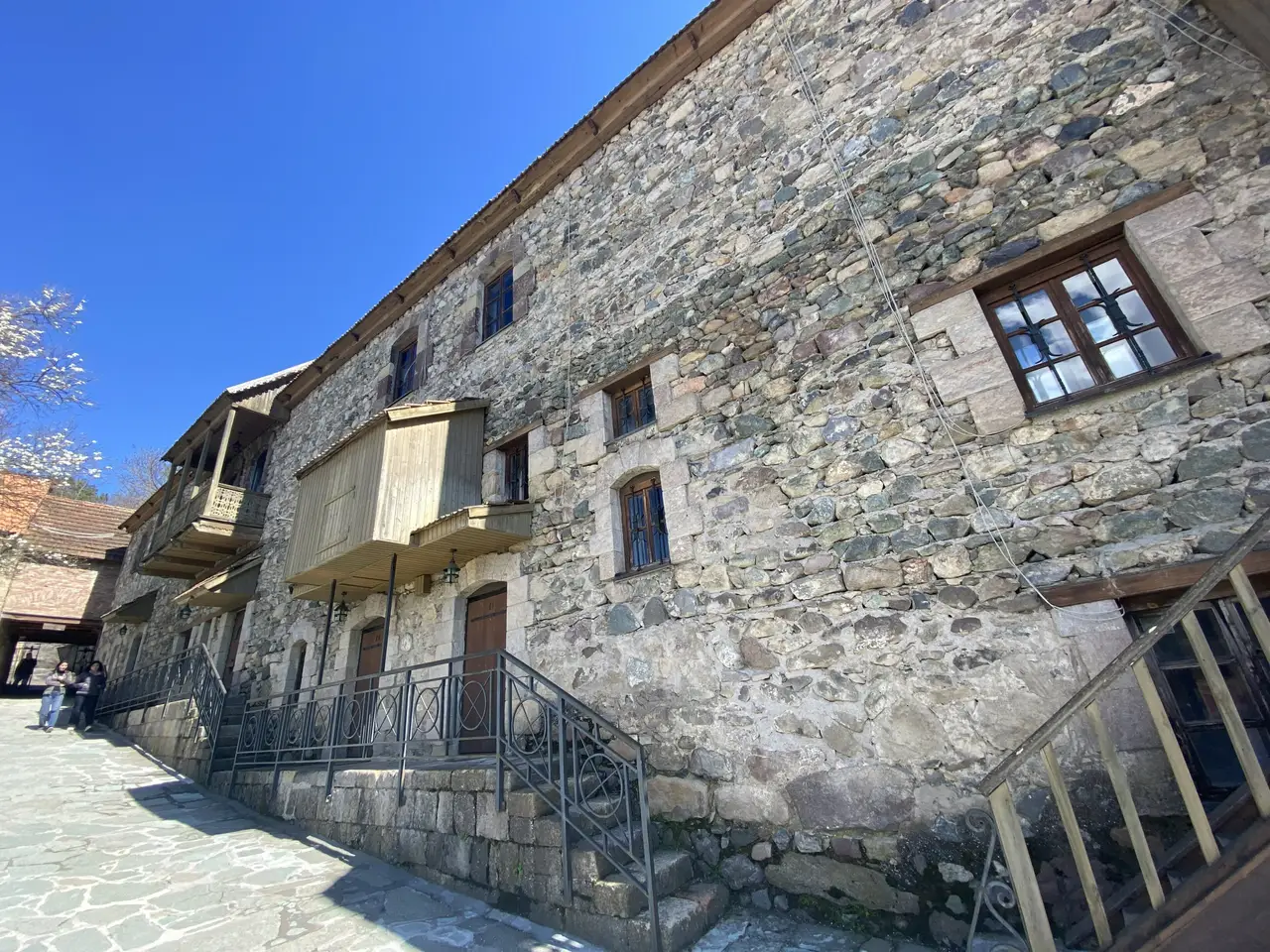
The payoff at the far end is one of Armenia’s greenest, most relaxed corners: the restored craft houses of the Sharambeyan old quarter, forest trails, and monasteries hidden in the hills. Note that the intercity minibus drops you in the lower town, a short local hop or a 20-minute uphill walk from the pretty old street, so factor that in. Our full guide to Dilijan covers what to see, where to eat and where to stay, and for the bigger picture of buses, trains and taxis across the country, getting around Armenia ties it all together.
Photos
Read also
Transport · 10 min read
Gyumri to Tbilisi 2026: Train, Road & Border
Verified · August 12, 2026Gyumri to Tbilisi in 2026: SCR train times via Gyumri (summer 16:29→00:11; winter 23:59→07:35), Bavra road crossing, marshrutka and private transfer.
Transport · 13 min read
Armenia to Iran Border Crossing: Meghri-Agarak (2026)
Verified · August 9, 2026Armenia-Iran border crossing at Meghri-Agarak in 2026: visa rules by nationality, the Yerevan-Tehran bus, carnet rules and the current safety picture.
Transport · 8 min read
Yerevan Public Transport: Metro, Buses & Fares
Verified · July 12, 2026How Yerevan public transport works in 2026: the Soviet metro, city buses and trolleybuses, vanishing marshrutkas, and the new 150 AMD tap-and-go fare.
Transport · 9 min read
Yerevan to Jermuk: Bus, Taxi & Car
Verified · August 9, 2026How to get from Yerevan to Jermuk in 2026: the Kilikia marshrutka, taxis and private transfers, or self-drive - prices, times and the spa-town catch.