
Travel Insurance for Armenia: Entry Rules, Costs, Exclusions
No policy needed to enter on a US, UK or EU passport. One Yerevan clinic bills foreigners 25,000 AMD a visit; what cheap cover skips in the mountains.
No, you don’t need travel insurance to enter Armenia on a US, UK, EU or Australian passport. Armenia’s Foreign Ministry lists those passports as visa-free for up to 180 days a year, and its entry rules for them ask for a valid passport and say nothing about a policy (checked 23 September 2026).
You’ll still want one, and the reason is the bill. By Armenian law, only emergency care for an immediate threat to life is free for foreigners. Everything after that is paid on the spot, and a single consultation for a non-citizen at Wigmore Clinic in central Yerevan is listed at 25,000 AMD (roughly $69). That one visit costs more than a week of basic cover.
Does Armenia require travel insurance?
For most Western visitors the answer on paper is no. We ran the Foreign Ministry’s own visa checker on mfa.am on 23 September 2026. US, UK, German, French and Australian passports all came back “Visa is not required”: up to 180 days in a year, on a passport that stays valid for the whole trip. Insurance doesn’t appear anywhere in those answers.
Two groups should read more carefully. Canadians do need a visa, usually an e-visa (the ministry quotes processing of up to three working days) or one issued at the border. Until 1 July 2027 there’s an exception for Canadians holding a residence permit from the US, an EU or Schengen country or one of six Gulf states, as long as it’s valid for at least six months from entry. Their document list puts “health (travel) insurance” under “provide if available”, so it helps an application without being required. Some nationalities get no such leeway: for Indian citizens, for example, travel medical insurance is a mandatory upload for the e-visa and a mandatory document at an embassy. If your passport needs a visa, open your own country’s answer on mfa.am before you buy anything; our Armenia visa and entry guide walks through the e-visa itself.
One more line for British and European readers, straight from the UK government: a GHIC or EHIC card isn’t valid in Armenia. Americans get the matching line from the State Department: Medicare and Medicaid don’t apply overseas, and most hospitals and doctors abroad don’t accept US health insurance. No public scheme from home follows you here, and a private US plan pays abroad only if its own wording says so, which is why the real question isn’t legal at all but financial.
Entry and insurance rules change without much notice. This reflects the Armenian Foreign Ministry’s visa search and the UK and US governments’ published guidance as we read them on 23 September 2026, and it’s general information, not financial or legal advice. Confirm your own passport’s requirements on mfa.am before you travel.
What a Yerevan clinic charges without a policy
Start with what’s free, because it’s narrower than people assume. Armenian law provides emergency medical care free of charge to everyone, foreigners included, when there’s an immediate threat to life. Once you’re out of danger, the meter starts. The US State Department’s notes put the rest bluntly: payment is made at the time of service, by card where it’s taken, and the department warns that most providers abroad accept only cash. You submit the receipts to your insurer afterwards.
What does “the rest” cost? Wigmore Clinic, a private hospital on Pushkin Street in central Yerevan, publishes its price list with a line for foreigners: a consultation for anyone who isn’t an Armenian citizen is 25,000 AMD (roughly $69). The clinic’s footnote applies that flat rate across its department lists, though a named specialist can charge more. An Armenian citizen pays 14,000-17,000 AMD for a cardiology consultation. Now picture a classic hiking mishap, an ankle turned on a stony descent. One of the clinic’s orthopaedic surgeons charges non-citizens 30,000 AMD (roughly $82) for the consultation, a CT scan of the ankle is listed at 30,000-60,000 AMD, and a leg cast costs 45,000 AMD (roughly $124) in plaster or 65,000 AMD (roughly $179) in fibreglass. If a displaced break needs surgical fixation, osteosynthesis of a medium bone is listed at 750,000 AMD (roughly $2,060) before the implant, which the clinic prices separately. Keyhole removal of an inflamed appendix is 280,000 AMD (roughly $769).
Use those numbers to size the risk, and expect the real bill to come in higher. The clinic calls its prices indicative, and its own footnote says surgery for non-citizens is priced by the type of operation, so a foreigner’s bill can land above the list. Add a hospital stay, drugs and a follow-up visit, and one bad week in Yerevan costs many times what a policy for the whole trip does.
Getting to that clinic is its own problem outside the capital. The State Department describes ambulances as unreliable in most areas except Yerevan and notes that an injured traveller may do better in a taxi or private car to the nearest major hospital than waiting for one. The UK government tells you to call 911 and ask for an ambulance with an English speaker, while the State Department gives 112. Both connect: since February 2026, 112 has been Armenia’s single number for the police and rescue services, with 911 redirecting to it, while the ambulance service keeps its own line, 103. The expensive part comes after that: the UK government is clear that the Armenian authorities don’t organise or pay for a medical repatriation, even if the hospitalisation was at their request. That flight home is the one line a policy exists for.
What a week of cover costs
SafetyWing, the insurer we partner with, sells its Essential plan either as a rolling four-week subscription or for fixed dates from five days up, and it charges the same daily rate for both. Its plan page listed Essential at US$62.72 for four weeks for travellers aged 10 to 39. When we checked on 25 September 2026, its calculator priced a seven-day policy starting that day from US$15.68 for the same age band, less than a quarter of that one Wigmore consultation. Age moves the price more than anything else: the same week came to roughly 1.6 times as much at 40-49, 2.6 times at 50-59 and 3.5 times at 60-69. Essential isn’t sold past 69, so travellers aged 70 and over need a different insurer.
For that money Essential carries a US$250,000 overall limit and up to US$100,000 of medical evacuation, and that evacuation figure is a lifetime cap rather than a per-trip one. What it doesn’t carry is trip cancellation cover, which SafetyWing keeps for its fuller Complete plan. Under Essential’s policy wording, in force since September 2025, a flight delayed or cancelled by 12 hours or more with no replacement gets you only an unplanned overnight stay, up to US$100 a day for two days at most. Don’t be thrown by the plan page, which shows US$60 for a 3-8 hour delay and US$150 from 8 hours under Essential too: SafetyWing’s own help pages put those figures under Complete, and it’s the policy wording a claim is judged against. Complete, meanwhile, needs a 12-month commitment, which rules it out for an ordinary holiday. For any fixed-date trip it’s worth pricing a single-trip policy from a mainstream insurer against Essential, and weighing both on the evacuation limit, trip cancellation and the exclusions below rather than on the headline price. Whatever you buy, check that the insurer runs a 24/7 assistance line that can guarantee payment to a hospital directly, which spares you fronting a large bill on a credit card.
Where cheap policies stop in Armenia’s mountains
The wording in this section is SafetyWing’s, because that’s the insurer we partner with; other budget insurers phrase these lines differently, so find the activity list in yours.
Altitude is the clause everyone reads, and in Armenia it’s the least of your worries. SafetyWing’s Essential plan excludes any sport or activity at 4,500 metres or higher unless you buy its adventure pack, while the country’s highest point, the north summit of Mount Aragats, is 4,090 metres. Nothing here breaks that ceiling.
The same policy covers hiking and trekking only “when using certified, official paths”, not off-trail or on unauthorised routes, and in Armenia that line matters far more than the altitude cap. Most Armenian summit trails aren’t marked at all, the Transcaucasian Trail being the big exception, as our guide to the best hikes in Armenia explains. So a fall on a faint shepherd’s track is exactly the kind of claim an insurer can question. Stay on waymarked routes where you can, keep a GPS record of where you actually walked, and if your plan is a scramble to a rocky summit, assume the insurer may call it mountaineering, which on Essential sits in the add-on.
That add-on costs US$10 per 28 days, but SafetyWing sells it only with the four-week subscription, never with a fixed-date policy. So a one-week trip with a paragliding day means paying for four weeks: US$62.72 plus US$10 at ages 10-39, against a week from US$15.68 without it (checked 25 September 2026). If that one flight is the only reason, price a single-trip policy that includes it before you commit.
| Activity in Armenia | Essential plan | With the add-on |
|---|---|---|
| Hiking and trekking on official paths | Covered | Covered |
| Hiking off official paths | Not covered | Not covered |
| Mountaineering below 6,000 m | Not covered | Covered |
| Tandem paragliding | Not covered | Covered |
| Zipline and via ferrata | Covered | Covered |
| Skiing on marked runs | Covered | Covered |
| Skiing off-piste | Not covered | Not covered |
| Quad bikes and other ATVs | Not covered | Not covered |
| Whitewater rafting | Not covered | Not covered |
| Scooter or motorbike over 50cc | Not covered | Covered if licensed and wearing a helmet |
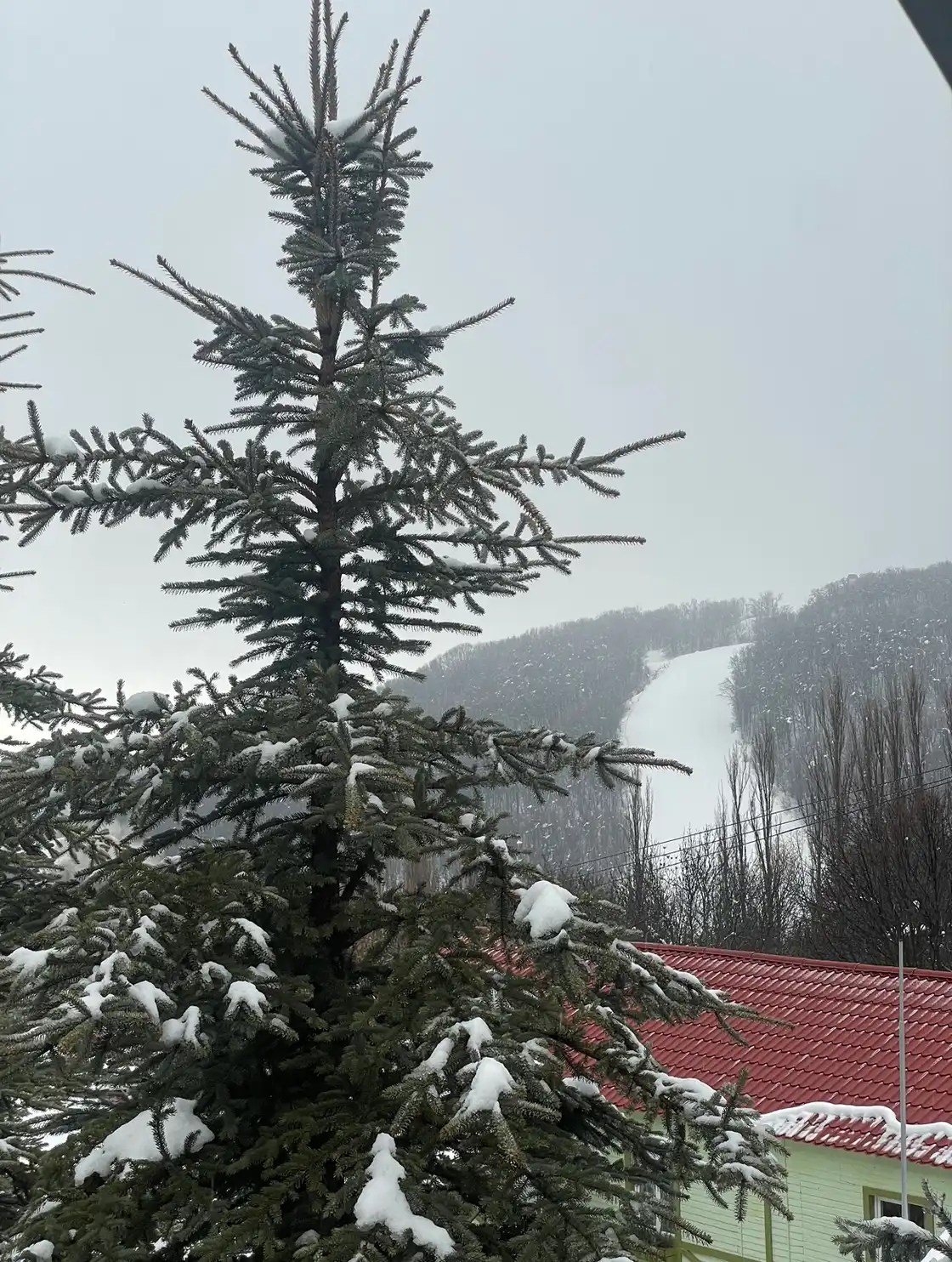
Snow brings two more lines. Essential doesn’t pay for search and rescue at all, and even the Complete plan covers it only “at a recognized ski resort or similar winter sports resort”, never in the backcountry. Keep to the marked runs at Tsaghkadzor and you’re inside the base plan. Go off-piste and neither Essential nor the add-on covers you. The adrenaline list is kinder than people expect: the zipline and via ferrata at Yell Extreme Park in Yenokavan fall under Essential’s covered activities, while tandem paragliding over Aparan or Lake Sevan needs the add-on. Quad-bike rides are the hard no, excluded even with it.
Driving: the rental car and the roads to avoid
Travel insurance and car insurance are separate products. Damage to a rental car falls under the rental company’s collision damage waiver and its excess, not your travel policy. What a travel policy covers is your own treatment if you’re hurt, and on SafetyWing only if you’re properly licensed, wearing all the safety equipment and not intoxicated. Each passenger needs their own policy, and SafetyWing excludes personal liability for operating any vehicle, so damage or injury you cause to others at the wheel isn’t covered either. It also tells drivers to check with local authorities that their licence is accepted in the country. Our guide to driving in Armenia explains the waiver, the excess and the roads before you sign anything at the counter.
The UK Foreign Office warns that travel insurance could be invalidated if you travel against its advice, and it advises against all travel within 5 km of Armenia’s entire eastern border and along the M16/H26 road between Ijevan and Noyemberyan in Tavush. If your insurer ties its cover to that advice, an accident inside that band may not be paid at all. So check your route before any drive near the eastern border: the Ijevan-Noyemberyan road in Tavush, and in the south the stretch past Goris and Kapan, where the FCDO’s own map runs the 5 km band right beside the towns. Our guide to whether Armenia is safe maps where the UK, US, Canadian and Australian warnings overlap.
EAEU passports don’t change the picture
Armenia shares the Eurasian Economic Union with Russia, Belarus, Kazakhstan and Kyrgyzstan, and the bloc’s health guarantee is written for workers, not tourists. Article 98 and Annex 30 of the treaty give emergency and urgent care on local terms only to citizens legally employed in another member state and to their resident families. A holidaymaker from any of the four pays the same bills as everyone else and needs the same policy. We checked the treaty on 16 July 2026 and the Eurasian Economic Commission’s FAQ on 23 September 2026.
Before you fly
- Buy for the trip you’re really taking. A city-and-monasteries week needs medical and evacuation cover; add the adventure pack only if paragliding, mountaineering or a motorbike is on the plan, and remember it comes only with the subscription (four weeks minimum).
- Declare anything pre-existing. The UK government’s advice is to declare pre-existing conditions so the policy stays valid, and SafetyWing says outright that its Essential plan doesn’t cover them.
- Save the numbers offline: 112 for the police and rescue (911 still redirects there), 103 for an ambulance, your insurer’s 24/7 line and your policy number. Ask for an English speaker when you call.
- Ring the insurer early. If you’re referred to a hospital, the UK government’s advice is to tell your insurer quickly, and SafetyWing wants an evacuation approved and arranged in advance.
- Keep every receipt and some cash. You pay first and claim later, and many providers take only cash.
- Keep data on. Claims, photos of receipts and the assistance line all run through your phone, so a working SIM or eSIM matters more on a trail or at a regional hospital than it does in a hotel lobby.
Staying for months rather than weeks? Our guide to healthcare in Armenia for expats explains the payroll health insurance that started in January 2026 and who it catches, and our getting around Armenia guide covers the buses, taxis and roads between all these places.
Photos
Read also

What to see · 10 min read
Soviet Modernist Yerevan: An Architecture Walk
Verified · September 5, 2026Walk Yerevan's Soviet modernism: Rossiya Cinema, Komitas Hall, Cascade, Hrazdan Stadium and Demirchyan Complex - dates, route order, and what still stands.

Food · 8 min read
Where to Eat in Dilijan: Best Restaurants
Verified · September 4, 2026Where to eat in Dilijan: Haykanoush on Sharambeyan, Hovk and Old Winery on Myasnikyan, Flying Ostrich, plus resort dining with real menu prices.

What to see · 9 min read
Kond: Walking Yerevan's Oldest Neighborhood
Verified · September 3, 2026Walk Kond, Yerevan's oldest living quarter: Surp Hovhannes, Tepebashi mosque walls, Leo Street alleys, and how to visit without treating it like a set.

Entertainment · 10 min read
Paragliding in Armenia: Where to Fly Tandem
Verified · September 3, 2026Tandem paragliding in Armenia: Sky Club, AERO CLUB and Armenian Geographic prices (30,000-85,000 AMD), launch sites, season and how to book.