Sevanavank Monastery: History and How to Visit
How to visit Sevanavank, the 9th-century monastery on the Lake Sevan peninsula: the two dark-stone churches, the climb, its history and getting there.
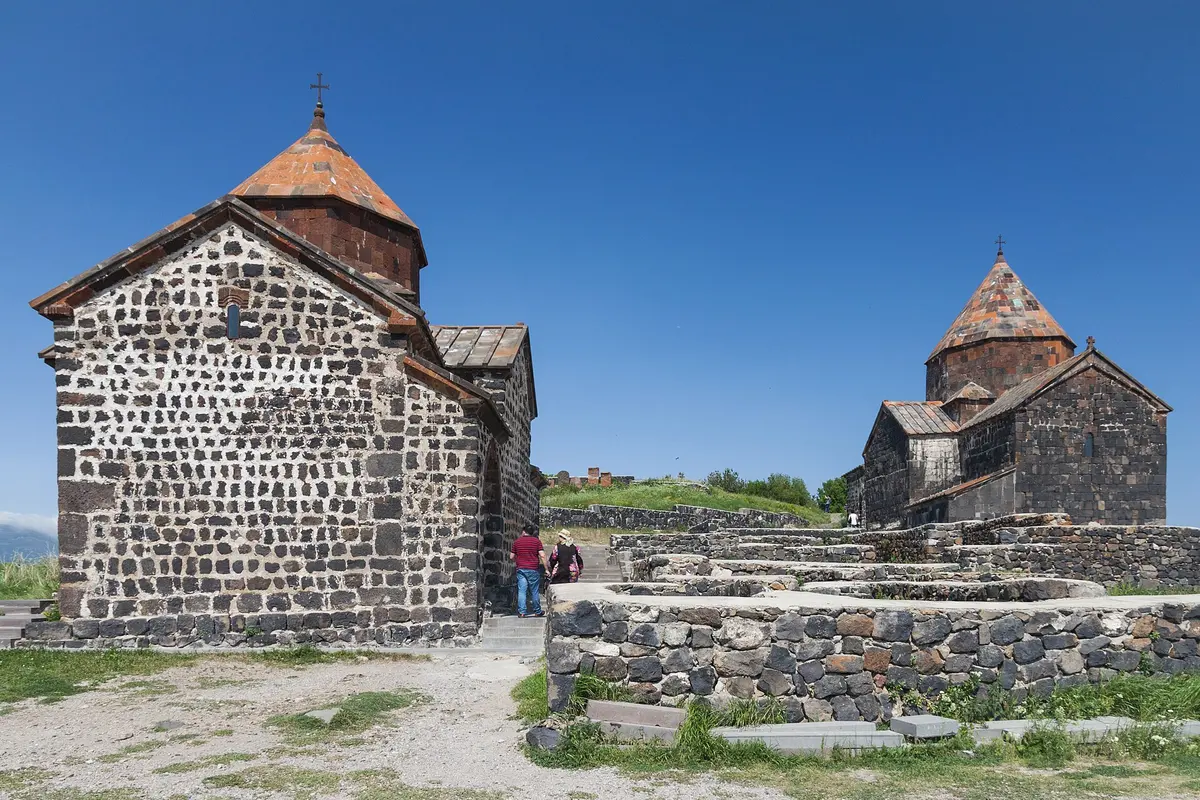
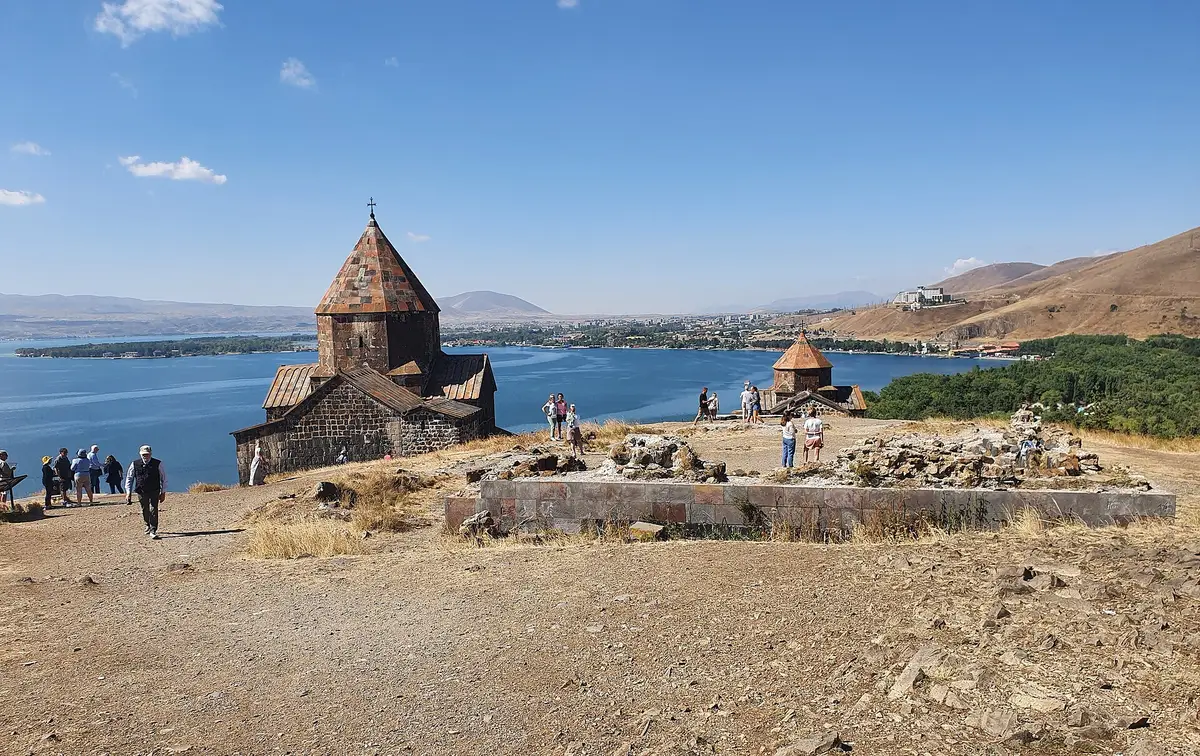
Sevanavank is the monastery you have seen on every Armenia poster: two squat, dark-stone churches on a green hilltop, with the vast blue of Lake Sevan spread out behind and below. It stands on a peninsula at the northwest corner of the lake, about 65 km and an hour from Yerevan, and it’s one of the easiest and most rewarding half-days you can make from the capital. There’s a short, stiff climb up a flight of steps to reach it, the churches themselves are small and plain inside, and the real payoff is the view from the top. This guide covers what the two churches are, the founding story, how the island became a peninsula, and how to visit without fighting the crowds.
A monastery founded by a princess
The date is unusually precise for a place this old: Sevanavank was founded in 874 AD by Princess Mariam, the daughter of Ashot I Bagratuni, who a decade later would be crowned the first king of the restored Armenian kingdom. She endowed the monastery, and it was settled by monks sent up from Etchmiadzin, the mother church out on the plain. This wasn’t a comfortable posting. Sevanavank had a reputation as a place of strict discipline, a monastery where monks came, or were sent, for penance and a hard, ascetic life. Whether by choice or as a punishment, the men who lived here were signing up for cold winters, isolation and a spare routine on a windswept island in the middle of a high mountain lake.
From island to peninsula
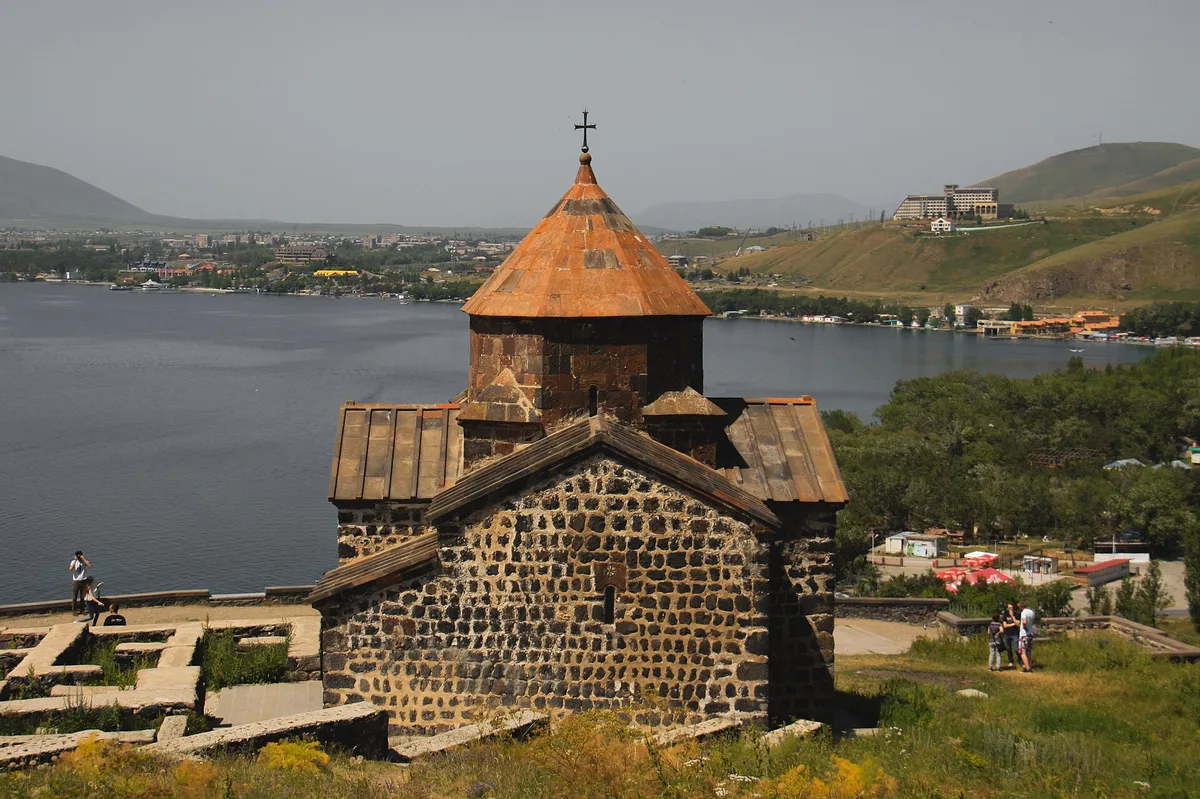
Here’s the twist that changes how you read the place. For most of its history Sevanavank wasn’t on a peninsula at all but on a small island, cut off from the shore, which is exactly what made it such a secure and solitary retreat. What connected it to land wasn’t nature but Soviet engineering. Starting in the 1930s, the authorities drained huge volumes of water from Lake Sevan for irrigation and hydropower, and the level of the whole lake dropped by around 20 metres. As the water fell, the strait between the island and the shore dried out, and the island became the peninsula you now simply walk onto. So the postcard hill you climb was, within the last century, an island you would have had to row to. Knowing that, the isolation the founding monks came for suddenly makes sense.
The island that saved a king
That island setting was not just spiritual, it was once literally life-saving. In 921 AD, half a century after the monastery was founded, King Ashot II Yerkat (“the Iron”) was cornered here by a far larger Arab army under the general Beshir, who besieged the king and expected an easy surrender. Ashot instead took cover on the island of Sevan and turned its water defences to his advantage: according to the chronicles he loaded around 70 of his best archers into boats, seven to a boat, and rowed out at the enemy massed carelessly on the shore, loosing a barrage that broke them and sent the Arab army into flight. The Battle of Sevan became a turning point in a years-long war and let Ashot go on to clear the invaders out of central and northern Armenia. When you stand on the hilltop and look down at the water on every side, it’s easy to see why a besieged king would have backed himself here.
The two churches, and a door in New York
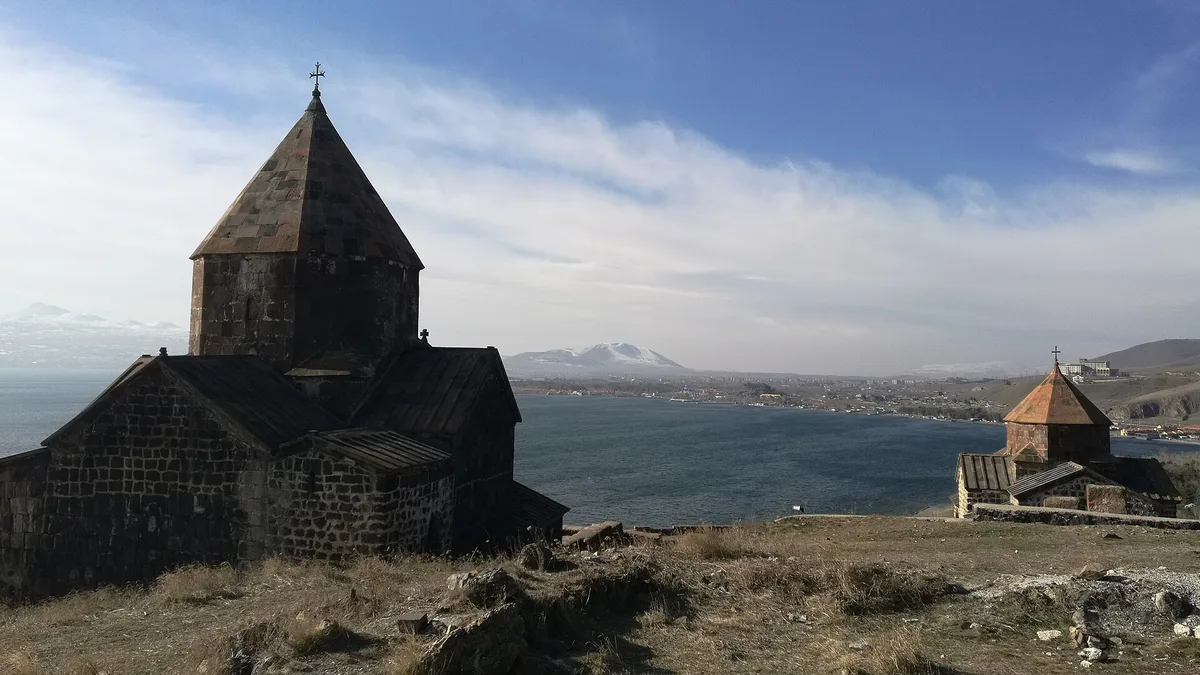
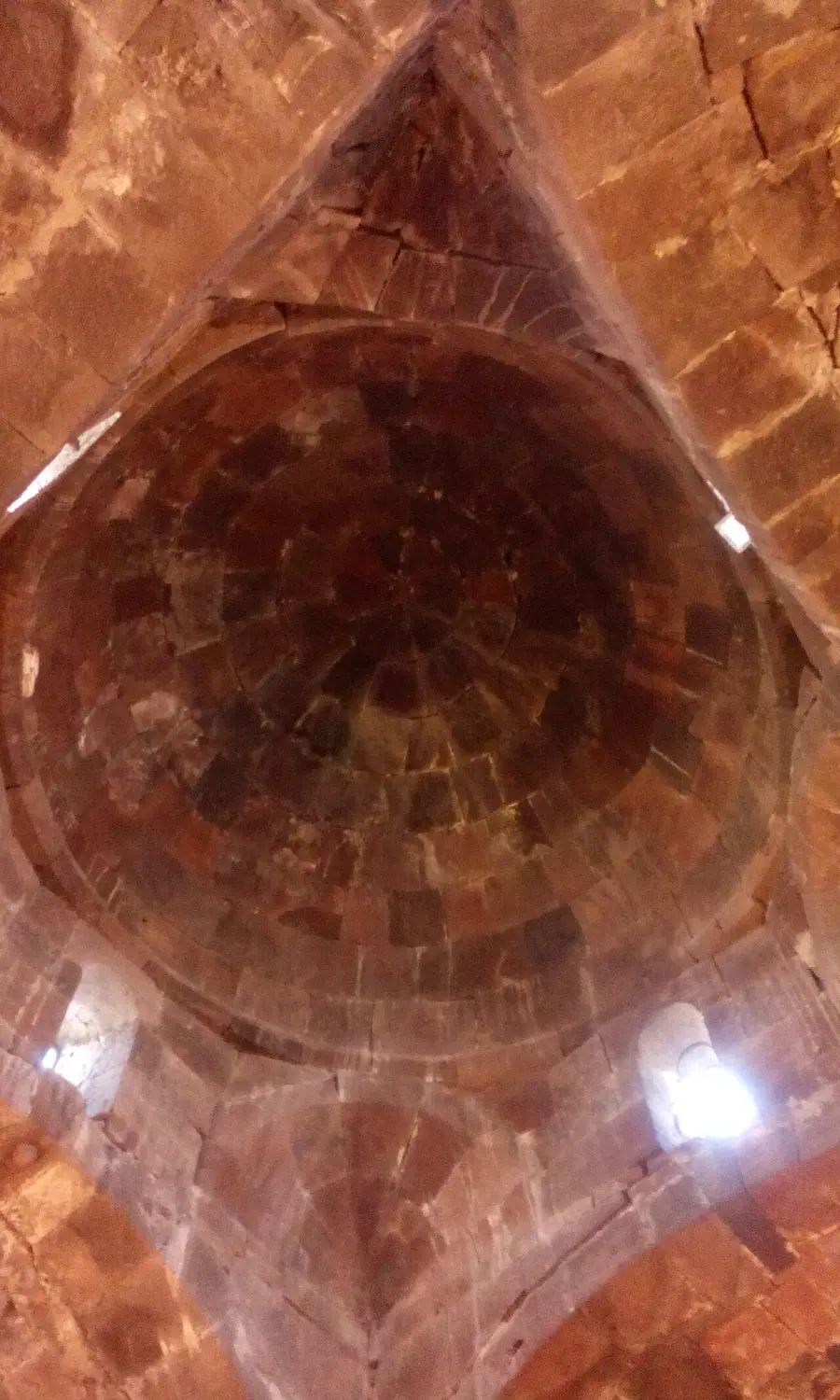
Sevanavank originally had three churches; two survive, and they sit side by side near the top of the hill. Both are small, cruciform in plan, and built of a dark grey-brown tuff that gives the place its severe, almost forbidding look, each capped with a conical dome on an octagonal drum. Surb Astvatsatsin, the Church of the Holy Mother of God, and Surb Arakelots, the Church of the Holy Apostles, are close cousins architecturally, and the pleasure is in how plain and solid they are: no gilding, no crowds of frescoes, just carved stone, a dim interior and a couple of altars. Beside them lie the excavated footings of the monastery’s gavit, the pillared narthex that once stood here; some of its carved timber and stonework ended up in the History Museum in Yerevan.
The single most travelled object from Sevanavank isn’t even here. The Church of the Holy Apostles once had an ornately carved walnut door, dated 1486, a masterpiece of Armenian woodwork, and it now sits in the Metropolitan Museum of Art in New York, which is worth knowing if you find yourself in front of the plain doorway wondering what the fuss is. The churches were given a restoration in 1956-1957, which is roughly the state you see them in today: weathered, austere and genuinely old.
The khachkars and the climb
Around the churches stand a scatter of khachkars, Armenia’s carved cross-stones, and they repay a slow look. One in particular is often pointed out for showing Christ with distinctly Asiatic features, almond eyes and a broad face, usually read as a memory of the Mongol period when Armenian carvers worked under Mongol rule; whatever the explanation, it’s a striking and unusual piece, and a reminder that these stones are individual works, not stamped out to a template. Between the two churches and the khachkars, and the seminary still active on the peninsula, Sevanavank is a living monastic site rather than a pure ruin: the Vazgenian Theological Seminary trains students here on the northern shore of the peninsula, so you may see seminarians about. Both churches still hold occasional services and you can light a candle inside, so keep your voice down and your shoulders covered if you arrive while one is on.
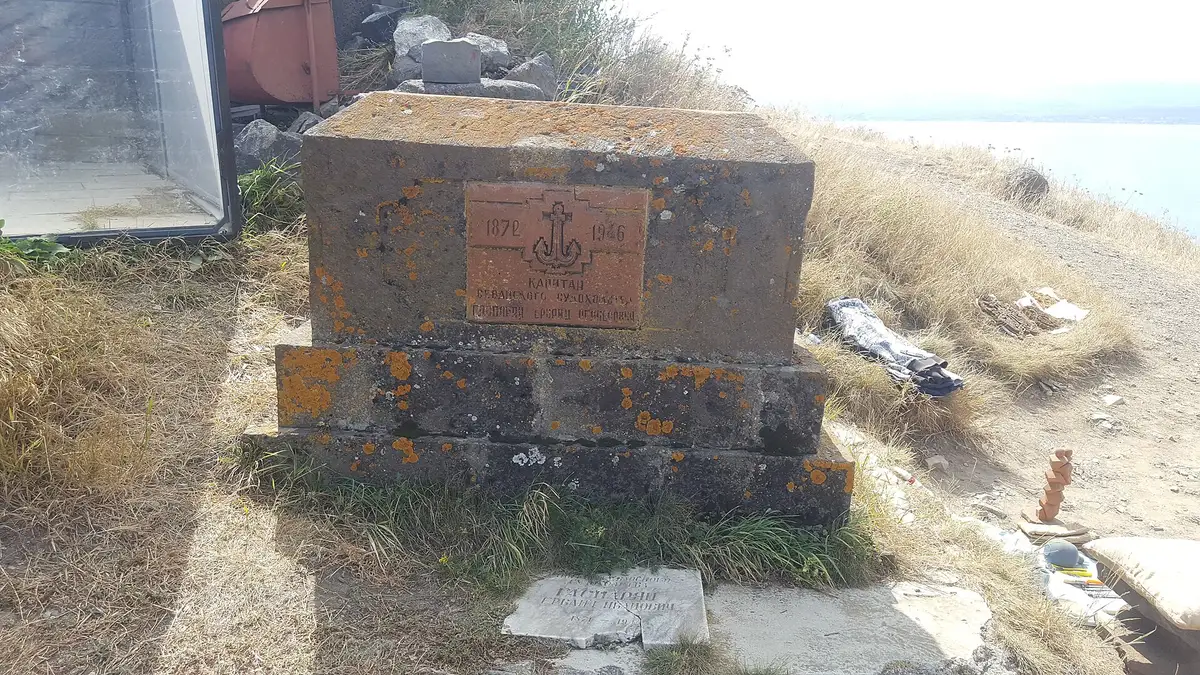
The one bit of effort is the staircase. From the car park and the row of souvenir and craft stalls at the bottom, a stone stairway of a bit over 200 steps (counts vary, most put it around 230) climbs straight up the hill to the churches. It’s short but steep, and at nearly 1,900 m of altitude you’ll feel it in your legs and lungs, so take it slowly; allow fifteen to twenty minutes up if you’re stopping for photos, which you will, because the lake opens up wider with every landing. Vendors sell paintings and handmade jewellery along the way. There’s no charge to climb or to enter the churches.
How to visit, and when
Sevanavank is one of the simplest trips out of Yerevan, about 65 km northeast on the good M4 highway, an hour by car. You have the usual options:
- A rental car is the most flexible, because Sevanavank pairs naturally with the drive on to Dilijan over the wooded pass, and lets you stop at the lakeshore on your own schedule.
- A taxi or private transfer for the round trip is easy to arrange and worth it if there are a few of you to split it.
- A marshrutka (shared minibus) toward Sevan or Dilijan from Yerevan’s Northern bus station will drop you near the peninsula turn-off, from where it’s a short walk or taxi to the base of the steps; confirm times at the station.
- An organised tour almost always bundles Sevanavank with Dilijan, and sometimes Goshavank and Haghartsin, as a single day out.
While you’re on the peninsula, look beyond the churches. Down at its base, below the monastery hill, stands the Sevan Writers’ Rest House, a striking piece of Armenian modernism from the Soviet decades, its cantilevered lounge jutting out toward the water; architecture travellers make a point of seeing it, and it’s a total contrast to the ninth-century churches above. The lower slopes and the shore at the foot of the peninsula are where the beach crowds gather in July and August, so the same headland gives you medieval monastery, mid-century modernism and a lakeside all within a short walk. It’s a lot of Armenia stacked onto one small tongue of land.
The one piece of timing advice that matters: come early. By late morning in summer the car park fills with tour buses and the narrow staircase becomes a slow procession, and the monastery, which is at its best when it feels remote and windswept, loses some of that on a crowded afternoon. Arrive soon after it opens and you can have the top nearly to yourself, with the light still low over the water. The lake sits high and cold, so even in summer there is a breeze up here; bring a layer.
For everything else the lake offers, from swimming and the famous ishkhan trout to the beaches and the road up to Dilijan, see our full guide to Lake Sevan, which treats the monastery as one stop on a bigger day. Sevanavank also sits among the country’s great religious sites in our roundup of the best monasteries in Armenia and on our map of the monasteries and UNESCO sites by region. If you’re still shaping the trip, the leg-by-leg Yerevan to Lake Sevan guide covers the transport, and it appears among the best day trips from Yerevan. Given how close it’s and how little effort it takes for how much it delivers, Sevanavank earns its place on almost every Armenia itinerary.
Photos
On the map
The map loads on click - to keep the page lightweight.
The map didn’t load. Check your connection and refresh the page.
Distance ≈65 km · about 1 hour by road
- Yerevan ≈65 km · about 1 hour by road Marshrutkas toward Sevan or Dilijan from the Northern (Hyusisayin) bus station drop you near the peninsula turn-off; a taxi or rental car is simpler. Confirm departures locally.
Read also

What to see · 10 min read
Soviet Modernist Yerevan: An Architecture Walk
Verified · September 5, 2026Walk Yerevan's Soviet modernism: Rossiya Cinema, Komitas Hall, Cascade, Hrazdan Stadium and Demirchyan Complex - dates, route order, and what still stands.

What to see · 9 min read
Kond: Walking Yerevan's Oldest Neighborhood
Verified · September 3, 2026Walk Kond, Yerevan's oldest living quarter: Surp Hovhannes, Tepebashi mosque walls, Leo Street alleys, and how to visit without treating it like a set.
What to see · 8 min read
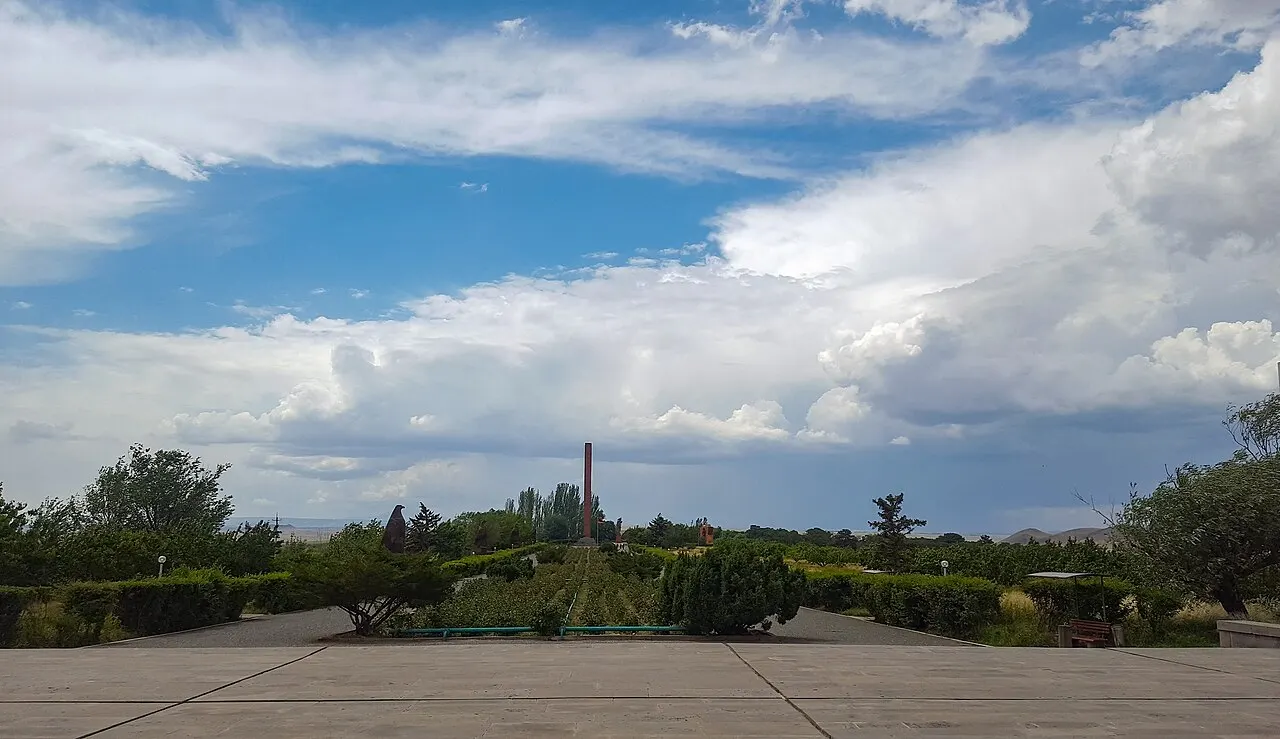
Sardarapat Memorial: Armenia's 1918 Battle Site
Verified · August 31, 2026Sardarapat Memorial near Armavir: 1918 battle site, Israelyan's red-tufa complex, ethnography museum tickets, hours and how to reach it from Yerevan.
What to see · 12 min read
Goshavank Monastery & the Village of Gosh
Verified · August 29, 2026Visiting Goshavank: Mkhitar Gosh's law code that reached Poland, the 1291 embroidered khachkar, his statue and hillside tomb, and the drive from Dilijan.