Where to See Mount Ararat: Best Viewpoints in Armenia
Where to see Mount Ararat in Armenia: the best viewpoints at Khor Virap, the Yerevan Cascade and Charents Arch, and when the mountain actually shows.
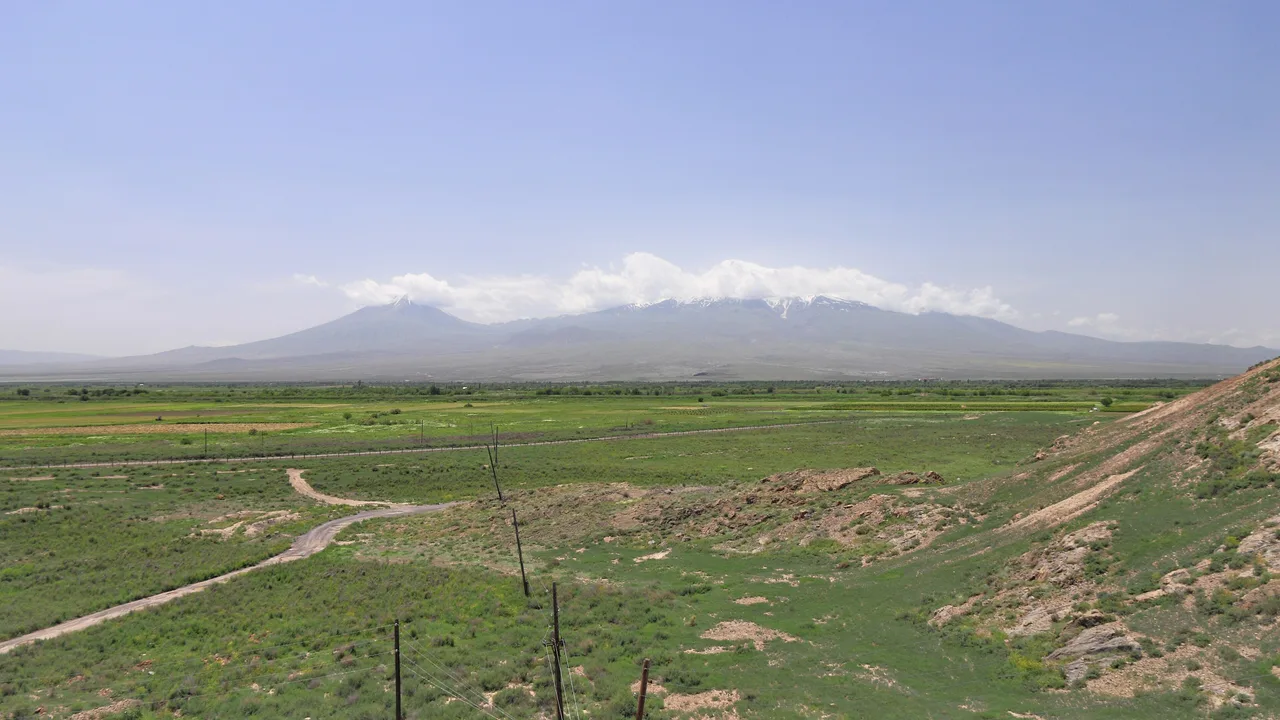
The best place to see Mount Ararat in Armenia is Khor Virap, the monastery on the plain about 40 km south of Yerevan, where the mountain rises straight out of the horizon with nothing in front of it. After that come the terraces of the Yerevan Cascade for the classic city-and-mountain shot, and the Arch of Charents on the Garni road, which frames the peak like a painting. The twist every first-timer has to swallow: Ararat is the symbol on Armenia’s coat of arms, but it sits inside Turkey, behind a border that has been shut since 1993, so you come to look at it, not to climb it. This guide covers where to stand, and the harder half of the problem - when the mountain will actually show up.
The catch: Ararat is Armenian in spirit, Turkish on the map
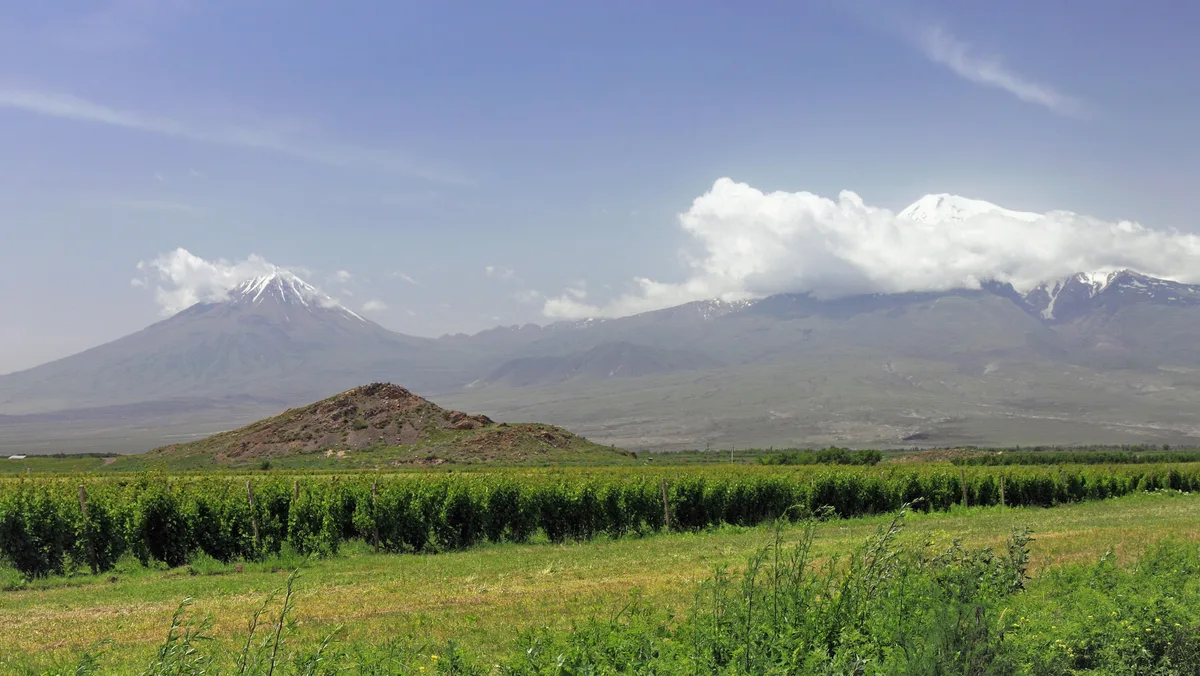
Start with the thing that confuses everyone. Mount Ararat - two peaks, Greater Ararat at 5,137 m and Lesser Ararat at 3,896 m - is the national mountain of Armenia. It’s on the coat of arms, on brandy labels, on the wall of half the restaurants in Yerevan. And it has stood on the Turkish side of the border since the frontier was redrawn after the First World War. The Armenia-Turkey border below it has been closed since 1993, so from Armenia you’re always looking across a sealed line at a mountain you can’t set foot on. Despite the on-off Armenia-Turkey talks through 2025 and 2026, that border is still shut, with no crossing point anywhere near the mountain (checked July 2026) - the view-only reality has not budged.
That’s worth knowing before you go looking for a trailhead, because there isn’t one. Climbs of Ararat are organised from the Turkish town of Doğubayazıt, not from Armenia. On the Armenian side the mountain is purely a view - which, given how enormous it’s and how flat the plain in front of it, turns out to be more than enough. On a clear day it fills the whole southern sky.
Masis, Noah and the flag on the horizon
To understand why a mountain in another country matters this much, you have to know what Ararat means here. Armenians call it Masis, and it has been the national mountain since long before there were borders to argue over. It sits at the centre of the coat of arms adopted at independence, it lends its name to brandy and children and football clubs, and it’s woven into the founding stories of the whole region. In the Book of Genesis, Noah’s Ark comes to rest “on the mountains of Ararat” after the flood, and Armenian tradition puts that landing right here - which is why you’ll see the Ark turning up in carvings and paintings across the country. None of that changes the fact that the summit lies in Turkey. But it explains the particular ache in the way people look at it: a mountain that is theirs in every way except the one that would let you climb it.
Khor Virap: the postcard, and the best view there is
If you see Ararat from one place, make it Khor Virap. The seventeenth-century monastery sits on a low hill on the Ararat plain, roughly 40 km and an hour south of Yerevan, and it’s barely 100 m from the closed Turkish border - which is exactly why the view is unbeatable. There are no foothills, no town, no clutter between you and the mountain: the plain runs dead flat to the wire, and the whole 5,137 m of Ararat lifts straight up behind the monastery walls. Foreground and background line up into the single most photographed scene in the country.
Come early. The mountain is a morning creature here, sharpest before the day heats up and the haze rises off the plain, and the tour coaches tend to roll in mid-morning. Get there for the first light and you often have both a clean Ararat and an empty hilltop. Even on a grey day the monastery earns the trip on its own - this is where Gregory the Illuminator was held in a pit for thirteen years before converting the king and, with him, the country, in 301 AD. Our full Khor Virap guide covers the pit you can climb into, the dress code and how to read the weather; here it is enough to say that no other spot puts you this close to the mountain.
Getting to Khor Virap without a car is the usual weak point - there’s no direct bus, and the marshrutkas drop you out on the highway with a long walk in. Most people take an organised tour (Khor Virap is nearly always paired with the wine country and Noravank to the south), a private transfer for a fixed early slot, or a rental car to chase the light on their own schedule.
The Yerevan viewpoints: Cascade, Victory Park, Tsitsernakaberd
You don’t have to leave the capital to see Ararat, and on a clear morning you barely have to look for it. Ask any local for the best city view and you will hear one answer over and over: the Cascade. Climb the giant limestone stairway - by the outdoor steps or the escalators tucked inside - and from the upper terraces the mountain floats above the rooftops, framed by the city it presides over. Dawn and the hour before sunset are the money shots, when the light is soft and the peak glows.
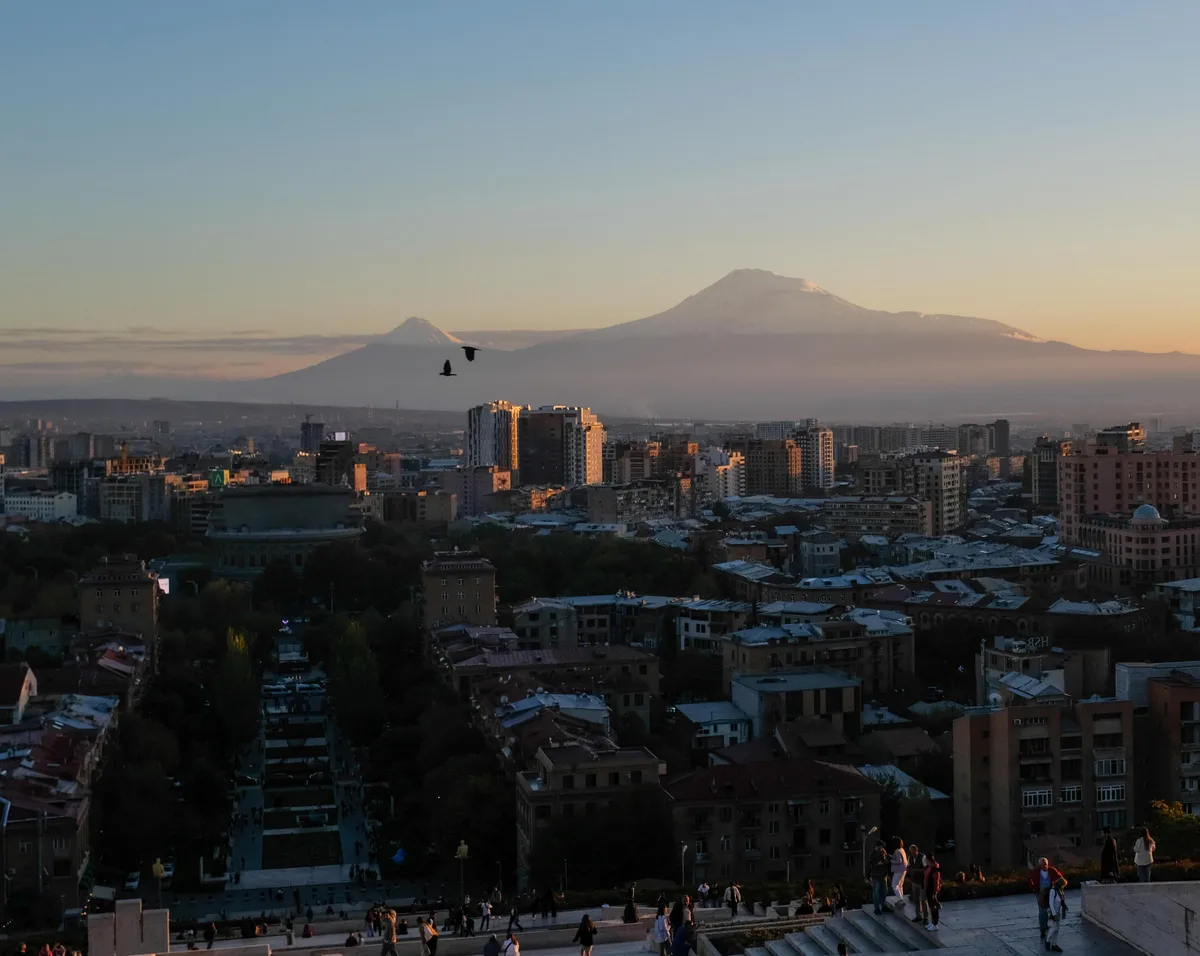
Two more city vantage points are worth the short walk. Victory Park, up above the Cascade around the towering Mother Armenia statue, gives you a higher and quieter panorama, and the Ferris wheel there lifts the view another notch. Over on the western hill, the Tsitsernakaberd genocide memorial complex looks out across the city toward the mountain from a solemn, wide-open terrace - a heavy place, but one of the great long views in Yerevan. All three are free, all three face the same way, and all three are best in the morning. For where they sit among everything else in the capital, see our guide to things to do in Yerevan.
Charents Arch: the framed view on the Garni road
The most deliberate view of Ararat is not in the city at all but on the road east, about ten minutes before Garni. The Arch of Charents (Charentsi Kamar) is a basalt archway built in 1957 and set on a bluff so that, when the air is clear, Ararat sits perfectly inside the stone opening. It’s named for the poet Yeghishe Charents, whose lines in praise of the mountain are carved into it, and it was designed as exactly this: a frame for the peak. Tour buses stop here on the way to Garni and Geghard, so it can get busy, but the shot is genuinely worth the pause.
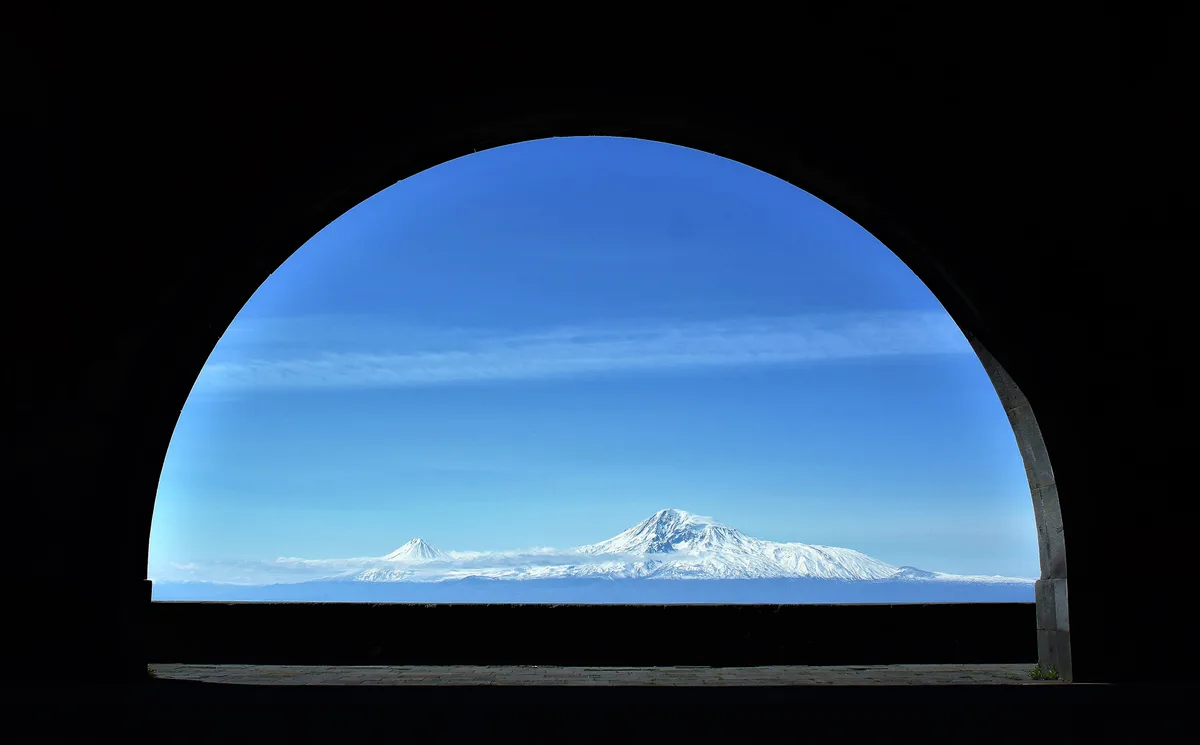
Because it is on the way to two of the country’s headline sights, the arch slots into a day trip for free. Pair it with the first-century temple and the rock-cut monastery in our Garni and Geghard guide, and you get the framed Ararat view thrown in with the morning.
When Ararat actually shows itself
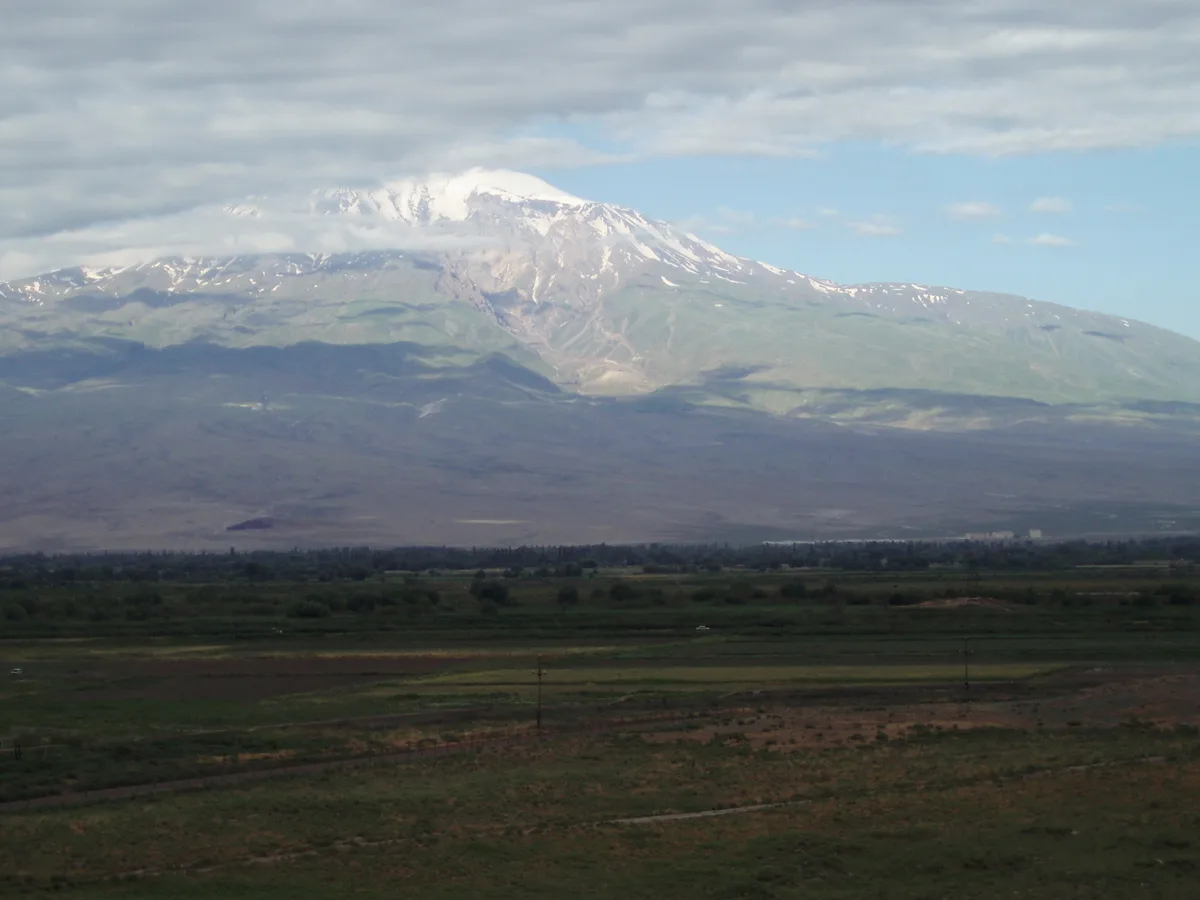
Here’s the honest part, and the one that decides your trip more than any viewpoint: the mountain is shy. Ararat spends a great deal of the year wrapped in cloud, and in high summer a milky haze settles over the plain that can hide it for days on end - locals will tell you they can go a week or two in July and August without a clean sighting. You can stand at Khor Virap on a hot afternoon and see nothing but a pale smudge where the mountain should be.
A couple of practical notes for the photograph itself. Ararat is far bigger than it is close - even from Khor Virap the summit is roughly 30 km away - so a telephoto lens compresses the scene and makes the mountain loom the way your eye remembers it, while a phone camera tends to shrink it to a distant bump on the horizon. And if the Ararat plain is socked in but the sky above is clear, the high slopes of Mount Aragats to the northwest give you the peak from another angle, across the valley - a decent plan B on a hazy day.
To load the dice in your favour, follow the rule every Armenian photographer lives by. Go early in the morning, before the heat builds the haze. Aim for spring or autumn rather than midsummer - May and September give the crispest air and the best odds, and a fresh snow-line makes Ararat look its most theatrical. And keep your plans loose: if you wake to a clear sky, that’s the morning to drop everything and drive to Khor Virap. Our guide to the best time to visit Armenia weighs the seasons month by month, and the same clear-air logic that gives you Ararat gives you the rest of the country at its sharpest. If the mountain stays hidden the whole trip, don’t take it personally - you’re in good company, and the monasteries and the wine are worth the drive regardless.
However you plan it, the smart move is to keep the far-southern day - Khor Virap plus the wine country - flexible enough to grab the first clear morning, and to bank the Cascade and Charents Arch as easy backups you can catch any bright day from the capital. Do that, and you give yourself three or four separate shots at the one view everyone comes to Armenia hoping for. For more ways to build the day around it, browse our best day trips from Yerevan and the full attractions section.
Photos
On the map
The map loads on click - to keep the page lightweight.
The map didn’t load. Check your connection and refresh the page.
Read also

What to see · 10 min read
Soviet Modernist Yerevan: An Architecture Walk
Verified · September 5, 2026Walk Yerevan's Soviet modernism: Rossiya Cinema, Komitas Hall, Cascade, Hrazdan Stadium and Demirchyan Complex - dates, route order, and what still stands.

What to see · 9 min read
Kond: Walking Yerevan's Oldest Neighborhood
Verified · September 3, 2026Walk Kond, Yerevan's oldest living quarter: Surp Hovhannes, Tepebashi mosque walls, Leo Street alleys, and how to visit without treating it like a set.
What to see · 8 min read
Sardarapat Memorial: Armenia's 1918 Battle Site
Verified · August 31, 2026Sardarapat Memorial near Armavir: 1918 battle site, Israelyan's red-tufa complex, ethnography museum tickets, hours and how to reach it from Yerevan.
What to see · 12 min read
Goshavank Monastery & the Village of Gosh
Verified · August 29, 2026Visiting Goshavank: Mkhitar Gosh's law code that reached Poland, the 1291 embroidered khachkar, his statue and hillside tomb, and the drive from Dilijan.