
Areni-1 Cave: The World's Oldest Winery
Inside Areni-1, the cave near Areni that gave up the oldest known winery, the oldest leather shoe and a Copper Age brain - what was found and how to visit.
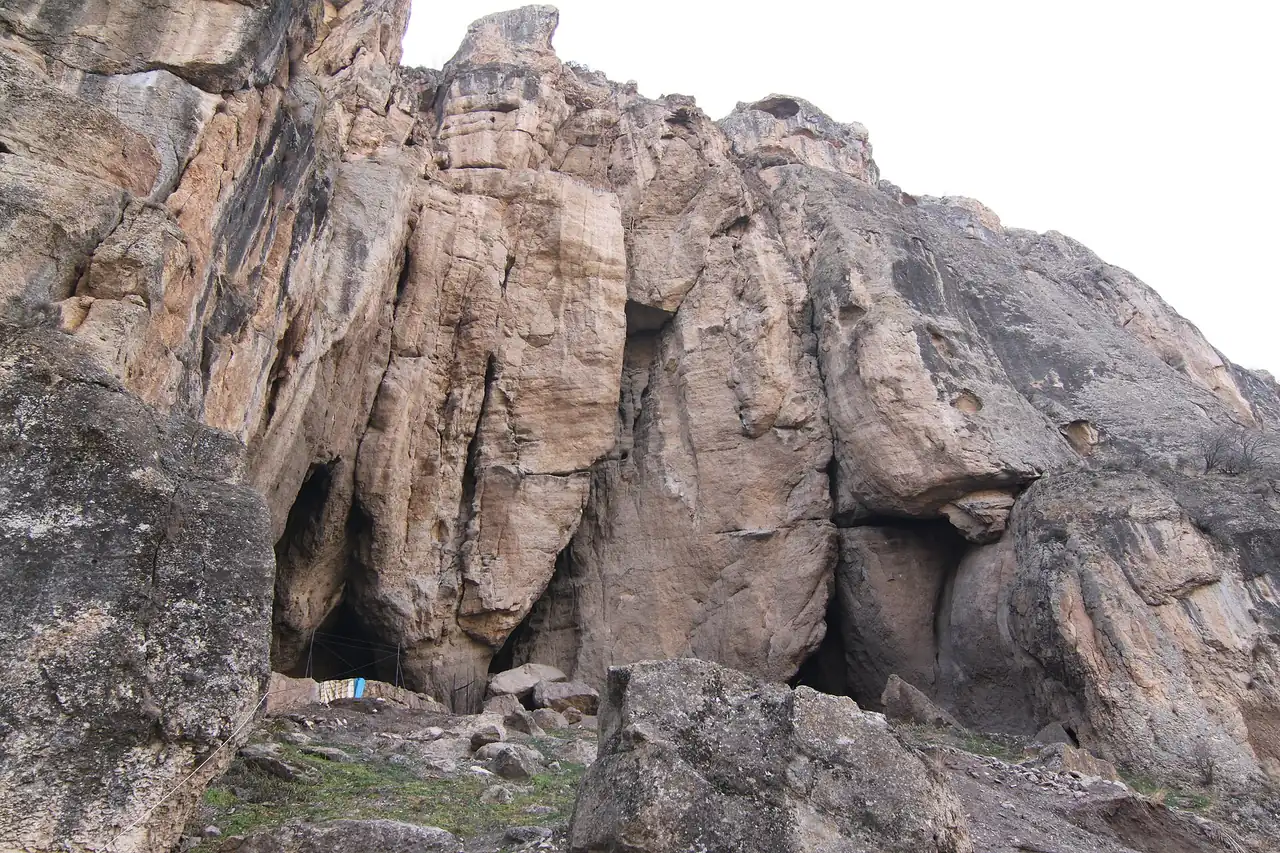
One small cave near the village of Areni, in the wine country of southern Armenia, has given archaeology three of its biggest headlines: the oldest known winery on earth, the oldest known leather shoe, and one of the oldest preserved human brains. All of it came out of a single unremarkable hole in the rock beside the road, excavated between 2007 and 2010. The real surprise isn’t the finds themselves but that one ordinary cave held on to them at all, when almost everywhere else would have lost them - and whether that’s enough reason to pull over today.
Birds’ Cave, above the Arpa
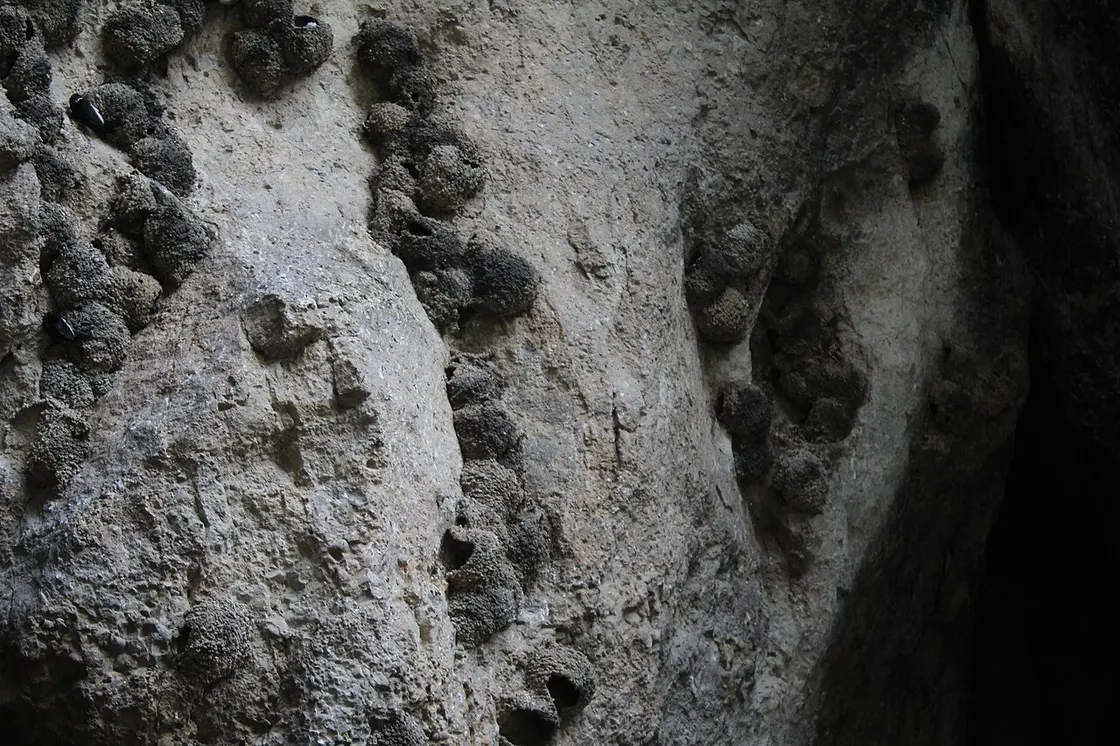
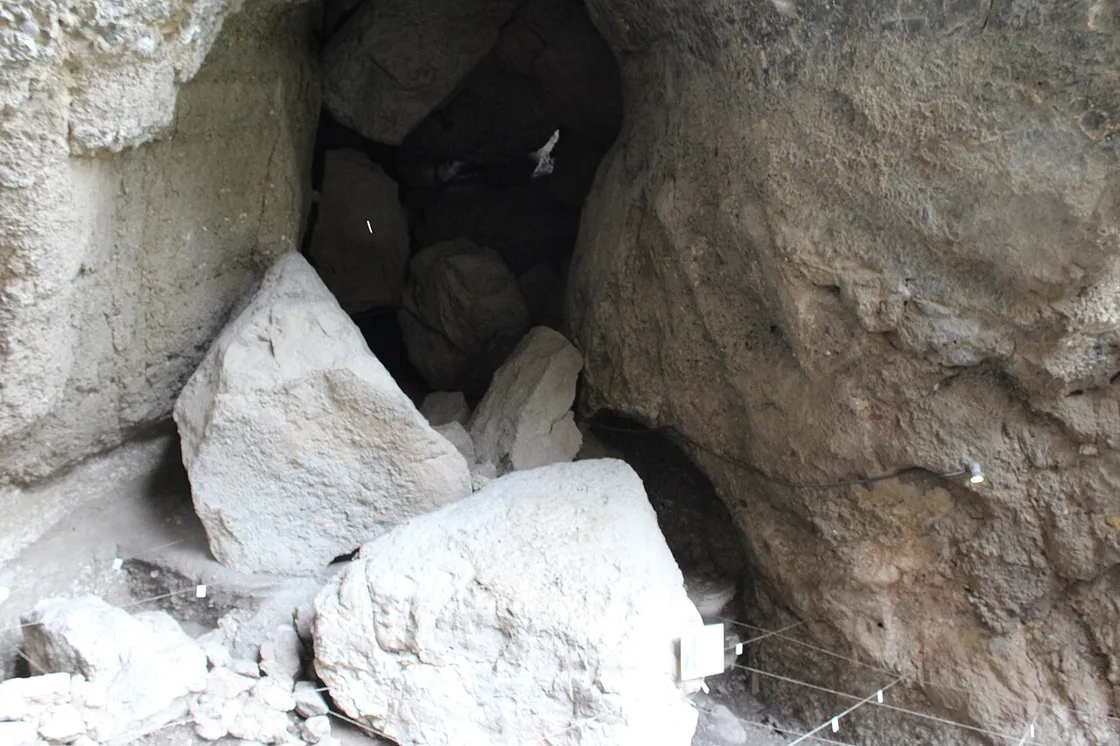
Areni-1 is a modest three-chamber cave, only about 40 m deep, set in the cliffs above the Arpa River on the edge of Areni village in Vayots Dzor. Locals know it as the Birds’ Cave, and the name is literal: the rock walls near the mouth are crusted with the mud nests of swallows, which still wheel in and out of the entrance. You would drive straight past it - it is not a show cave with lighting and handrails, just a dark opening in a pale limestone cliff a few minutes off the M2.
What that plain opening hides is a deep, undisturbed floor of Copper Age deposits. The layers here belong to the Late Chalcolithic, roughly 4300 to 3500 BC, and because the cave was later partly sealed by rockfall and settled dung, those layers sat untouched for six thousand years until archaeologists cut into them.
The dig that kept breaking records
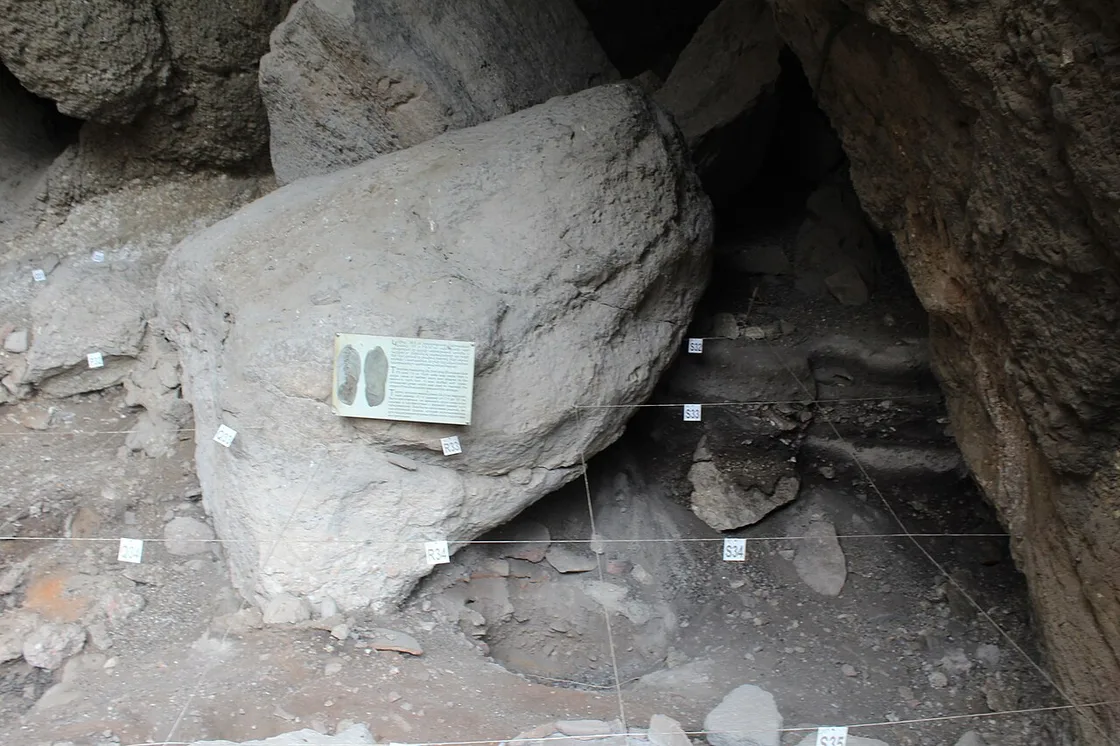
The excavation ran from 2007 to 2010 under a joint team: Boris Gasparyan of Armenia’s Institute of Archaeology and Ethnography, with Ron Pinhasi of University College Cork and Gregory Areshian of UCLA co-directing, and specialists from Armenia, Ireland and the United States. What makes the site so unusual isn’t one spectacular object but the run of them, each pushing back a date the textbooks thought was settled. Stand on the numbered survey grid today and you’re looking at the spot where several “world’s oldest” labels were earned in the space of a few seasons.
The oldest winery in the world
The find that made Areni famous is a wine-making setup dated to roughly 4100-4000 BC, about 6,100 years old, and confirmed by radiocarbon labs at UC Irvine and Oxford. It is complete enough to read like a working cellar: a shallow clay basin about a metre across where grapes were trodden, a 60-cm-deep vat below it to catch and ferment the juice, tall karas storage jars, plus grape seeds, pressed skins and desiccated vines. The clincher was chemical - the basin was stained with malvidin, the pigment that gives red wine its colour - and the grape pips were domesticated Vitis vinifera, the same species behind almost all wine made today. It beats the previous record-holder, a site in the West Bank, by more than a thousand years.
The archaeology is the point here; for the living side of Areni - the native Areni Noir grape, the cellars you can taste in, and the October wine festival - see our guide to Areni’s wine country and the dedicated Areni Wine Festival page for the harvest weekend itself. What matters at the cave is the leap it represents: six thousand years ago, people on this spot weren’t just eating grapes but pressing, fermenting and storing wine at something like production scale.
The oldest shoe, and a straw skirt
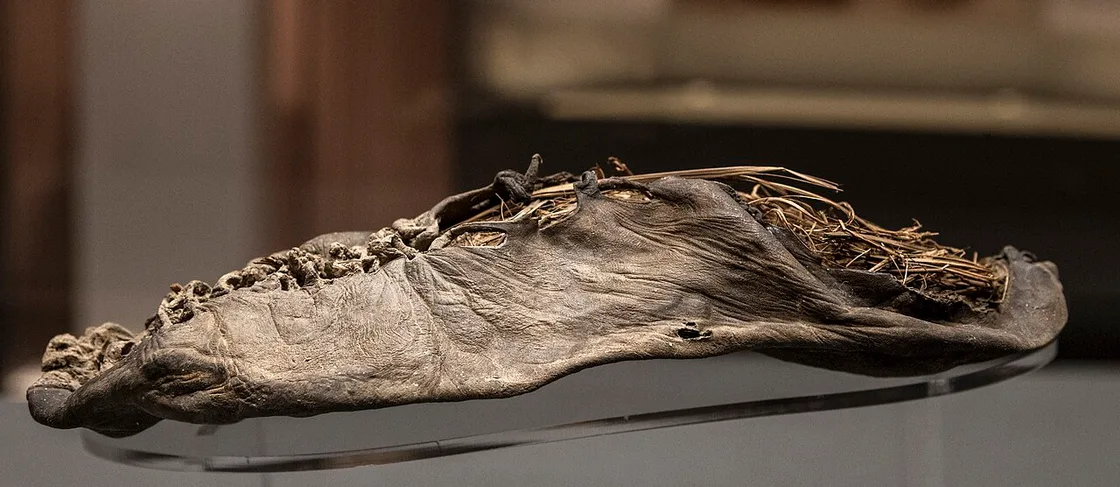
A year earlier, in 2008, the graduate student Diana Zardaryan lifted out an object that got almost as much attention: a leather shoe, about 5,500 years old (around 3600-3500 BC), and the oldest complete leather footwear ever found. It is startlingly familiar - a single piece of cowhide, cut and stitched to the shape of a right foot, laced up the front and packed with dried grass, either as insulation or to hold its shape. It’s a European size 37, a small adult’s, and it survived because it had been tucked into a pit and sealed under a layer of sheep dung. Today you can see it under glass at the History Museum of Armenia in Yerevan.
The shoe has a lesser-known companion. The same layers gave up a fragment of a straw-woven skirt dated to around 3900 BC, among the oldest pieces of clothing known anywhere. Between the shoe and the skirt, Areni-1 has done something very few sites can: shown us not just the pots and walls of Copper Age people but what they actually wore.
Put the finds side by side and the people behind them sharpen into focus. Six thousand years ago the community using this cave was not scraping by: they were pressing and storing wine at a real scale, tanning and stitching leather to fit a single foot, weaving cloth, and burying their dead with evident care. That is a settled, skilled society with time for craft and ceremony, not a band of survivors, and it is why archaeologists point to this corner of Armenia as one of the cradles of winemaking and of a good deal of everyday life we tend to assume came much later.
The darker find: burials and a brain
Areni-1 wasn’t only a workshop. In one chamber the team found three ceramic vessels, each holding the skull of a girl aged somewhere between about eleven and sixteen, arranged with a deliberation that reads as ritual rather than accident. Inside one of those skulls was something almost no site preserves: soft human brain tissue, one of the oldest ever recovered, kept intact by the cave’s dry, still air. The people buried here have since been dated to roughly 5,700 to 6,250 years ago, and DNA from one of them even suggests a child with red hair and blue eyes. It’s a sobering counterweight to the wine and the shoe - a reminder that this was a place of the dead as much as a place of work.
Why one cave kept everything
The obvious question is why here, and the answer is boring in the best way: climate. Leather, grape skins, straw and brain don’t normally last centuries, let alone millennia; they rot or dry to dust. Areni-1 happens to hold a cool, stable temperature and steady low humidity all year, and crucially, key deposits were capped by fallen sheep dung that hardened over them and sealed out air and water. That combination - a dry fridge with an airtight lid - is what let organic things survive intact when everything similar elsewhere decayed. It’s the reason a single ordinary-looking cave outweighs grander ruins for what it tells us about daily life six thousand years ago.
How to visit, and what to expect
Set your expectations before you go: this is a research site, not an attraction, and the famous objects aren’t in it. The winery installation stayed in place, but the shoe, the skirt and the other showpieces are in Yerevan at the History Museum, so the cave itself is dark, bare and quietly atmospheric rather than a display. Opening is informal - there may be a caretaker, there may not - so confirm locally, bring a torch, and treat access as a maybe rather than a certainty.
The good news is that Areni-1 sits right where you would be anyway. It’s about 110 km and 1.5 hours south of Yerevan on the M2, a few minutes before the turn-off up to Noravank, the red-cliff monastery that’s the area’s headline sight, and roughly an hour past Khor Virap with its view of Mount Ararat. This whole stretch of Vayots Dzor is Armenia’s main wine region, so the road itself is lined with roadside cellars and vineyards, and the cave slots neatly between a monastery in the morning and a tasting in the afternoon. The classic southern day trip strings all three together, which is why the cave is best treated as a fascinating ten-minute stop rather than a destination in itself - see where it fits among the best day trips from Yerevan. And if you want to stand over the actual shoe and skirt, build in time at the History Museum in Yerevan, where the finds now live. Stop at the cave for the wine press and the sense of the place; go to the capital for the shoe.
Photos
On the map
The map loads on click - to keep the page lightweight.
The map didn’t load. Check your connection and refresh the page.
Admission and opening hours
- Opening hours
- Irregular - confirm locally
The cave sits by the M2 near Areni; opening is informal and hours vary, so confirm on the day and bring a light. The famous finds are displayed in Yerevan, not in the cave.
Details checked: July 18, 2026
Distance ≈110 km · about 1.5 hours by road
- Yerevan ≈110 km · about 1.5 hours by road South on the M2 to Areni, just before the Noravank turn-off. The cave is by the road; the finds themselves are in Yerevan. Confirm the cave is open locally.
Read also

What to see · 10 min read
Soviet Modernist Yerevan: An Architecture Walk
Verified · September 5, 2026Walk Yerevan's Soviet modernism: Rossiya Cinema, Komitas Hall, Cascade, Hrazdan Stadium and Demirchyan Complex - dates, route order, and what still stands.

What to see · 9 min read
Kond: Walking Yerevan's Oldest Neighborhood
Verified · September 3, 2026Walk Kond, Yerevan's oldest living quarter: Surp Hovhannes, Tepebashi mosque walls, Leo Street alleys, and how to visit without treating it like a set.
What to see · 8 min read
Sardarapat Memorial: Armenia's 1918 Battle Site
Verified · August 31, 2026Sardarapat Memorial near Armavir: 1918 battle site, Israelyan's red-tufa complex, ethnography museum tickets, hours and how to reach it from Yerevan.
What to see · 12 min read
Goshavank Monastery & the Village of Gosh
Verified · August 29, 2026Visiting Goshavank: Mkhitar Gosh's law code that reached Poland, the 1291 embroidered khachkar, his statue and hillside tomb, and the drive from Dilijan.