
Areni Wine Festival 2026: 3 October, Free Entry & How to Go
The 2026 edition ran on Saturday 3 October with free entry. Areni village, 110 km from Yerevan: buses, the 7,000 AMD glass package, what to drink.
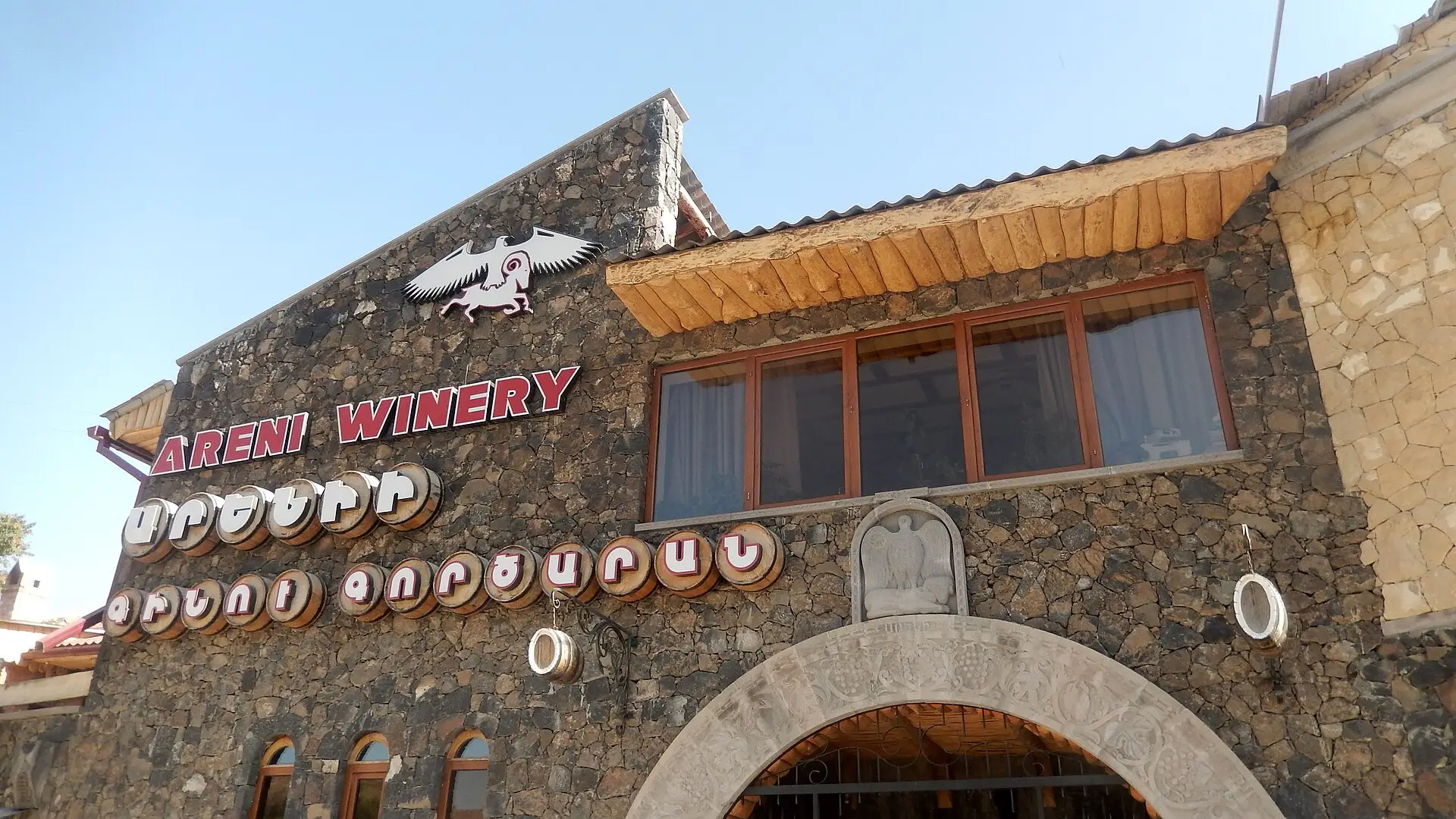
The 2026 Areni Wine Festival ran on Saturday 3 October in the village of Areni in Vayots Dzor, about 110 km south of Yerevan, and entry was free. The official listings gave 11:00 to 20:00, while Armenpress, reporting a press conference on 28 September, put the start at 12:00 and the official opening at 13:00; for the next edition, take the date and hours from Armenia’s official tourism listing before you plan. We rechecked the date, hours, venue and free entry on 24 September 2026 against Armenia’s official tourism listing and the festival’s own page on the ticketing site tkt.am. If an older page shows 4 October, that’s the 2025 edition.
The part that needs planning is the ride, and above all the ride back. Neither page mentions a shuttle from Yerevan, so you’re choosing between a car, a tour, a taxi and the long-distance buses. The evening is the weak spot: the last run back on the official timetable leaves nearby Yeghegnadzor at 17:50 and passes Areni about a quarter of an hour later, roughly two hours before the stalls shut.
Getting there from Yerevan
Every option uses the same road: Areni sits right on the M2, the highway from Yerevan south to Meghri. Leave the city by 08:30-09:00 and it still feels calm on festival Saturday; leave at 11:00 and you’ll be sitting in the queue.
Driving yourself is the flexible choice: roughly 1.5 to 2 hours on a clear run, longer on festival morning. You decide when to leave and whether to swing past Noravank or the Areni-1 cave before the crowds peak. Just remember that whoever drives isn’t tasting, and parking in the village is wherever a gap appears.
A festival day trip takes the wheel off your hands, though not the clock. One operator we checked on 24 September, One Way Tour, listed a group trip for Saturday 3 October at 6,000 AMD (about $16.50) per adult, run in Armenian, with a second language possible when foreign guests join; Noravank and Areni’s 14th-century church are on the way. It leaves 1a Sayat-Nova Avenue at 08:00 and the day ends at 20:00, so with the drive back the group leaves Areni before the stalls close. Private tours cost more and let you set the return time yourself.
A taxi or shared taxi suits a small group that wants to taste and skip the drive home. Agree the return pick-up time before you set off: a car out of a packed village at 20:00 is the hardest thing to find on the night.
Long-distance buses are usually the cheapest way down, but none of them ends at Areni. Four of the southbound routes through the village run to an official timetable, approved by the Ministry of Territorial Administration and Infrastructure in August 2025:
| Bus | Leaves Yerevan | From | Due in Yeghegnadzor |
|---|---|---|---|
| No. 604 to Meghri and Agarak | 07:30 | Southern bus station | 10:30 |
| No. 602 to Goris | 08:30 | Southern bus station | 11:30 |
| No. 603 to Kapan | 08:30 | Southern bus station | 11:30 |
| No. 601 to Sisian | 09:00 | Central bus station (Kilikia) | 12:06 |
Areni comes up about 15 km before Yeghegnadzor but isn’t a listed stop on any of the four, so tell the driver as you board that you’re getting off there. The timetables print no fares, so bring cash. Three of the four leave from the Southern bus station, beside Sasuntsi Davit, Yerevan’s main railway station, and its ticket office sells Goris seats ahead of time; they fill up, so buy yours the day before and ask at the same window which run back is really the last, since other listings give the Goris line more runs. Travellers’ reports and many guides still call the Goris bus No. 607; on the ministry’s timetable it’s No. 602. The one that leaves from Kilikia, the Central Bus Station on Admiral Isakov Avenue west of the centre, is the Sisian bus, No. 601. For the minibuses to Yeghegnadzor and Jermuk that pass the village without a published timetable, ask at the stand.
Getting back is the hard part. The last run on the official timetable, No. 602 from Goris, leaves Yeghegnadzor at 17:50, which puts it at Areni around 18:05, and is due at the Southern bus station at 20:50; the Sisian bus leaves Yeghegnadzor at 16:34. And on a festival Saturday you can’t count on a seat, or on a driver stopping where there’s no stop. Without a car, the choices that actually work are a tour, a taxi you’ve booked for the return, or a bed in the valley. For how Armenia’s bus stations, marshrutkas and taxi apps work more broadly, see getting around Armenia.
How tasting works on the day
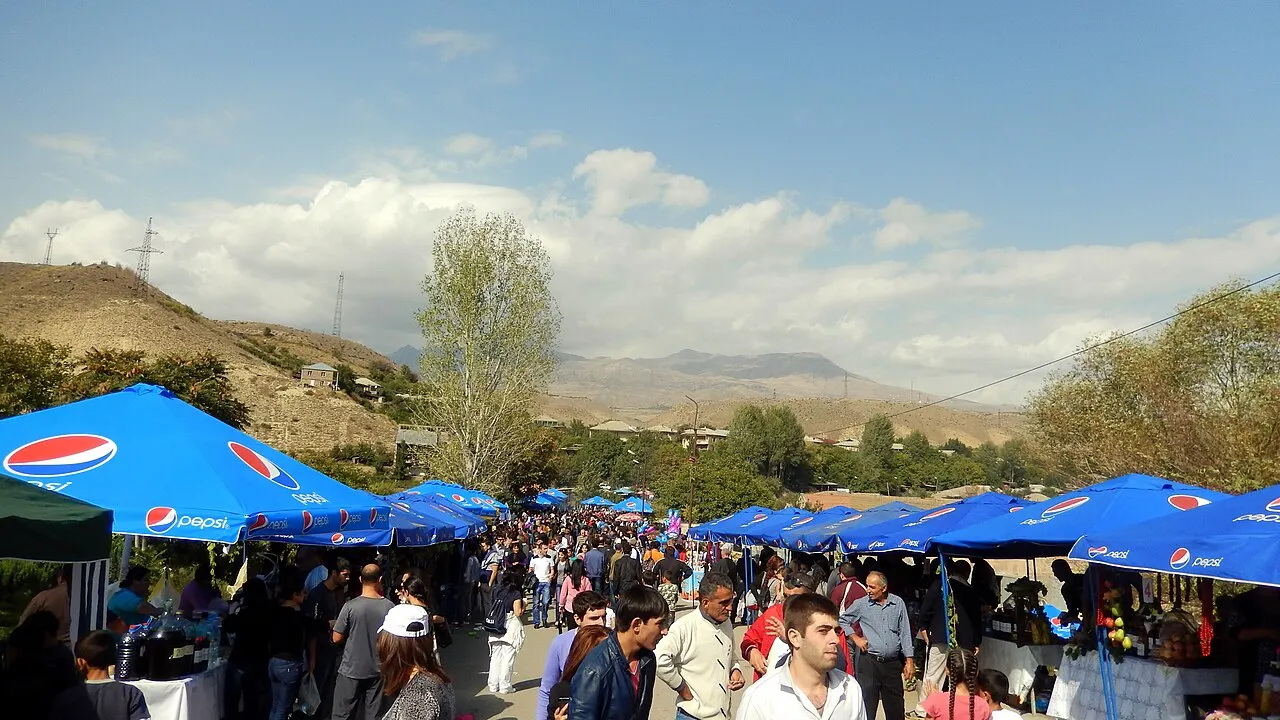
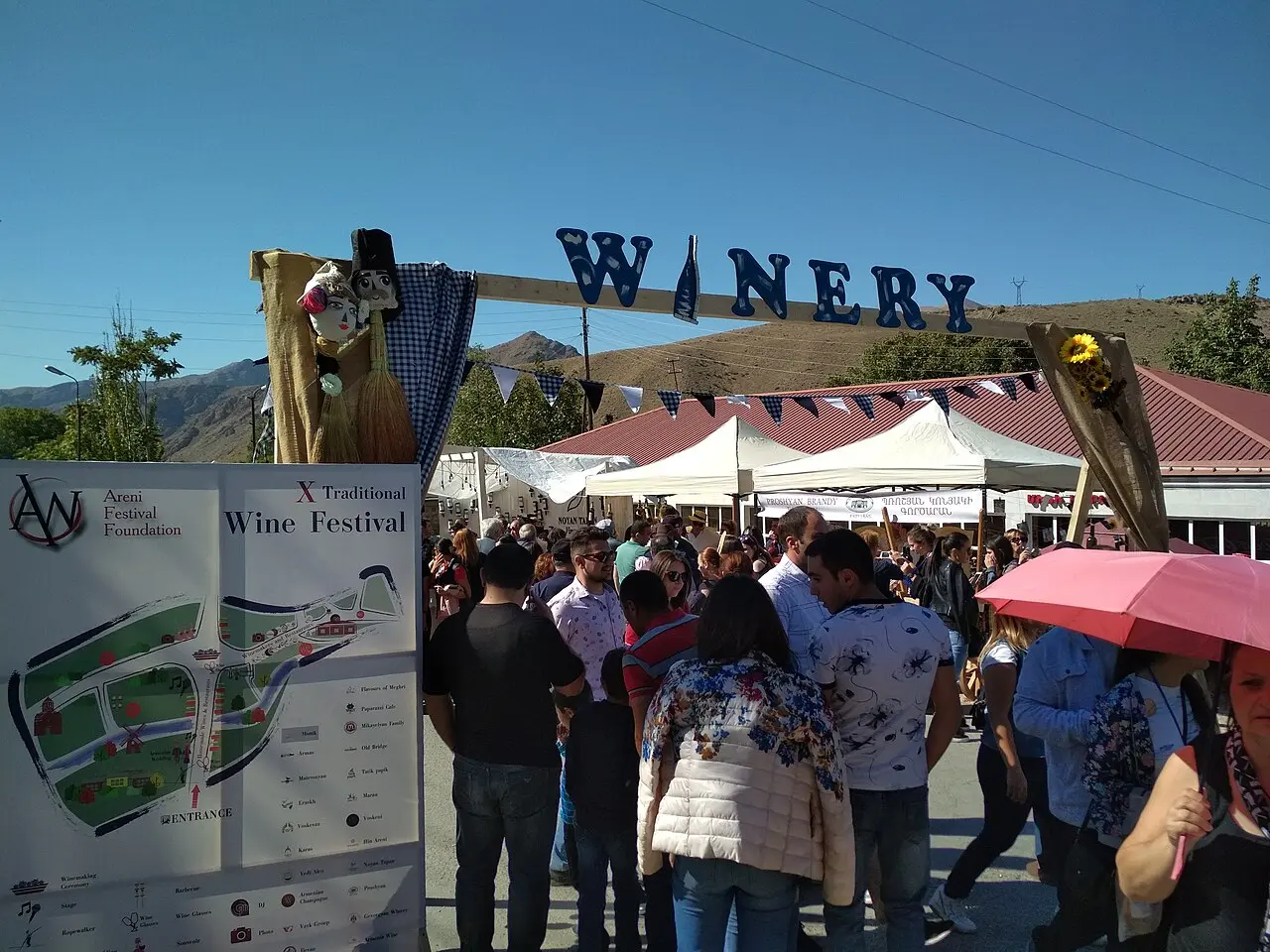
In 2023 the day was laid out in three zones: a homemade-wine area for villagers and people from neighbouring regions, a producers’ zone where Armenian wineries poured alongside restaurants and cheesemakers, and a music area. The 2026 listing promises the traditional grape-stomping ceremony to open, then live music, dance, solo sets and games through the day.
You walk in free. For the 2026 edition, the festival’s page on tkt.am lists two optional extras: a Souvenir Package for 7,000 AMD (about $19), with a branded glass, a glass holder and a Festival Booklet, and the booklet on its own for 2,000 AMD (about $5.50). The only drink the booklet names is one glass of sangria at a set booth; otherwise it covers the games zone (Jenga, chess and the like) and discounts from festival partners.
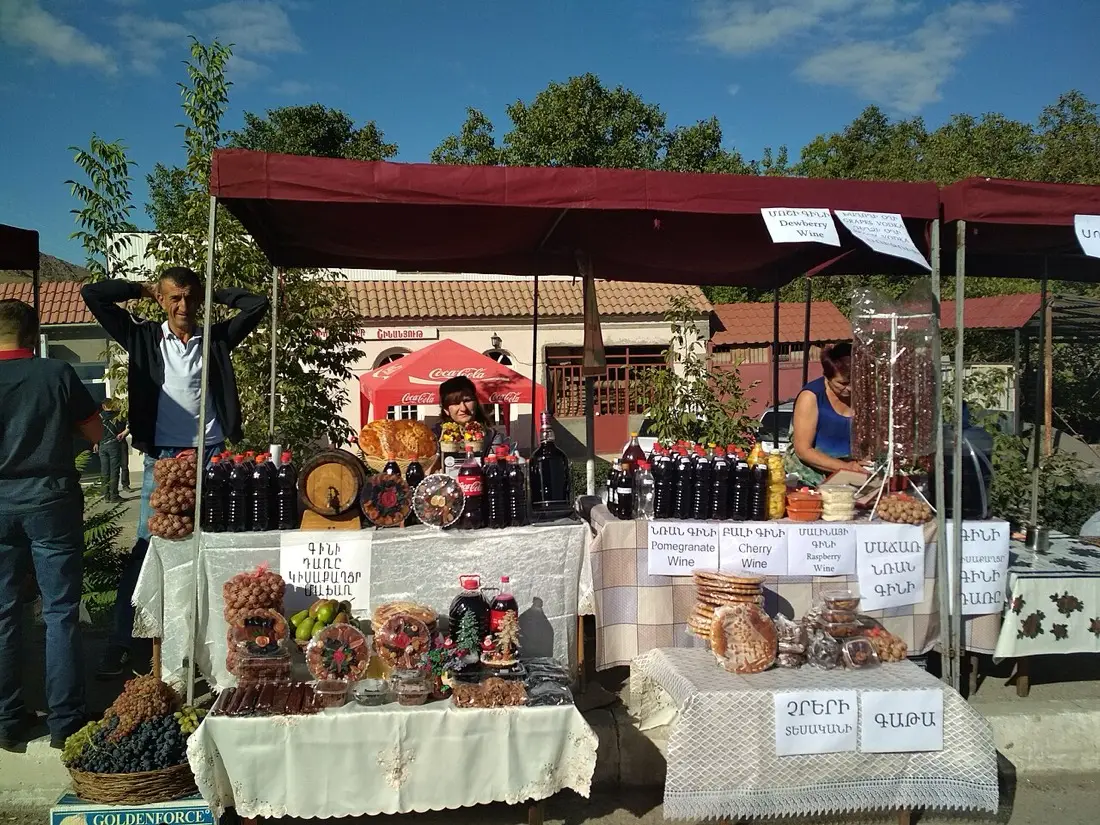
Is the 7,000 AMD package your tasting pass? Probably, but the 2026 listing doesn’t say: it sells the package as a keepsake, calls this year’s set-up a new format and never mentions how the producers’ booths pour. In 2023 the glass package (5,000 AMD then) was what got you poured at the commercial wineries’ booths, while the homemade-wine area ran as a separate zone. Ask at the stand by the entrance how the booths are pouring before you pay.
What to drink: start with Areni Noir
Areni Noir is the red grape named after this village and Armenia’s most widely planted red. It gives pale-to-medium ruby wines with fresh acidity, silky tannins and notes of red cherry, pomegranate and pepper. The festival’s best trick is the side-by-side: a winery’s estate bottle first, then a family’s homemade version of the same grape in the homemade-wine area. The grape’s backstory and the cellars that pour it year-round are in our Armenian wine and Areni region guide.
A few habits make the afternoon better:
-
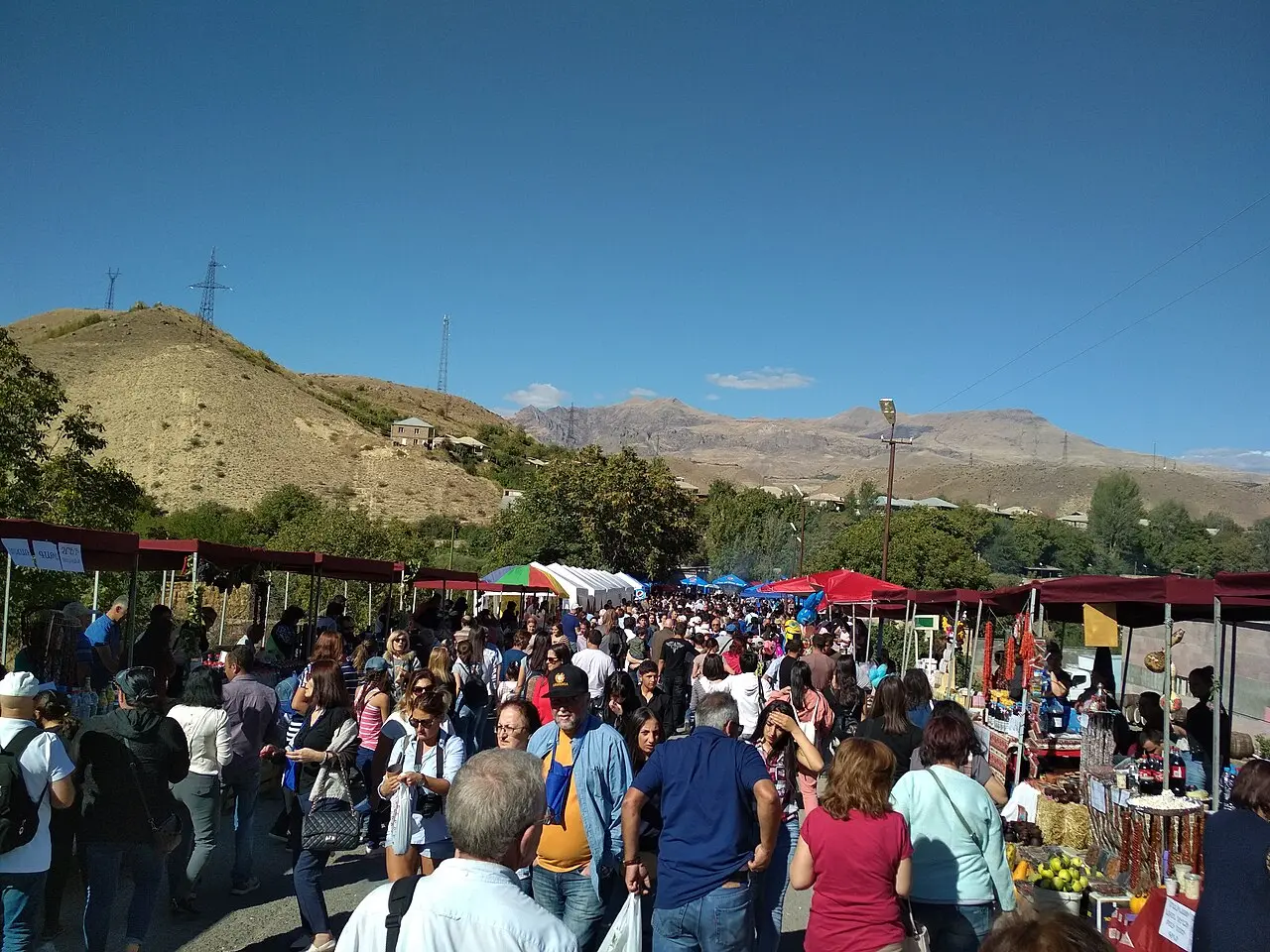
Be there for the 11:00 opening. The booths are easiest to reach before the day-trip coaches roll in, and by early afternoon the village road is packed.
-
Taste with a plan. Dozens of pours blur together. Group by style - light Areni Noir, bigger reds, whites, homemade oddities - and jot a phone note after anything you’d actually buy.
-
Eat as you go. Food stalls are part of the point, and drinking on an empty stomach in October sun is a bad plan.
-
Pack for a day outdoors. Cash in small notes (for bottles, food and whatever the booths charge), water, sunscreen, a layer for the evening, and clothes you don’t mind smelling of khorovats.
What you’re walking into
Areni sits on the Arpa river about 15 km by road from Yeghegnadzor, the provincial centre, and on festival day the village itself is the venue: the stalls take over the road running through it. It’s wine country first and a photo stop second: dry hills, irrigated vines, and a village that has been making wine from the native Areni grape for generations. The festival has run since 2009, organised by the Areni Wine Festival foundation, and it traditionally sits on the first Saturday of October, which is exactly 3 October in 2026.
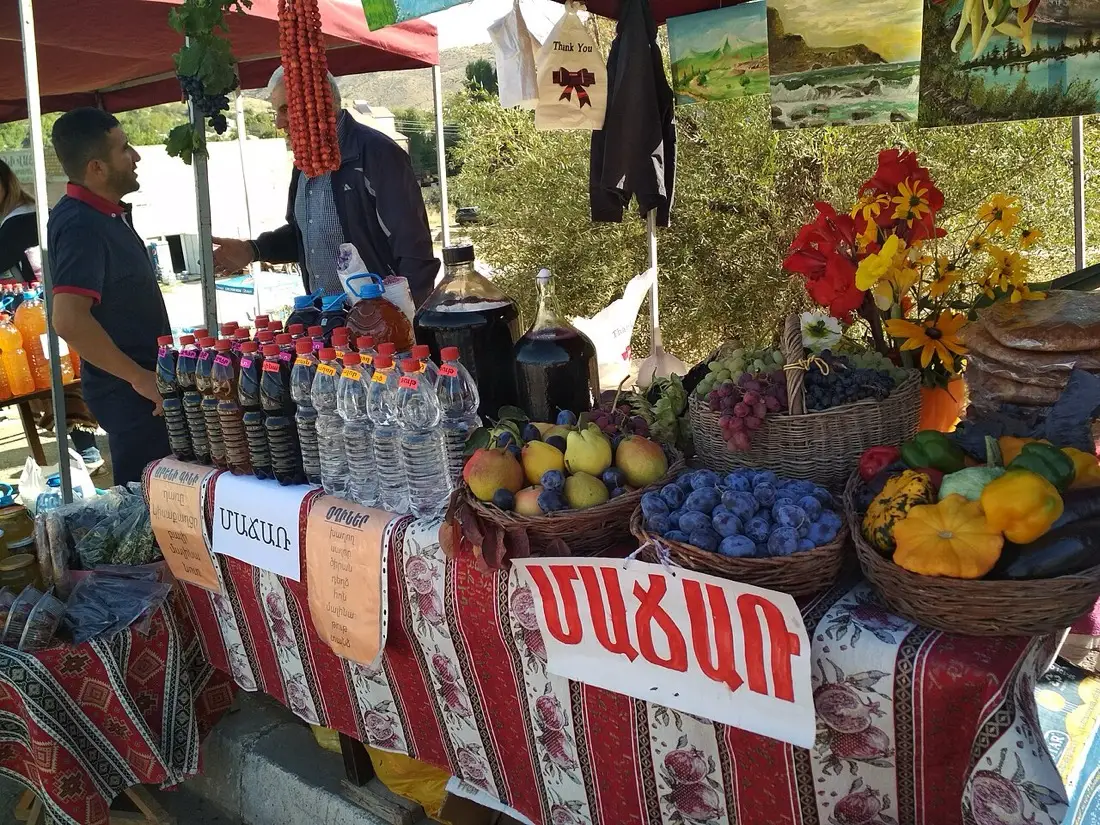
The whole village turns into the fair: industrial wineries next to family tables, demijohns beside labelled bottles, khorovats smoke, cheese and lavash, dance groups. It’s loud, friendly and crowded by early afternoon, so Saturday is for sampling widely; a quiet cellar chat with one winemaker belongs to the days either side.
Two stops on the same road
The festival eats most of a Saturday, but the geography is kind. Two stops sit almost on the same road and don’t need a second trip south.
Areni-1 cave is the Copper Age site that produced the world’s oldest known winery evidence - the reason this village shows up in archaeology headlines, not only on wine lists. It’s by the highway near the village; the prize finds themselves live in Yerevan museums, so you’re seeing the place, not the full cabinet of artefacts. Full visit notes are in our Areni-1 cave guide.
Noravank is the red-cliff monastery turn-off a short drive from Areni. If you’re driving, it fits in before the 11:00 opening; otherwise keep it for Friday evening or Sunday morning, because by mid-afternoon you’ll be tasting, not climbing steps.
For the wider loop - Rind, Getap, Yeghegis - save the days either side and follow our Vayots Dzor wine route. Cellars and the festival scrum don’t fit into one breathless afternoon.
Where to sleep for the weekend
Beds inside Areni and within about 30 km (Yeghegnadzor, Rind, small guesthouses along the valley) book out first. The whole Areni community, the village plus its neighbours, counts just 23 guesthouses, up from five, according to the head of its development foundation. If the festival is your reason for being in Armenia that week, reserve the room when you reserve the flight. Commuting from Yerevan on the day works, but you’ll spend more hours in traffic and miss the quiet evening after the stalls shut.
Yeghegnadzor is the practical base: more rooms than Areni itself, close enough for an early Saturday arrival, and it’s where the southbound buses actually stop. For month-level weather, foliage timing and what else October does to a trip, see Armenia in October.
Building Fri-Sun around one official day
Officially, 2026 was a one-day festival: Saturday 3 October. If you’ve flown in for it, stretch the trip anyway:
- Friday: drive south, check into Yeghegnadzor or Areni, visit one quiet cellar or Noravank while the village is still calm.
- Saturday: festival from late morning; leave before the worst evening jam if you’re returning to Yerevan the same night.
- Sunday: Areni-1 cave, a second winery, or the longer wine-route loop without festival parking panic.
Areni vs Yerevan Wine Days - don’t mix them up
Armenia runs two big wine events that people constantly confuse:
| Areni Wine Festival | Yerevan Wine Days | |
|---|---|---|
| When (2026) | Sat 3 October | 5-7 June |
| Where | Areni village, Vayots Dzor | Central Yerevan streets |
| Feel | Harvest fair, village scale | City street party |
| Entry | Free (optional 7,000 AMD package with the festival glass) | Free entry; tasting package |
Areni is the autumn harvest version. Yerevan Wine Days is the early-summer city one. Both belong on the Armenia festivals calendar, which is also where to look if you’re in Yerevan on a different weekend; only one of them puts you among the vines at the end of harvest.
Photos
Read also

Entertainment · 10 min read
Paragliding in Armenia: Where to Fly Tandem
Verified · September 3, 2026Tandem paragliding in Armenia: Sky Club, AERO CLUB and Armenian Geographic prices (30,000-85,000 AMD), launch sites, season and how to book.

Entertainment · 9 min read
Yerevan Nightlife: Bars, Clubs & Live Music
Verified · August 28, 2026Saryan wine bars, Pushkin jazz at Malkhas, Dargett craft beer, Club 12, late food and night safety tips for central Yerevan.
Entertainment · 8 min read
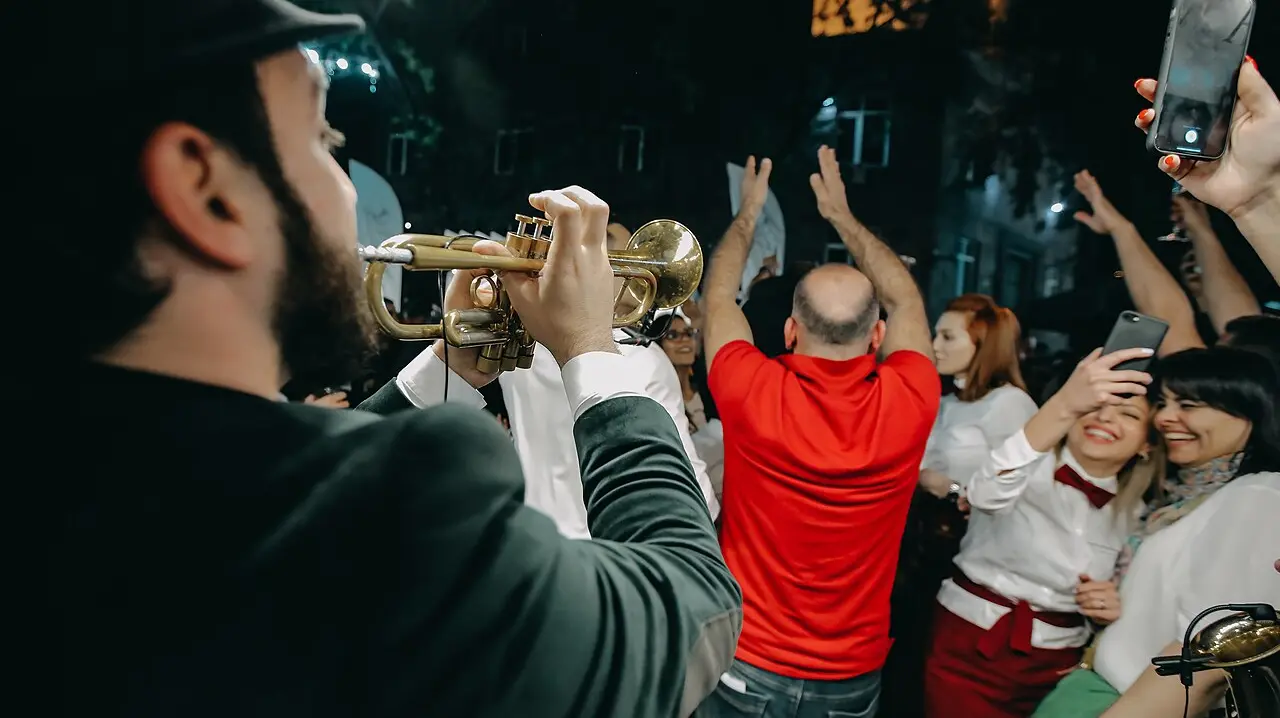
Yerevan Wine Days: The City's Street Wine Festival
Verified · August 26, 2026Yerevan Wine Days in early June: free street entry, tasting package, Saryan and Tumanyan routes, and how it differs from Areni and year-round bars.
Entertainment · 9 min read
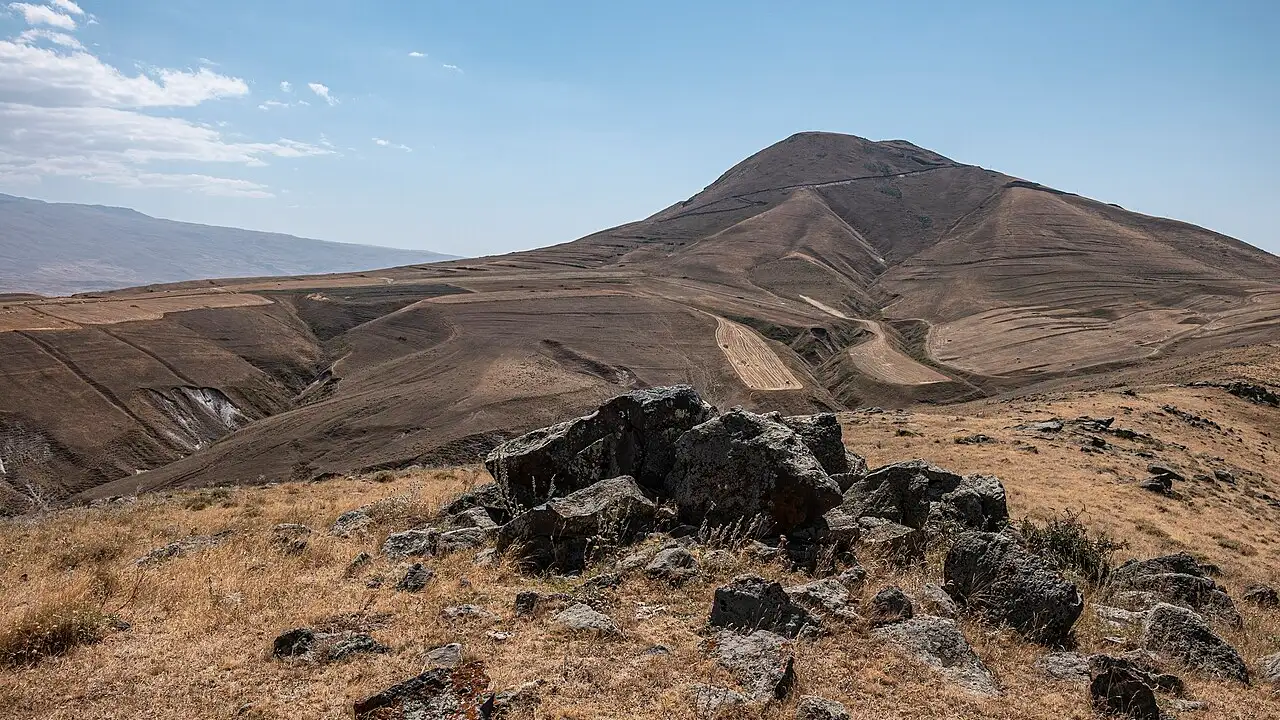
Best Day Hikes Near Yerevan
Verified · August 25, 2026Day hikes from Yerevan: Mount Hatis, Mount Ara, Garni Gorge, Khosrov Forest and Dilijan forest walks, with distances, seasons and trailhead access.