3 Days in Yerevan
A tight 3-day Yerevan itinerary: the capital on day one, then day trips to Garni & Geghard, Khor Virap and Noravank, all from one hotel base.
Three days is just enough for Yerevan and its doorstep, as long as you treat the city as a base and don’t try to see the whole country from it. The plan here keeps one hotel for all three nights: day one is the capital on foot, then days two and three are out-and-back day trips to the sights that sit within a couple of hours of the centre. That means the Roman temple at Garni, the cliff monastery of Geghard, Khor Virap under Mount Ararat and the red canyon of Noravank, with the wine village of Areni thrown in. It leaves out the far south and the northern forests on purpose, because Tatev and Dilijan are a long haul and belong to a longer trip. If you have a week, our 7-day Armenia itinerary loops the whole country instead of returning to Yerevan each night. This is the short version, and it works.
One decision shapes everything: how you reach the day trips. None of these sights has convenient public transport, so you either rent a car, hire a driver for the day, or take an organised tour. A car gives you the most freedom for the price and lets you linger; a driver or a small-group tour spares you the mountain roads and the parking. Either way, keep your base in the city, because Yerevan has the hotels, the food and the late nights, and the drives back are short.
Day 1: Yerevan on foot
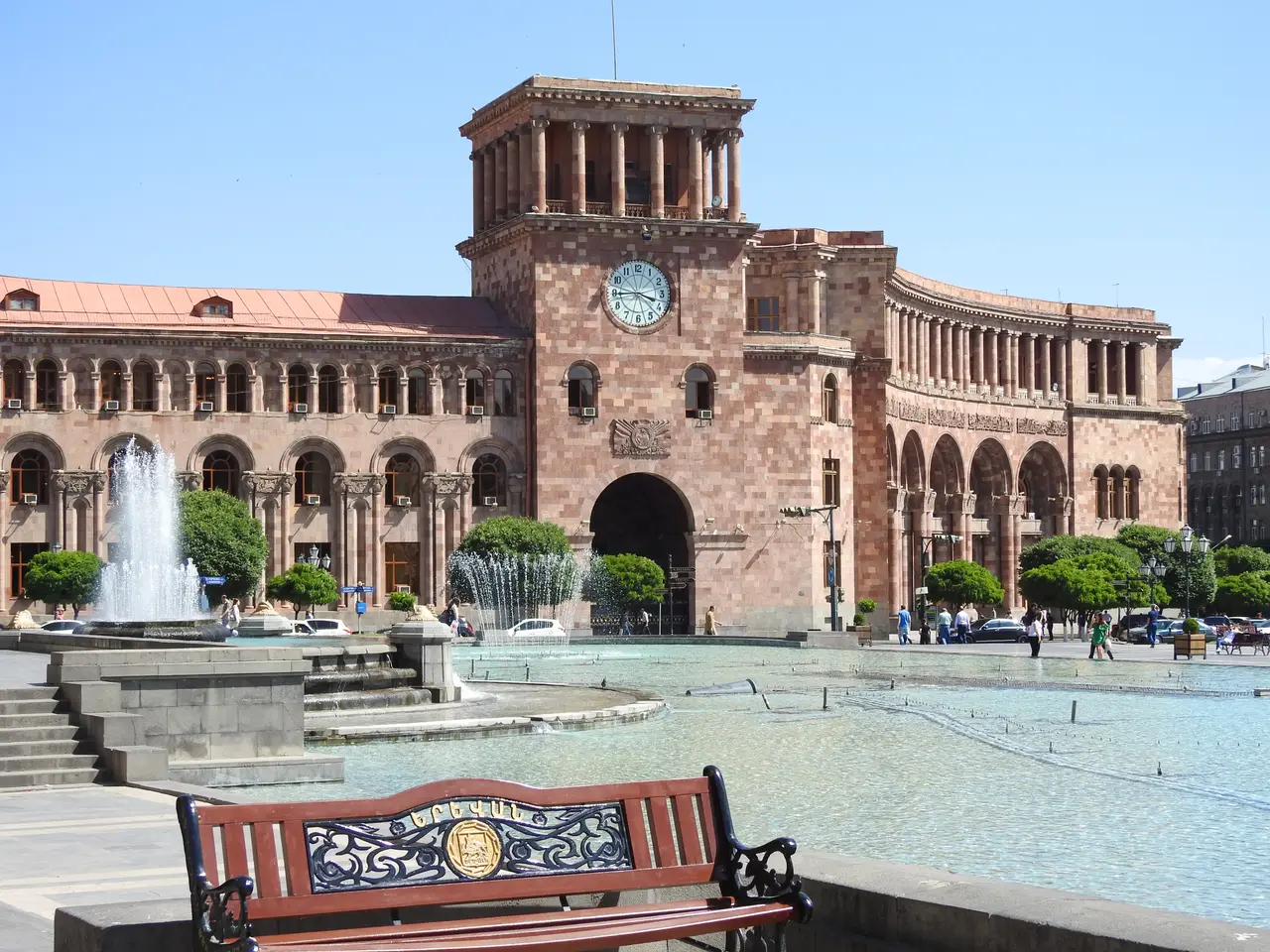
Give the first day entirely to the capital, and walk it. Yerevan is compact, built from pink and honey-coloured tuff, and most of what you want is within a slow morning’s stroll of the centre. Start at Republic Square, the oval of government buildings that anchors the city, and if you’re here on a summer evening come back for the musical fountains after dark. From there it’s a short walk up to the foot of the Cascade, the giant tuff-and-travertine stairway that climbs the hillside in a run of 572 steps. You don’t have to climb it in the heat: indoor escalators run up the inside past the free contemporary art of the Cafesjian Center, so ride up, take in the view over the city toward Mount Ararat, and walk down through the sculpture terraces.
Fold two more things into the day. The Matenadaran, the manuscript museum at the top of the avenue above the Cascade, holds one of the world’s great collections of medieval books, some 23,000 of them, and even a quick visit puts the country’s long literary history in front of you. If it’s a weekend, detour to the Vernissage, the sprawling open-air market near Republic Square where Armenians sell carpets, silver, khachkar carvings, old Soviet cameras and woodwork; it’s at its fullest on Saturday and Sunday and is the best single place to shop. Everything else the city offers, from the market halls to the parks, is laid out in our guide to things to do in Yerevan.
The one stop that reframes the rest is Tsitsernakaberd, the Armenian Genocide memorial and museum on a hill west of the centre. It is a sober, quiet place built around an eternal flame, and the museum below explains the events of 1915 that shaped the modern nation and its worldwide diaspora. Go in the afternoon, give it time, and understand that it changes the register of the day. Round the evening off the Armenian way, with dinner and a glass of wine on Saryan Street or a tasting at one of the brandy houses; our guide to Yerevan brandy explains the “cognac” the city is proudest of.
Day 2: Garni, Geghard and the gorge
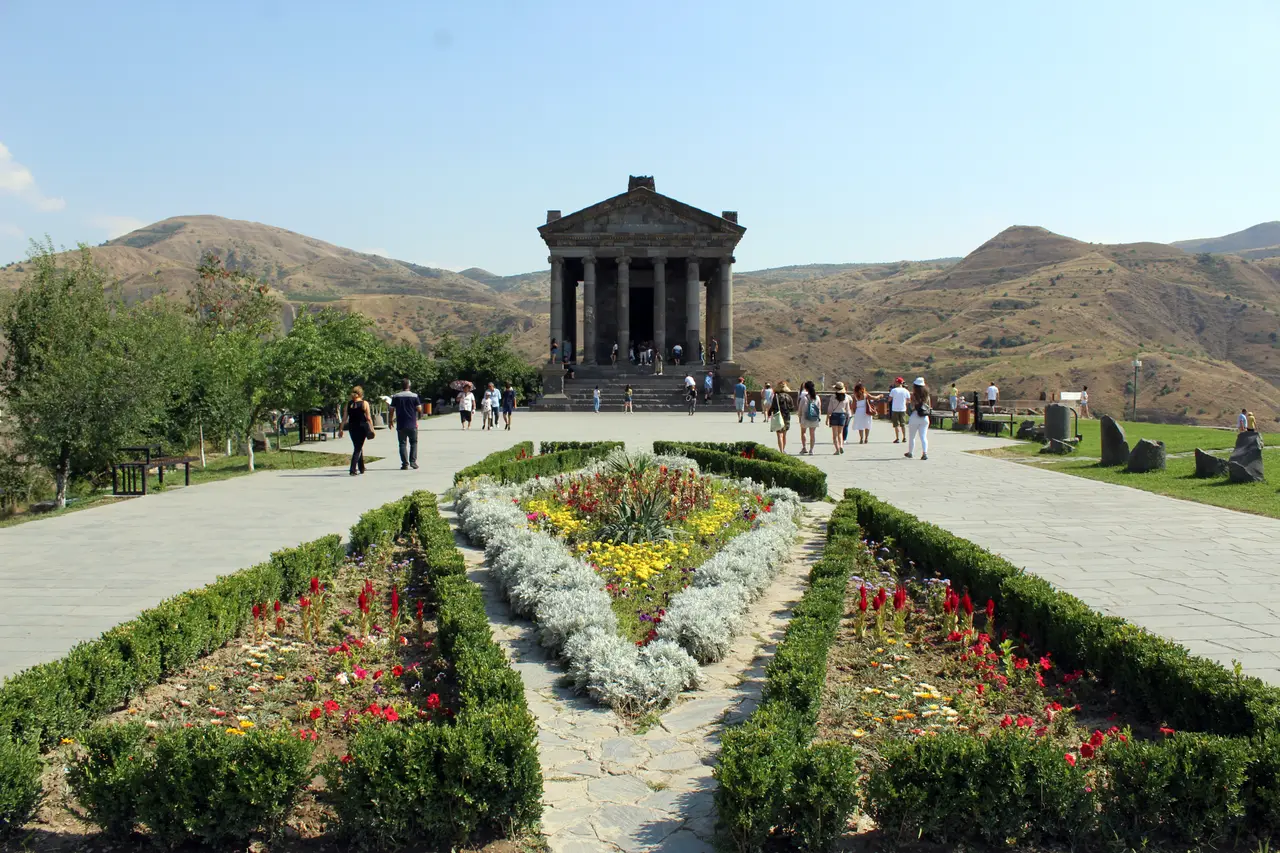
Point east on day two for the classic half-day pairing that almost everyone does first. Garni, about 30 km from the city, is the only Greco-Roman colonnaded temple left standing in the former Soviet Union, a first-century sanctuary perched on a spur above the Azat gorge. It’s small, and an hour covers it, but the setting is the thing. Below the temple, a rough track and a short walk lead down to the Symphony of Stones, a wall of towering hexagonal basalt columns carved by the river into something that looks built rather than grown. Wear proper shoes if you want to get right under them.
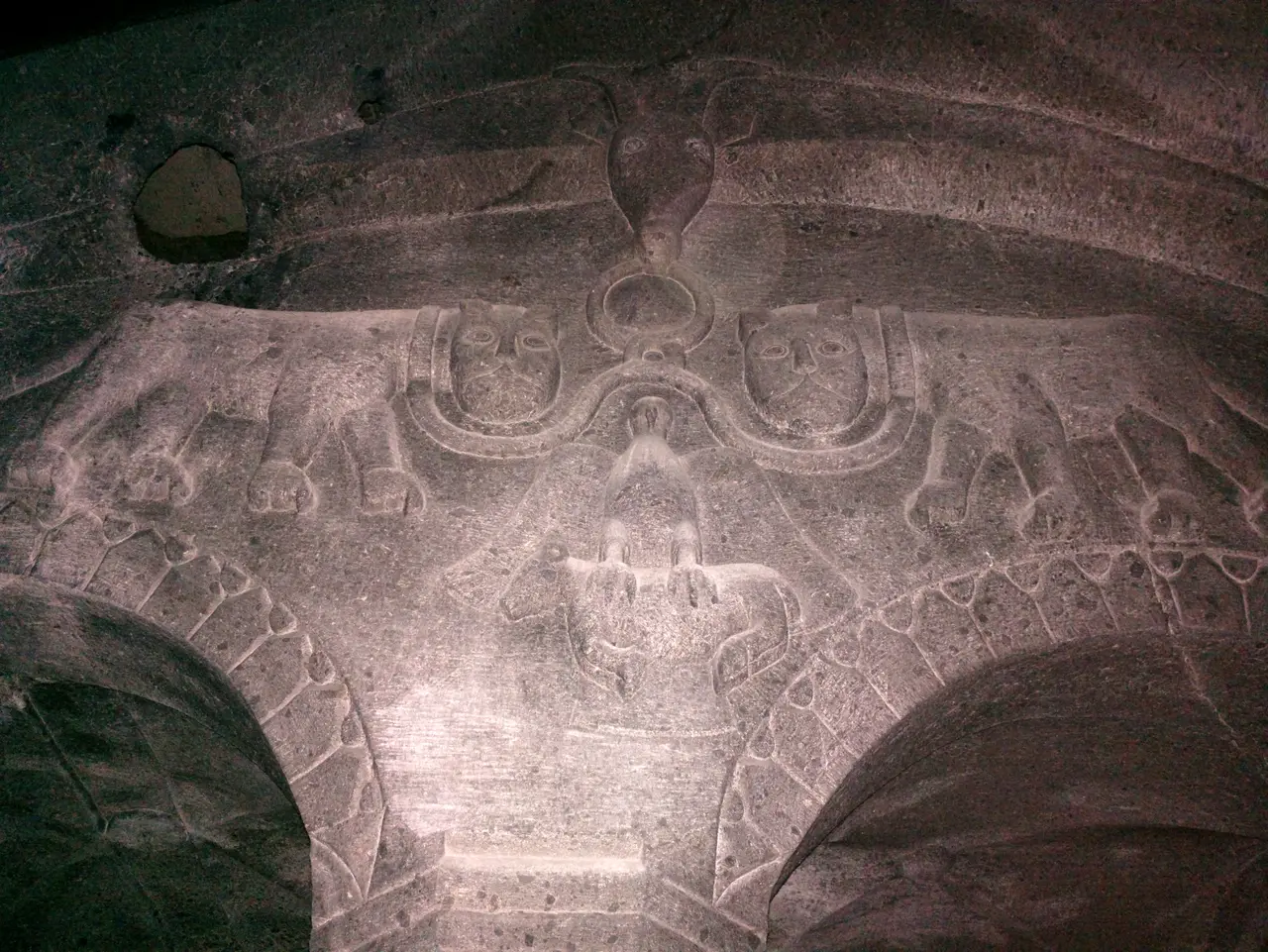
Ten kilometres further up the valley sits Geghard, and it’s the more moving of the two. Half of this UNESCO-listed monastery is carved directly into the mountainside, with chapels, a spring and tombs hewn out of solid rock. Time your visit for a moment when a group of singers strikes up in one of the rock chambers, because the acoustics turn a handful of voices into something that fills the stone. The pairing of temple and monastery is the single best short outing from the city; the full detail on both is in our Garni and Geghard guide. You will be back in Yerevan by mid-afternoon, with time for the museums you skipped on day one.
If monasteries are not your reason for coming, swap this day for Lake Sevan instead. The biggest lake in the Caucasus is about 65 km northeast, and the dark stone churches of Sevanavank sit on a peninsula above the water with a wide blue view. In July and August you can swim off the north shore and eat lake trout by the water. It makes an easy, breezy day out and a complete change of scene from stone and dust; the practical detail is in our Lake Sevan guide.
Day 3: south to Khor Virap and Noravank
Save the longest and best drive for last. The southern day strings together the country’s signature view and its most dramatic canyon, and it’s the one to prioritise if the weather looks kind. First stop, about 40 km south on the Ararat plain, is Khor Virap, a fortress-walled monastery on a lone hill directly beneath Mount Ararat. The mountain sits just across the closed Turkish border, unreachable and enormous, and the sight of the little monastery against that snow-capped double cone is the photograph everyone comes to Armenia for. You can climb down a steep ladder into the pit where, tradition says, Gregory the Illuminator was held for thirteen years before Armenia adopted Christianity. Come early: Ararat is clearest in the morning and often lost to haze by a summer afternoon.
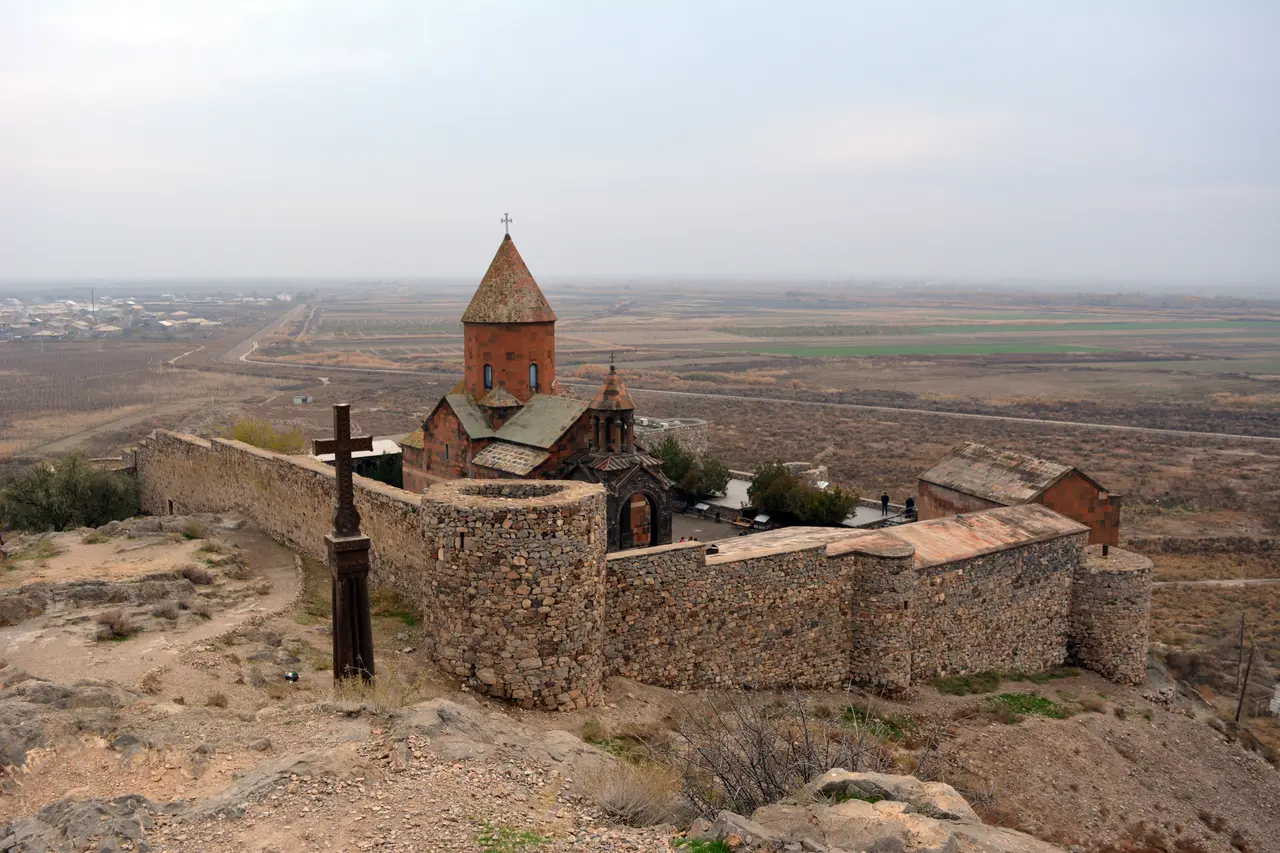
From Khor Virap keep driving south into Vayots Dzor, the wine country. About 110 km from Yerevan you reach Areni, a village of family cellars where you can taste the local reds poured straight from the barrel, and where the Areni-1 cave holds the remains of the world’s oldest known winery, roughly 6,100 years old. It’s a natural lunch and tasting stop; our guide to Areni’s wine country covers the cellars and the cave. A few minutes on, a side road turns up the Amaghu gorge to Noravank, a two-storey monastery the colour of honey wedged into a canyon of sheer brick-red cliffs, famous for the narrow stone stair that juts straight off the church wall. At about 122 km out it’s the far point of the day; the detail is in our Noravank guide.
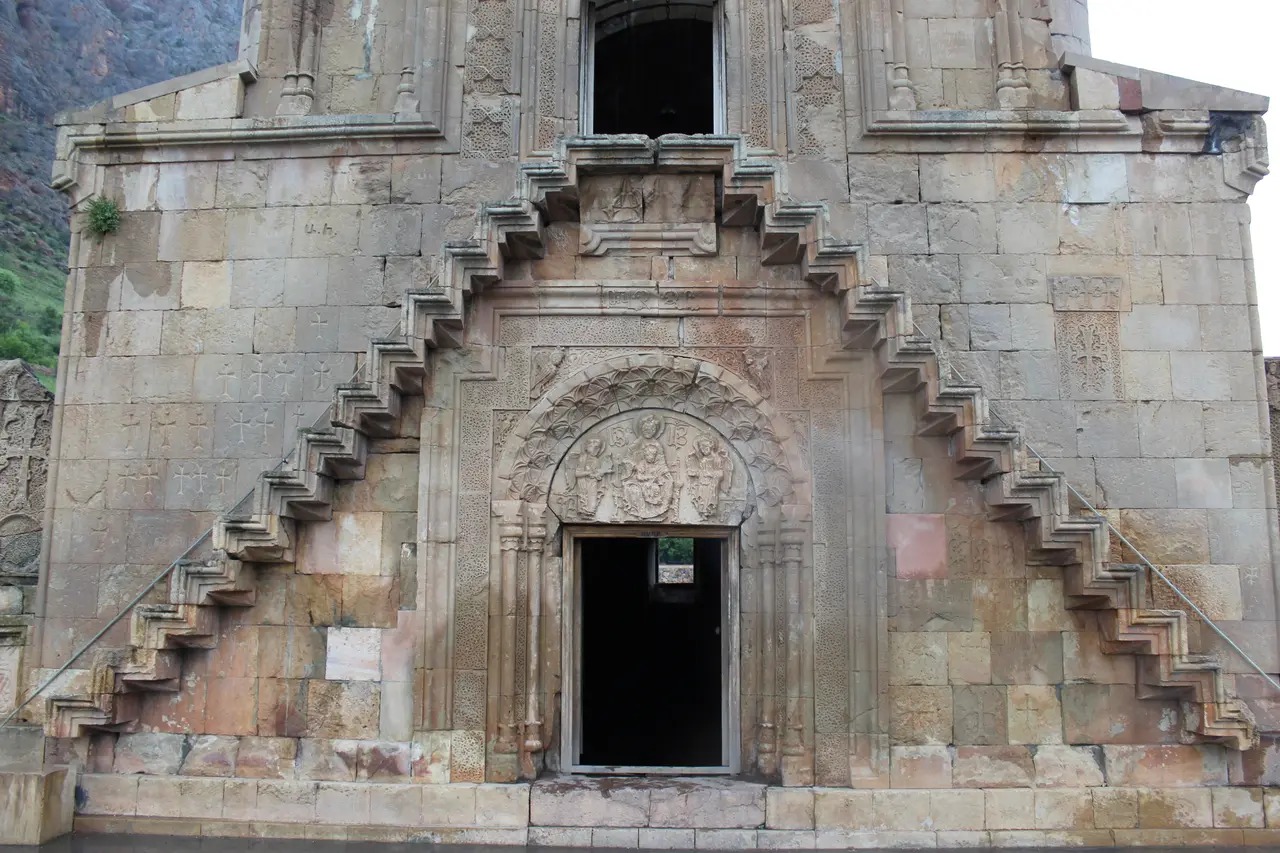
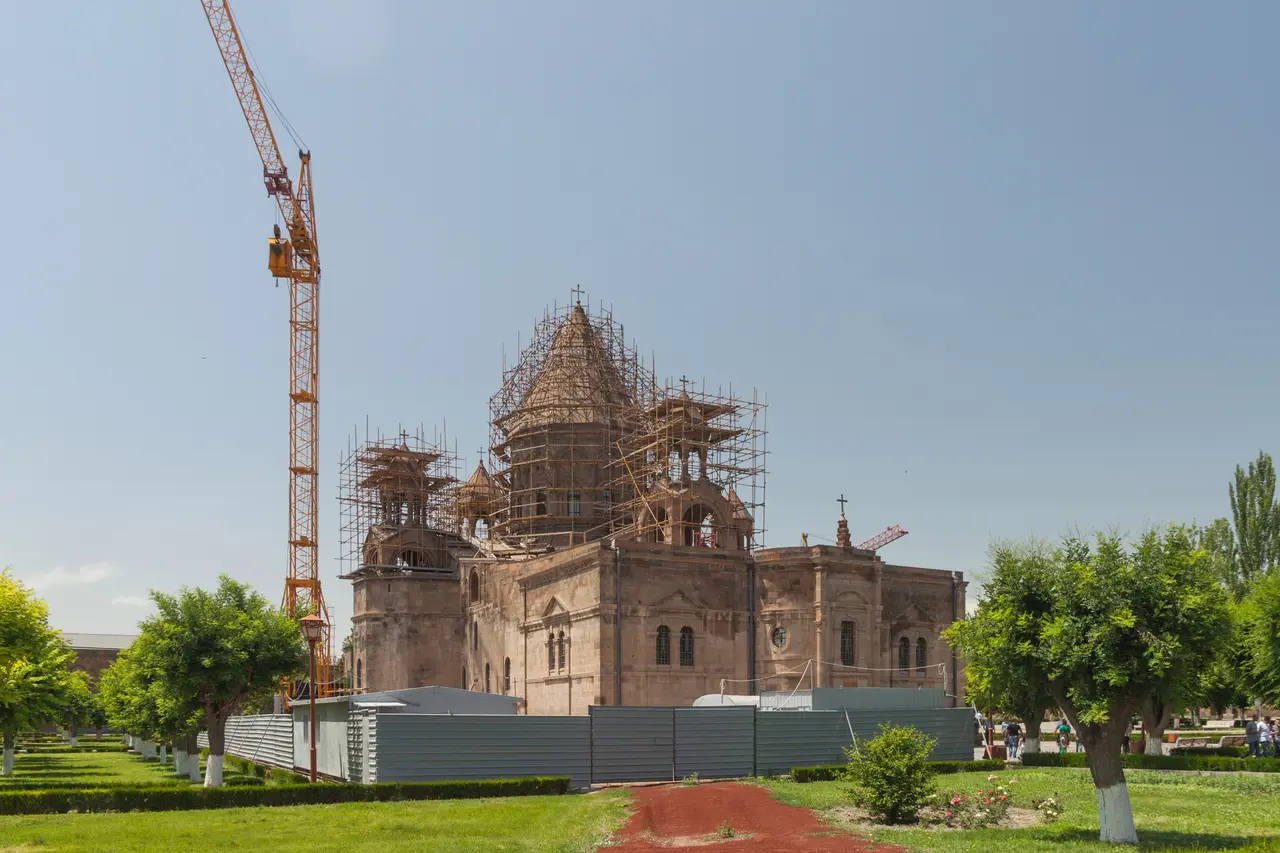
The southern day is a full one, with roughly two hours of driving each way, so it suits a rental car or a tour where someone else takes the wheel. Prefer a gentler last day? Swap it for the western sights instead. Echmiadzin, about 20 km out at Vagharshapat, is the seat of the Armenian Church and one of the oldest cathedrals in the world, and on the way back you can stop at the ruined seventh-century cathedral of Zvartnots, its broken columns standing on the plain with Ararat behind. It’s a shorter, calmer day than the southern run, and it rounds out the picture of Armenia as the first country to make Christianity its state religion.
What it costs and how to stretch it
Money depends entirely on how you travel and where you sleep, but a rough floor for three days on a simple footing, with a modest central hotel, local food and one shared day-trip vehicle, sits around US$260 per person for two sharing, before you add nicer rooms, wine or a private guide. The sights themselves are cheap: the monasteries are free, the museums are modest, and the biggest single cost is transport for the day trips. Renting a car for the two driving days often beats booking two separate tours if there are two of you; our guide to car rental in Armenia covers the documents, the deposit and the mountain roads, and if you would rather not drive, a guided day trip from Yerevan does the legwork for you.
Three days fills up fast, so pick, don’t cram. If you only get the classic version, do day one in the city, day two at Garni and Geghard, and day three south to Khor Virap and Noravank, and you’ll have seen the temple, the cliff monastery, the mountain view, the canyon and the wine, all from one bed. If you can add a fourth day, that’s when Lake Sevan or Echmiadzin stops being an either-or and both fit. Should you have longer still, our roundup of the best day trips from Yerevan splits them into the eastern, southern and northern runs, and the routes hub has the full week-long loops. From a central hotel the days fall into an easy shape: catch Ararat clear over the rooftops before the morning haze, put in the driving while the light holds, and be back on Saryan Street for dinner, with the Republic Square fountains switching on around nine in the summer to round the night off.
Route day by day
- Days on the road
- 3
- Distance
- ≈380 km
- Budget from
- 260 USD
- Best season
- May, June, September, October
The route at a glance
-
Yerevan
Route startstop ≈600 min
Day one on foot in the capital: Republic Square, the Cascade and its art, the Vernissage market, the Matenadaran, and Tsitsernakaberd.
Photo: Optimi4 / Wikimedia Commons, CC BY-SA 4.0 ( source) -
Garni Temple
30 km from the startstop ≈120 min
The colonnaded first-century temple over the Azat gorge, about 30 km east of the city, with the Symphony of Stones basalt columns just below it.
Photo: Soghomon Matevosyan / Wikimedia Commons, CC BY-SA 4.0 ( source) -
Geghard
40 km from the startstop ≈120 min
The rock-cut UNESCO monastery about 10 km up the valley from Garni, its chapels hewn straight out of the cliff.
Photo: Soghomon Matevosyan / Wikimedia Commons, CC BY-SA 4.0 ( source) -
Khor Virap
40 km from the startstop ≈120 min
The fortress-walled monastery on the Ararat plain about 40 km south, framed by Mount Ararat across the closed border.
Photo: Emma YSU / Wikimedia Commons, CC BY-SA 4.0 ( source) -
Noravank
122 km from the startstop ≈120 min
A honey-coloured monastery up a canyon of red cliffs near the wine village of Areni, about 122 km south of Yerevan.
Photo: Soghomon Matevosyan / Wikimedia Commons, CC BY-SA 4.0 ( source) -
Areni
110 km from the startstop ≈90 min
The wine village on the way to Noravank, home to family cellars and the Areni-1 cave with the oldest known winery.
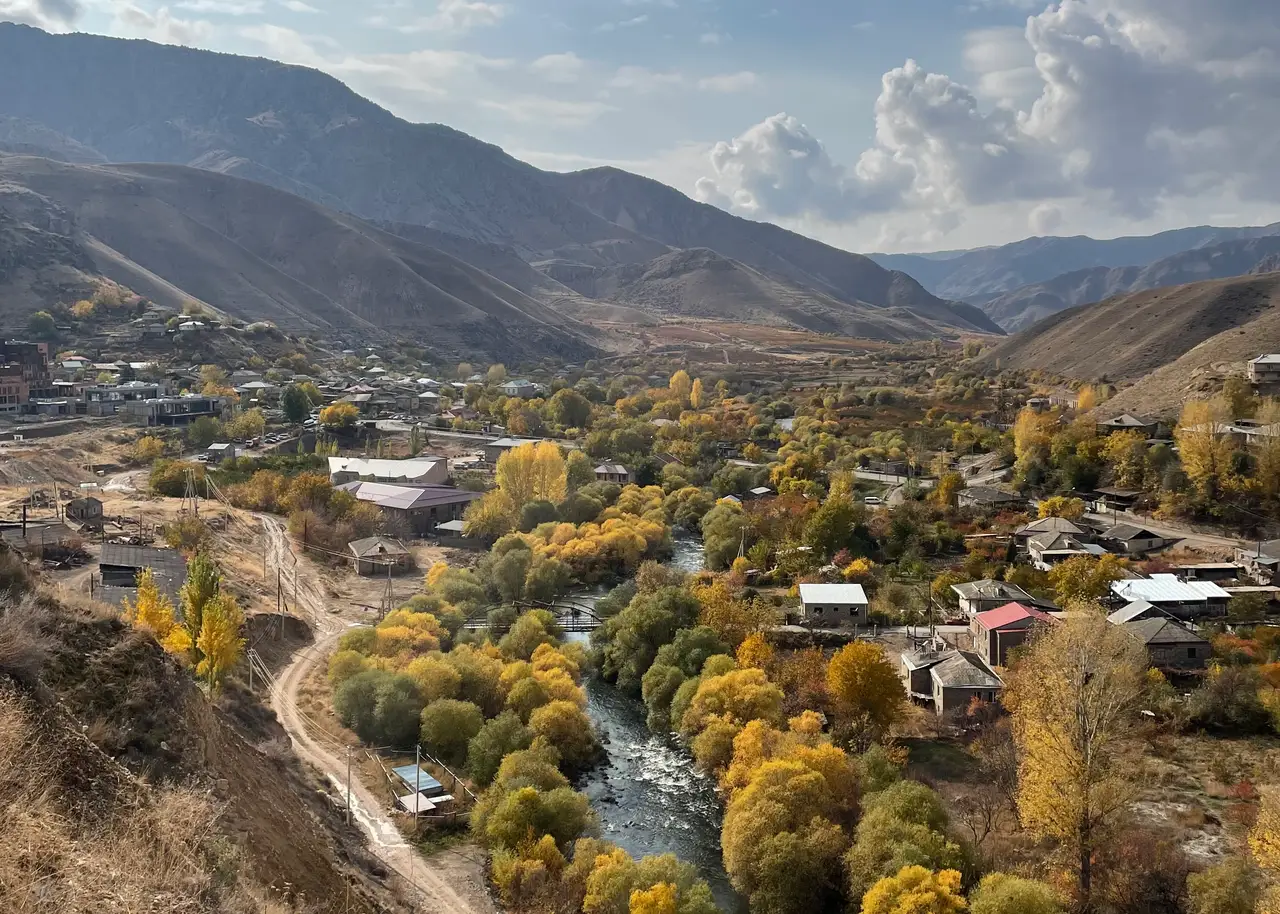
Photo: Dor Shabashewitz / Wikimedia Commons, CC BY 4.0 ( source) -
Lake Sevan
65 km from the startstop ≈180 min
An alternative day two: the great blue lake and the Sevanavank monastery on its peninsula, about 65 km northeast.
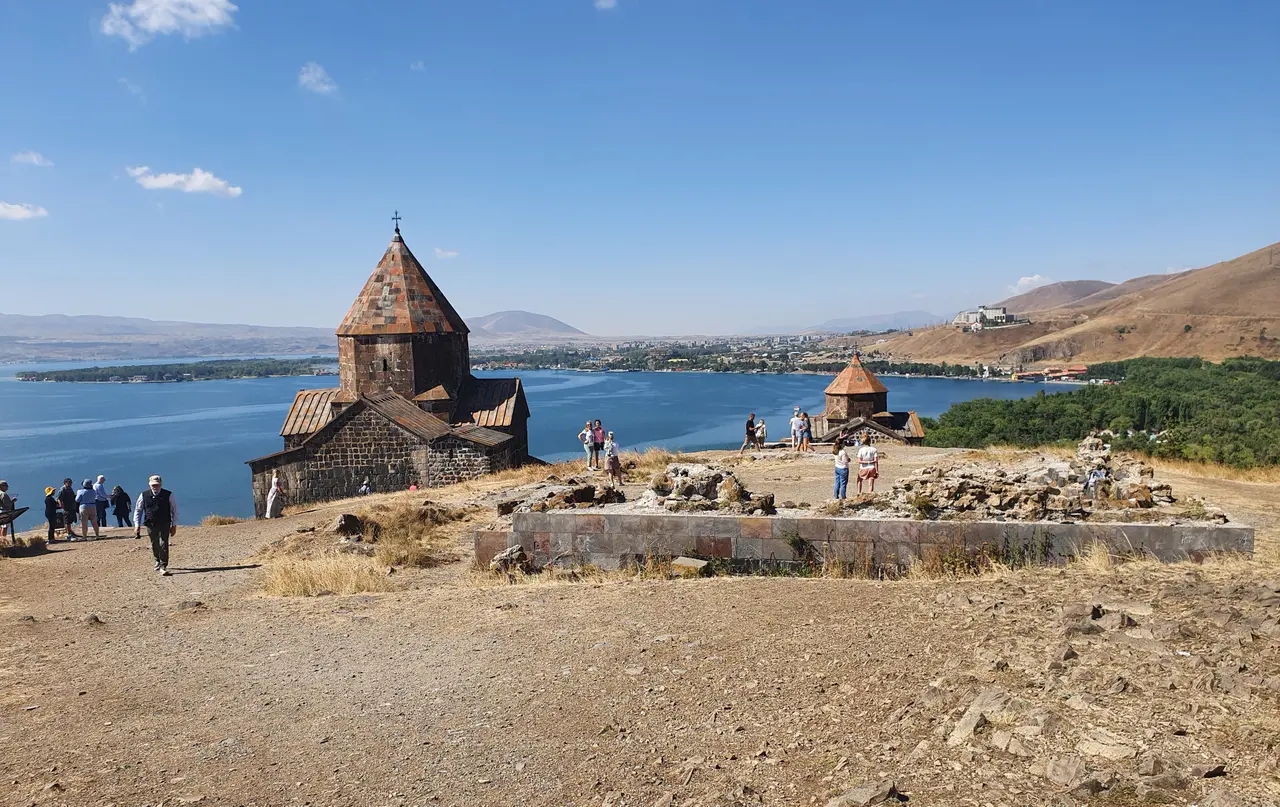
Photo: GRANDE PUFFO VCO / Wikimedia Commons, CC BY-SA 4.0 ( source) -
Echmiadzin
20 km from the startstop ≈120 min
An alternative day three: the Mother See cathedral at Vagharshapat, about 20 km west, with the Zvartnots ruins on the way back.
Photo: Marcin Konsek / Wikimedia Commons, CC BY-SA 4.0 ( source)
Route map
The map with stops loads on click - to keep the page lightweight.
The map didn’t load. Check your connection and refresh the page.