
Opening a Bank Account in Armenia as a Foreigner
Open a bank account in Armenia as a foreigner or non-resident: which banks are easiest (Evocabank, Ameriabank), documents, remote options and timeline.
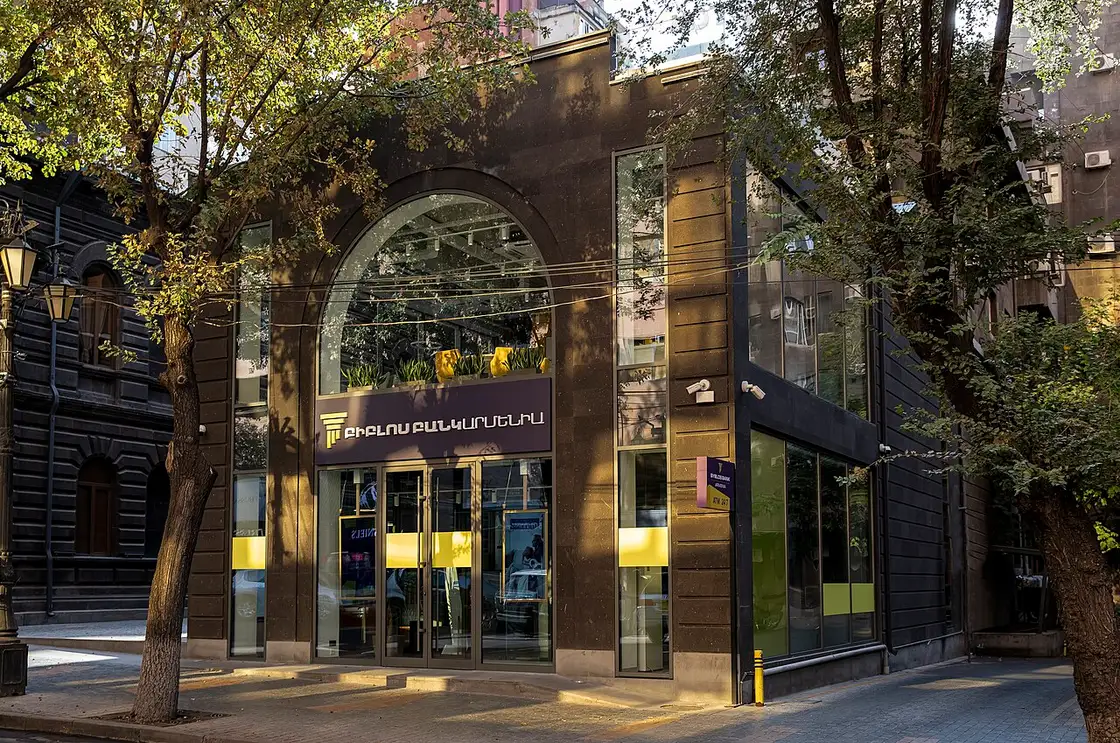
Opening a bank account in Armenia as a foreigner is genuinely straightforward: you don’t need residency or citizenship, and for most people a passport plus an Armenian social card (the Public Services Number) is the core of what a bank asks for. The one rule that trips people up is that the law makes banks identify you in person the first time, so your very first account usually means a visit to a branch rather than a few taps in an app. This guide covers the documents, the in-person-versus-remote question, which banks are easiest for foreigners, and what you get in the way of multi-currency accounts and cards. Requirements differ from bank to bank and do change, so confirm the current list with your chosen bank before you go.
A quick note on reliability. This is general information, not financial advice, and it reflects bank and official guidance checked on 4 July 2026. Individual banks set their own document lists, fees and onboarding rules, and they update them, so the safe move is always to call or email the specific branch and confirm before you turn up. Nothing here is a substitute for a bank’s own current terms.
If citizenship by descent is on your radar, read our Armenian citizenship by descent guide first.
Can a foreigner open an account? Yes
Start with the good news, because it removes the biggest worry. Armenian banks open accounts for non-residents as well as residents, and you don’t need a residence permit or Armenian citizenship to hold one. The official wording at a typical bank is blunt about it: resident and non-resident individuals alike can open current accounts in dram and in foreign currency. That makes Armenia one of the easier places in the region to get banked as a newcomer, whether you’re relocating properly or just spending a long stretch here.
Where nationality matters is at the margins. Some banks ask non-residents for a longer paper trail, US citizens complete the usual FATCA forms, and a handful of nationalities face extra checks or, occasionally, lighter ones. None of that stops you opening an account; it just shapes how much you bring to the meeting.
What you actually need
The baseline is short. For an individual, the two documents that matter most are your passport and an Armenian social card, formally the Public Services Number (PSN). A bank can open the account on your passport and social card, or on a statement that you don’t yet hold a social card, so the social card isn’t always a hard blocker on day one, though having it makes everything smoother and you’ll want it for tax and payroll anyway.
Beyond those, banks commonly ask for a couple of extras, especially from non-residents:
- Proof of a local address, which can be a rental agreement or an address registration.
- Source of funds or proof of income, particularly if you plan to move meaningful sums through the account.
- FATCA paperwork if you’re a US citizen or taxpayer.
The exact combination is the part that varies by bank, which is why a two-minute call ahead saves a wasted trip. If you don’t have a social card yet, ask whether the bank will open on the “no social card” statement and let you add it later, or whether they would rather you get the card first.
In person or remotely? The rule that catches people
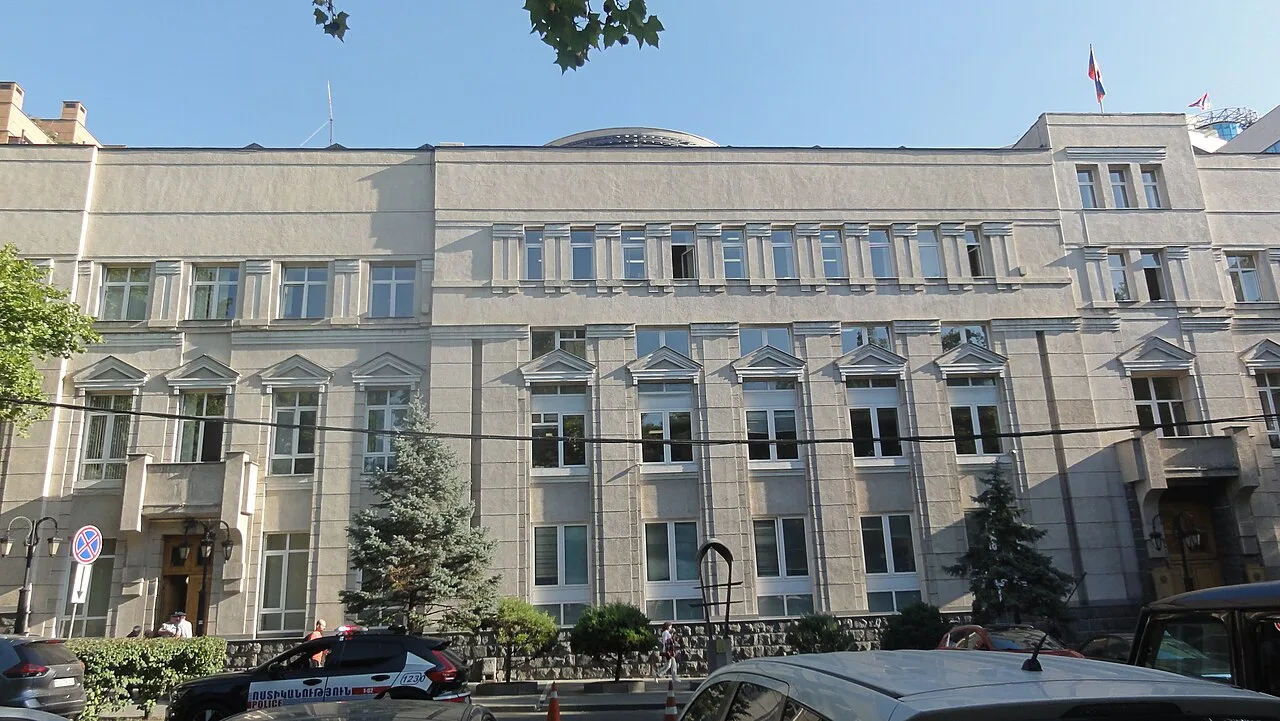
This is the detail worth understanding before you plan around a slick “open online” button. By law, a bank must identify a client in person at the first point of contact. In practice that means your first ever account at an Armenian bank generally requires an in-person visit, or a properly verified equivalent, even where a bank advertises non-resident onboarding or an app-based opening. Those online options are real, but they don’t replace that mandatory first identification for someone who has never been verified at an Armenian bank.
The upside is that this is a one-time hurdle. Once you’ve been identified in person, most of what follows is remote: you can manage the account, issue extra or virtual cards, and deal with the bank through its app or an authorised representative without going back to a branch. Some banks, Evocabank among them, do advertise remote onboarding for non-residents in limited cases, so if a trip to Yerevan is genuinely impossible, it’s worth asking a specific bank whether your situation qualifies. As a working assumption, though, plan on being there in person for the first account.
Timelines are quick either way. Residents often walk out with an account the same day, within roughly thirty minutes to a couple of business days. Non-residents typically wait a little longer, in the region of one to ten business days, depending on nationality, documents and whether any of it’s being done remotely.
Which banks are easiest for foreigners
Armenia has a crowded, competitive banking sector, and several banks are visibly comfortable with foreign customers. From the guidance out there, Ameriabank, Evocabank and ID Bank come up repeatedly as accustomed to non-residents, with English-speaking staff at their central Yerevan branches. The other large names you’ll meet, ACBA Bank, Ardshinbank, Araratbank, Converse Bank, Unibank and Inecobank, are all substantial banks worth considering too. Treat this as a starting shortlist rather than a ranking, and do your own diligence on fees and service.
For the flavour of the difference: Evocabank is often the pick for individuals and digital nomads because it’s mobile-first and easy to run from your phone, while Ameriabank is strong for business banking and tends to be flexible, sometimes offsetting that with an extra commission. If your needs are personal and simple, the app-led banks are a comfortable default; if you’re running a company, weight the business features more heavily. Company setup itself is covered in registering a business in Armenia.

Multi-currency accounts, cards and transfers
One of the quiet strengths of Armenian banking is how normal multi-currency accounts are. Most banks let you hold AMD, USD, EUR and RUB together, and some go wider: Evocabank, for instance, lists dram, US dollars, euros, Russian roubles, plus pounds sterling, Swiss francs and Canadian dollars. For anyone earning in one currency and spending in another, that flexibility is a real convenience and saves a layer of conversion faff.
On cards, you get Visa and Mastercard debit cards, alongside the domestic ArCa system, and mobile-wallet support such as Apple Pay or Google Pay varies by bank, so check if that matters to you. Opening a plain AMD account is usually free, other-currency accounts may carry a small charge, and annual maintenance is modest, on the order of up to a thousand dram. One thing to keep an eye on: an account left completely inactive can be closed after roughly fourteen months, so run at least the occasional transaction to keep it alive between visits.
For getting a Public Services Number in the first place, and for weighing whether to bank locally at all, it’s worth reading this alongside our guide to living in Yerevan as a digital nomad, which covers the practicalities of basing yourself here, and the cost of living in Yerevan, which puts rent, food and the rest into monthly figures so you can see what a local account will actually be handling.
A short checklist
Pulling it together, the path is simple enough to hold in your head:
- Bring your passport and, ideally, an Armenian social card (or expect to get the card, or open on the “no social card” statement).
- Plan for an in-person first visit; online and remote options mostly come into their own after that.
- Have a local address and, if relevant, proof of income and FATCA forms ready, and call the branch ahead to confirm its exact list.
- Pick a foreigner-friendly bank such as Evocabank or Ameriabank to start your shortlist, then compare fees.
- Ask for a multi-currency account and keep it active with the odd transaction.
Get those lined up and opening an Armenian account is usually a single, low-stress appointment. Sort it early in your stay and the rest of settling in, paying rent in dram, getting a local card, receiving transfers, becomes markedly easier.
Photos
Read also
Relocation · 10 min read
Registering a Business in Armenia: IE & LLC
Verified · September 1, 2026How foreigners register an IE or LLC in Armenia via e-register: fees, timelines, documents, tax election, and residence links. Checked Sept 2026.
Relocation · 7 min read
Armenia vs Georgia for Relocation
Verified · August 27, 2026Armenia vs Georgia for relocation: visa stay, permits, remote-worker tax, rent, banking and citizenship - not tourism.
Relocation · 9 min read
Armenian Citizenship by Descent: 2026 Guide
Verified · August 27, 2026Armenian citizenship by descent: who qualifies, documents, 50,000 AMD fee, dual citizenship and the 2026 mcs-citizenship.am portal.
Relocation · 9 min read
Buying Property in Armenia as a Foreigner
Verified · August 27, 2026Can foreigners buy property in Armenia? Apartments yes, farmland via a company. Cadastre steps, taxes and why a deed is not a residence permit.